

COUNTERPOINT | CRT = ‘truth of America"
When I received the call asking if I would write a column as a counterpoint to critical race theory (CRT), I was flabbergasted. My friends and colleagues Dr. Louis and Heatherlyn Hoffman had been over to my house the weekend before celebrating my birthday and one of the dinner table topics was critical race theory!
We discussed CRT being maligned by politicians and pundits based on inaccurate information and deceptions. My emotions were further piqued by the news later that day of the Senate passing a bill declaring Juneteenth (aka, Emancipation Day) a federal holiday, which is of itself a positive move towards racial equality and a serendipitous segue into the question at hand: Should Colorado schools teach CRT?
It is crucial to understand CRT prior to entertaining and/or establishing policies against or in support of it. Many who use the term do not understand it. According to Politifact, “Supporters describe critical race theory as a collection of ideas, not a single doctrine, that explain why racial inequality and disparities persist long after civil rights laws and court rulings barred discrimination,” whereas “opponents use it as a blanket label for any discussion of white privilege, and they have encouraged local school districts to forbid the teaching of anything that addresses systemic racism.”
Over 40 years ago, CRT emerged out of a framework for legal analysis called Critical Legal Studies (CLS) as an academic concept created by legal scholars Derrick Bell, Kimberlé Crenshaw, and Richard Delgado, among others. The core idea is that racism is a social construct, and not just merely the product of individual bias or prejudice, but also something embedded in legal systems and policies.
CRT holds adamantly to the premise upon which our Declaration of Independence is predicated, “We hold these truths to be self-evident, that all men are created equal.” It, therefore, transcends a Black/white racial binary and recognizes that racism has impacted the experiences of various people of color, including Latinx, Native Americans, and Asian Americans. CRT challenges white privilege, a primary factor for its resistance, and exposes deficit-informed research that ignores, and often omits, the scholarship of people of color. Contrary to what is often stated, CRT does not suggest any “racial” group is inherently inferior or biased, which would contradict the foundational premise that race is a social construction.
To raise the question if CRT should be taught in our schools is asking if the truth of America should be taught to those who hold our future, or should they be bamboozled with distorted information, such as being taught that Christopher Columbus “discovered” America.
We are disillusioned if we believe or act as if racism has had no part in the shaping of America. As Blair Imani stated, “If Black children are old enough to experience racism then White children are old enough to learn about it.”
Teaching CRT in our schools will only benefit our children as in the adage ‘knowledge is power.’ However, it is not going to be comfortable because the truth sometimes hurts. Nevertheless, not teaching CRT in our schools helps perpetuate the lies that continue to keep us as a people divided. We claim the moniker “home of the brave and land of the free,” but unless we confront the lies, we are not brave at all; and, until we accept and teach the truth, we will never be free. For you shall know the truth and the truth will make you free!
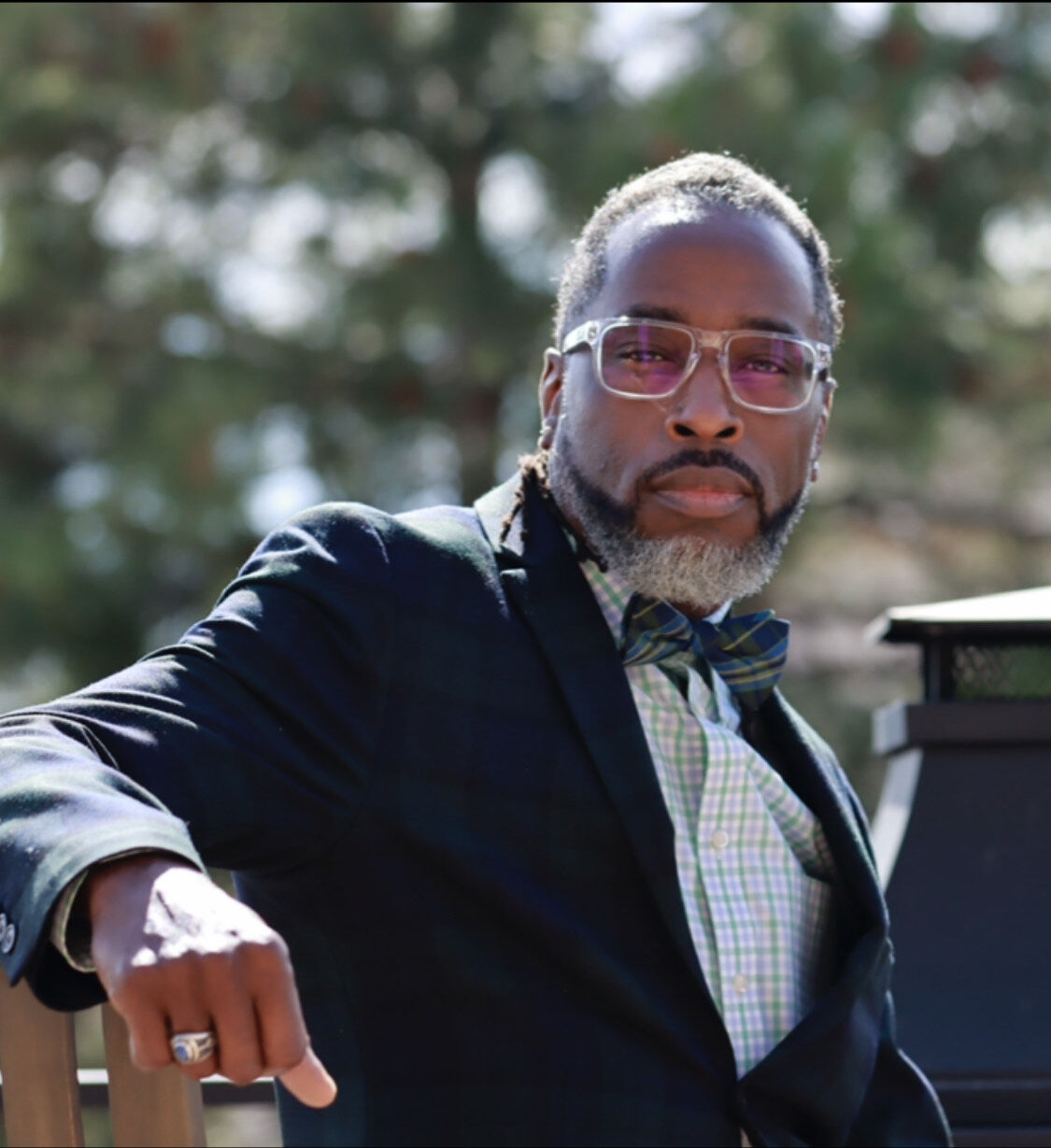
Nathaniel Granger, Jr., Ph.D., is the past president of APA Division 32 Society for Humanistic Psychology, adjunct professor at Saybrook University and Pikes Peak Community College and is the founder and director of Be REAL Ministries in Colorado Springs.


Pay raises for incompetence at the Colorado Capitol | Jon Caldara
Jon Caldara
jon-caldara@coloradopolitics.com
Updated 6 hours ago
By Jon Caldara I am personally responsible for helping overpay socialists to make Colorado unaffordable, overregulated and one windstorm away from a power blackout. I failed you. Colorado legislators already get automatic inflation raises. You know, just like your job...
Founding documents reconnect us to our shared American roots – and rebelliousness | Vince Bzdek
Vince Bzdek
vince.bzdek@gazette.com
Updated 14 hours ago
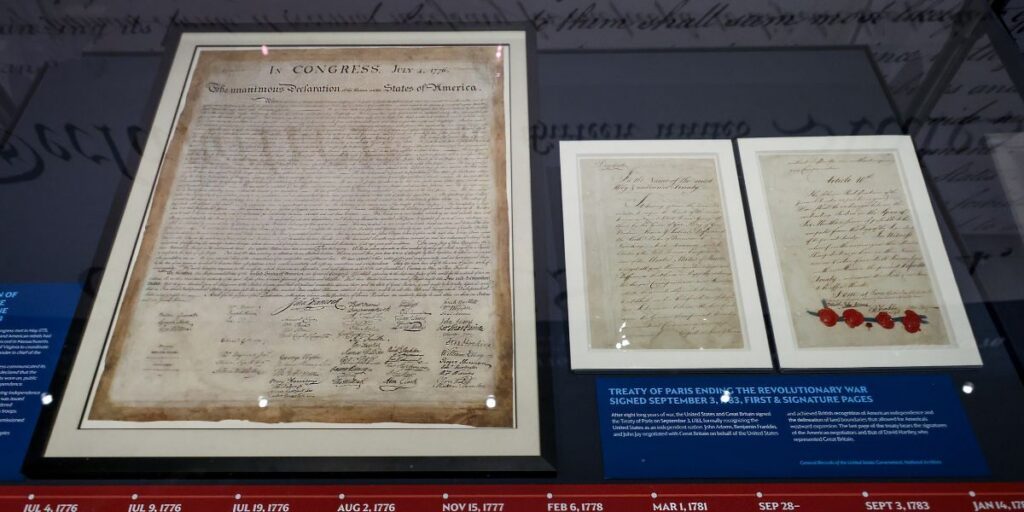
When you first lay eyes on the actual founding documents of our country that, for the first time in history, have traveled together from their gilded cages in Washington to visit us out here in the hinterlands, you’re struck not...

Attorney General Phil Weiser’s underdog campaign for Colorado governor| Cronin and Loevy
Tom Cronin Bob Loevy
tom-cronin-bob-loevy@coloradopolitics.com
Updated 6 hours ago
Phil Weiser, 58, Colorado’s attorney general, is in a heated race against U.S. Sen. Michael Bennet, 61, for the Democratic nomination for governor. They are friends and share mostly similar progressive, Democratic policy views. Primary election day is June 30....
Would you hire Jena Griswold to handle your case? | SONDERMANN
By Eric Sondermann
by-eric-sondermann@coloradopolitics.com
Updated 5 days ago
If you were in a child custody dispute with a former spouse, would you hire an attorney with experience in family law or would you trust your case to an operative with virtually zero mastery? If you were getting ready...
Trends to track as Colorado’s in precarious position pre-gubernatorial primaries | Paula Noonan
Paula Noonan
paula-noonan@coloradopolitics.com
Updated 3 days ago
As they say on Colorado Public Radio’s Marketplace, let’s do the numbers. April 2026 voter registrations continued a long-term Colorado trend with a large majority of new or changed voter registrations joining the unaffiliated cohort. Total registrations of Democrats, Republicans...
High-potency hemp products are hurting Colorado kids | GUEST COLUMN
Colorado Politics
colorado-politics@coloradopolitics.com
Updated 3 days ago
By Heidi Lawrence Six years ago, my daughter, by most metrics, was a typical overachieving teenager. She was a straight-A, pre-professional ballet dancer. She loved school and art, had lots of friends, and above all else, she was kind, funny...
Michael Fields reviews Colorado’s 2026 legislative session | The OpEdge Podcast
Tony Olivero
tony.olivero@gazette.com
Updated 4 days ago
Michael Fields, executive director of Advance Colorado, joins OpEdge host and investigative columnist Jimmy Sengenberger to assess the good, the bad and the ugly of the Colorado General Assembly’s 2026 legislative session. Reflecting on the 120 bills passed in 120...
From secret huddles to Zebulon — the high cost of the Dougco BOCC’s shady governance | PODIUM
Colorado Politics
colorado-politics@coloradopolitics.com
Updated 4 days ago
By Bob Marshall, Lora Thomas and Julie Gooden In Douglas County, a new and dangerous standard of governance has taken root: if the public doesn’t like your plan, simply stop letting the public in the room. During the last year,...

Election must be decided on issues of combating public corruption, restoring integrity in government | FEEDBACK
Colorado Politics
colorado-politics@coloradopolitics.com
Updated 4 days ago
There has been considerable press and outrage regarding Gov. Jared Polis’ commutation of former Mesa County Clerk and Recorder Tina Peters’s remaining prison sentence. The outrage is reinforced by President Donald J. Trump’s creation of a $1.776 billion compensation fund...
Is the ‘penumbra of privacy’ going, going, gone in Colorado? | Hal Bidlack
Hal Bidlack
hal-bidlack@coloradopolitics.com
Updated 5 days ago
Once again, there are too many things in Colorado Politics that are newsworthy and should be written about. Unless my kindly editor will allow me to write a book-length column this week? (Ed: not so much…) First up, I’d like...
PREV
PREVIOUS

CALDARA | Local control? It's a complete lie
Jon Caldara When is “local control” not local control? Whenever the current progressive state legislature increases local control, that’s when. Don’t worry. You won’t be confused in a moment. We Coloradans generally like having governmental authority close to us rather than centralized in some place far away. It’s a lot easier getting in touch with […]

POINT | Critical race theory betrays MLK's dream
Nate Ormond Were “critical race theory” taught as one of many belief systems to enrich education with different views, it might be defensible. Instead, it’s taught as the unquestionable truth. It shuts down debate, accusing dissenters of contributing to an oppressive system. Also read: COUNTERPOINT | CRT = ‘truth of America” Despite CRT’s pretensions to […]