

US Supreme Court strikes down California regulation allowing union organizers onto farms, ranches
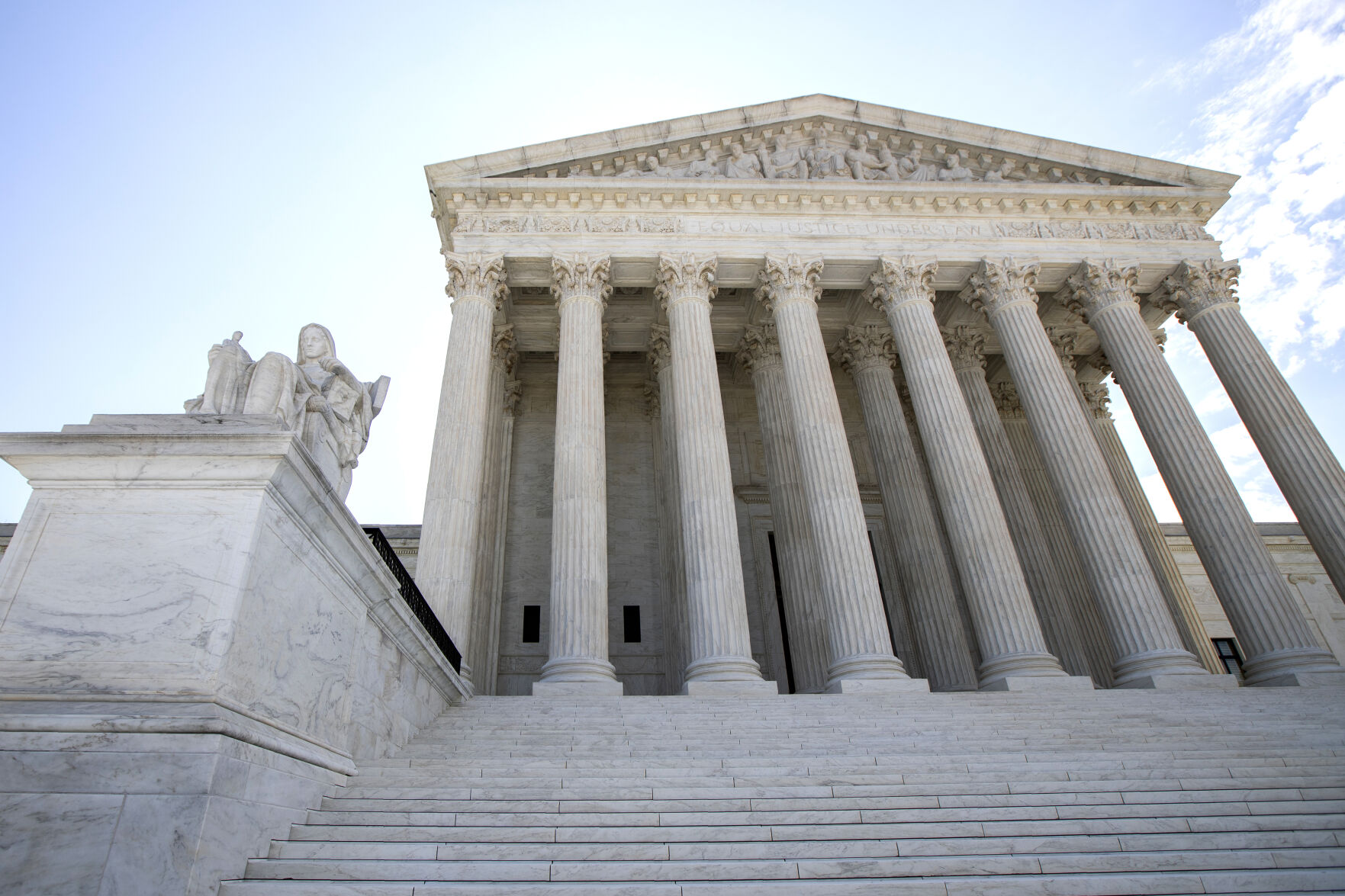
A 6-3 ruling Wednesday from the U.S. Supreme Court could have implications for Colorado’s efforts to unionize farmworkers.
The Court ruled in Cedar Point Nursery v. Hassid that a California regulation that required agricultural employers to allow union reps on their property to unionize farmworkers is unconstitutional and a violation of the Fifth and Fourteenth amendments, specifically calling the regulation a “taking.”
Writing for the majority, Chief Justice John Roberts said, “California’s access regulation appropriates a right to invade the growers’ property and therefore constitutes a per se physical taking. Rather than restraining the growers’ use of their own property, the regulation appropriates for the enjoyment of third parties (here union organizers) the owners’ right to exclude. The right to exclude is ‘a fundamental element of the property right.'”
The regulation stems from a 1975 California law tied to United Farm Workers and organizer Cesar Chavez. The law was challenged in 1976, with the California Supreme Court ruling in favor of the farmworkers’ union. At that time, the U.S. Supreme Court declined to take up the case.
The more recent challenge started in 2015 with the strawberry grower Cedar Point Nursery in northern California, which according to NPR lost in a complaint against the union and decided to try again with the U.S. Supreme Court, given its conservative majority.
In a statement, the National Federation of Independent Business said the Constitution “requires that small business owners get compensated when union organizers have access to a business owner’s property and we’re glad to see the Supreme Court protect this important right and not allow the government to interfere with their daily business operations.”
In the recently-concluded Colorado General Assembly session, Democratic lawmakers passed Senate Bill 87 (no Republicans voted for it), a bill that critics have said follows California’s path.
Among its many provisions, SB 87 strikes down the exemption for agricultural employers and employees from the Colorado “Labor Peace Act” and authorizes agricultural employees to organize and join labor unions; engage in protected, concerted activity; and engage in collective bargaining.
The California regulation in Cedar Point Nursery said that agricultural employers must allow union organizers onto their property for up to three hours per day, 120 days per year. While that’s not in SB 87, the Colorado Department of Labor and Employment would conduct rulemaking that would set guidelines on how union organizers contact farmworkers.
That level of specificity is what made California’s regulation problematic, according to SB 87 co-sponsor State Sen. Dominick Moreno of Commerce City. He told Colorado Politics that the bill sponsors were aware that the court case was in process, and made sure to work with organizations like Colorado Farm Bureau on language granting reasonable access.
The California regulation was slightly different from what Colorado’s proposed law would do, he said, which granted access for a certain period of time. SB 87 sponsors went in a different direction, with language that said farmworkers had to have access to key service providers – including union organizers – without specifying a minimum amount of time.
In the bill, key service providers are defined as health care providers, a community health worker, education provider, attorney or other legal advocate, a government official, a member of the clergy and “any other service provider to which an agricultural worker may need access,” which would include union organizers.
That access is also limited to visitors to farmworker housing, Moreno said. “The Court’s decision is informative for the rulemaking that CDLE will do in the future and likely will have an impact on that rulemaking.”
The bill’s language around access says an employer shall not interfere with a worker’s “reasonable access to visitors” at the employer-provided housing during any time when the employee is taking a break or otherwise not working. It also directs CDLE to come up with rules for “additional times” when an employer may not interfere with an employee’s reasonable access to those service providers, which could include on-the-job time, especially if the employee is working in excess of 40 hours per week. Those rules must be in place, according to the bill, by Oct. 31 and in effect by Jan. 1, 2022.
Moreno said he believes the statute is broad enough to avoid running afoul of the Supreme Court decision. “The California regulation was incredibly specific, and that opened the door to this argument of an illegal taking. This is private property, which the Court takes very seriously and something we wanted to avoid in the development of SB 87.”
Gov. Jared Polis has not yet signed the legislation; he has until July 8 to do so.
But the Court’s decision is already giving opponents of SB 87 something to hope for.
State Sen. Jerry Sonnenberg, R-Sterling, was among the bill’s most vocal critics, calling it the most devastating legislation to agriculture since he’s been politically active. Sonnenberg told Colorado Politics he hopes the Court’s decision will be an incentive for Polis to dismiss SB 87. “The governor’s only move forward is to veto the bill,” Sonnenberg said Wednesday.
While Colorado Farm Bureau eventually moved from opposition to neutral on SB 87, the ruling was praised as good news for Colorado ranchers, farmers and property owners by Chad Vorthmann, CFB’s executive vice president. The national American Farm Bureau Federation filed a friend-of-the-court brief, siding with Cedar Point, on the case.
“The ruling underscores the importance that property rights are a fundamental right and have been since the founding of this country,” Vorthmann said in a statement to Colorado Politics. “Colorado Farm Bureau has maintained for years that takings can come in many forms and property rights should be protected. The Supreme Court’s further clarification that the taking of those property rights can come in many forms is a strong message that farmers and ranchers have a say over who can have access to their farms.
“The bottom line is that this ruling is good news for every citizen to know that their rights are being protected and upheld by the highest court. We are still reviewing how this impacts SB 21-87, but the ruling should serve as a key reminder to state and local governments that the ability to control access to property is a right granted to all citizens by the 5th amendment to the Constitution.”
The five members signing onto the Roberts opinion were the Court’s conservatives: Justices Samuel Alito, Colorado’s Neil Gorsuch, Clarence Thomas, Brett Kavanaugh and Amy Comey Barrett. The three liberal members – Justices Sonia Sotomayor, Elena Kagan and Stephen Breyer – signed onto a dissent authored by Breyer.
In his dissent, Breyer wrote that the regulation “does not ‘appropriate’ anything; it regulates the employers’ right to exclude others. At the same time, our prior cases make clear that the regulation before us allows only a temporary invasion of a landowner’s property and that this kind of temporary invasion amounts to a taking only if it goes ‘too far,'” and in his opinion it did not.
The US Supreme Court June 23, 2021 decision in Cedar Point Nursery v Hassid, which could have implications for Colorado’s farmworker bill, Senate Bill 87.


Victor Marx says he’ll only debate Phil Weiser once in Colorado governor’s race — without a moderator
Ernest Luning
ernest.luning@coloradopolitics.com
Updated 6 hours ago
Colorado Republican gubernatorial nominee Victor Marx said on Tuesday that he will participate in only one debate with Attorney General Phil Weiser before the November election — and he challenged the Democratic nominee to hold the event without a moderator....
10th Circuit finds no fair housing violation by Littleton landlord for worker’s alleged rape of tenant
Michael Karlik
michael.karlik@coloradopolitics.com
Updated 8 hours ago
The Denver-based federal appeals court concluded on Monday that Littleton’s housing authority could not be held liable for a maintenance worker’s alleged rape of a tenant, as the worker’s employment did not provide any special access to the victim. A...
Fauci’s Fifth Amendment answers may test Biden pardon as GOP eyes contempt
Kaelan Deese
kaelan-deese@coloradopolitics.com
Updated 7 hours ago
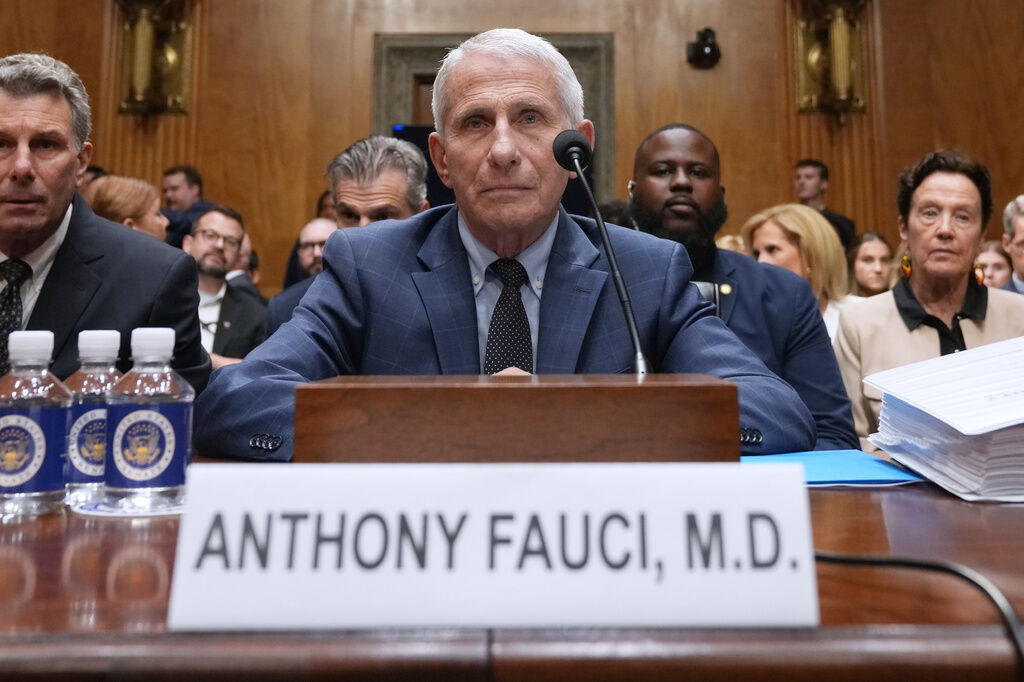
Dr. Anthony Fauci invoked his Fifth Amendment right against self-incrimination more than 100 times on Wednesday, a move legal experts described as strategically sound despite the politically damaging optics. Sen. Rand Paul (R-KY), chairman of the U.S. Senate Committee on...

Democrats must win 57 out of 77 competitive House seats to take majority: Cook Political Report
Hailey Bullis
hailey-bullis@coloradopolitics.com
Updated 9 hours ago
Democrats’ path to retaking the House in November has significantly slimmed as a result of the mid-decade redistricting war this cycle, a new analysis found. The nonpartisan Cook Political Report found that under the newly drawn maps across 10 states,...
Denver labor acknowledgment proposal faces council committee questions
Deborah Grigsby
deborah.smith@denvergazette.com
Updated 13 hours ago
A proposal to add a labor acknowledgment to Denver City Council proceedings has been delayed by the Finance and Business Committee after members raised questions about its wording, intentions and place in the council’s opening proceedings. The proposal, put forth...
Fauci invokes the Fifth Amendment and declines to testify in GOP-led Senate panel’s COVID-19 hearing
The Associated Press
the-associated-press@coloradopolitics.com
Updated 15 hours ago
WASHINGTON (AP) — Dr. Anthony Fauci on Wednesday invoked the Fifth Amendment and declined to answer questions from senators in a Republican-led committee hearing about his handling of the COVID-19 pandemic. The move injects new drama into the lingering tensions...

Colorado residents rush to buy guns ahead of new restrictions, breaking sales records for several stores
By Debbie Kelley
by-debbie-kelley@coloradopolitics.com
Updated 14 hours ago
Colorado residents are lining up to buy guns ahead of the latest weapons restrictions set to take effect this Saturday. The new law mandates individuals seeking to purchase semiautomatic firearms with detachable magazines to first complete a firearm safety course...

Crime continues to decline in Aurora, police chief says
Kyla Pearce
kyla.pearce@gazette.com
Updated 14 hours ago
Crime in Aurora continued to decline in the first half of 2026, according to Aurora Police Department officials. Crime overall in the city has been on a downward trend since 2024, according to APD. Between Jan. 1 and June 30,...
El Paso County rejects multi-family zoning request near Monument Academy
Savannah Eller
savannah-eller@coloradopolitics.com
Updated 13 hours ago
The El Paso County Board of Commissioners narrowly rejected a developer’s bid to convert land from low- to high-density residential zoning. The request, made by MA Infrastructure, LLC, would have allowed 12 units per acre on half of a 14-acre...
Atop taxes, here’s how much each Colorado resident pays in fees
Marissa Ventrelli
marissa.ventrelli@coloradopolitics.com
Updated 1 day ago
Each Colorado resident paid nearly $5,000 in state-sanctioned fees last year, according to a report by a policy think tank. The report, which analyzed how fees have affected Colorado’s economy, found that fee revenue has more than tripled since 2008...
PREV
PREVIOUS

15 years after failed effort, former legislators relieved at passage of sex abuse bill
When a bipartisan majority of state lawmakers voted in the final days of the legislative session to give survivors of past childhood sex abuse access to the justice system, a small group of people quietly celebrated the accomplishment: the former Colorado legislators who watched their similar effort go down in flames 15 years ago. “I […]

Governor signs bill to curb veteran suicides
The timing is sad but notable for Senate President Leroy Garcia. Brown University published a report this week that indicated four times as many veterans since 9/11 have died by suicide than in combat. You can read that research paper by clicking here. Wednesday morning, Gov. Jared Polis signed one of the bills that has […]