

Denver unveils new behavioral health center focused on people in crisis

Eight years after announcing the project, Denver officials unveiled Thursday a new behavioral health center in Sun Valley, a facility that will focus on treating, stabilizing and supporting people experiencing a mental health crisis.
The building, now officially dubbed the Behavioral Health Solutions Center, is one of the first of its kind in the United States, officials said at a press conference Thursday. Touted as a way to actually treat and help people in a crisis, rather than sending them to jail or to an emergency room, the 46-bed facility will offer immediate help and short-term stays for patients referred by first responders or certain mental health providers.
“The strategy under all of this … is to keep people out of the jail system, to keep them out of the hospital, to get them here, where we’re going to set them up for the greatest success,” Bob McDonald, the executive director of Denver’s Department of Public Health and Environment, said at the press conference outside of the facility. “That’s the long-term strategy.”
The center, which is only open to people with referrals, “is a collaborative and innovative facility that we believe will be a game changer for behavioral health care in the city and county of Denver,” Jeff Holliday, a manager with the Denver health department, told reporters.
The building was previously a city-run residential child care facility. After the center was announced in 2013, the city spent $7 million renovating it, Holliday said, on top of $3.4 million in annual operating costs.
All treatment there is voluntary, and the facility has three tiers of immediate support for patient. First is the triage clinic, where patients can be brought by first responders for immediate help. The triage center offers up to 24 hours of services, though stabilization may not take that long and patients can leave whenever they want, officials said.
The second is the 16-bed “crisis stabilization clinic.” Depending on a patient’s circumstances and crisis, he or she may have the option to stay for up to five more days, during which time they’ll be evaluated, begin therapeutic services and receive prescribed medication.
The first floor of the building, which stands at 2929 W. 10th Avenue in west Denver, is dedicated to the first two tiers. It looks like the office for a primary care clinic, with single-occupancy bedrooms and bathrooms built around provider stations, a common room, a laundry room and a small bank of lockers that each contain phone chargers. Doors lead from the cafeteria in one corner of the floor to a courtyard with astroturf and a basketball court.
The third floor houses the 30-day “transitional shelter.” It, too, is ringed by bedrooms and bathrooms, with common rooms in the middle. The shelter is for “people recovering from a crisis,” according to a city press release describing the facility, and staff and patients can use those 30 days to secure ongoing health care treatment, plus transportation and even housing, if needed.
It’s possible for a patient to skip the five-day stay — and go from immediate crisis to 30-day stay — said Marissa VanDover, the associate director of the Mental Health Center of Denver who will oversee the behavioral health center. But it will likely be rare, she said.
The need for this type of facility is great, officials said at the press conference and in interviews Thursday. In its press release, the city noted a 2019 survey that found more than 94,000 residents, amounting to 12.6% of Denver’s population, “reported not receiving help or counseling for mental health issues.”
Holliday said that the facility was modeled off of a similar one in Seattle. That helped not only in establishing programming and getting an idea of how to run it, he said, but it also gave them insight into how to work with the surrounding neighborhood. There was some concern among Sun Valley residents about patients with a history of violent crimes and patients leaving and entering the facility or using nearby public transit.
Conversations with Sun Valley residents took a year to smooth out, Holliday said, and there’s now an advisory committee to give the neighborhood an ongoing voice and forum. The facility won’t take any referrals for patients with a history of violent crimes, and it will provide supervision to any who make the short walk to the nearby bus stop.
‘We’re going to manage this in a way where it adds to the value of the community,” McDonald said at the press conference.


Unsustainable: How Colorado’s Medicaid spending exploded
Nico Brambila
nico.brambila@denvergazette.com
Updated 9 hours ago
The state’s Medicaid program — which covers about one in four Coloradans — is poised for its largest single-year jump in at least two decades, with officials proposing a $2.3 billion increase, even as lawmakers face a $1.5 billion budget...
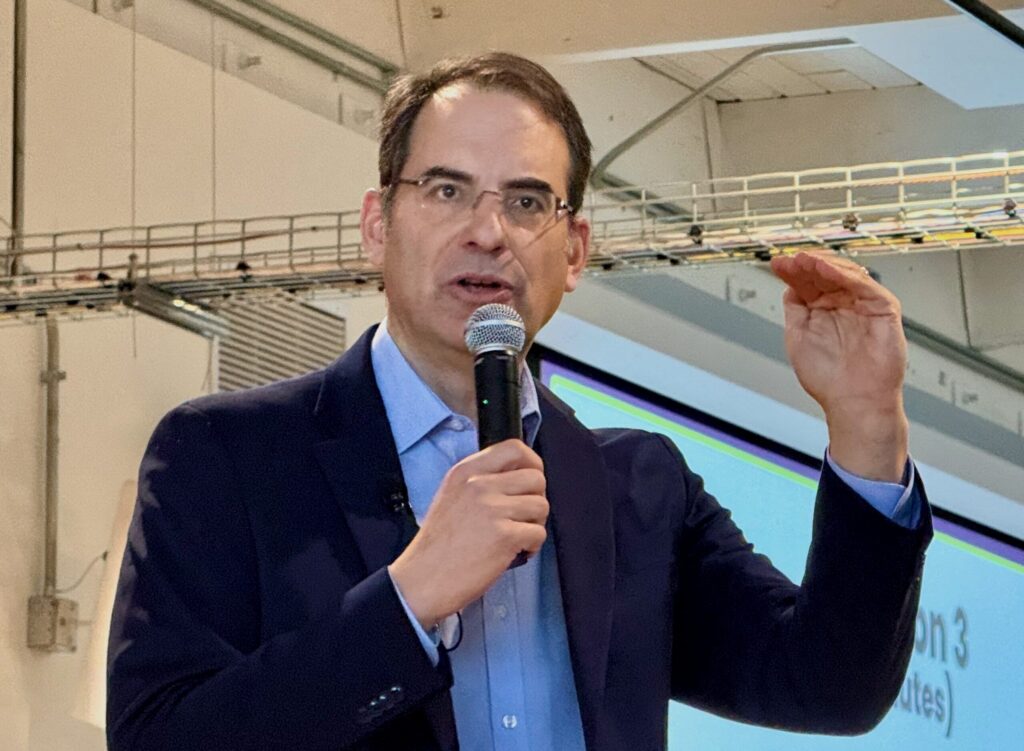
Phil Weiser wins top spot in Colorado’s Democratic gubernatorial primary at party’s state assembly
Ernest Luning
ernest.luning@coloradopolitics.com
Updated 1 day ago
Attorney General Phil Weiser’s name will appear first on Colorado’s Democratic gubernatorial primary ballot after his overwhelming win Saturday at the party’s state assembly in Pueblo. Weiser joins U.S. Sen. Michael Bennet in the June 30 primary for the office...

‘No Kings’ protest draws tens of thousands to Colorado state Capitol
Matt Kyle
matt.kyle@denvergazette.com
Updated 1 day ago
The third round of the national No Kings Day protests hit Denver Saturday, when tens of thousands gathered near the Colorado state Capitol to criticize the Trump administration. Organizers addressing the crowd estimated there were 30,000 present for the Saturday...
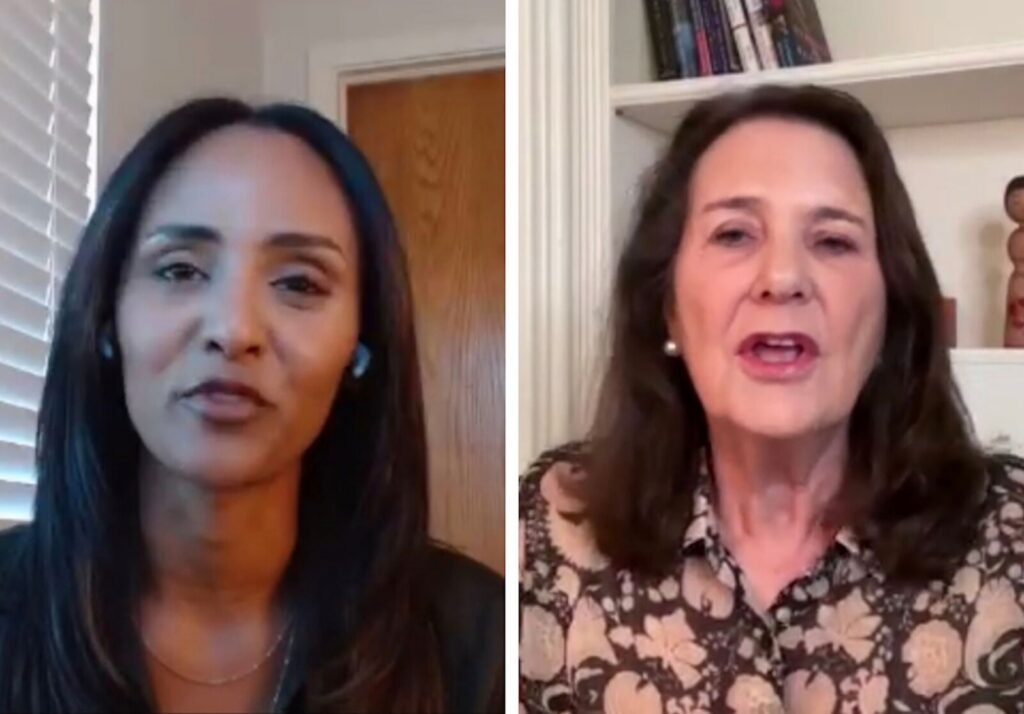
Denver Democrat Diana DeGette trails challenger Melat Kiros at assembly as both qualify for primary
Ernest Luning
ernest.luning@coloradopolitics.com
Updated 2 days ago
U.S. Rep Diana DeGette, a Denver Democrat, qualified for Colorado’s June primary by the skin of her teeth Friday at the party’s district assembly, where the 15-term incumbent received fewer than half as many delegate votes as her challenger, 28-year-old...
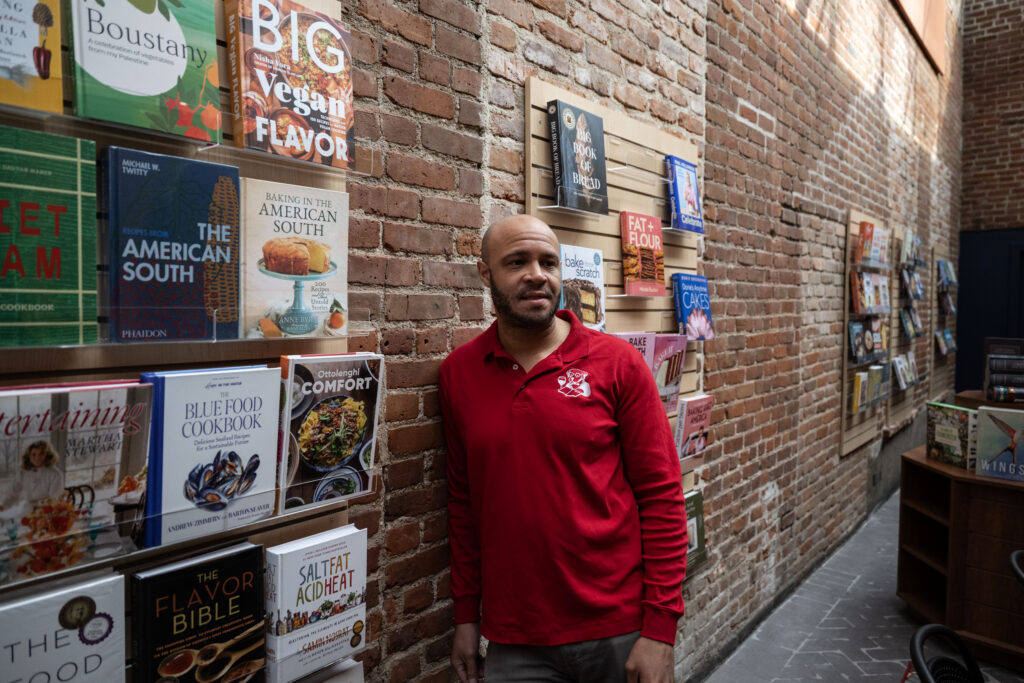
Kwame Spearman warrants plenty of criticism, not cancellation | SONDERMANN
By Eric Sondermann
by-eric-sondermann@coloradopolitics.com
Updated 4 days ago
All of us are flawed humans, some more so than others. This is the tale of Kwame Spearman who burst onto Denver’s business and political scene a handful of years back. His ride has taken a downhill trajectory. Within the...

Colorado Politics Calendar Mar. 30-Apr. 5
Rachael Wright, Special to Colorado Politics
rachael.wright@coloradopolitics.com
Updated 3 days ago
CoPo’s weekly political calendar will help you find political and public-policy events throughout Colorado. It includes candidate and issue campaign events, public policy meetings, court hearings, state and local party conventions, assemblies, debates, rallies, parades, speaking engagements, traveling dignitary appearances,...
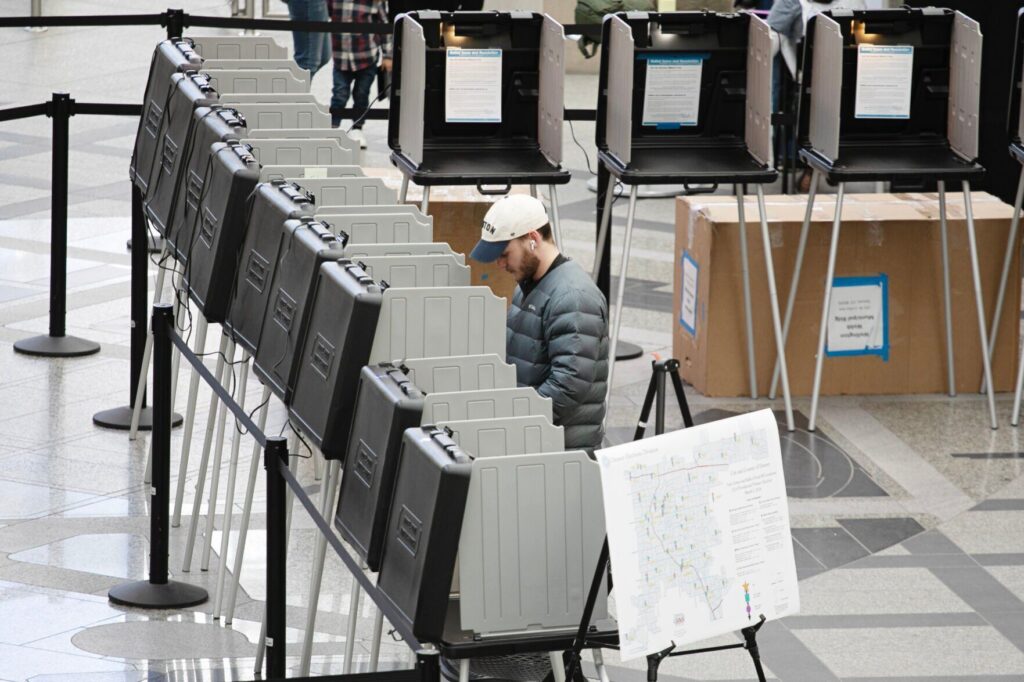
Federal judge upholds constitutionality of Colorado campaign contribution limits
Michael Karlik
michael.karlik@coloradopolitics.com
Updated 2 days ago
A federal judge upheld Colorado’s individual campaign contribution limits as constitutional on Thursday, finding that three Republican plaintiffs failed to prove the campaign finance framework violates their First Amendment rights. U.S. District Court Senior Judge John L. Kane recognized that...
Appeals court rejects theory that existing tax revenue undermines need for new fees
Michael Karlik
michael.karlik@coloradopolitics.com
Updated 2 days ago
Colorado’s second-highest court rejected a plaintiff’s claim on Thursday that the tax revenue generated by an existing activity should prevent local governments from imposing new fees aimed at regulating the activity. The question stemmed from Colorado’s unique constraints on taxation...
Colorado ski resorts announce early closures amid historic snowpack lows, high temperatures
Kyla Pearce
kyla.pearce@gazette.com
Updated 2 days ago
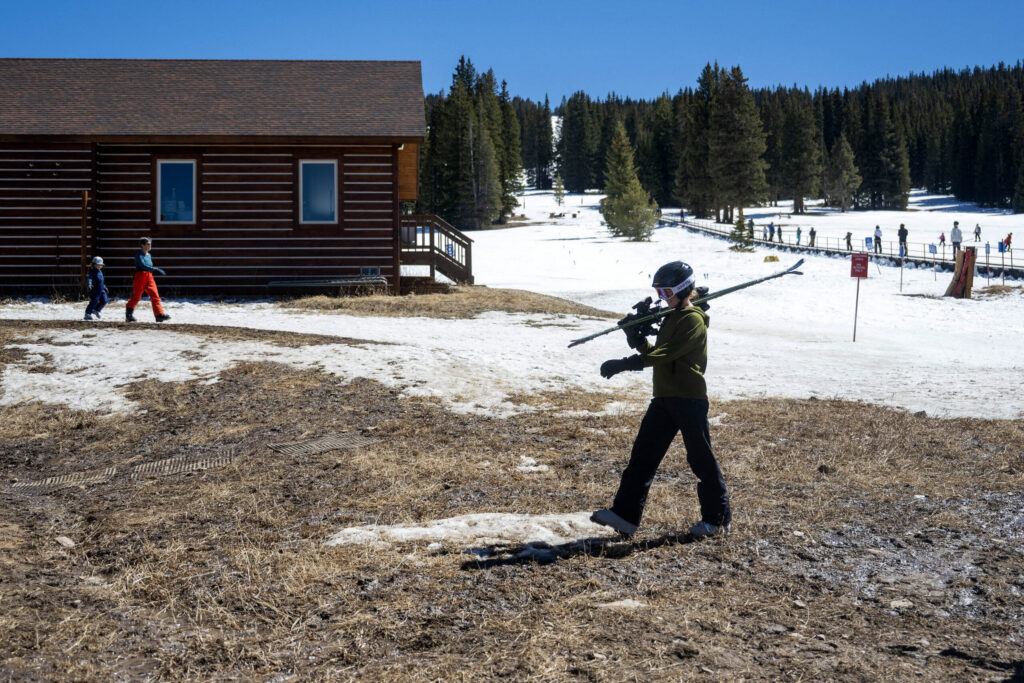
As Colorado’s historically low snowpack year comes to a close and spring conditions take over the mountains, the state’s major ski resorts are announcing closing dates — some of which are weeks before historic closing dates. Most of Colorado’s ski...

Marco Rubio’s star power rises at CPAC 2026
Mabinty Quarshie and Samantha-Jo Roth, Washington Examiner
mabinty.quarshie.and.samantha-jo.roth.washington.examiner@gazetteedit.wpenginepowered.com
Updated 3 days ago
GRAPEVINE, Texas — Secretary of State Marco Rubio’s popularity is growing and could possibly boost him to one of the top two spots in the 2028 GOP presidential race, if attendees at the Conservative Political Action Conference are to be believed. ...
PREV
PREVIOUS

In wake of new mask order, who needs to keep covered up?
Gov. Jared Polis announced Friday that the general public is no longer required to wear masks, in line with new guidance released this week by the Centers for Disease Control and Prevention. On Thursday, the CDC specifically said that fully vaccinated people don’t need to wear masks anymore in most situations. Polis’s office said Thursday […]

Lew and Kopp discuss fees, congestion and Floyd Hill in Colorado Concern podcast
Pending legislation, traffic jams, paying for a 10-year plan and fixing Floyd Hill were all on the agenda when state highway director Shoshana Lew sat down with Mike Kopp for the latest episode of the podcast “In the Arena with Colorado Concern.” The conversation was driven by Senate Bill 260, the legislature’s plan to put […]