

Bill to have preliminary redistricting maps rely on survey data sails through first hearing

A panel of lawmakers gave unanimous approval to a bill that aims to fix the state redistricting commissions’ census data delay problems, by deeming survey data appropriate to use for the preliminary maps, instead of waiting for the U.S. Census Bureau’s official decennial census data.
The state’s redistricting commissions would normally have had the decennial census data by this point in the redistricting process, but the global coronavirus pandemic caused problems, leading to a months-long delay. The census bureau has told states that official decennial census data should be available by August or September.
But that won’t allow enough time for the state’s new redistricting commission process to play out. According to amendments Y and Z, passed overwhelmingly by the state’s voters in the 2018 election and which amend the state’s constitution, the citizen redistricting commissions are required to draft maps, then tour the state with them, gathering feedback and input from the public, which is to be used to help craft and adopt final maps. The commissions are supposed to have maps approved by the state Supreme Court by November.
The delayed data and constitutional deadlines just won’t work together, and something needs to be changed, a lawyer and staff working for the commission have said.
SB247, passed Tuesday by the Senate State, Veterans & Military Affairs Committee, would put into law that the commissions can use data from the 2019 American Community Survey, a five-year compilation of surveys of 2.7% of the population, to draft preliminary maps that would be used for the public tour, before later using official decennial census data to make final maps.
Senate Majority Leader Stephen Fenberg, a prime sponsor of the bill, said during the committee hearing that he and the other backers of the bill want to avoid lawsuits that could result from waiting for the official decennial census data, and not meeting the constitutional deadlines.
The deadlines ensure that elections officials have enough time to incorporate new maps into their election administration operations, Fenberg said, which normally takes several months. Not hitting the deadlines, he said, could mean lawsuits between county recorders, the secretary of state and the commission.
The bill was amended to specify that the maps drafted with decennial census data would be the commissions’ “draft” maps and that the maps made with preliminary data would be only “preliminary,” in order to align with the language of the constitution. It was also amended to give the commissions 10 days, instead of 5, to begin their mapping process, once the preliminary data is ready.
Amanda Gonzalez, the executive director of Colorado Common Cause, a nonprofit organization that advocates for democracy and political rights, warned about what could result from the changes in the bill.
First, American Community Survey data authorized for preliminary maps in the bill is not intended to be used for redistricting, she said, and the decennial census data has in the past been significantly different from the American Community Survey results, meaning the official decennial census data could require significant changes to the maps.
At the same time, she said, the constitution requires that the public is able to provide meaningful input on the maps that are drafted with final data, not preliminary survey data.
She urged an amendment to the bill that would include language requiring for meaningful public input on the maps using decennial census data.
Nobody from the redistricting commissions testified during the hearing.
The bill passed in committee 5-0, and will be sent next to Senate Appropriations.


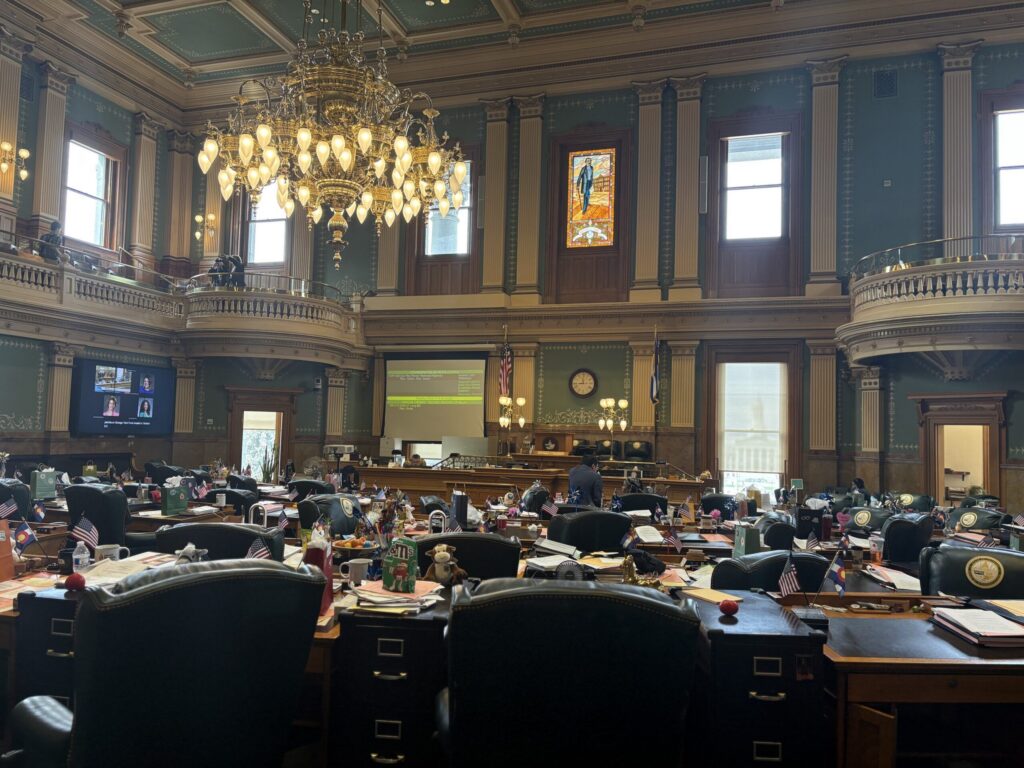
Colorado’s 661‑page budget read aloud after Rep. Bradley invokes procedural rule
Marianne Goodland
marianne.goodland@coloradopolitics.com
Updated 17 hours ago
A rarely used procedural move by Rep. Brandi Bradley, R‑Roxborough Park, has thrown the Colorado House into an extended slowdown, after she invoked her right to have the 661‑page state budget bill read aloud in full. While unprecedented, once Bradley...
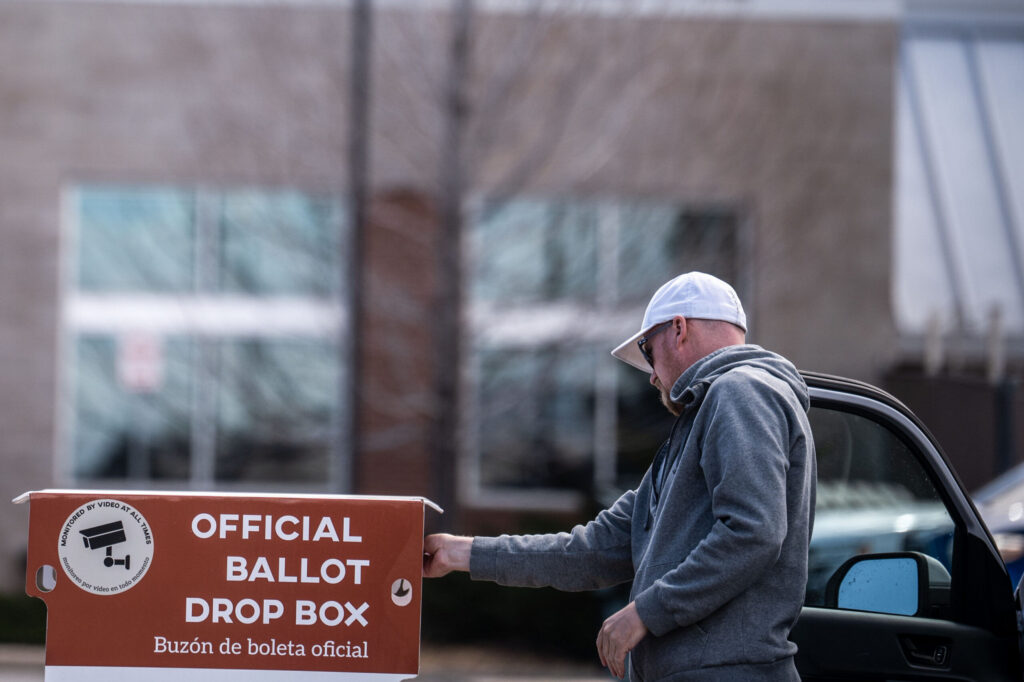
Colorado GOP votes down bid to ask court to prevent unaffiliated voters from voting in June primary
Ernest Luning
ernest.luning@coloradopolitics.com
Updated 17 hours ago
Members of the Colorado Republican Party’s executive committee rejected a proposal Thursday night to seek an emergency injunction in federal court to prevent unaffiliated voters from participating in the state’s upcoming June primary election. The proposed motion, backed by Colorado...

Colorado Democrat John Hickenlooper pulls in nearly $1.4M in 1st quarter, heads into primary with $4M
Ernest Luning
ernest.luning@coloradopolitics.com
Updated 17 hours ago
U.S. Sen. John Hickenlooper’s campaign raised nearly $1.4 million in the first quarter of 2026 and plans to report more than $4 million on hand heading into Colorado’s June primary, the first-term Democrat’s campaign said Thursday. That brings Hickenlooper’s total...
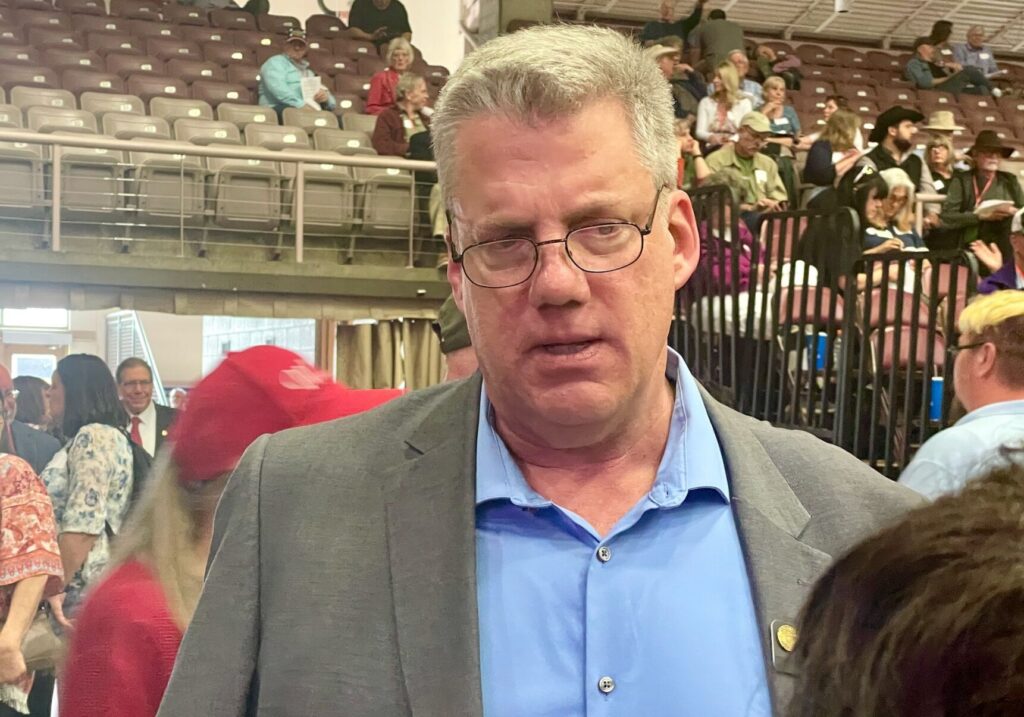
Republican Ron Hanks plans ‘grassroots’ primary challenge to US Rep. Jeff Hurd in Colorado’s 3rd CD
Ernest Luning
ernest.luning@coloradopolitics.com
Updated 18 hours ago
Colorado Republican Ron Hanks, a former state lawmaker, plans to challenge first-term U.S. Rep. Jeff Hurd in the 3rd Congressional District primary by seeking a spot on the June ballot at the GOP’s district assembly in Pueblo on Friday, Colorado...
House GOP stalls Colorado budget debate by forcing full reading of 661-page bill
Marianne Goodland
marianne.goodland@coloradopolitics.com
Updated 2 days ago
A procedural battle at the Colorado Capitol boiled over on Wednesday night, when a House Republican demanded the 661‑page state budget be read aloud in full — a move that delayed the advance of the proposed $46.8 billion spending plan....
Poll: Colorado Gov. Jared Polis loses support among Democrats
Marissa Ventrelli
marissa.ventrelli@coloradopolitics.com
Updated 3 days ago
Gov. Jared Polis is losing steam among members of his party, particularly progressive Democrats, according to a recent poll. Other statewide Democrats also saw their favorability ratings drop, though relatively stable compared to the governor’s numbers, the poll conducted by...

Kentucky Gov. Andy Beshear set to headline Colorado Democrats’ annual fundraising dinner
Ernest Luning
ernest.luning@coloradopolitics.com
Updated 1 week ago
Kentucky Gov. Andy Beshear, one of the Democrats’ top 2028 presidential prospects, is scheduled to deliver the keynote address at the Colorado Democratic Party’s annual fundraising dinner in June in Denver, the party said Friday. Serving his second term as...
Colorado sues Trump administration over elections order
Marissa Ventrelli
marissa.ventrelli@coloradopolitics.com
Updated 5 days ago
Colorado has joined a coalition of states in suing President Donald Trump over his new executive order on elections, arguing the directive unlawfully intrudes on their authority to run their own voting systems and threatens access to mail ballots for...
Denver Democrat Neal Walia lands endorsement from Ro Khanna in Colorado’s state House District 9
Ernest Luning
ernest.luning@coloradopolitics.com
Updated 5 days ago
California Rep. Ro Khanna on Friday endorsed legislative candidate Neal Walia in the race for an open state House seat, praising the Denver Democrat’s commitment to public service and progressive goals. Walia, who mounted an unsuccessful challenge against U.S. Rep....
Redistricting fight escalates as Colorado Title Board clears competing ballot proposals
Marianne Goodland
marianne.goodland@coloradopolitics.com
Updated 12 hours ago
Colorado’s title board on Wednesday gave final approval to multiple ballot measures related to congressional redistricting, setting up a series of proposals that could alter how the state draws its U.S. House districts for the 2028 and 2030 elections. The...
PREV
PREVIOUS

Speaker of the House Alec Garnett talks about decision to appoint West Slope Republican to ag committee leadership
In an era of hyperpartisanship, Speaker of the House Alec Garnett, D-Denver, has done something no other Colorado Speaker has done, at least not in the almost two-dozen years this reporter has been at the Capitol. He appointed a Republican – Rep. Marc Catlin of Montrose – as vice chair of the Democratic-controlled House Agriculture, Livestock and Water […]

CDOT responds to estimates on traffic and air pollution in transit report
A calculation on how much new lanes of interstate add in cars and gas use quickly got jammed again after the costly expansion didn’t add up to state highway director Shoshana Lew. The Rocky Mountain Institute hopes its analysis, released Wednesday, will add to the conversation about how to spend federal stimulus dollars on transportation. […]