

COURT CRAWL | Race and Colorado’s courts, a new standard for inmate early release
Welcome to Court Crawl, Colorado Politics’ roundup of news from the third branch of government. While the federal appeals court in Colorado clarified the rules for granting early release to inmates, Colorado’s Supreme Court has instituted a new rule for diversity training.
Equity and diversity
> Colorado has joined the handful of states that requires equity, diversity and inclusivity training for lawyers. The state Supreme Court on Thursday approved the rule change, which enjoyed the support of Colorado’s various bar associations and Attorney General Phil Weiser. The requirement for two credit hours of instruction during a three-year period is intended to help lawyers represent diverse populations and recognize bias in the legal system.
Speaking of bias…
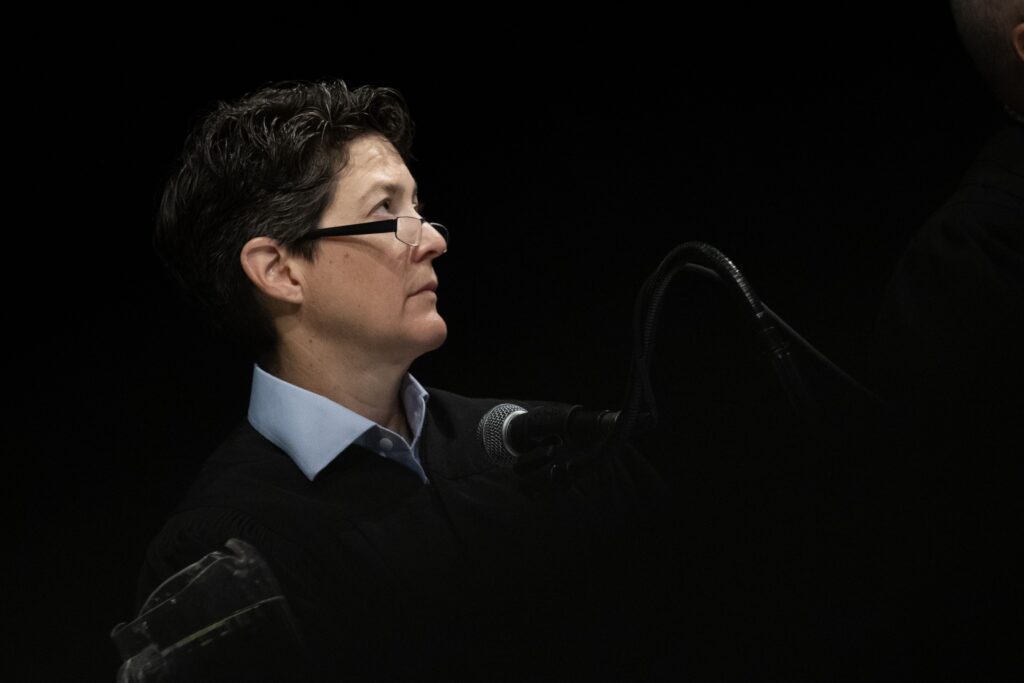
> News broke on Friday that an Arapahoe County judge will resign for multiple instances of misconduct, including having her court staff attend to her personal business and saying the N-word multiple times in front of a Black employee. District Court Judge Natalie T. Chase, a 2014 appointee of then-Gov. John Hickenlooper, also voiced opinions from the bench about the Black Lives Matter movement.
? Although some readers labeled this an example of “cancel culture,” in which a person lost their job for expressing their political views, it was Chase who volunteered her resignation, according to the Supreme Court’s narrative.
> Court Crawl devotees may remember that Chase’s handling of a Black defendant’s criminal trial was the subject of a Court of Appeals decision earlier this month. The appellate panel found likely racial discrimination had occurred when the prosecution excused at least two people of color from the jury pool, and Chase interjected her own non-racial explanation before the prosecutor could offer his.
Body language, regular language
> In other news out of the Supreme Court, the justices decided 6-1 that an officer’s non-expert testimony was acceptable at trial, in which he told jurors how he interpreted a teenager’s non-verbal answer to be a lie.
> The justices also reeled in a Court of Appeals panel that said if a person commits a new crime during a police interrogation, the evidence is admissible even if the interrogation was unconstitutional. Instead, the Supreme Court established a standard of “it depends.”
Meanwhile, at the federal level
> Big news for inmates seeking sentence reductions: the federal appeals court based in Denver has clarified that lower court judges are not bound by federal sentencing guidelines when deciding whether to grant early release.
? The First Step Act, a major criminal justice reform bill passed in 2018, expanded the role of trial courts to grant compassionate release to inmates.
? Because the sentencing guidelines were never updated to account for this change, multiple circuit courts of appeals have now ruled the guidelines are “policy statements” for courts, and not binding directives.
> There was nothing unconstitutional about the warrant to seize a Park County rancher’s malnourished and dying horses during a brutal cold spell, a federal judge found.
> A Muslim employee of the Colorado Department of Corrections received poor performance reviews and a demotion. Right before that, his supervisor saw him praying. A judge said a jury could reasonably see a discriminationatory connection between the events.
> Hours after a medical contractor cleared an Arapahoe County jail detainee from suicide watch, the detainee killed himself. His family’s lawsuit against the contractor will proceed, on the grounds that she showed deliberate indifference to his suicide risk.
Weiser watch
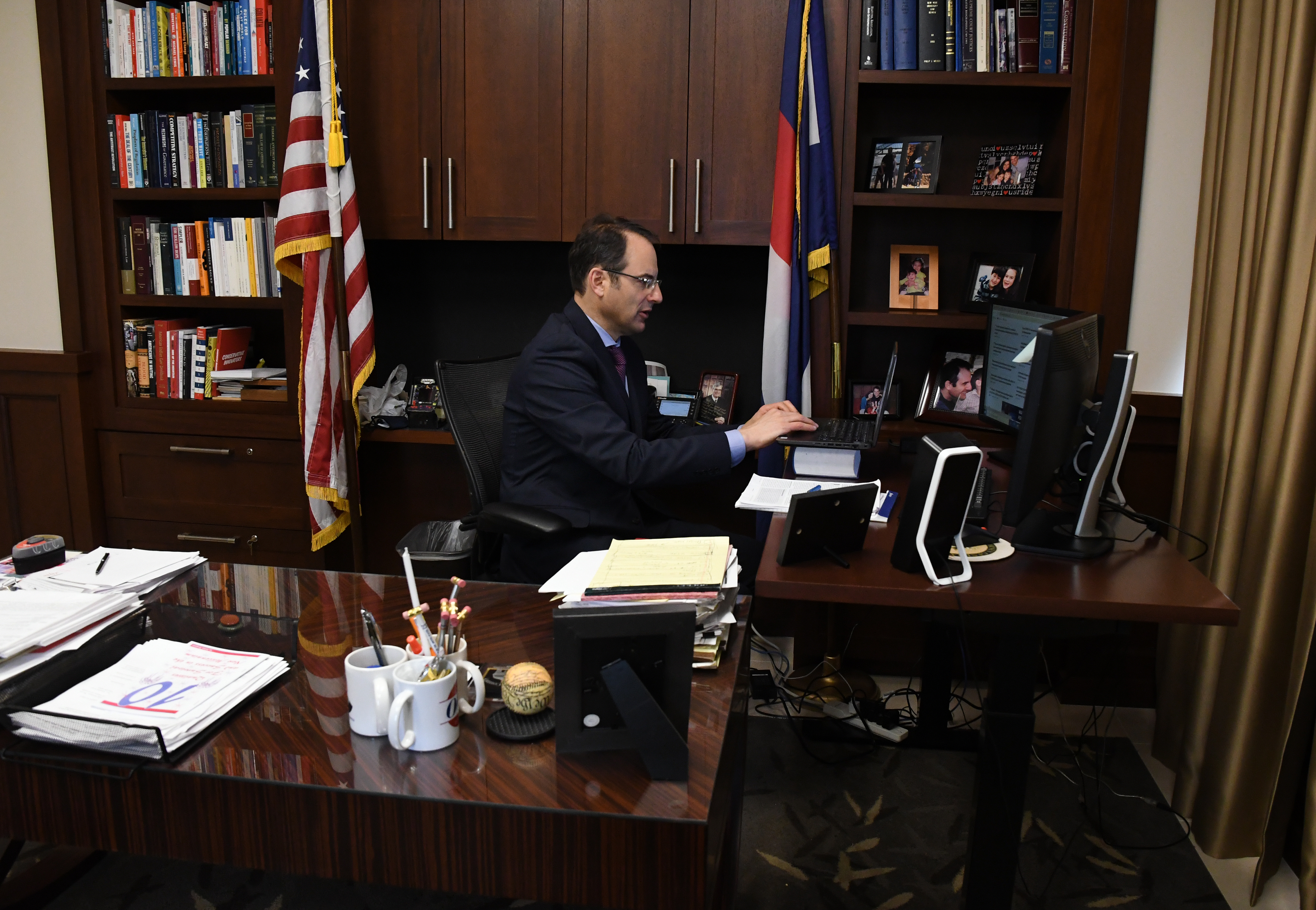
> Attorney General Phil Weiser joined other Democratic attorneys general in asking the U.S. Supreme Court to uphold California’s rule requiring nonprofits to report their major donors – confidentially – to the state.
? Disclosure allows states “to check the accuracy of charities’ financial reporting, ensure compliance with basic regulatory responsibilities, and identify and remedy fraud and abuse.” –March 31 legal brief
A focus on SCOTUS
> The conservative Centennial Institute will host a virtual lecture at 7 p.m. tonight about the politics of U.S. Supreme Court nominations and various proposals for court reform.
? President Joe Biden recently signed an executive order establishing a 36-member commission to explore Supreme Court reform, specifically: “the Court’s role in the Constitutional system; the length of service and turnover of justices on the Court; the membership and size of the Court; and the Court’s case selection, rules, and practices.”
? For another perspective on Court reform, the Brookings Institution has a roadmap of options.


Colorado Supreme Court clarifies restraining order violations can always support burglary charge
Michael Karlik
michael.karlik@coloradopolitics.com
Updated 15 hours ago
The Colorado Supreme Court’s majority ruled on Monday that a violation of a restraining order can also serve as a basis for finding a defendant guilty of burglary. Under state law, a person commits second-degree burglary by unlawfully entering or...

10th Circuit judge creates vacancy, district court gets new chief judge | COURT CRAWL
Michael Karlik
michael.karlik@coloradopolitics.com
Updated 19 hours ago
Welcome to Court Crawl, Colorado Politics’ roundup of news from the third branch of government. A longtime member of the Denver-based federal appeals court will give the president a vacancy to fill, plus Colorado’s federal trial court will see a...
Gov. Jared Polis moves to end ICE subpoena fight over Colorado workers’ personal data
Marianne Goodland
marianne.goodland@coloradopolitics.com
Updated 4 days ago
The effort by Gov. Jared Polis to comply with an administrative subpoena from U.S. Immigration and Customs Enforcement for information held by several state agencies is over. Polis, in a motion filed Feb. 20, asked for a permanent injunction and...
Ex-Colorado Sen. Sonya Jaquez Lewis avoids prison, gets probation for forged ethics letters
Marianne Goodland
marianne.goodland@coloradopolitics.com
Updated 4 days ago
Former state Sen. Sonya Jaquez Lewis, D-Longmont, was sentenced Friday to two years of supervised probation and 150 hours of community service, and a $3,000 fine, to be waived if she completes an additional 100 hours of community service. The...

Toll to sexual assault survivors rises if they feel blamed and disbelieved
Jenny Deam
jenny-deam@coloradopolitics.com
Updated 4 days ago
Natalie, a single mother, dropped off her son at daycare, went to therapy and then returned home. She swallowed a fistful of pills, washing them down with a six-pack of beer. She was ready to end her life. “I just...

Colorado rape cases rarely result in an arrest and prosecution
Evan Wyloge
evan-wyloge@coloradopolitics.com
Updated 15 hours ago
Authorities say they are especially difficult cases. In Colorado, most go nowhere. Over the past decade, for every 10 reports of rape, there is only one arrest. Warning: This story contains descriptions of sexual violence. Kiersten May remembered a fuzziness...

10th Circuit upholds finding of no misconduct against Colorado federal judge
Michael Karlik
michael.karlik@coloradopolitics.com
Updated 5 days ago
A judicial committee for the Denver-based federal appeals court upheld the chief judge’s finding last week that a federal judge in Colorado did not engage in misconduct by handling a civil case involving other attorneys and judges in the state....
SCOTUS whisperer? Justice Carlos Samour may get second opportunity to turn state dissent into national precedent
Michael Karlik
michael.karlik@coloradopolitics.com
Updated 4 days ago
For the second time in two years, Justice Carlos A. Samour Jr. occupies an unusual position: Having his dissent in a Colorado Supreme Court case potentially forming the basis of U.S. Supreme Court precedent. Earlier this week, the nation’s highest...

10th Circuit appoints ex-Colorado solicitor general to argue issue after federal government declines
Michael Karlik
michael.karlik@coloradopolitics.com
Updated 4 days ago
The Denver-based federal appeals court took the unusual step earlier this month of appointing an attorney to independently argue a key issue in a criminal sentencing appeal after the government indicated it would not contest the defendant’s view of the...
Daniel Domenico to take over as Colorado’s chief federal judge
Michael Karlik
michael.karlik@coloradopolitics.com
Updated 2 days ago
Daniel D. Domenico will become the new chief judge of Colorado’s federal trial court next week, a role that encompasses the administration of the court as well as a judicial caseload. Under federal law, the chief judge of a U.S....
PREV
PREVIOUS

Here's how much Coloradans got in tax refunds last year
Americans paid in 2019 more than $3.5 trillion in taxes. Nearly half of all tax returns filed by individuals, corporations and estates received a refund. Altogether, the Internal Revenue Service issued nearly 122 million refunds totaling $452.1 billion, or $3,709 per refund. There are a number of variables that affect the amount that is refunded, […]

Q&A with Jeffrey Colwell | 'The bald guy' behind Colorado's federal court
FAST FACTS: Jeffrey P. Colwell has been the clerk of the U.S. District Court in Colorado since late 2012. He spent a quarter century in the U.S. Marine Corps, where he defended Guantanamo Bay detainees facing terrorism charges, and retired at the rank of colonel. A graduate of Suffolk University Law School in Boston, Colwell […]