

Court: Rules prevent airing of Weld County jury misconduct allegations
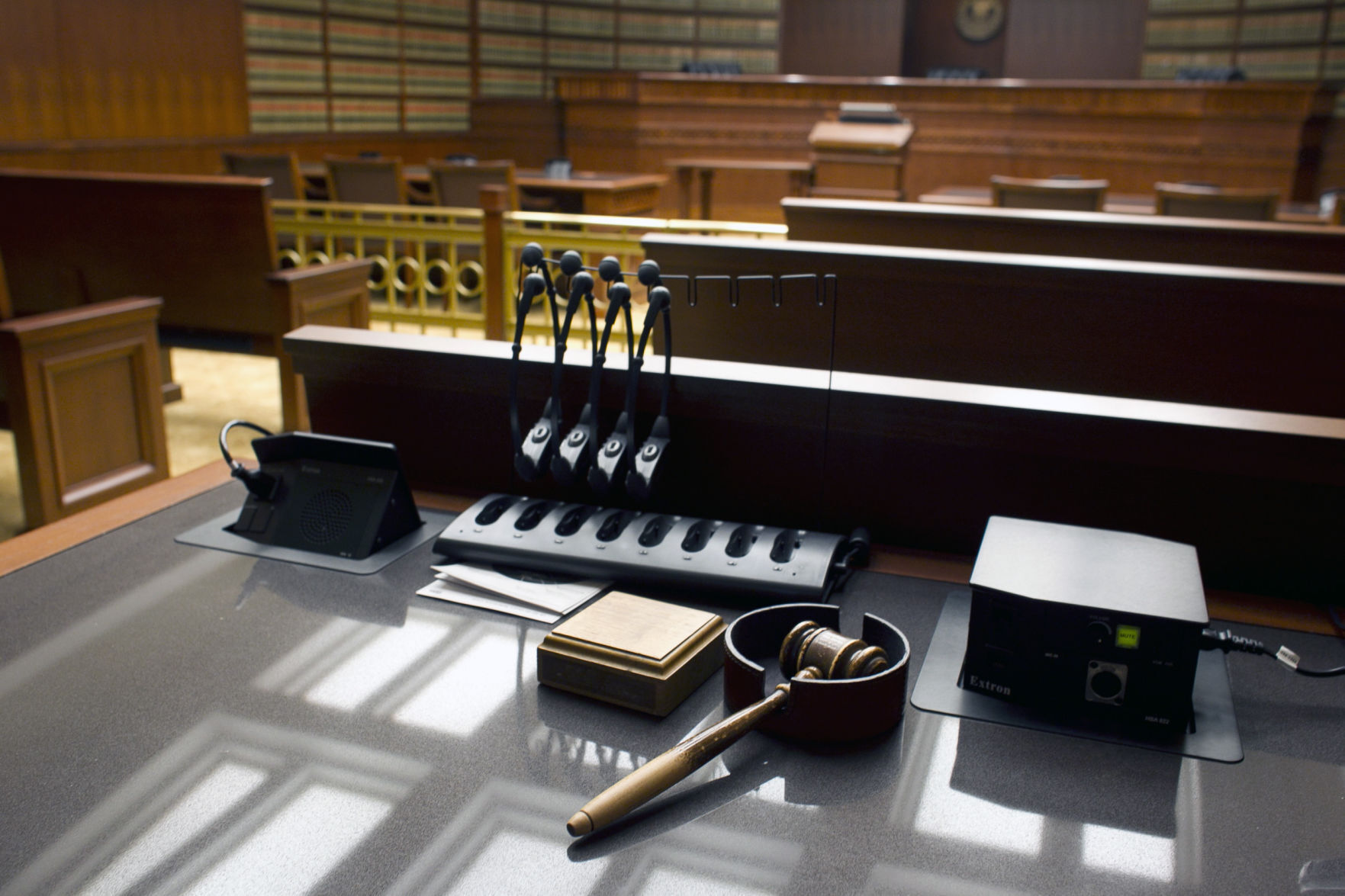
Even if jurors did speak among themselves during trial about a defendant’s guilt in violation of a judge’s instructions, legal rules prohibit the review of those allegations, the Court of Appeals ruled on Thursday.
“Courts have long been hesitant to peek behind a jury verdict by inquiring into a jury’s deliberations or its thought processes in reaching the verdict,” wrote Judge Stephanie Dunn for the three-member appellate panel. The judges determined the post-trial allegations of one juror about his fellow members’ misconduct did not fall into the accepted reasons for investigating verdict.
Stephen A. Saltzburg, a law professor at The George Washington University, said the Court of Appeals’ decision fit well within existing legal practice.
“The thing that courts look to are things that corrupt a jury verdict,” he said. If judges had to consider all allegations of jurors talking to one another about the case outside of deliberations, “every single verdict, just about, would be subject to being overturned.”
A Weld County jury found Sandra Archuleta guilty in 2017 of child abuse resulting in the death of her infant grandson. The four-month-old child, Donovan Archuleta, died in August 2015 with chemical burns on his face and in his mouth, a sepsis infection and broken ribs. A judge sentenced Archuleta to 24 years in prison. A separate jury convicted the child’s mother after she failed to get help for the baby.
At Archuleta’s sentencing hearing four months after her conviction, a male juror in her trial asked District Court Judge Julie C. Hoskins to impose the minimum sentence because he believed there was not evidence to convict her beyond a reasonable doubt. The defense later filed a motion for a new trial that elaborated on the alleged misconduct the juror witnessed.
Throughout the trial, Hoskins had instructed the jury to base its decision on the evidence it heard and the legal directives of the court. She also advised jurors not to discuss the case until they had all of the evidence. Yet, according to the unnamed juror’s recollection, he heard jurors talk about the evidence during breaks, and heard one person say the trial was taking too long because Archuleta was “overwhelmingly guilty.”
After listening to Archuleta’s police interview, “a number of jurors laughed and shook their heads,” and one asked, “Does she really expect us to believe that?” the unnamed juror alleged.
Under the Colorado Rules of Evidence, there is limited ability for a juror to question the validity of a verdict after the fact. Exceptions include the introduction of prejudicial information or outside influence, and if there was a mistake in filling out the verdict form. The U.S. Supreme Court has also allowed racist motivations of a juror to be brought forward.
Finding the juror’s allegations did not fit into any of those categories, Hoskins denied the motion for a new trial.
Archuleta appealed, claiming the rules governing evidence do not apply to juror conduct before deliberations begin. However, a three-judge panel of the Court of Appeals disagreed with her, citing a 5-4 Supreme Court decision from 1987 blocking allegations that as many as seven jurors were drunk during a man’s criminal trial, and also consumed marijuana.
In the majority’s opinion, Justice Sandra Day O’Connor explained that “long-recognized and very substantial concerns support the protection of jury deliberations from intrusive inquiry.” Justice Thurgood Marshall, writing for the four dissenting members, believed drug use could easily fall under the exception for “outside influence.”
Even alleged mistakes are not grounds for reviewing a jury’s verdict: the Colorado Supreme Court decided in 2002 against admitting the affidavits of five jurors who appeared to misunderstand a judge’s instructions at the time of deliberation.
In Archuleta’s case, the juror who allegedly observed unsanctioned deliberations “could have reported his concerns about pre-deliberation chatter to the court during the trial. Had he done so, the trial court could have taken curative measures to address the concerns,” wrote Dunn for the appellate panel.
She added: “To be sure, such pre-deliberation discussions — if they occurred — undoubtedly violated the court’s instructions and were inappropriate.”
Saltzburg, the law professor, said jurors are human, however, and it would be unrealistic to expect them to suppress all reactions to what they hear at trial.
“There’s nothing more unnatural than sitting together with a group of people for hours or days or weeks and not in any way even mentioning what you’ve been doing together. It’s not the way humans react. And courts have known that now for decades, maybe even centuries,” he said.
Saltzburg mentioned an exception to the prohibition on premature jury deliberations: in 1995, the Arizona Supreme Court allowed jurors in civil trials to talk about the evidence while the trial was ongoing.
The case is People v. Archuleta.

Federal judge green-lights trial against Denver officer over race-based enforcement
Michael Karlik
michael.karlik@coloradopolitics.com
Updated 10 hours ago
A federal judge green-lit a jury trial last week on a man’s claim that a Denver police officer engaged in racially selective enforcement of the law by arresting him for video recording at a police station, while not arresting a...
Federal judge says 8 years in solitary confinement not grounds to reduce man’s sentence
Michael Karlik
michael.karlik@coloradopolitics.com
Updated 10 hours ago
A federal judge concluded earlier this month that a man’s eight years allegedly spent in solitary confinement did not justify granting his request for a sentence reduction. However, U.S. District Court Senior Judge William J. Martínez signaled his willingness to...
10th Circuit rejects ‘potential for violence’ when police arrest vehicle occupant’s romantic partner
Michael Karlik
michael.karlik@coloradopolitics.com
Updated 13 hours ago
The Denver-based federal appeals court rejected the idea on Tuesday that a vehicle occupant poses a danger to police solely because they are romantically involved with another occupant who officers are arresting. By 2-1, a three-judge panel of the U.S....

Colorado justices grill debt collector about compliance with law
Michael Karlik
michael.karlik@coloradopolitics.com
Updated 7 hours ago
The Colorado Supreme Court repeatedly pressed a debt collection company last week to explain how its lawsuit against a Boulder woman for an unpaid credit card balance complied with the specific requirements that state lawmakers have created. Portfolio Recovery Associates,...
Appeals court agrees defendant’s speech constitutionally protected against El Paso County judge
Michael Karlik
michael.karlik@coloradopolitics.com
Updated 17 hours ago
Colorado’s second-highest court agreed last week that a defendant’s critical statements toward an El Paso County judge were constitutionally protected and could not form the basis of a retaliation charge. A three-judge Court of Appeals panel concluded that, in context,...
Colorado justices, 4-3, order new murder trial due to wrongfully excluded evidence
Michael Karlik
michael.karlik@coloradopolitics.com
Updated 2 days ago
The Colorado Supreme Court agreed on Monday that a trial judge incorrectly faulted a defendant for refusing to cooperate in a mental health examination, even though the state’s hospital was the entity that botched its responsibility to evaluate her during...

Overdose deaths from opioids dip in America — but not in Colorado, study says
Jacob Mauk
jacob.mauk@denvergazette.com
Updated 2 days ago
Overdose deaths from opioids rose in Colorado, diverging from the national trend, which has been decreasing, according to a new study from a think tank. In its new report, the Common Sense Institute said synthetic opioid overdose deaths in Colorado...
Error-prone Douglas County judge triggers another reversal of criminal convictions
Michael Karlik
michael.karlik@coloradopolitics.com
Updated 1 day ago
Colorado’s second-highest court overturned a defendant’s Douglas County convictions on Thursday due to the error of a judge whose actions have triggered a disproportionate number of reversals to convictions and sentences in recent years. Since 2021, the Court of Appeals...

Federal judge formalizes injunction blocking USDA’s ‘pilot project’ for Colorado food assistance
Michael Karlik
michael.karlik@coloradopolitics.com
Updated 15 hours ago
A federal judge formalized his order on Monday to prevent the U.S. Department of Agriculture from requiring Colorado to participate in a food assistance “pilot project,” finding that it violates the law, the U.S. Constitution, and “the bounds of reasoned...

Colorado justices speak about inner workings of court, analysis of appellate opinions | COURT CRAWL
Michael Karlik
michael.karlik@coloradopolitics.com
Updated 3 days ago
Welcome to Court Crawl, Colorado Politics’ roundup of news from the third branch of government. Members of the state Supreme Court provided an inside look at the workings of their institution, and a Colorado Politics analysis found that some appellate...
PREV
PREVIOUS

10th Circuit expands judges' discretion to reduce inmates' sentences
A lower court judge may not have realized that his discretion to grant early release to a federal inmate extended beyond the government’s sentencing guidelines, said the Denver-based appeals court on Wednesday. As a result, the judge must take another look at the inmate’s change in family circumstances. In reaching its decision, a three-judge panel […]

Muslim employee allowed to sue Department of Corrections for alleged discrimination
A Pueblo County man may sue the Colorado Department of Corrections, a federal judge ruled, for allegedly demoting him and characterizing his performance as poor only after a supervisor witnessed him performing a Muslim prayer at work. “While we cannot comment on the merits of the case, we are pleased with the current progress and […]