

Court overturns convictions, finding racial bias in man’s jury selection
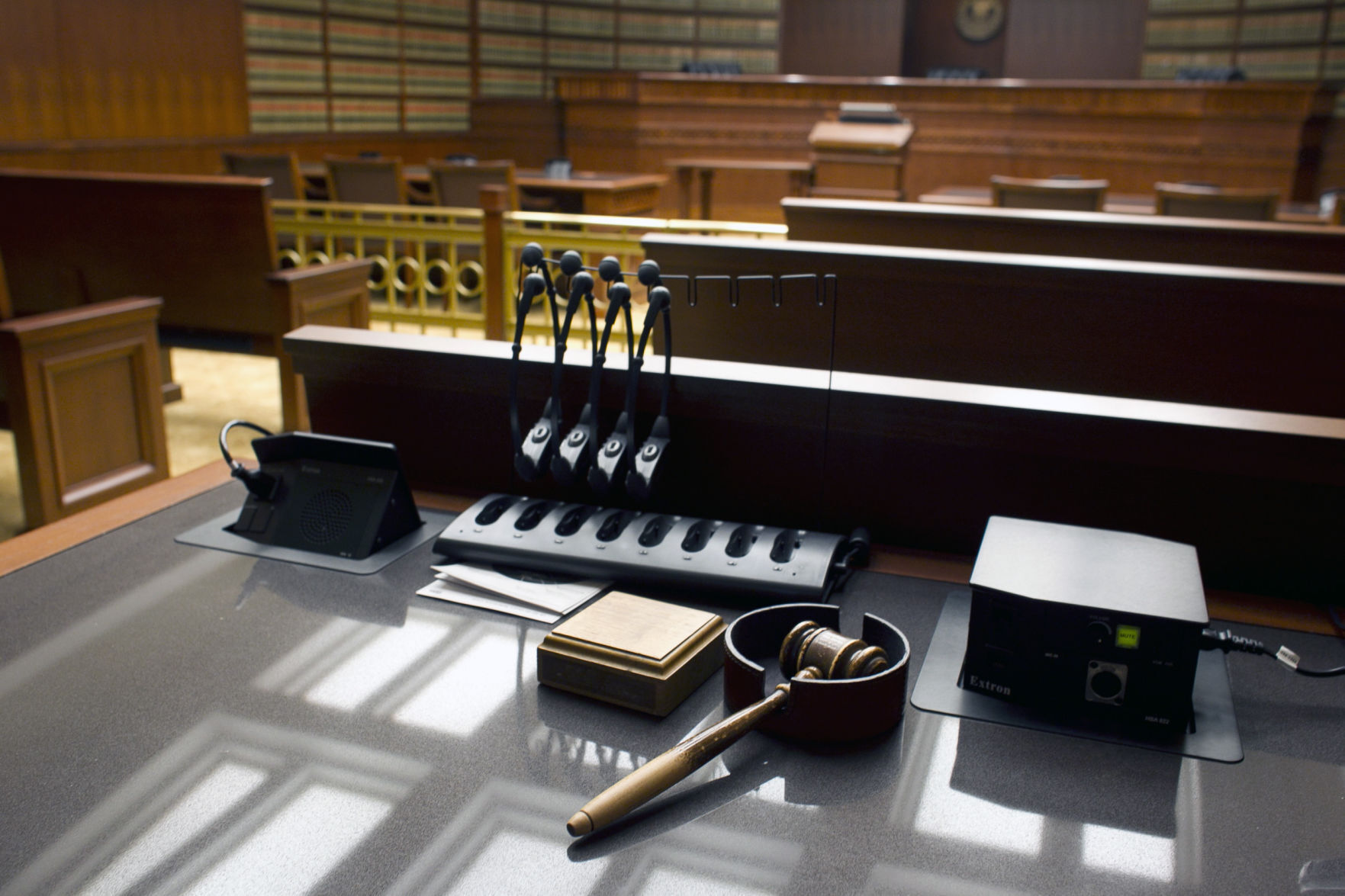
An Arapahoe County judge mistakenly accepted the prosecution’s non-racial reason for excusing at least two people of color from a Black defendant’s jury pool, the Court of Appeals decided by a 2-1 vote, reversing the man’s convictions and ordering a new trial.
The appellate panel’s majority concluded a prosecutor’s move to strike two non-white jurors for their answer to a question, while letting a white juror who expressed virtually the same sentiment remain in the pool, violated established legal guidelines prohibiting race-based dismissal of jury members.
The court’s ruling, however, was “not the same as concluding that the strike was motivated by racial animus or prejudice on the prosecutor’s part,” cautioned Judge Anthony J. Navarro in the majority opinion issued on Thursday.
Derek Ramon Robinson is serving a sentence of 48 years in prison after a jury convicted him in 2016 of the attempted murder and assault of his then-girlfriend. During jury selection, the unnamed prosecutor dismissed three prospective jurors of color. The appellate court identified them as Juror N, who appeared to be Asian American; Juror V, who appeared Hispanic; and Juror S, who appeared to be of “Indian descent.”
Robinson, who is Black, raised a “Batson challenge” following their dismissals. The legal procedure is named after the 1986 U.S. Supreme Court decision in Batson v. Kentucky, in which a majority of the justices deemed it unconstitutional to exclude people from serving on a jury because of their race.
Under the Batson procedure, the defendant must state a sufficient claim that the prosecution dismissed a person for racial reasons. Prosecutors need to then offer a race-neutral reason for their actions. Finally, the trial court judge must determine whether purposeful discrimination had likely occurred.
During the process of interviewing jurors, known as voir dire, the prosecutor in Robinson’s case posed a question to multiple jurors: If the state had proved what it needed to legally beyond a reasonable doubt, but a juror still had lingering questions about a case — like the color of car the suspect was driving — would the juror still be able to find the defendant guilty? Juror S and Juror V both indicated they would hesitate to declare guilt in that scenario.
After the defense made its Batson challenge, but before the prosecution could offer a non-racial explanation for dismissing Juror S and Juror V, District Court Judge Natalie T. Chase interjected her own explanation.
“[H]e was not willing to follow the reasonable-doubt standard,” she said, speaking of Juror S. “In fact, he made several statements that I even highlighted in here about reasonable doubt and … if he thought that fact was necessary he would not follow the beyond-a-reasonable doubt instruction.”
The prosecutor, in his answer, adopted the judge’s reasoning as his own for Juror S and Juror V. In weighing the credibility of each side’s argument, Chase denied Robinson’s Batson challenge, citing the jurors’ equivocation on the hypothetical car color example.
Of Juror S, Chase said it was “highlighted on my sheet he was not able to follow reasonable doubt. I’m seeing that there is a race-neutral reason.” She gave the same justification for Juror V as well.
A majority of the three-member Court of Appeals panel disagreed with Chase’s findings, and stated that Chase had erred by providing her own non-racial reason for the dismissals before the prosecutor could state his. Such an explanation “was the prosecutor’s alone to give,” wrote Navarro.
Ultimately, the panel’s majority decided Chase should have upheld Robinson’s challenge to the dismissal of Jurors S and V because of the prosecution’s interaction with a white woman whom they did not seek to excuse. During questioning, the woman, identified as Juror D, brought up the hypothetical car color example and volunteered, “you know, some details are a whole lot more important than others.” The prosecutor did not ask any follow-up questions, despite Juror D’s response being similar to the jurors of color.
“The disparate treatment between Jurors S and V, on the one hand, and Juror D, on the other, is concerning because the prosecutor identified no other race-neutral reason for striking Jurors S and V” besides those jurors’ stated discomfort over certain details, Navarro wrote.
The panel’s majority reversed Robinson’s convictions and ordered a new trial. They did not weigh in on the dismissal of Juror N, the Asian-American member of the pool, whom the prosecution claimed it excused because the juror seemed to have difficulty understanding English.
The panel also noted it did not matter that the dismissed jurors were of a different race than Robinson, or that one Black person ultimately did serve on his jury. The court pointed to a 2005 opinion from former U.S. Supreme Court Justice David H. Souter, in which he suggested prosecutors may accept one Black juror as a tactic to “obscure the otherwise consistent pattern of opposition to seating one.”
Tristan Gorman, the legislative policy coordinator with the Colorado Criminal Defense Bar, said there is a failure in the criminal justice system to recognize implicit bias and systemic racism, even when no one displays outwardly biased intentions. She described being a defense attorney participating in jury selection, seeing the number of people of color slowly dwindle throughout the process.
“Of course, no prosecutor is getting up there and outright saying, ‘I am striking this person because of their race.’ But there is always some sort of alternative rationale for dismissing a juror of color, and it takes place in coded language which may not be conscious in the prosecutor’s mind,” Gorman said. “I think what we need to spend less time looking at is the intent, and more time looking at the outcome.”
The three appellate judges reviewing Robinson’s case took the unusual step of authoring their own opinions. Judge Jerry N. Jones emphasized in a concurring statement that the court’s ruling did not mean the prosecutor had acted out of racial motivations.
“Whether the prosecutor was actually motivated by, for example, racial animus is often impossible to know,” Jones explained. “But the Batson test creates guardrails deemed necessary to ensure that prospective jurors aren’t excluded for impermissible reasons; it seeks to ensure equal protection of the laws.”
Judge David H. Yun disagreed that Jurors S, V and D had offered identical views about the importance of extraneous details in their decisions whether or not to convict. Whereas Jurors S and V had said a fact like the color of the suspect’s car might cause them to hesitate, even if that detail was not an essential part of the crime, the white juror’s thoughts on the matter were unclear from the court record.
“I find it difficult to conduct a meaningful comparison because the prosecutor did not ask, and Juror D did not express any opinion, about whether she would have difficulty reaching a guilty verdict if the prosecution did not prove the color of the car,” Yun wrote. “To the contrary, she later agreed that she would follow the law as instructed by the court.”
The opinions in Robinson’s case were unpublished, meaning the Court of Appeals did not intend for its decision to set a precedent for future cases.
John Kellner, the district attorney for the 18th Judicial District whose office originally handled the case, said on Friday that the panel’s statements “highlight how close a call and nuanced opinion this really is. We’re going to review the order and confer with the Attorney General’s office about filing a motion to reconsider or appealing to the Supreme Court.”
The case is People v. Robinson.

10th Circuit rejects ‘penalty’ for children of naturalized citizens seeking visas
Michael Karlik
michael.karlik@coloradopolitics.com
Updated 44 minutes ago
The Denver-based federal appeals court joined three of its peers earlier this month and determined the child of a newly naturalized U.S. citizen is not moved to a longer visa line as a result of his parent gaining citizenship, and...
Appeals court recognizes longer window to sue insurers for withholding policy details
Michael Karlik
michael.karlik@coloradopolitics.com
Updated 6 hours ago
Colorado’s second-highest court split with its own prior decision earlier this month and concluded injured motorists have two years, not one, to sue insurance companies for withholding relevant information about an at-fault driver’s policy. In 2019, Colorado lawmakers enacted a measure to...

Appeals court decides free speech cases, error-prone judge reversed again | COURT CRAWL
Michael Karlik
michael.karlik@coloradopolitics.com
Updated 8 hours ago
Welcome to Court Crawl, Colorado Politics’ roundup of news from the third branch of government. The state’s Court of Appeals decided multiple cases implicating free speech rights, plus Colorado’s most error-prone judge was reversed on appeal yet again. Heard on...
Federal judge dismisses claims against medical contractor for Eagle County jail suicide
Michael Karlik
michael.karlik@coloradopolitics.com
Updated 3 days ago
A federal judge dismissed the claims against a medical contractor for the Eagle County jail and its employees earlier this month, concluding there were insufficient allegations that they violated the constitutional rights of a man who died by suicide in...
Federal judge advances lawsuit seeking overtime compensation for Aurora firefighter trainees
Michael Karlik
michael.karlik@coloradopolitics.com
Updated 3 days ago
A federal judge gave preliminary approval earlier this month to a class of Aurora firefighter trainees who may sue the city over allegations that they were denied overtime pay in violation of federal law. Joseph Elias, who attended Aurora’s fire...
Appeals court says jury not obligated to apply discounts to determine value of stolen merch
Michael Karlik
michael.karlik@coloradopolitics.com
Updated 3 days ago
Colorado’s second-highest court concluded on Thursday that it was up to a Douglas County jury to determine the value of stolen merchandise at a defendant’s theft trial, after both sides presented different estimates of the items’ value. Under state law,...
Public figures have limited path to sue over accusations of criminality, says appeals court
Michael Karlik
michael.karlik@coloradopolitics.com
Updated 3 days ago
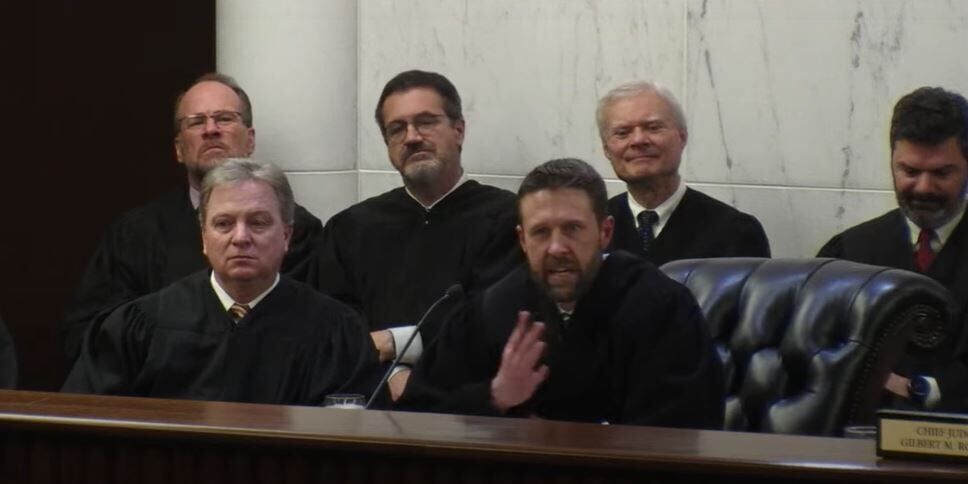
Colorado’s second-highest court ruled last week that a public figure cannot sue for defamation solely because a person publicly accuses them of committing a crime, as the statement may be constitutionally protected opinion. A three-judge Court of Appeals panel narrowed...
Federal judge to consider sanctioning ex-Colorado judicial discipline director
Michael Karlik
michael.karlik@coloradopolitics.com
Updated 4 days ago
A federal judge ordered Colorado’s former head of judicial discipline on Wednesday to explain why she should not sanction him for making inaccurate statements about the defendants in his lawsuit against the Colorado Supreme Court and related entities. U.S. District...
Federal judge green-lights trial against Denver officer over race-based enforcement
Michael Karlik
michael.karlik@coloradopolitics.com
Updated 3 days ago
A federal judge green-lit a jury trial last week on a man’s claim that a Denver police officer engaged in racially selective enforcement of the law by arresting him for video recording at a police station, while not arresting a...
Federal judge says 8 years in solitary confinement not grounds to reduce man’s sentence
Michael Karlik
michael.karlik@coloradopolitics.com
Updated 5 days ago
A federal judge concluded earlier this month that a man’s eight years allegedly spent in solitary confinement did not justify granting his request for a sentence reduction. However, U.S. District Court Senior Judge William J. Martínez signaled his willingness to...
PREV
PREVIOUS

Highlands Ranch physician indicted after allegedly stealing nearly $300,000 in COVID relief funds
A Highlands Ranch doctor has been indicted on federal charges that he stole nearly $300,000 from three different COVID relief funds, the U.S. Department of Justice announced Thursday afternoon. Francis F. Joseph, 56, is facing four federal charges: one for embezzlement related to health care; a second for stealing federal money; a third for wire […]

Rural hospital not required to accommodate blind employee's transportation, court rules
A woman who went blind and had difficulty commuting to the Eastern Plains hospital where she worked was not entitled to a flexible work schedule under the Americans with Disabilities Act, the federal appeals court based in Denver ruled on Thursday. Joan Unrein, a former clinical dietician with Colorado Plains Medical Center in Fort Morgan, […]