

Title Board to rehear animal cruelty measure, consider 4 others
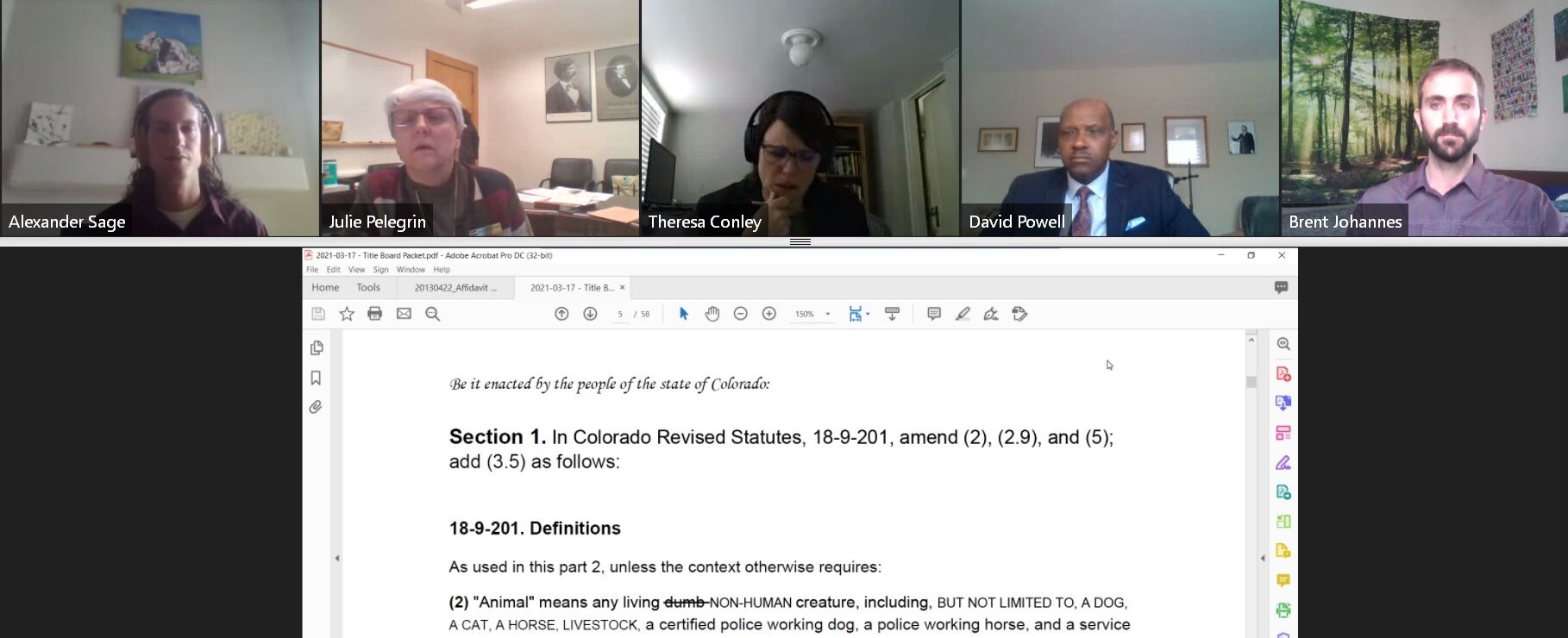
Proposed ballot initiatives pertaining to out-of-school learning opportunities and the spending of certain state funds are scheduled before the Title Board on Wednesday, as is a reconsideration of the board’s decision to grant a title to an animal cruelty measure.
In March, the three-member board advanced Initiative #16, which seeks to expand animal cruelty protections to livestock, place conditions around the slaughter of animals and add new elements to the definition of “sexual act with an animal.” The board received two separate requests to review that decision from individuals arguing the ballot initiative does not adhere to a single subject and the ballot title is misleading.
“The measure’s Proponents stated that the single subject is…’the removal of the exemption that livestock has in the animal cruelty statutes,’ ” wrote one set of six objectors. “The Proponents nonetheless included a second subject within the measure: redefinition of ‘sexual act with an animal.’ These subjects are not ‘necessarily connected’ but are logically distinct and separate issues.”
In deciding whether to set a ballot title to appear before voters, the Title Board must ascertain that the proposal encompasses a single subject and, if so, grant a title that is brief yet encompasses all central features of a measure. Initiative #16, also known as Protect Animals from Unnecessary Suffering and Exploitation (PAUSE) has a stated goal of giving the same protections to farm animals as the law currently provides to pets.
The objectors, represented by Denver attorney Mark G. Grueskin, also claimed the words “cruelty to animals” in the measure’s title constituted a catchphrase intended to appeal to voters’ emotions, and that “sexual act with an animal” likewise is a “socially and politically loaded phrase.”
A second group of more than one dozen people also submitted a request for reconsideration, similarly asserting the initiative covered more than one subject. Specifically, the objectors believed the measure would also change the practice of veterinary medicine by prohibiting certain practices such as spaying, neutering, artificial insemination and breeding.
The objectors construed the ban against sexual acts with an animal to encompass those healthcare procedures. The measure defines sexual act to include any intrusion, “however slight,” into an animal’s anus or genitals with an object or body part.
The meeting will also encompass four other measures, three of which board members have already seen in slightly different forms during the 2021-2022 election cycle. Two proposals, Initiatives #23-24, would amend the constitution and Colorado law to restructure the state’s direct democracy process, and Initiative #25 would raise marijuana taxes and divert state land revenue to create a Learning Enrichment and Academic Progress Program for out-of-school instruction and enrichment.
Finally, the board will hear anew Initiative #19, which would provide authority over custodial funds to the General Assembly, rather than the direction of the executive branch. Custodial funds are not tax-generated, and which the state holds for particular purposes. Pension funds and court-approved settlements are examples of such money.
Among the 49 questions the Office of Legislative Legal Services and Legislative Council Staff raised upon reviewing the initiative, analysts were unclear whether, should voters approve the measure, state agencies could use federal money received until the legislature acts.
For instance, in the case of the Department of Health Care Policy and Financing, which makes Medicaid reimbursements to healthcare providers, “This may lead to a disruption of services or federal payments,” OLLS wrote.



Republican Victor Marx taps George Markert as his lieutenant governor pick in Colorado’s gubernatorial race
Ernest Luning
ernest.luning@coloradopolitics.com
Updated 2 days ago
Colorado Republican gubernatorial nominee Victor Marx named George Markert, a retired Marine colonel, as his running mate for lieutenant governor Friday morning, saying the former U.S. Senate candidate will bring “exceptional character, proven leadership and a lifetime of serving others”...
Democrat Jessica Killin’s internal poll shows dead heat with U.S. Rep. Jeff Crank in Colorado’s 5th CD
Ernest Luning
ernest.luning@coloradopolitics.com
Updated 3 days ago
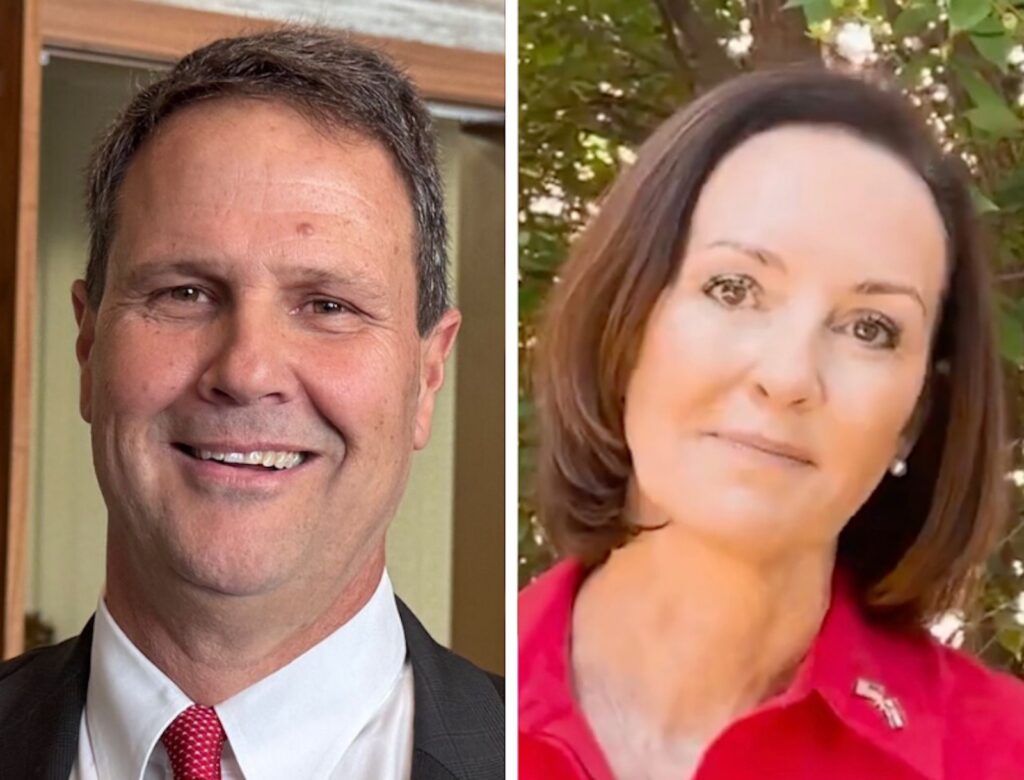
Jessica Killin, the Democratic nominee in Colorado’s 5th Congressional District, is in a statistical tie with Republican U.S. Rep. Jeff Crank, according to an internal poll released this week by Killin’s campaign. The poll of likely general election voters, conducted...
Victor Marx says he’ll only debate Phil Weiser once in Colorado governor’s race — without a moderator
Ernest Luning
ernest.luning@coloradopolitics.com
Updated 3 days ago
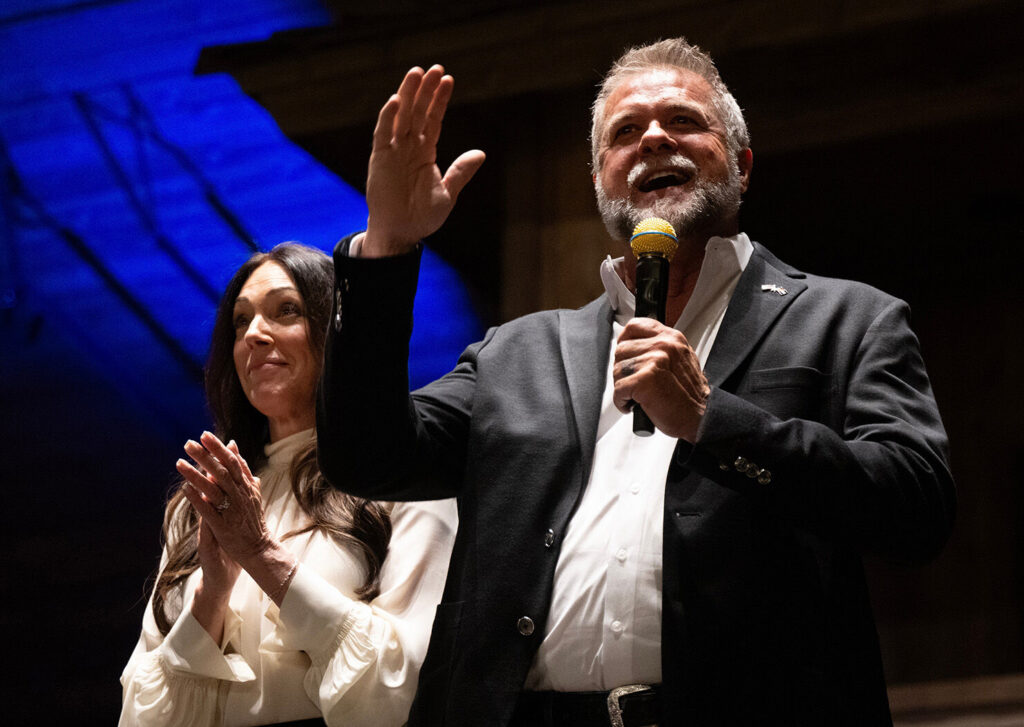
Colorado Republican gubernatorial nominee Victor Marx said on Tuesday that he will participate in only one debate with Attorney General Phil Weiser before the November election — and he challenged the Democratic nominee to hold the event without a moderator....
Independent gubernatorial candidate Greg Lopez, a former GOP congressman, qualifies for Colorado ballot
Ernest Luning
ernest.luning@coloradopolitics.com
Updated 5 days ago
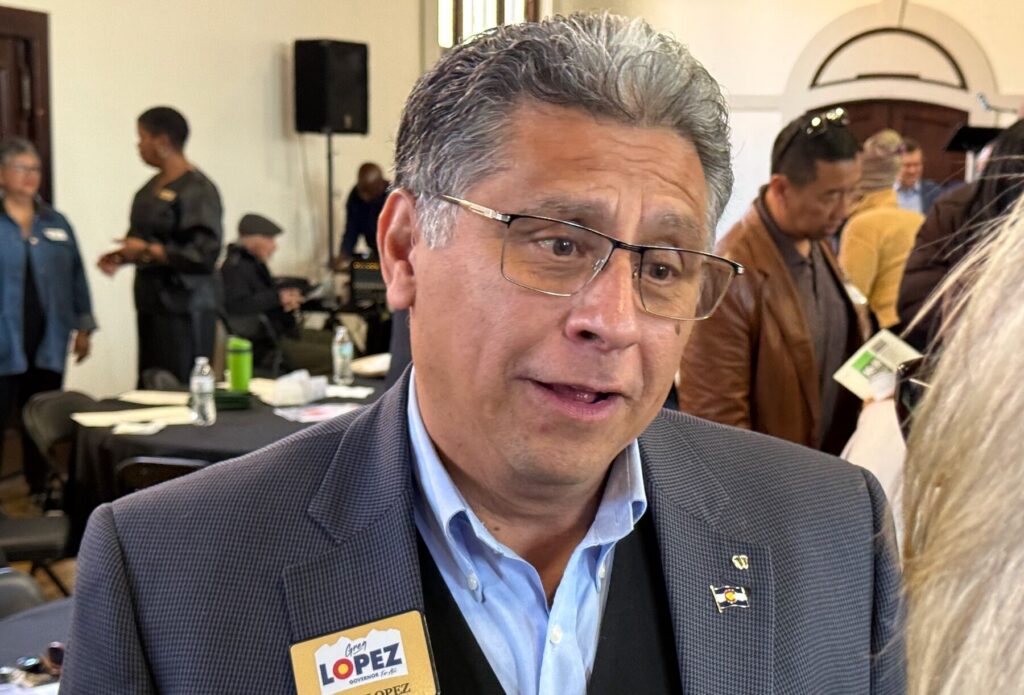
Unaffiliated gubernatorial candidate Greg Lopez, a former Republican congressman from Elizabeth who left the GOP to run as an independent, has qualified for the ballot by submitting enough petition signatures, the Colorado Secretary of State’s Office said Tuesday. He’ll face...

Surprise candidate Shimon Blau cleared to face off against Melat Kiros in November
Ernest Luning
ernest.luning@coloradopolitics.com
Updated 1 week ago
Unaffiliated congressional candidate Shimon Blau, a Denver doctor, has qualified by petition for the general election in Colorado’s 1st District, where Democrat Melat Kiros defeated 15-term U.S. Rep. Diana DeGette in last month’s primary, the Colorado Secretary of State’s Office...
Victor Marx, GOP candidate for governor, faces 100-plus campaign finance complaints
Marianne Goodland
marianne.goodland@coloradopolitics.com
Updated 6 days ago
Victor Marx’s gubernatorial campaign has been hit with more than 140 campaign finance complaints, although most have been consolidated by the state’s election office because they follow similar alleged violations. Marx faces Attorney General Phil Weiser, who won the Democratic...

Jefferson County to fill commissioner vacancy after Dahlkemper tapped for lieutenant governor
Matt Kyle
matt.kyle@denvergazette.com
Updated 1 week ago
Democratic gubernatorial nominee Phil Weiser on Wednesday announced that Jefferson County Commissioner Lesley Dahlkemper would be his lieutenant governor, meaning she would be leaving her commissioner seat open should he win the race in November. However, Dahlkemper’s term was already...
Democrat Phil Weiser names Jeffco Commissioner Lesley Dahlkemper as his gubernatorial running mate
Ernest Luning
ernest.luning@coloradopolitics.com
Updated 2 weeks ago
Colorado Attorney General Phil Weiser, the Democratic nominee for governor, on Wednesday named Jefferson County Commissioner Lesley Dahlkemper to be his lieutenant governor running mate in the general election. Calling her “someone who can be a governing partner,” Weiser said...
Democrat John Hickenlooper hauls in $1.3 million in 2nd quarter in Colorado’s U.S. Senate race
Ernest Luning
ernest.luning@coloradopolitics.com
Updated 2 weeks ago
U.S. Sen. John Hickenlooper’s reelection campaign raised just over $1.3 million in the year’s second quarter and finished the period with $2 million in the bank, leaving the first-term Democrat with nearly 80 times as much cash on hand as...

Campaign launched to redirect $1 billion in TABOR refunds to education
Marissa Ventrelli
marissa.ventrelli@coloradopolitics.com
Updated 2 weeks ago
A coalition that includes the state teachers’ union on Tuesday launched a campaign for a ballot proposal that would reduce more than $1 billion in taxpayer refunds and spend the money on education. The measure is among several campaigns taking...
PREV
PREVIOUS

Denver landed All-Star Game thanks to Polis' and Hancock's hustle, but voting laws not a major draw
It was no accident that Denver’s Coors Field landed this summer’s All-Star Game after Major League Baseball pulled the event from Atlanta over recent changes to Georgia’s voting laws. But the feat had more to do with preparation and hustle — and possibly the Mile High City’s high, dry air — than the state’s election […]

MUNICIPAL ELECTION ROUNDUP | Voters approve 11 of 12 ballot questions
Voters in four Colorado cities on Tuesday overwhelmingly passed local ballot questions put before them, voting to approve 11 of the 12 ranging from a tax increase to a ban on large grocers providing disposable plastic bags. Unofficial results from the April 6 election show the latter of those ballot questions, the plastic bag ban, […]