

Bill to privatize Pinnacol Assurance goes down in flames
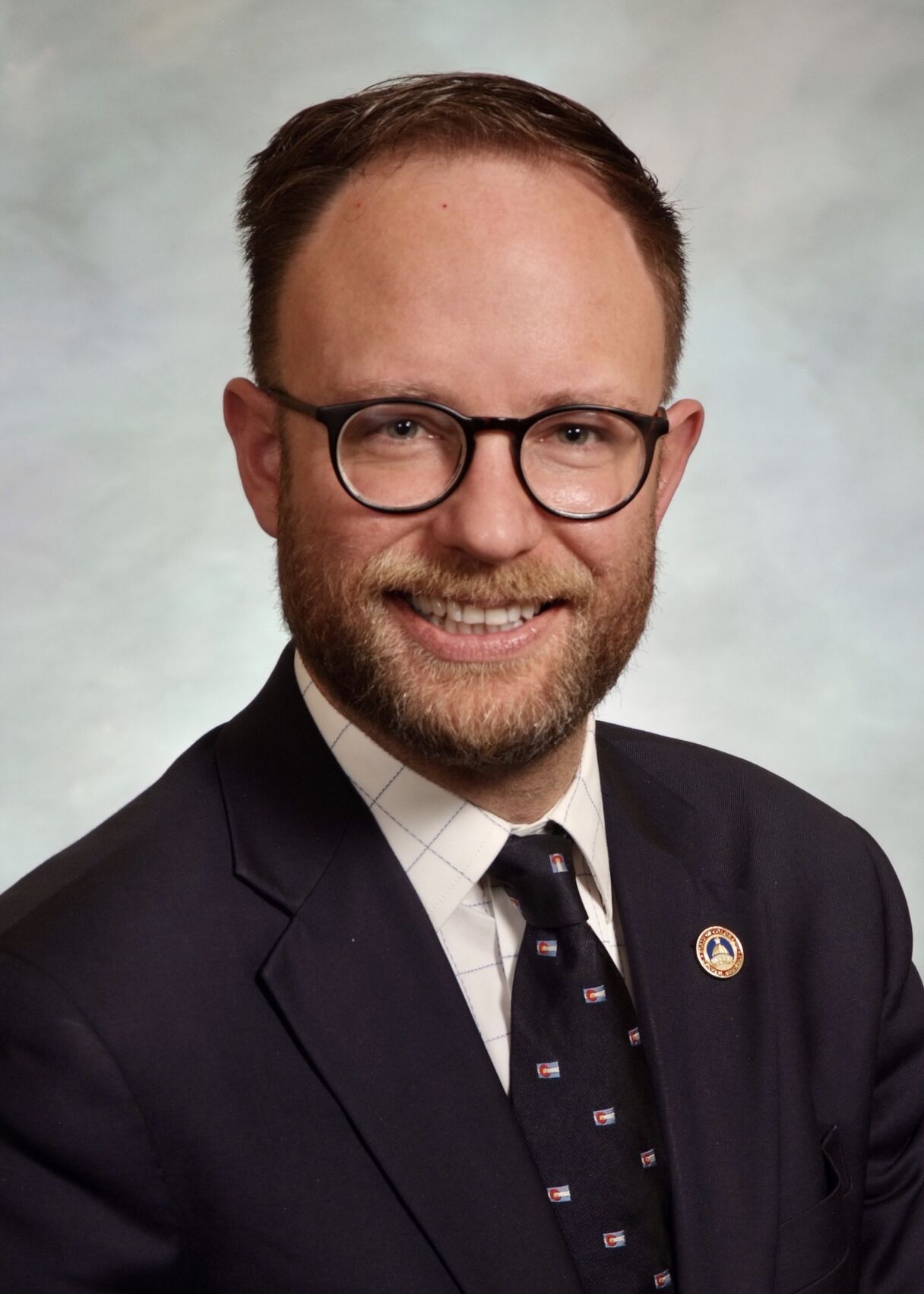
When a bill can’t get support from a member’s own caucus, you know something isn’t quite right.
That’s what happened Monday to House Bill 1213, sponsored by Rep. Matt Soper, R-Delta. The bill to “disaffiliate” Pinnacol Assurance from the state was reviewed by the House State, Civics, Military and Veterans Committee and got one vote in support and 10 against. That included “no” votes from three of the four committee Republicans.
House Bill 1213 sought to separate from the state Pinnacol Assurance, the state’s workers compensation insurer of last resort since 1915, which currently provides coverage to 56,000 member companies in Colorado.
The company was a state agency until 2002, when it became a political subdivision of the state, meaning the governor appoints the board, its employees are members of the state’s pension plan, and it remains the insurer of last resort, meaning they must insure anyone. On the private side, Pinnacol is required to operate like a mutual insurance company. However, where it differs is that policyholders don’t own or control the company; it can only offer workers compensation insurance and only in Colorado.
Pinnacol was in favor of the bill, as were a number of county commissioners who saw it as a way forward on transitioning workers from coal mines to new jobs outside of the mining industry.
The bill would have provided the very first real money for the Office of Just Transitions, which came from a 2019 bill that called for creation of a transition plan to assist communities and workers whose coal-related industries and jobs “are subject to significant economic transition.” The 2019 bill identified nearly 2,000 workers who would need transition assistance.
But HB 19-1314, sponsored by then-Speaker of the House KC Becker, D-Boulder, said that plan would be funded with gifts, grants and donations. That was in a year when the state was flush with funds. Programs funded with gifts, grants and donations generally see little if any money.
A stimulus proposal from Gov. Jared Polis and legislative leaders, announced two weeks ago, would have set aside $10 million to $15 million for the just transition and economic diversification. A report from an advisory committee in the Office of Just Transitions estimated they would need as much as $150 million to assist those moving out of coal jobs, Soper told the state affairs committee. Three mines have or are closing in his district, and last week, a school board decided to close one of the area high schools, which Soper said is a direct result. Families are leaving the area, Soper said.
For coal miners who need training for other jobs, they need that help now, not in two or three years, he added.
Soper’s bill would have directed $305 million toward controlled maintenance as well as the just transition program. That’s the tax revenue Pinnacol would have paid to the state and is the cost of separating the company from the state, according to Soper.
Efforts to privatize Pinnacol have been ongoing for 20 years.
The big difference with the 2021 bill, however, is that it was backed by Pinnacol and some of the business organizations that have opposed privatization in the past. Even a member of the just transition advisory committee supported the bill. “It’s a very thoughtful approach,” Soper said. The bill ensures Pinnacol pays its fair share and can still have enough in reserve to maintain its top ratings. The company gets the freedom to sell across state lines and to sell more than one product.
Despite the support from Pinnacol and business organizations, HB 1213 was opposed by AFL-CIO and other unions, as well as attorneys who advocate for workers in workers compensation claims. In a Democratic-controlled committee, that was enough to kill it.
Those against the bill said disaffiliating Pinnacol could result in no one wanting to be the insurer of last resort (Pinnacol CEO Phil Kalin said the company would vie to continue in that role). Privatization is a solution in search of a problem, said Royce Mueller of the Workers Compensation Education Association, a nonprofit of 100 lawyers who represent injured workers.
Representing unions, Dennis Daugherty of AFL-CIO objected to losing state oversight over Pinnacol. He also raised questions about the valuation of Pinnacol, who conducted the valuation and who paid for it. “We need to focus on improving the current workers comp system” rather than disaffiliating Pinnacol. “This would turn our workers comp system upside down.”
As to the Just Transition program, which was backed by the unions in 2019, Mueller said the money from HB1213 is one-time and would not support ongoing programs.
Kalin said as the years go by, fewer and fewer Colorado companies are using Pinnacol and that means fewer Colorado workers are under the protection of Pinnacol. The company covers about one million workers, about 30% to 40% of the workforce. Kalin said many opposed to HB 1213 believe the company’s stellar performance is because of state oversight, but the limitation put on Pinnacol by the state is strangling the company, he said, driving businesses to out of state companies.
Christian Reece, executive director of Club 20, said that despite the Office of Just Transition being set up two years ago, it’s never had any funding identified to support the programs it’s been asked to provide to coal-impacted communities and workers.
Two members of the Just Transition advisory committee, past and present, also testified in favor of HB 1213. Commissioner Melody Villard of Moffat County, a current member, told the committee that while ag is strong, half of the existing energy tax base – which comes from the energy industry tax revenues – will be gone in 10 years. Those energy companies fund the schools, community college, hospital and fire department, among other services that are the backbone of the county. The Just Transition team is without significant funding to see to completion any of its goals, she said. Former committee member Ray Beck, formerly a Moffat County Commissioner, said Just Transition would likely entail significant costs, such as investments for local economic growth. Lack of funding in a time of significant economic uncertainty is among the most challenging parts of the advisory committee’s work, Beck said.
But even Republicans on the committee, while thinking the bill was a good idea, thought it wasn’t quite the right solution and that the timing wasn’t right. Rep. Dave Williams, R-Colorado Springs, told Soper he was in favor of having the state divest its interest in exchange for fair payment. But his biggest concern is where the money would be sent, to the Just Transition program and to controlled maintenance.
While Soper said during the hearing that he held a robust stakeholder process, he also told Colorado Politics after the hearing that there were some opposed to the bill whose views he didn’t know about until the hearing.
Soper, however, is philosophical about the bill’s defeat, telling Colorado Politics that this process “is the beginning, not the end,” and that he will come back again next year, with more time spent reviewing the concerns raised by opponents.


10th Circuit rules cognitively impaired man’s risk of lobotomy, mistreatment in Mexico not ‘torture’
Michael Karlik
michael.karlik@coloradopolitics.com
Updated 10 hours ago
The Denver-based federal appeals court concluded last month that a man’s risk of mistreatment or forced lobotomy in his native Mexico did not amount to “torture” that should shield him from deportation. A three-judge panel of the U.S. Court of...
Colorado justices side with news organizations for disclosure of high-level child abuse data
Michael Karlik
michael.karlik@coloradopolitics.com
Updated 14 hours ago
The Colorado Supreme Court ruled on Monday that the state must disclose the number of child abuse reports at individual group living facilities in response to an open records request, as the addresses are already in the public domain. The...
Divided Colorado Supreme Court finds Denver detective did not violate defendant’s Miranda rights
Michael Karlik
michael.karlik@coloradopolitics.com
Updated 10 hours ago
The Colorado Supreme Court determined on Monday that a Denver detective did not improperly resume questioning of a defendant in custody after he invoked his right to counsel. By 4-3, the justices reversed a trial judge’s order that found a...

Colorado Gov. Polis signs social media warrant bill after last year’s veto
Marissa Ventrelli
marissa.ventrelli@coloradopolitics.com
Updated 11 hours ago
Colorado law enforcement will soon have faster access to digital evidence after Gov. Jared Polis signed a pared‑down bill requiring social media companies to acknowledge and respond to search warrants on a tight timeline, a shift from a broader proposal...
Under fire from legislators and critics, Colorado’s top Medicaid official resigns
Marianne Goodland
marianne.goodland@coloradopolitics.com
Updated 14 hours ago
Colorado’s top Medicaid official stepped down on Monday, just as a bipartisan bloc of state senators prepared to formally urge Gov. Jared Polis to remove her over what they called years of mismanagement, waste and costly errors inside the state’s...

Usha Vance launches story time podcast in latest second lady venture
Asher Notheis, Washington Examiner
asher.notheis.washington.examiner@gazetteedit.wpenginepowered.com
Updated 20 hours ago
Second lady Usha Vance unveiled her new story time podcast of reading children’s stories on Monday. The podcast, Storytime with the Second Lady, features either her reading books or inviting a special guest to read, and is part of her...

Out-of-state judges address ex-discipline director’s lawsuit, Colorado justices accept federal invitation | COURT CRAWL
Michael Karlik
michael.karlik@coloradopolitics.com
Updated 22 hours ago
Welcome to Court Crawl, Colorado Politics’ roundup of news from the third branch of government. A pair of out-of-state judges got down to business in a lawsuit brought by Colorado’s former judicial discipline director, plus the state Supreme Court has...
Power grid shutdowns in Colorado bring protection — and problems
Scott Weiser
scott.weiser@gazette.com
Updated 11 hours ago
A downed power line in Sunshine Canyon in the mountains west of Boulder in December posed an electrocution risk to firefighters and bystanders after Xcel Energy re-energized it without repairing it, despite being notified of the break the day before....
Aurora wildland fire contained at Buckley Space Force Base
Nicholas Fogleman
nicholas.fogleman@denvergazette.com
Updated 22 hours ago
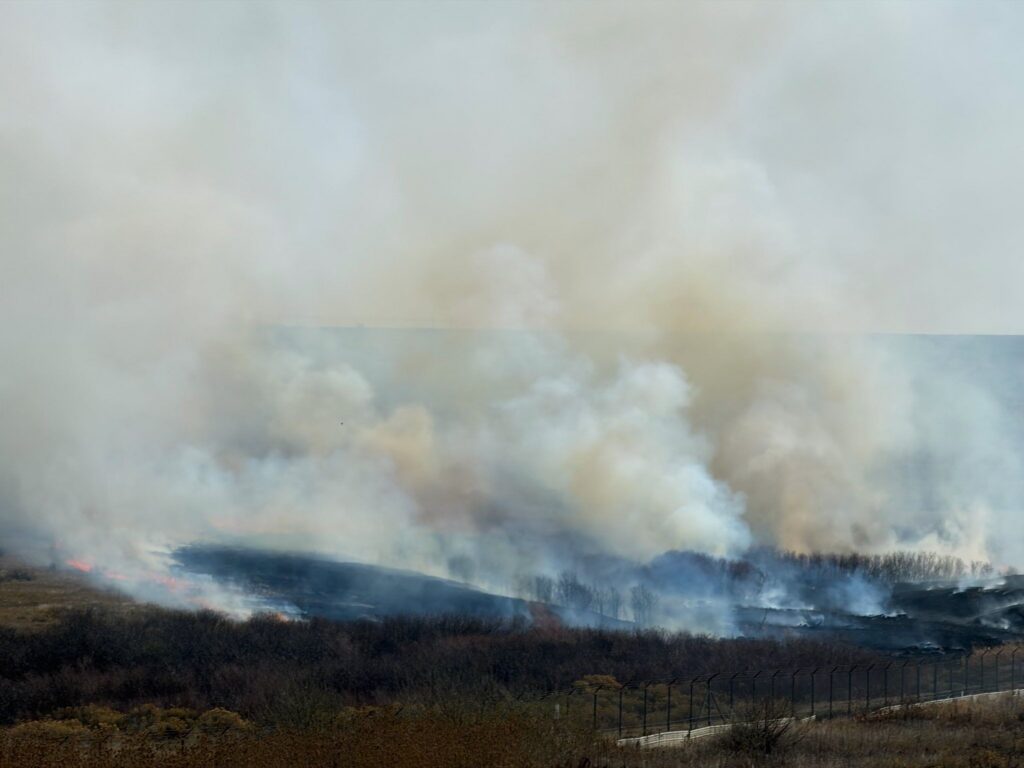
A wildland fire burned Sunday morning on the southwest end of Buckley Space Force Base in Aurora, authorities said. The fire no longer posed a threat and crews were clearing the scene as of 10:53 a.m., according to Aurora Fire...

Unsustainable: How Colorado’s Medicaid spending exploded
Nico Brambila
nico.brambila@denvergazette.com
Updated 24 hours ago
The state’s Medicaid program — which covers about one in four Coloradans — is poised for its largest single-year jump in at least two decades, with officials proposing a $2.3 billion increase, even as lawmakers face a $1.5 billion budget...
PREV
PREVIOUS

Applications drop for Daniels Fund, which announces 2021 scholarship winners
Applications for this year’s Denver-based Daniels Fund scholarship dropped by several hundred over last year, a change officials believe is related to the COVID-19 pandemic. The private charitable foundation has “no definitive prognosis” for the decline but “we would expect a big part of that was probably due to COVID,” fund spokesman Bruce Wilmsen said. […]
Polis told business owners that Colorado would largely end state-level restrictions by mid-April
Colorado officials will end the state’s top-down approach to COVID restrictions in the next three to four weeks, Gov. Jared Polis told restaurant owners Sunday, under a plan that would give authority to individual counties to determine what, if any, health care measures would be in place. Two restaurant owners on the call described Polis’s […]