

State proposal would end mask mandate for Colorado counties with low levels of COVID spread

Colorado’s mask mandate may soon no longer apply to counties with low incidence levels of COVID-19, under a proposal released Friday evening by the state health department.
Proposed changes to the state’s so-called coronavirus dial would leave masking decisions up to local leaders or to “private entities” in counties that qualify for Level Green, the least restrictive level on the dial. The exception: students between the ages of 11 and 18, who must continue to mask through the rest of this school year.
The dial has six levels generally based on incidence of COVID-19 in counties: green (least restrictive), blue (caution), yellow (concern), orange (high risk), red (severe risk), and purple (extreme risk). Purple equates to a localized “stay at home order,” as the state saw last spring.
Currently, counties must have fewer than 15 cases per 100,000 in a week to qualify for Level Green. Under proposed the proposed criteria, counties with as many as 35 cases could qualify as Level Green.
For counties in the other categories – with the exception of the highest level of restrictions – the mask mandate “remains in place for all indoor public places with 10+ people.”
The change would end nearly all restrictions under Level Green. There would be no state-mandated capacity caps for restaurants, personal services providers, retailers, manufacturers, health care providers or outdoor events. Last call for alcohol sales would be subject to local restrictions, as would those capacity decisions.
The state would no longer limit the size of personal gatherings and will instead follow “CDC’s guidance on personal gatherings,” according to the state’s Friday night announcement.
“The CDC still strongly recommends avoiding larger gatherings and crowds to prevent the spread of COVID-19,” the state Department of Public Health and Environment wrote.
Under this proposed plan, the remaining Level Green restrictions would still include capacity caps on gyms, bars and indoor events.
For counties in Level Blue, the next-to-lowest level of restrictions, bars would also be able reopen with a capacity limit of 75%. Similar caps for retail businesses, offices and non-critical manufacturing facilities would also be increased to 75%, from 50%.
Currently, only two Colorado counties are in Level Green: Crowley and Otero. Most of the remaining counties – all but 16 – are currently in Level Blue. In the metro area, Denver, Adams, Douglas, Boulder and Broomfield counties are all in Level Yellow, with the remainder currently blue.
The state is seeking feedback on this new dial, but input will only be accepted until noon Monday. That short window, and the weekend release of a significant change to COVID policy, mirrors the approach taken by the state when it last announced changes to its dial last month.
“Because of the commitment of all Coloradans, we are where we are now, able to be less restrictive and provide local communities and their public health agencies more control while still protecting the public’s health,” Jill Hunsaker Ryan, the executive director of the state health department, said in a statement.
“It’s all about a balance. We’ve enacted the restrictions we need to slow the disease while attempting to limit the ramifications of closing down parts of the state and the impacts that come with that.”
This latest tweak to the state’s COVID dial comes as the country has significantly stepped up its vaccination distribution efforts. On Friday, Colorado opened up vaccine eligibility to as many as 2.5 million residents from across industries, ages and medical conditions. In roughly a month, the state will then open eligibility up to its entire population, weeks ahead of the schedule first established in December.
In recent weeks, Gov. Jared Polis has repeatedly suggested that the mask mandate was nearing the end of its usefulness, though he has not been concrete on timelines or tweaks. He has said that the “majority” of Coloradans won’t be wearing masks this summer, and he and others have begun to couch the use of face coverings in the near future as a personal choice, rather than a requirement.
In its statement announcing the change, the state health department said the proposal reflects “the increasing number of Coloradans who have received a COVID-19 vaccine,” particularly the state’s oldest residents. Nearly 80% of the state’s 70-and-older population has been vaccinated; that age group accounts for a bulk of deaths and a plurality of hospitalizations. Polis has repeatedly touted that specific vaccine push as the end of the “crisis” part of the pandemic.
“The state’s role in continuing to mandate statewide restrictions is lessening,” the health department wrote, “and the role of local communities to regulate and manage the virus is increasing.”
By mid-April, when vaccines are available to the entire state, the health department plans to move even further away from top-down guidance and will phase into “a more local model, allowing local public health agencies to assume more control over capacity restrictions that are currently determined by the dial.”
Though vaccines are increasingly available, state modelers estimated last week that roughly 22% of the state is currently immune to COVID, either through inoculation or prior infection. Officials have spoken in recent days about the race to vaccinate as many people in the state as possible before variants can wreak havoc.
Those variants, modelers say, represent a serious risk to the state, if people stop working to control the virus and if those strains become dominant.
Eric France, the state’s chief medical officer, told reporters Thursday that two variants, both of which are more transmissable, may now account for 30% of the total COVID cases in the Colorado. The South African variant has also now been identified here, though its known prevalence is currently low.
In their latest modeling report released last week, experts with the Colorado School of Public Health wrote that maintaining infection control – like masking and social distancing – for at least four more weeks “will avoid a substantial burden of infection and deaths, compared with a drop now or in 2 weeks.”


Phil Weiser wins top spot in Colorado’s Democratic gubernatorial primary at party’s state assembly
Ernest Luning
ernest.luning@coloradopolitics.com
Updated 9 hours ago
Attorney General Phil Weiser’s name will appear first on Colorado’s Democratic gubernatorial primary ballot after his overwhelming win Saturday at the party’s state assembly in Pueblo. Weiser joins U.S. Sen. Michael Bennet in the June 30 primary for the office...
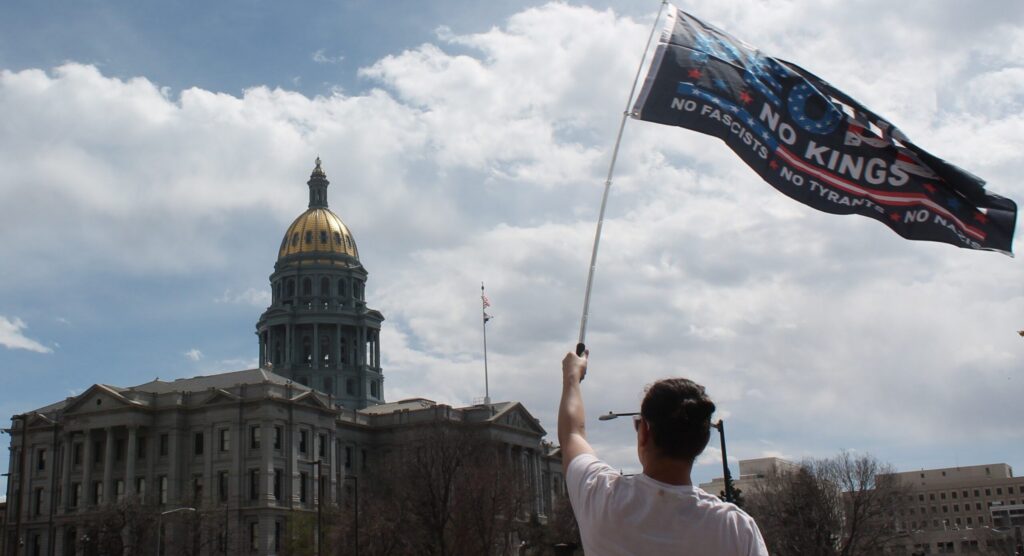
‘No Kings’ protest draws tens of thousands to Colorado state Capitol
Matt Kyle
matt.kyle@denvergazette.com
Updated 9 hours ago
The third round of the national No Kings Day protests hit Denver Saturday, when tens of thousands gathered near the Colorado state Capitol to criticize the Trump administration. Organizers addressing the crowd estimated there were 30,000 present for the Saturday...
Denver Democrat Diana DeGette trails challenger Melat Kiros at assembly as both qualify for primary
Ernest Luning
ernest.luning@coloradopolitics.com
Updated 17 hours ago
U.S. Rep Diana DeGette, a Denver Democrat, qualified for Colorado’s June primary by the skin of her teeth Friday at the party’s district assembly, where the 15-term incumbent received fewer than half as many delegate votes as her challenger, 28-year-old...
Kwame Spearman warrants plenty of criticism, not cancellation | SONDERMANN
By Eric Sondermann
by-eric-sondermann@coloradopolitics.com
Updated 3 days ago
All of us are flawed humans, some more so than others. This is the tale of Kwame Spearman who burst onto Denver’s business and political scene a handful of years back. His ride has taken a downhill trajectory. Within the...
Colorado Politics Calendar Mar. 30-Apr. 5
Rachael Wright, Special to Colorado Politics
rachael.wright@coloradopolitics.com
Updated 2 days ago
CoPo’s weekly political calendar will help you find political and public-policy events throughout Colorado. It includes candidate and issue campaign events, public policy meetings, court hearings, state and local party conventions, assemblies, debates, rallies, parades, speaking engagements, traveling dignitary appearances,...
Federal judge upholds constitutionality of Colorado campaign contribution limits
Michael Karlik
michael.karlik@coloradopolitics.com
Updated 1 day ago
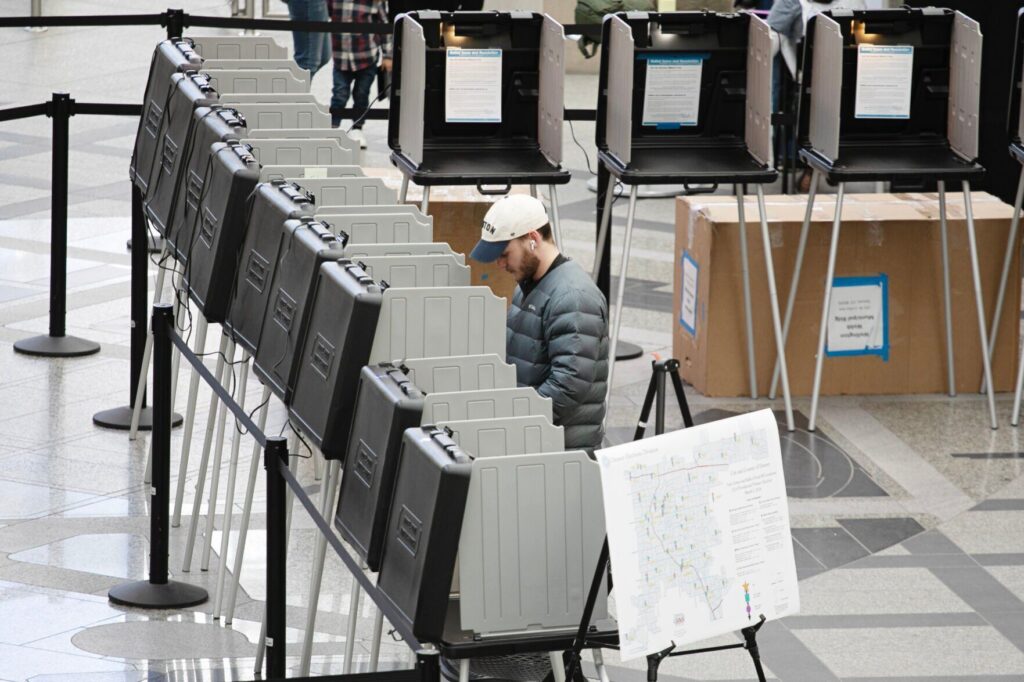
A federal judge upheld Colorado’s individual campaign contribution limits as constitutional on Thursday, finding that three Republican plaintiffs failed to prove the campaign finance framework violates their First Amendment rights. U.S. District Court Senior Judge John L. Kane recognized that...
Appeals court rejects theory that existing tax revenue undermines need for new fees
Michael Karlik
michael.karlik@coloradopolitics.com
Updated 1 day ago
Colorado’s second-highest court rejected a plaintiff’s claim on Thursday that the tax revenue generated by an existing activity should prevent local governments from imposing new fees aimed at regulating the activity. The question stemmed from Colorado’s unique constraints on taxation...
Colorado ski resorts announce early closures amid historic snowpack lows, high temperatures
Kyla Pearce
kyla.pearce@gazette.com
Updated 1 day ago
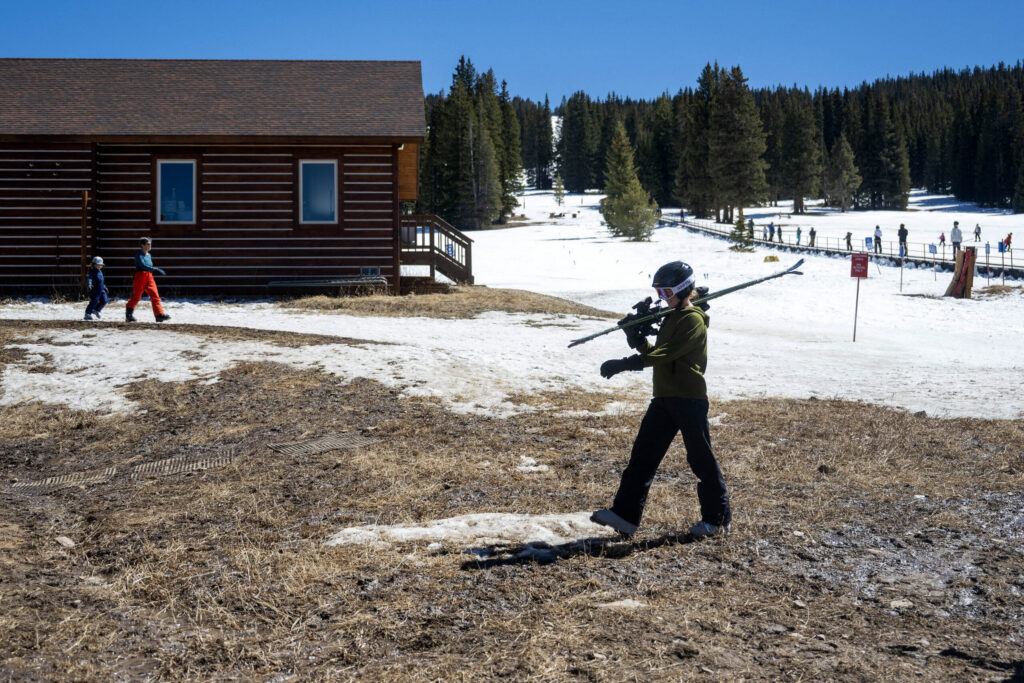
As Colorado’s historically low snowpack year comes to a close and spring conditions take over the mountains, the state’s major ski resorts are announcing closing dates — some of which are weeks before historic closing dates. Most of Colorado’s ski...

Marco Rubio’s star power rises at CPAC 2026
Mabinty Quarshie and Samantha-Jo Roth, Washington Examiner
mabinty.quarshie.and.samantha-jo.roth.washington.examiner@gazetteedit.wpenginepowered.com
Updated 2 days ago
GRAPEVINE, Texas — Secretary of State Marco Rubio’s popularity is growing and could possibly boost him to one of the top two spots in the 2028 GOP presidential race, if attendees at the Conservative Political Action Conference are to be believed. ...

Boulder police investigate sexual assault, ‘drugging’ at bar near CU
Matt Kyle
matt.kyle@denvergazette.com
Updated 2 days ago
The Boulder Police Department is investigating reports of sexual assault and “suspected drugging” involving underage girls at a bar. There may be additional victims who have not yet come forward, the department said in a news release. The bar, Scrooge...
PREV
PREVIOUS
USDA declares 63 out of 64 counties in Colorado a disaster due to drought
The U.S. Department of Agriculture declared all but one Colorado county a disaster area due to longstanding drought during 2020 and into 2021. Custer County in south central Colorado was the only county to be left out of the primary drought designation. It was listed as contiguous to other counties in the declaration and is […]
HIGH AND DRY: Colorado in Drought | Scientists preparing for 'chaotic weather' future
The hot, dry conditions that melted strong snowpack early in 2020 and led to severe drought, low river flows and record-setting wildfires could be a harbinger of what is to come in Colorado. Climate change is likely to drive “chaotic weather” and greater extremes with hotter droughts and bigger snowstorms that will be harder to […]