

General Assembly returns to state Capitol after five-week hiatus

The 73rd General Assembly, after a five-week break, will be back at the state Capitol beginning Tuesday to pick up where they left off in January.
Several legislative leaders are expected to give the opening day speeches they passed on in January. In the House, three Denver Health frontline employees (Nicole Stafford, nursing director of perioperative services; Jenae Martinez, a certified nursing assistant with women’s and children’s services; and Orlando Poole, the lead care patient navigator in Denver Health’s ambulatory care clinics) will sing the National Anthem.
Once the speeches are done, lawmakers will head right into committee work and begin to review the more than 600 bills expected in the next 117 days.
The 2021 session is likely to focus straightaway on providing economic and other forms of relief to Coloradans impacted by the pandemic and recession that resulted from it.
But it’s not the only thing that lawmakers will be looking at. Last year’s pandemic-shortened session of 84 days still saw 224 bills introduced in the Senate and 427 in the House, about average for a 120-day session.
Twenty bills have already been authorized for pre-release by their sponsors, including a second attempt at allowing for composting of human remains. The Senate Local Government Committee plans to review that measure and two others Tuesday afternoon.
In 2020, the human composting bill was sponsored by Rep. Brianna Titone, D-Arvada, but was buried by the pandemic. Senate Bill 6, the 2021 version, will start in the Senate and is sponsored by Sen. Robert Rodriguez, D-Denver.
A second bill scheduled for Tuesday will grant county governments the authority to require businesses in unincorporated parts of the county to register, but those governments will not be allowed to charge a fee or require a license for that service.
The third bill on the Local Government calendar is on allowing county assessors to notify property owners of their valuations via postcard, a cost-saving measure.
A bill to create the status of “discharged LGBT veteran” and make those military veterans eligible for certain state services will be sponsored by Rep. David Ortiz, D-Littleton, and Sen. Dominick Moreno, D-Commerce City. The bill notes that some LGBT veterans have been discharged less than honorably from the U.S. military due to sexual orientation or gender identity. Senate Bill 26 would make LGBT veterans eligible for tuition assistance available to the military, teaching grants, burial at the Homelake Veterans Cemetery in Monte Vista or any other state-owned veterans cemetery and hunting licenses for which veterans do not need to take a hunter safety course.
Persons who are dishonorably discharged remain ineligible for those state programs.
The names of Otero Junior College, Trinidad Junior College and Northeastern Junior College would all lose “junior” under Senate Bill 8, sponsored by Sen. Cleave Simpson, R-Alamosa and Reps. Richard Holtorf, R-Akron and Don Valdez, D-LaJara. Trinidad’s name would change to Trinidad State College, although it would remain under the Community College of Colorado system.
House and Senate Democratic leaders Monday said they will focus on pandemic relief as well as getting the state back to normal. “We will not only focus on direct need and assistance, but how to get the state on a better course to withstand these challenges,” said Senate Majority Leader Steve Fenberg, D-Boulder.
Sen. Chris Holbert, R-Parker, whose caucus is at a 15-20 disadvantage, told Colorado Politics Monday that their priorities will include constitutional authority. He pointed to a bill backed by Sen. Paul Lundeen, R-Monument, to redefine the constitutional authority of the governor and legislature in future disaster emergencies. “We now have 11 months of experience, and most of how we treat disaster emergencies is based on what happened on Sept. 11, 2001. This has nothing to do with that,” Holbert said.
The legislature should have some role in disaster emergencies, Holbert said.
Holbert also noted a bill sponsored Sen. Rob Woodward, R-Loveland, that says in future declared emergencies that small businesses cannot be classified as non-essential. It’s based on a law passed by the Ohio legislature last November that curbed the authority of Gov. Mike DeWine to close (and define) non-essential businesses. Similar to the frustration experienced by small business owners in Colorado, in Ohio, “DeWine’s decision made winners and losers. Walmart was able to remain open while local retailers were not. Many small business owners were frustrated that they had to close their doors while others remained open, according to Cincinnati.com.
Holbert pointed to concerns over school funding, and that 30,000 students went missing in the October headcount. The Joint Budget Committee voted to sponsor a bill to hold school districts harmless from budget cuts tied to those pupil counts. But Holbert questioned where those students went, and whether some are being double-counted. How do districts get held as harmless when some districts get 100% of their per pupil funding from the state and some get very little? he asked.
Holbert said he’s also curious about whether the legislature will review the rulemaking done by state agencies through some of the 307 executive orders issued by Gov. Jared Polis in 2020. “But we don’t get to look at any of them and we think we should,” he said. “We want the legislative branch to have a role.”


Federal judge hears arguments about Colorado’s 3-day gun purchase waiting period
Michael Karlik
michael.karlik@coloradopolitics.com
Updated 3 hours ago
A federal judge heard arguments on Monday about the constitutionality of a 2023 Colorado law that generally imposes a three-day waiting period on firearm purchases after the initiation of a background check. The test that the U.S. Supreme Court created...

U.S. Supreme Court clears way for Trump mail voting order in advance of midterms
Wire Services
wire-services@coloradopolitics.com
Updated 6 hours ago
WASHINGTON • The U.S. Supreme Court on Monday cleared the way for President Donald Trump to move ahead with an executive order that seeks to restrict the mailing of ballots to American citizens in an eligible voters list. The executive...
Colorado Supreme Court intervenes in Weld County prosecution dismissed due to Missy Woods misconduct
Michael Karlik
michael.karlik@coloradopolitics.com
Updated 6 hours ago
The Colorado Supreme Court ordered a Weld County trial judge last week to respond to the district attorney’s claim that he improperly dismissed a criminal case because of “outrageous” conduct by the Colorado Bureau of Investigation. Daniel Lee Eatinger stood...

Trump opens ‘economic D-Day’ offensive against Iran as war nears six-month mark
Christian Datoc
christian-datoc@coloradopolitics.com
Updated 11 hours ago
President Donald Trump is seeking to increase the financial pressure on Iran with new secondary sanctions on nations and foreign actors propping up the regime’s economy as the war between the United States and Tehran nears the six-month mark. Treasury...

Trump announces 50% tariffs on Canadian cars, auto parts, and steel
Naomi Lim
naomi-lim@coloradopolitics.com
Updated 11 hours ago
President Donald Trump escalated the trade war with Canada after talks collapsed last week, announcing Monday that the United States would impose 50% tariffs on cars, trucks, automotive components, and steel starting Jan. 1, 2027. “Canada has been ripping off...

Iran puts out propaganda video tracking Barron Trump’s location, offering $10 million for his assassination
Timothy Nerozzi
timothy-nerozzi@coloradopolitics.com
Updated 12 hours ago
The Islamic Revolutionary Guard Corps is putting a hit out on President Donald Trump’s son, Barron Trump, with an inflammatory video claiming to track his location. State-run television in Iran is broadcasting a propaganda video claiming to show the locations...

Nevada sues Trump administration over Colorado River cuts
Marianne Goodland
marianne.goodland@coloradopolitics.com
Updated 5 hours ago
On Monday, the state of Nevada filed a lawsuit against the Trump administration and Interior Secretary Doug Burgum, seeking to block the Colorado River management plan. On Friday, Burgum released a “record of decision” that would reduce water allocations to...

Healthcare Freefall: Longer drives, fewer options for maternity care in Colorado
Thelma Grimes
thelma.grimes@coloradopolitics.com
Updated 15 hours ago
Editor’s Note: Colorado’s healthcare system is entering a period of accelerating instability — a “tsunami,” as multiple leaders describe it — driven by collapsing hospital finances, shrinking Medicaid reimbursements, disappearing services and a political fight over who is responsible for...
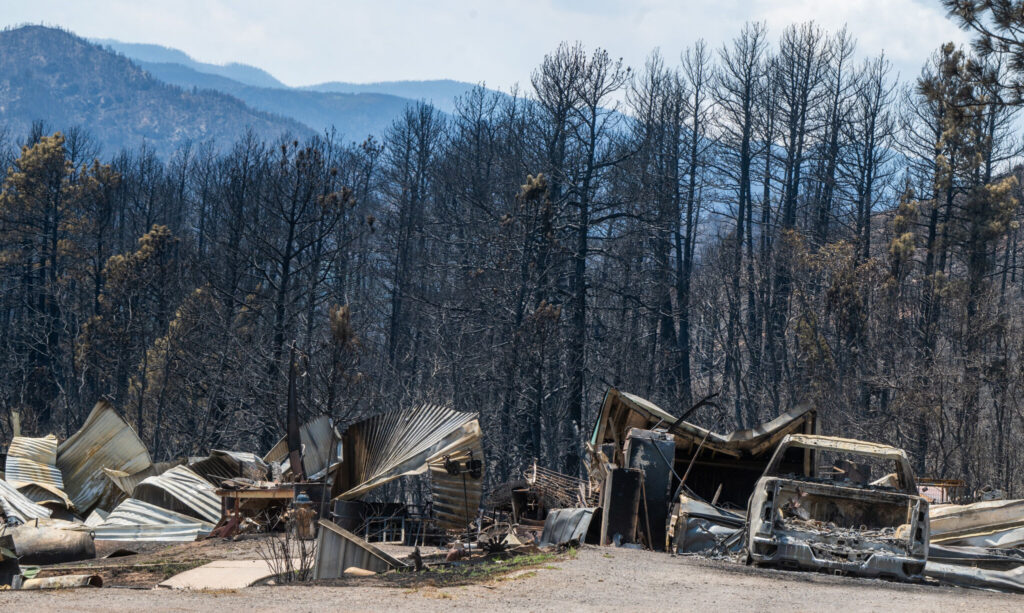
Polis requests federal disaster declaration for Colorado wildfires and floods
9News
9news@coloradopolitics.com
Updated 8 hours ago
On Sunday, Gov. Jared Polis officially requested a Major Disaster Declaration from President Donald Trump and the Federal Emergency Management Agency to support recovery from two wildfires and the subsequent flooding and debris flows on both burn scars. Polis requested a declaration...

US strikes another boat in eastern Pacific, killing two, Pentagon says
The Associated Press
the-associated-press@coloradopolitics.com
Updated 15 hours ago
U.S. forces have struck another vessel in the eastern Pacific, killing two people the Pentagon says were trafficking drugs. The U.S. Southern Command announced the strike in a social media post early Monday. The death toll from the Trump administration’s...
PREV
PREVIOUS

Biden extends pandemic mortgage relief program until June 2021
The Biden administration announced on Tuesday that the COVID-19 mortgage forbearance and foreclosure protection program will extend through June 2021. The measure will extend the foreclosure moratorium for homeowners and extend the mortgage payment forbearance enrollment date for borrowers until June 30. “As millions of Americans face continued hardship from the COVID-19 pandemic, President Biden […]

SCFD funds helped nonprofits withstand the ravages of 2020
A feared pandemic wipeout of Denver’s nonprofit cultural sector has not yet materialized on the same scale as the restaurant industry. That, officials say, is in large part because the Scientific and Cultural Facilities District just reported the second-best year in its 32-year existence. The SCFD has distributed more than $1 billion to arts and […]