

Colorado joins multistate effort to improve how teacher prep programs cover reading

Colorado is one of six states selected for a yearlong effort focused on strengthening how the state’s teacher preparation programs train future educators to teach reading.
The project is the latest in a series of steps by state education officials meant to get more Colorado children reading at grade level after years of stagnant scores.
The Mississippi-based Barksdale Reading Institute is spearheading the effort – called The Path Forward – with an inaugural group of six states. Besides Colorado, they include Arizona, Massachusetts, Missouri, North Carolina, and Ohio.
Path Forward will allow state leaders to share strategies for embedding the science of reading into teacher training programs, holding those programs accountable for early literacy outcomes, and enlisting the help of philanthropic groups in such efforts. A coach will work with each state’s team to help them analyze data and decide what to pursue.
The science of reading refers to a large body of research on how children learn to read. Many teachers in Colorado and other states say they never learned about science-backed reading instruction in their teacher prep programs.
State education officials said they’re eager to hear from leaders in other states and believe Colorado has a lot of momentum behind its reading improvement efforts.
“We get to learn what other people are doing, and what’s working and what’s not working,” said Colleen O’Neil, associate commissioner of educator talent at the state education department.
There are a variety of ways to change how teacher prep programs deliver instruction on reading. These include more carefully enforcing state requirements – a tack Colorado has taken for the last two years in reauthorizing such programs. Other states, including Mississippi, require graduates of teacher prep programs to pass tests on reading instruction to earn their teaching licenses – an incentive for prep programs to ensure their students have the knowledge to pass the tests.
Barksdale, launched in 2000 with a $100 million gift from a tech executive, played a substantial role in Mississippi’s reading turnaround. Mississippi made headlines in 2019 when its fourth-graders made greater reading gains than almost anywhere else on the National Assessment of Education Progress test.
Kelly Butler, the organization’s CEO, said her group conducted in-depth studies of reading instruction practices in the state’s teacher prep programs and offered free voluntary training for prep program faculty who had never been trained on the science of reading.
Butler said the six states selected for the first round of Path Forward are all in different places when it comes to reading instruction reforms.
“The common theme was they had high-energy teams that seemed really eager to take this work on,” she said.
Johanna Anderson, executive director of the North Carolina-based Belk Foundation, helped Butler develop the Path Forward concept and believes philanthropy can play an important role in helping shift the direction of teacher prep programs.
She said Belk, a small family foundation focused on early literacy and educator training, paid for a study examining how teacher preparation programs in North Carolina address reading instruction and coordinated high-profile meetings on the issue.
She said foundations can serve as “the connective tissue or glue that helps folks that are eyes-down, getting the work done, connect to the bigger picture.”
In Colorado, state leaders ranging from top lawmakers to Education Commissioner Katy Anthes have described the push to improve reading proficiency as a top priority.
Starting in 2018, Colorado began cracking down on how teacher preparation programs cover reading through the state’s reauthorization process. But given that universities only go through the process every five years or so, it will take at least until 2026 to touch all of the state’s prep programs. That means lots of newly minted teachers may not have the skills they need to teach young children to read.
Colorado has two dozen traditional 4-year teacher prep programs and another two dozen alternative prep programs, which are faster-track programs for people who already hold bachelor’s degrees. Traditional programs turn out far more teachers than alternative programs. Two-thirds of the state’s new public school teachers come from Colorado.
Of the five traditional prep programs that have undergone reauthorization since the state got tougher on reading, only two smaller programs have won full approval for all majors: Fort Lewis College and Adams State University. The other three – the University of Northern Colorado, Metro State University, and Regis University – have all been dinged because of shortcomings in reading instruction.
Colorado’s seven-member Path Forward team includes three education department leaders, a representative from the Colorado Department of Higher Education, a state lawmaker, a State Board of Education member, and a representative from Colorado Mountain College, which enrolls 426 students in its teacher prep program.
The first Path Forward meeting is Friday.
Colorado’s Path Forward team:
Colleen O’Neil, associate commissioner of educator talent, Colorado Department of Education
Mary Bivens, director of educator development, Colorado Department of Education
Floyd Cobb, executive director of teaching and learning, Colorado Department of Education
Brittany Lane, director of educator preparation, Colorado Department of Higher Education
Cathy Kipp, state representative from Fort Collins, member of the House Education Committee
Liz Qualman, director of teacher education, Colorado Mountain College
To be determined, State Board of Education
Chalkbeat is a nonprofit news site covering educational change in public schools.


Another TABOR fight: Democrats plan to redirect refunds to Colorado residents
Marianne Goodland
marianne.goodland@coloradopolitics.com
Updated 3 hours ago
Colorado voters could decide this fall whether billions of dollars that would otherwise be returned as refunds under the Taxpayer’s Bill of Rights should instead go to public schools under a ballot measure unveiled Thursday by Democrats. Supporters say the...

Colorado bill aims to launch $1 million ‘Cradle to Career’ program
Marissa Ventrelli
marissa.ventrelli@coloradopolitics.com
Updated 3 days ago
Saying it would help Colorado families living in poverty, legislators are proposing to allocate $1 million to organizations that support impoverished communities. Senate Bill 080 — sponsored by Senate President James Coleman, D-Denver, Minority Leader Cleave Simpson, R-Alamosa, and Rep....
Ex-Cherry Creek superintendent must repay one month’s salary after abrupt resignation
Nico Brambila
nico.brambila@denvergazette.com
Updated 1 week ago
Former Cherry Creek School District Superintendent Chris Smith must repay one month’s salary for failing to provide the board of education with three-month’s notice of his resignation, The Denver Gazette has learned. The board of education has not waived the...
Senate committee kills bill to track education violations
Sage Kelley
sage.kelley@denvergazette.com
Updated 1 week ago
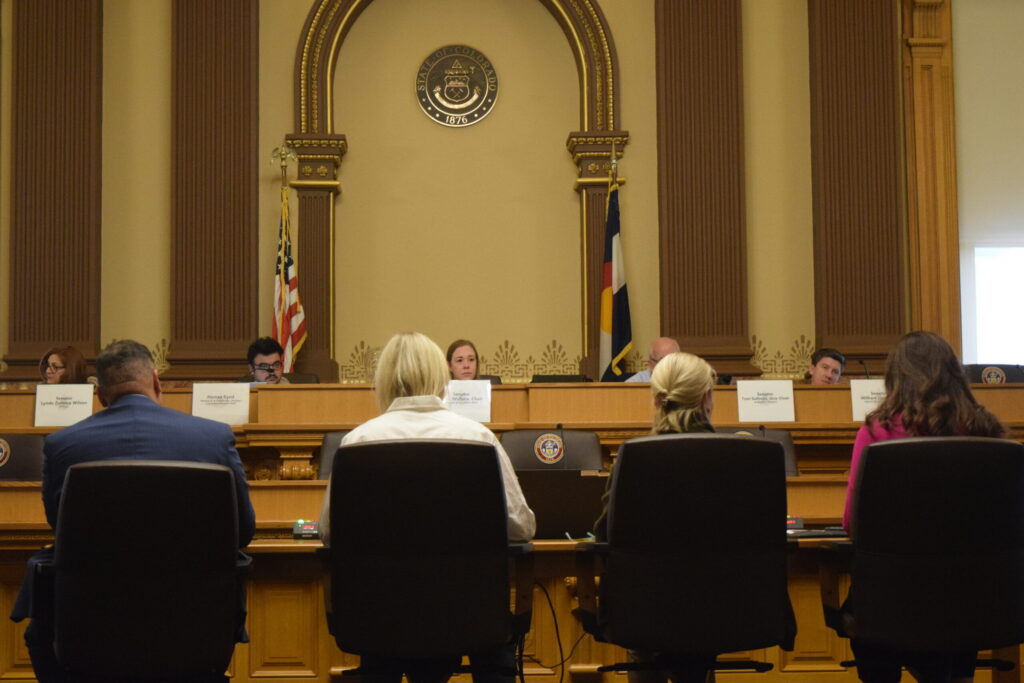
A proposed bill following in the wake of multiple Jeffco Public Schools sexual misconduct cases won’t make it to the Senate floor. The Colorado Senate State, Veterans and Military Affairs committee denied proposed Senate Bill 26-055 on Tuesday afternoon with...
Cherry Creek school district to pay ex-superintendent $165K after resignation amid toxic workplace claims
Nico Brambila
nico.brambila@denvergazette.com
Updated 2 weeks ago
The Cherry Creek School District will pay nearly $165,000 to former Superintendent Chris Smith following his resignation last month amid allegations of a toxic workplace. The board of education announced last week that the district is contractually obligated to pay...
Colorado’s ‘first public Christian school’ sues state, alleges discrimination
Eric Young
eric.young@gazette.com
Updated 2 weeks ago
Riverstone Academy, a public elementary school that opened last fall in Pueblo as a tuition-free option with Christian-based instruction, has filed a lawsuit against the state of Colorado over alleged religious discrimination. The lawsuit, filed in U.S. District Court for...

CU Boulder, state launch economic research in coal-transition areas
Scott Weiser
scott.weiser@gazette.com
Updated 3 weeks ago
Communities in northwest Colorado built on coal mining and power plants are losing hundreds of high-paying jobs and a major share of their tax revenue as operations wind down. In a yearlong effort, the University of Colorado Boulder is teaming...

Several Denver-area school districts cancel classes Friday amid national shutdown
Michael Braithwaite
michael.braithwaite@gazette.com
Updated 1 month ago
The protest is in response to ICE operations Several Denver-area school districts canceled classes on Friday due to staff shortages amid a shutdown campaign nationwide. The shutdown, held across the country on Friday, came about in response to recent U.S....

Federal judge recommends dismissing trans athletics lawsuit by area school districts
Eric Young
eric.young@gazette.com
Updated 1 month ago
A judge has recommended dismissing a federal lawsuit filed by multiple school districts against the Colorado Attorney General’s and Civil Rights Offices over their policies dictating students’ participation in athletics and activities based on their biological sex rather than gender...
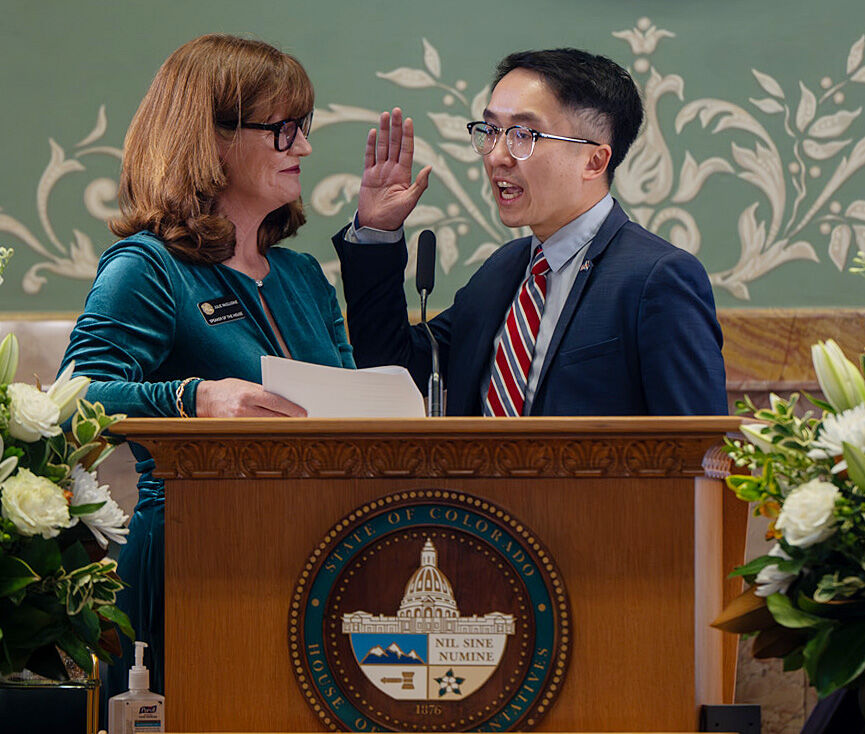
House Speaker urges colleagues to fight Trump, who ‘would hold Colorado hostage’
Marissa Ventrelli
marissa.ventrelli@coloradopolitics.com
Updated 2 months ago
A top Colorado Democrat on Wednesday characterized Colorado as under siege by the Trump administration, as she invoked Winston Churchill and urged colleagues to fight back. “In this moment, when the White House would hold Colorado hostage, I’m reminded of...
PREV
PREVIOUS

Denver’s Sloan’s Lake neighborhood could be rezoned for 'granny flats'
Councilwoman Amanda Sandoval has submitted an application to rezone portions of Denver’s Sloan’s Lake neighborhood, allowing for accessory dwelling units (ADUs), colloquially called “granny flats,” in the neighborhood. If accepted, Sloan’s Lake homeowners will no longer have to ask the Denver City Council for permission before building the structures on their property. Each of these […]
Meet the first members of Colorado's first independent congressional redistricting committee
Colorado has its first set of citizen redistricting commissioners. On Tuesday, six of the eventual 12 congressional redistricting commissioners were randomly selected from a group of qualified applicants. The congressional redistricting commission now has two Republicans, two Democrats and two non-party-affiliated voters. Eventually there will be four from each group. Next, the remaining pool of […]