

UK COVID variant ‘very minor’ in Colorado, but randomness is troubling
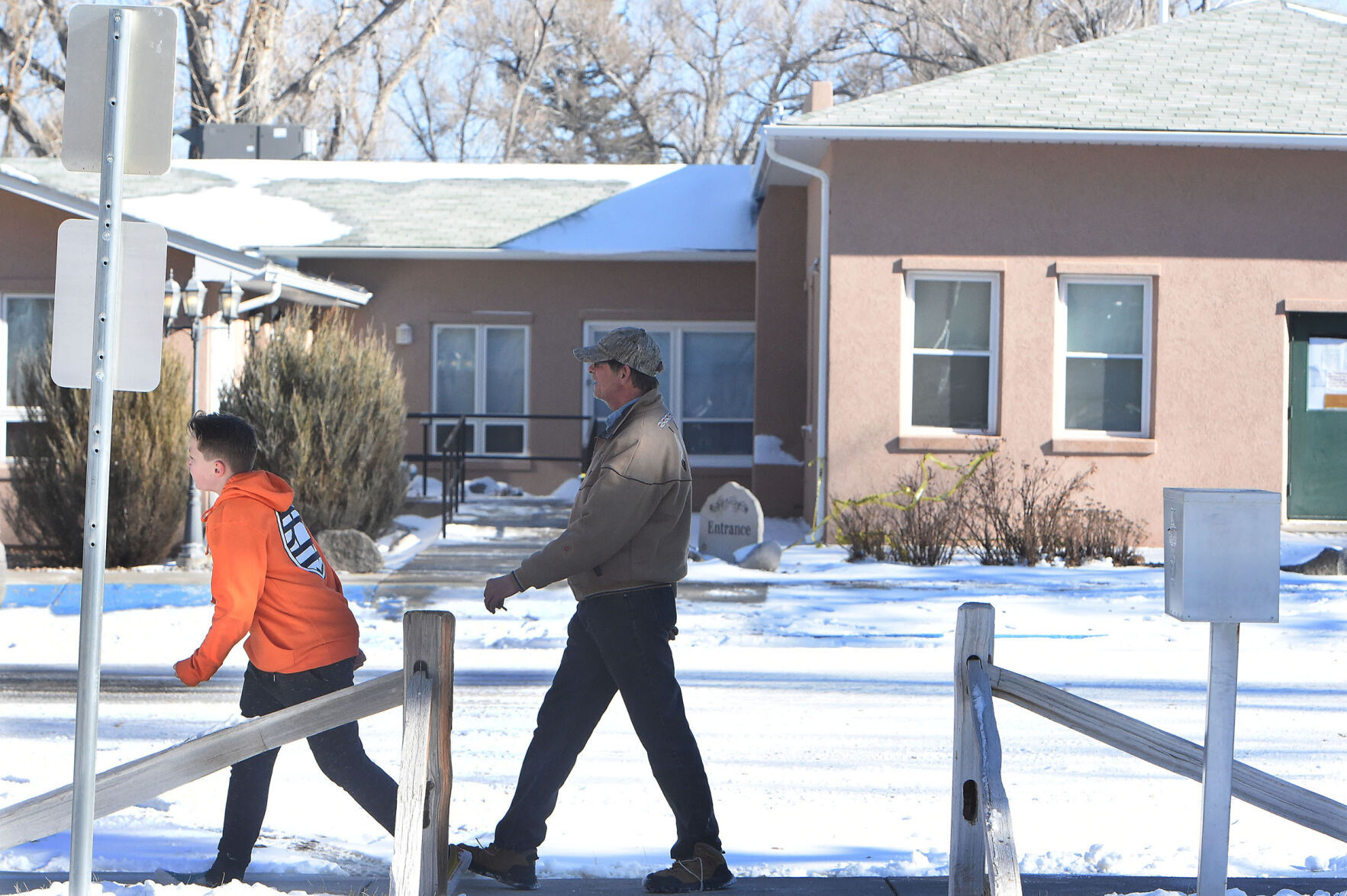
The presence of a highly transmissible UK variant of COVID-19 in Colorado is “very minor,” state officials said this week, noting that only 11 cases have been identified.
But how many cases have gone unidentified, some wonder, including a Colorado College microbiology professor with a history of accurate El Paso County virus projections.
The handful of identified cases would be less concerning if “all those people breathed on each other,” said Phoebe Lostroh, who has a Ph.D. in microbiology from Harvard University. But if those individuals weren’t in contact, “the virus is in the community somewhere, and we don’t know where.”
The first two cases of the variant, known as B.1.1.7, occurred among Colorado National Guard members deployed to a long-term care facility in Simla in late December. Neither had a history of recent travel. A third case was identified in early January among staff at the Veterans Community Living Center at Fitzsimons in Aurora, an hour and a half northwest.
When asked for generalized locations of the other patients diagnosed with the variant, the state on Friday responded that it had so far been diagnosed in five “metro area” counties so far – presumably Denver metro, though it did not specify. Small counties with patients with the variant will not always be identified due to privacy concerns, officials said.
This week they also declined to estimate how common the variant is in Colorado, saying that the task was “impossible” and adding that they don’t believe it to be widespread. The latest report, dated Jan. 20, from the state’s COVID-19 modeling group, a multidisciplinary team of experts at colleges and universities throughout the state, assumes, in some scenarios, that the variant will comprise half of circulating virus strains by March 8, while noting, “we do not know how quickly the variant will increase in Colorado.”
“Should we be alarmed and act like we’re being taken over by zombies? No,” Lostroh said. “I think our job is to plan for the most concerning scenario for which there’s a reasonable chance of it happening.”
And that includes the 50% by March 8 scenario, Lostroh said, adding, “I think it’s a race between the spread of the variant and vaccinating people.”
How communities choose to prepare for the possibility of such a scenario is a “big political call,” she said, adding that some individuals are more concerned with the virus’s economic toll, others with the virus’s toll on the health of those it will infect.
Communities that wish to catch “most cases” of COVID-19, whatever variety, should keep the rate of positive tests under 5%, Lostroh said. In El Paso County over the past two weeks, that number has ranged from nearly 6% to just over 9%.
A major reason to keep COVID-19 transmission down is to reduce the number of mutations that occur, since mutations are inevitable as the virus reproduces, Lostroh said, adding, “It is concerning that we’re letting the virus replicate so much.”
And the problem with waiting too long to act aggressively is that “by the time you realize things are getting out of hand, it’s already too late to take action,” she said.
On Friday state officials said that Colorado had identified its first case of a COVID-19 variant first seen in Denmark last spring recently linked to several large-scale outbreaks in California. It is currently unknown if the variant, L452R, is more transmissible or deadly.
Colorado was the first state in the country to confirm the presence of the UK strain, known as B.1.1.7, which became prevalent there late last year and is thought to be 50-70% more transmissible.
As to why the variant would become so widespread in the United Kingdom but perhaps not in the U.S., Dr. Jon Samet, dean of the Colorado School of Public Health and member of the state’s modeling team, noted that the variant “penetrated rapidly in the UK but at a time when the epidemic curve was heading up, which leads to it becoming common quickly.”
“At the moment, we still have a declining epidemic curve, which provides protection against a rising frequency of the variant,” he said in an email to The Gazette this week.
“So far, the prevalence is low and the state is looking,” he noted. As to whether the strain is more deadly, he pointed to a Jan. 26 article in The British Medical Journal that suggested it might be.
Colorado’s state health lab is checking all COVID samples with a specific, telltale profile for the variant, a spokesperson for the state health department said this week. Health officials here have also asked “private and partner labs to send a random sampling of positive tests to conduct sequencing.”
Testing for variants is not as simple as running a general COVID-19 test. Performing additional sequencing takes three to four days, compared to an average turnaround time of fewer than 48 hours for a general COVID test. The state is capable of running as many as 200 of these sequences per week, the spokesperson said, adding that there wasn’t a backlog of samples that required more rigorous processing.
“They are finding just one or two out of 100,” Polis said at a Tuesday afternoon press conference of B.1.1.7. “It’s not the widespread variant. We’re doing enough testing to know it’s a small minority of cases right now.”
The state’s positivity rate has hovered just above or below 5% for roughly two weeks.
Rachel Herlihy, an epidemiologist with the state health department, said the state is still undertaking a “robust” investigation into how the variant may have originally wormed its way into Colorado.
“It’s quite possible that someone at some point came from an international destination and that’s how that variant was specifically spread to those (first) individuals,” she said.
Herlihy said the same measures taken to prevent the overall spread of COVID – masking, washing hands, social distancing – are all still the top ways to block the spread of the new variant. She pointed to modeling data that indicated that without continued use of such measures, the variant could drive the state’s COVID numbers well above where they are now, even with the vaccine.
“I think the take-home message here is if we’re able to maintain our current level of transmission control for the next few months, at least through June 1, that’s our best way to limit impact of COVID-19 in the state,” she said.


Trump to attend White House Correspondents’ Dinner for first time as president
Washington Examiner Staff, Washington Examiner
washington.examiner.staff.washington.examiner@gazetteedit.wpenginepowered.com
Updated 1 hour ago
President Donald Trump announced on Monday that he accepted an invitation to this year’s White House Correspondents’ Dinner. It would mark the first time Trump has attended the dinner, in either term, since he’s been president. Trump announced the decision...
Primary rival sues to prevent Democrat Eileen Laubacher from going through assembly in Colorado’s 4th CD
Ernest Luning
ernest.luning@coloradopolitics.com
Updated 4 hours ago
Democratic congressional candidate Trish Calvarese on Monday asked a judge to prevent one of her primary rivals, Eileen Laubacher, from participating in the caucus and assembly process to seek the nomination to challenge Republican U.S. Rep. Lauren Boebert in Colorado’s...
Colorado lawmakers tackle legislation on sexual assault
Jenny Deam
jenny-deam@coloradopolitics.com
Updated 6 hours ago
A panel of Colorado lawmakers on Monday unanimously approved a bill that supporters say will offer protections and support to victims of domestic violence, stalking, sex trafficking and sexual assault, including mandatory training for law enforcement on trauma. The measure,...

Denver adopts face mask ban for law enforcement
Deborah Grigsby
deborah.smith@denvergazette.com
Updated 3 hours ago
Members of the Denver City Council unanimously approved an ordinance Monday that prohibits law enforcement officers, including federal immigration agents, from wearing a mask or face covering while interrogating, detaining, or arresting an individual within Denver, including in city-owned buildings....

More than 20 Colorado counties receive grants to improve land record-keeping systems
Maren Prince
maren.prince@denvergazette.com
Updated 3 hours ago
More than 20 Colorado counties received $2.5 million to improve their land record-keeping systems, according to a Monday news release. The State’s Electronic Recording Technology Board awarded 22 counties with grants ranging from $5,000 to $350,000, according to the release....
Denver among top 5 finalist cities for 2028 DNC
Deborah Grigsby
deborah.smith@denvergazette.com
Updated 3 hours ago
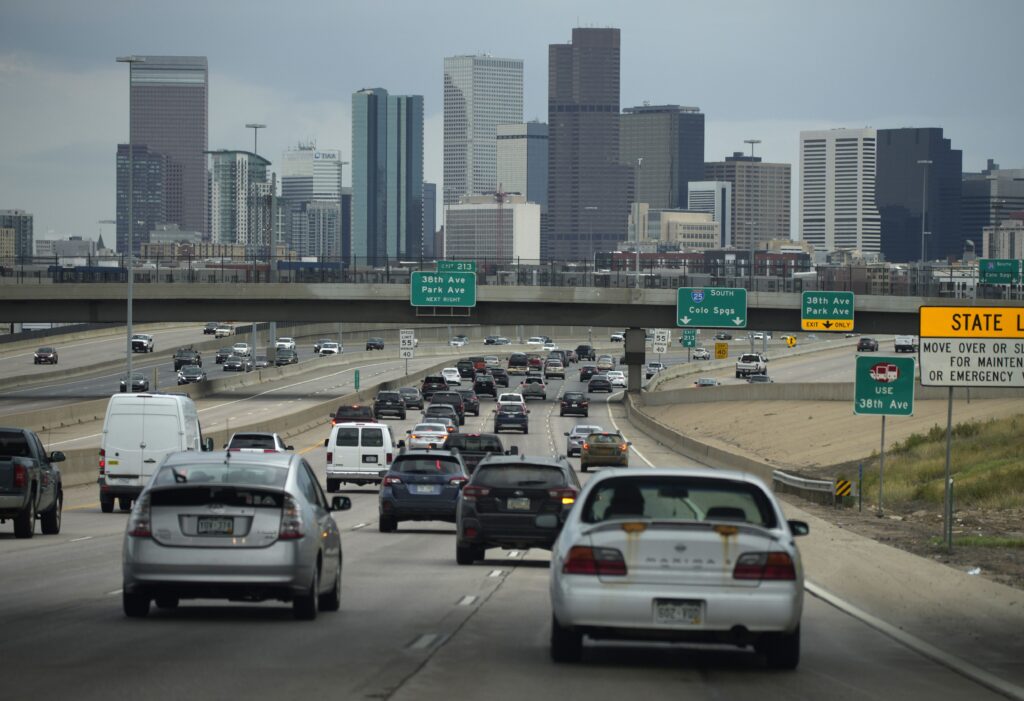
Denver is among the five cities that could host the 2028 Democratic National Convention, the Democratic National Committee announced Monday. Along with Denver, Philadelphia, Atlanta, Boston and Chicago have advanced in the application process to host the next DNC, which...

Colorado bill would require employers to grant legislative leave to state lawmakers
Marissa Ventrelli
marissa.ventrelli@coloradopolitics.com
Updated 2 hours ago
When she was elected to the legislature in 2022, Sen. Janice Marchman was hopeful she could bring real-world experience to the state’s education policy. Marchman, a Loveland Democrat, was the only actively-working teacher in the General Assembly for the past...

Colorado Supreme Court clarifies restraining order violations can always support burglary charge
Michael Karlik
michael.karlik@coloradopolitics.com
Updated 20 hours ago
The Colorado Supreme Court’s majority ruled on Monday that a violation of a restraining order can also serve as a basis for finding a defendant guilty of burglary. Under state law, a person commits second-degree burglary by unlawfully entering or...

Big week ahead for major legislation to address housing affordability woes
Zach Halaschak, Washington Examiner
zach.halaschak.washington.examiner@gazetteedit.wpenginepowered.com
Updated 22 hours ago
The Senate is pushing ahead with a bipartisan bill to improve housing affordability, teeing up a critical week for housing on Capitol Hill and raising major questions about what provisions will be included. Senate Majority Leader John Thune (R-SD) filed cloture on legislation from the...

Macron goes nuclear with increases to French warhead arsenal
Timothy Nerozzi, Washington Examiner
timothy.nerozzi.washington.examiner@gazetteedit.wpenginepowered.com
Updated 22 hours ago
French President Emmanuel Macron is channeling the atomic spirit of his predecessor Charles de Gaulle with orders for the French military to “increase the number of nuclear warheads” in the nation’s arsenal. Macron announced the seismic shift in France’s defensive...
PREV
PREVIOUS
A LOOK BACK | Pueblo state rep. switches parties after flap with Lamm, Dem leadership
A weekly dive into the pages of Colorado Politics’ predecessor, The Colorado Statesman, which started in 1898: Forty Years Ago This Week: In a shocking move, Colorado state Rep. Bob Leon Kirscht, D-Pueblo, switched his party affiliation to Republican after thirteen years as a registered Democrat. Consumer activist John Van Vranken blasted Kirscht for his […]
How the Wall Street fight over GameStop reignited the populist coalition
A battle between Wall Street and a small group of mischievous investors on Reddit has breathed new life into a left-right populist coalition with the potential to scramble old political alliances across the spectrum, with some Republicans and Democrats positioning themselves in favor of the little guy against the financial establishment. When Robinhood and other […]