

TRAIL MIX | Senate floor speech was classic Bennet

It wasn’t the first time Michael Bennet had invoked ancient history in an attempt to make sense of the day’s exasperating events.
Taking a turn at the microphone in the well of the Senate past midnight on the night of Jan. 6, Bennet made a case against an objection raised by Ted Cruz, the Texas Republican and Bennet’s reliable antagonist, to counting the electoral votes submitted by the state of Arizona.
The presence was still palpable of the pro-Trump rioters who had stormed the Capitol earlier that day and taken over the Senate chambers.
The state’s voters had picked the Democratic presidential ticket – Joe Biden and Kamala Harris – for only the second time in more than 70 years, but President Donald Trump refused to believe he’d lost. A cadre of Republican lawmakers, including Cruz, were playing along with the president’s fantasies, attempting to overturn Biden’s win by disallowing the Electoral College votes from as many as six states whose elections they claimed were conducted improperly.
Cruz and his cohorts, Bennet contended, didn’t even believe what they were arguing.
After promoting groundless conspiracy theories hatched in the darkest corners of the internet or dreamed up by Trump’s crack team of election-law attorneys – involving everything from dead Venezuelan dictator Hugo Chavez to a suspicious overflowing toilet in an Atlanta convention center – Trump and his helpers cited their followers’ suspicions as proof something must be fishy.
“By the way, the fact that 37% or 39% of Americans think there’s evidence of fraud does not mean there is fraud,” Bennet asserted.
After Cruz and others had trafficked in demonstrably false claims about election irregularities, Bennet said, “You can’t now come to the floor of the Senate and say, ‘You’re ignoring the people who believe the election was stolen.’ Go out there and tell them the truth, which is that every single member of this Senate knows this election wasn’t stolen.”
It went without saying that the hordes of violent protesters who had forced lawmakers to delay counting the votes that would certify Biden’s win had shown up in Washington at the president’s invitation.
“Big protest in D.C. on January 6th. Be there, will be wild!” Trump tweeted in December amid calls to “stop the steal” and “save America.”
Bennet also argued that Arizona’s election results had been certified by state authorities and seconded by courts, some of whom howled with laughter as they dismissed lawsuits brought by Trump and his allies, who failed to produce any evidence of fraud.
But before that, Bennet invoked the fall of the Roman Republic as a warning against what had happened just hours earlier, when the #MAGA mob had poured into the Capitol, live-streaming and selfie-posting their way to infamy.
The framers of the Constitution, he said, knew their history, and one thing they knew when they were drafting the young federal government’s rules was how the world’s last republic – in Rome – had fallen.
One thing Bennet said he pondered that day was how “armed gangs doing the work for politicians prevented Rome from casting their ballots … keeping elections from being started, keeping elections from ever being called.”
While he skipped over some other key factors – he was only allotted five minutes to speak – Bennet summed up: “And in the end, because of that, the Roman Republic fell and a dictator took its place. And that was the end of the Roman Republic, or any republic for that matter, until this beautiful Constitution was written in the United States of America.”
He returned to the point in his conclusion: “We, just as in the Roman Republic, have a responsibility to protect the independence of the judiciary from politicians who will stop at nothing to hold on to power. There’s nothing new about that either. That’s been true since the first republic was founded.”
That’s Bennet: a Classical mind in an Instagram world.
He’s turned to the Greeks and Romans to make similar points about the dangers facing America’s civic experiment.
On the presidential primary campaign trail, Bennet sometimes compared Trump to a Roman autocrat after describing the president’s peculiar brand of populism – mob rule, a classicist might warn – including straining international alliances and starting trade wars.
Other times, Bennet lamented the rise of partisan propaganda and the glee with which politicians were sucking the meaning out of words.
Around the time Republican leadership changed Senate rules in 2017 to confirm Trump’s first Supreme Court nominee, Colorado’s Neil Gorsuch, Bennet hauled out a passage from Greek historian Thucydides to illustrate the perils of falling for an autocratic ruler’s state-sponsored spin.
Citing “History of the Peloponnesian War,” Bennet held up the civil war in Corcyra as a cautionary tale for modern America. The ancient city was destroyed from within as its citizens took up sides and let their passions overtake their laws.
“Words had to change their ordinary meaning and to take that which was now given them,” Thucydides wrote. “Reckless audacity came to be considered the courage of a loyal ally; prudent hesitation, specious cowardice; moderation was held to be a cloak for unmanliness; ability to see all sides of a question, inaptness to act on any.”
Bennet referred to the excerpt at a town hall in Summit County when a constituent urged: “When somebody comes up with a bald-faced lie, call him on it.”
“Words,” Bennet said after quoting the historian, “have lost their meaning. I think that’s exactly right.” He added that it seemed Trump was trying to “decouple” Americans from reality.
In a July 2019 column calling Bennet the Democrats’ best chance to defeat Trump, conservative author George Will – who got his start in politics as a staffer for another Colorado senator, Republican Gordon Allott, almost 50 years ago – pointed to Bennet’s familiarity with Thucydides.
The story of Corcyra shows up in “The Land of Flickering Lights,” Bennet’s 2019 book subtitled “Restoring America in an Age of Broken Politics.”
In the book – part memoir, part diagnosis – Bennet examines “where we went wrong and how we can become citizens again.”
Will noted a Thucydides quote Bennet used to make a point about the dangers of a certain kind of populism: ” ‘With public life confused to the critical point, human nature, always ready to act unjustly even in violation of laws, overthrew the laws themselves and gladly showed itself powerless over passion but stronger than justice and hostile to any kind of superiority.’ “
“Fortunately,” Will wrote, the field preparing to square off against Trump “includes one person familiar with Thucydides’ warning … who is unafraid to assert its contemporary pertinence.”
Like the framers, Bennet knows – in a phrase he notes is often attributed to Mark Twain, though it’s an age-old insight – that history doesn’t repeat, but it often rhymes.
And like the Romans and the residents of Corcyra before them, Bennet observes, modern Americans can’t expect laws, norms and institutions to survive on their own, not without constant vigilance.


Rep. Ron Weinberg won’t seek reelection
Marianne Goodland
marianne.goodland@coloradopolitics.com
Updated 20 hours ago
Republican Rep. Ron Weinberg of Loveland announced on Thursday evening that he will not seek another term in the Colorado House. “Serving this community has been one of the greatest honors of my life,” the two-term state representative said on...
Colorado title board OKs ballot measures to eliminate flat income tax in favor of graduated brackets
Marianne Goodland
marianne.goodland@coloradopolitics.com
Updated 20 hours ago
Proponents hoping to change Colorado’s income tax structure from a flat rate to graduated tiers — thereby raising taxes for some brackets — walked away from a Wednesday meeting with eight ballot measures approved by the title board. The coalition...
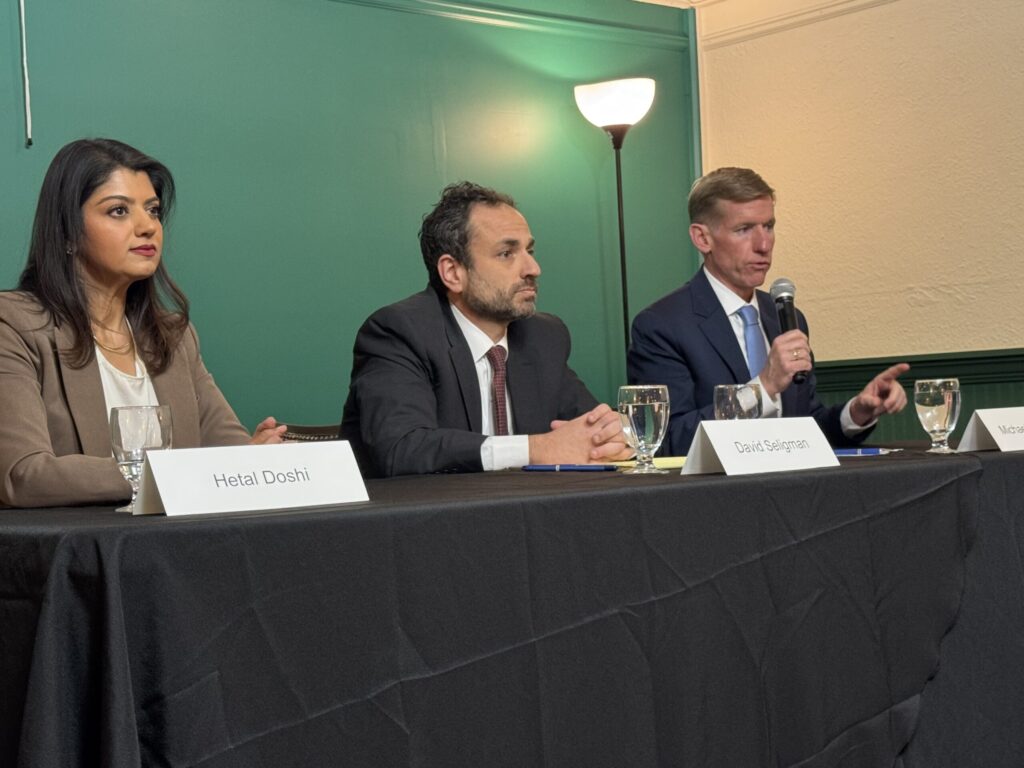
‘The people’s lawyer should show up,’ Democratic AG candidates say as Griswold misses forum
Thelma Grimes
thelma.grimes@coloradopolitics.com
Updated 6 hours ago
Watch the forum here. Three Democratic primary candidates running for Colorado attorney general used a forum Wednesday night to call out the absence of a fourth contender at an event hosted by the Denver Press Club. In their opening statements,...
Colorado Democrat John Hickenlooper raises over $1.1 million in 4th quarter for reelection bid
Ernest Luning
ernest.luning@coloradopolitics.com
Updated 18 hours ago
U.S. Sen. John Hickenlooper’s reelection campaign raised over $1.1 million in the fourth quarter of 2025 and finished the year with more than $3.8 million in the bank, the Colorado Democrat’s campaign said Thursday. The fundraising haul brings Hickenlooper’s total...
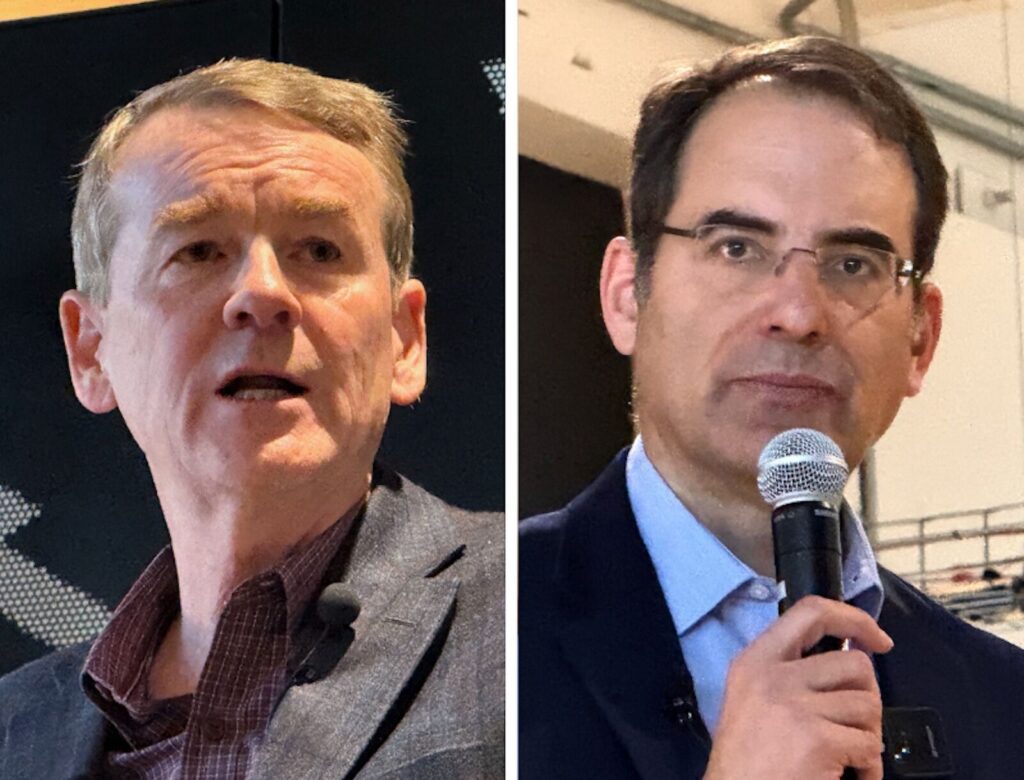
Democrats Michael Bennet, Phil Weiser and their backers bank $9 million for Colorado gubernatorial race
Ernest Luning
ernest.luning@coloradopolitics.com
Updated 1 day ago
Democratic gubernatorial candidates U.S. Sen. Michael Bennet and Attorney General Phil Weiser, and the campaign committees that support them, entered the election year with almost $9 million on hand, as the race to succeed term-limited Colorado Gov. Jared Polis heats...
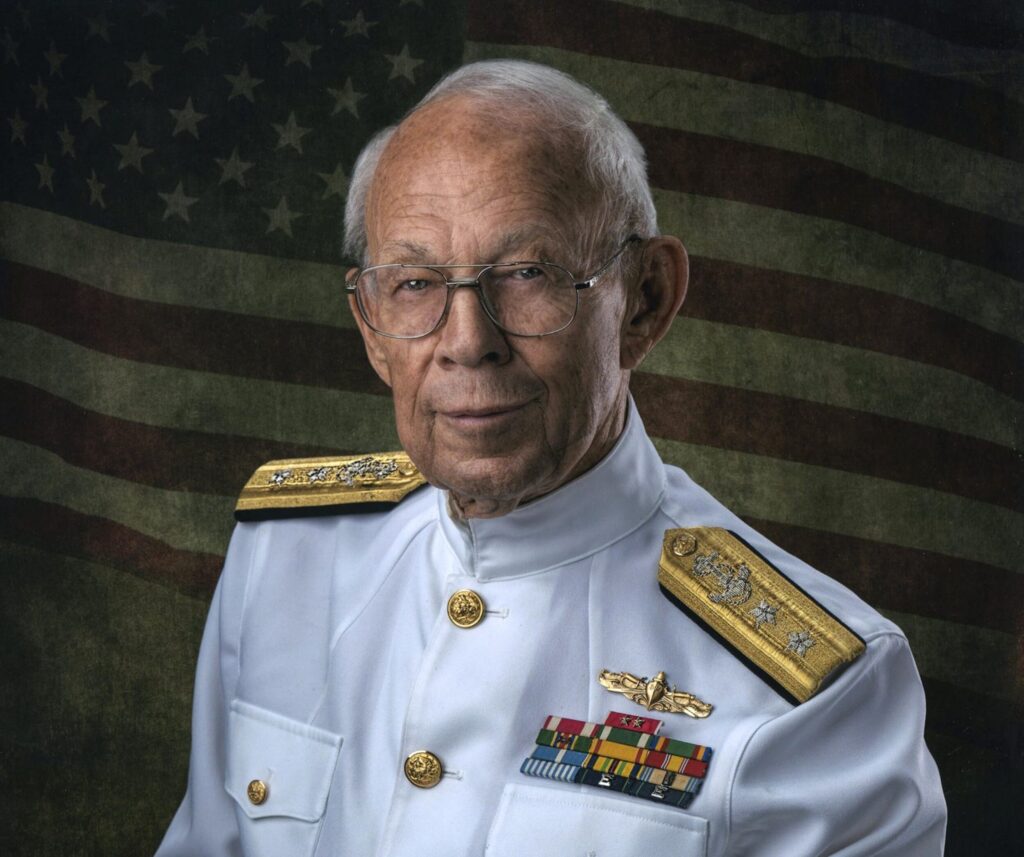
Longtime Denver resident Dick Young, a retired rear admiral and pioneering civic advocate, dies at 94
Ernest Luning
ernest.luning@coloradopolitics.com
Updated 7 days ago
Richard Edward Young, a retired rear admiral, attorney and towering figure in Colorado’s civic landscape for more than six decades, died Jan. 7. He was 94. A lifelong advocate for civil rights, fair housing, veterans and his neighborhood, Young was...
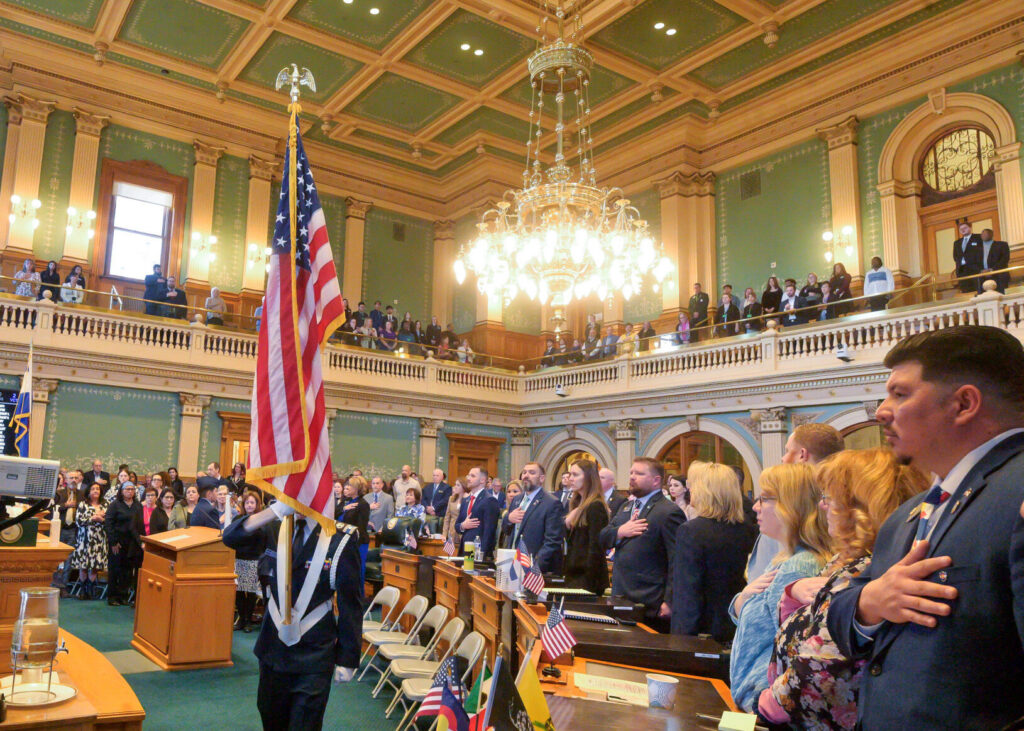
Opening Day: Colorado lawmakers return to state Capitol for 2026 session
Marianne Goodland
marianne.goodland@coloradopolitics.com
Updated 1 week ago
Underneath the pomp and circumstance of this morning’s opening ceremonies, the 100 lawmakers who took their seats at the state Capitol face a daunting task — how to keep the state’s economy moving forward in the midst of a challenging...

Kenny Nguyen selected to represent Colorado House District 33
Marianne Goodland
marianne.goodland@coloradopolitics.com
Updated 1 week ago
Kenny Nguyen, a member of the Broomfield City Council, was chosen by a 36-member Democratic vacancy committee on Monday to represent House District 33. Nguyen will replace Sen. William Lindstedt, who was appointed by Gov. Jared Polis last week to...
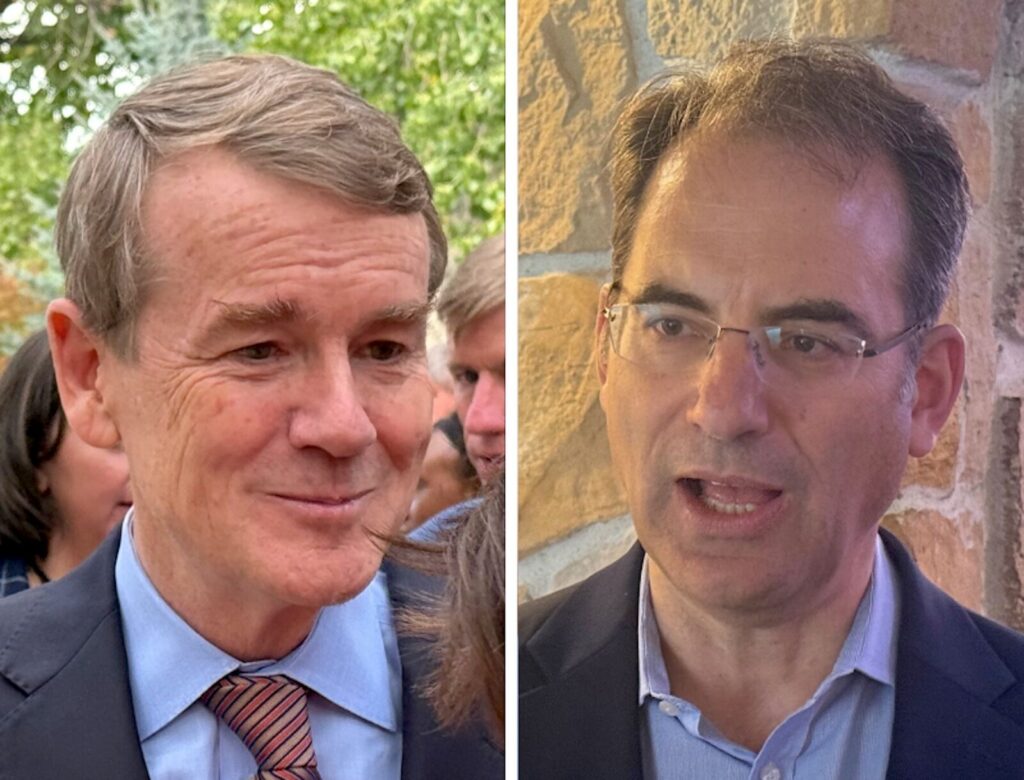
U.S. Sen. Michael Bennet, Colorado Attorney General Phil Weiser clash at Democratic gubernatorial forum
Ernest Luning
ernest.luning@coloradopolitics.com
Updated 1 week ago
Things got a little chippy Saturday at a union hall north of Denver, as Democratic gubernatorial candidates U.S. Sen. Michael Bennet and Colorado Attorney General Phil Weiser sparred over the effectiveness of their respective responses to President Donald Trump’s second...
Colorado Democratic vacancy committee selects Lori Goldstein for HD 29
Marianne Goodland
marianne.goodland@coloradopolitics.com
Updated 2 weeks ago
A Democratic vacancy committee on Sunday chose Lori Goldstein, president of the Adams 12 Board of Education, to serve the final year of Rep. Shannon Bird’s term. Bird, a Democrat who would have been term-limited this year, resigned her seat...
PREV
PREVIOUS

City leaders demand regional housing solutions following Mayor Coffman’s homeless ‘stunt’
Numerous city leaders and homeless advocates demanded action Thursday in a virtual press conference inspired by Aurora Mayor Mike Coffman’s week-long experiment posing as homeless in Aurora and Denver. “Our goal is to provide an alternate vision to solving housing and homelessness issues,” said Aurora City Council member Crystal Murillo. Murillo said she and the […]
CU chancellor condemns but refuses to fire conservative scholar who spoke at D.C. rally
University of Colorado-Boulder Chancellor Philip DiStefano on Thursday refused to terminate John C. Eastman, a visiting scholar in conservative thought and policy, for spreading conspiracy theories about election fraud prior to the Jan. 6 siege of the U.S. Capitol by supporters of the losing presidential candidate. “Those who fanned the flames of disinformation and distrust, […]