

Committee sends proposed halfway house contracts to full Denver City Council

The Denver City Council’s safety committee on Wednesday morning sent two contracts worth a combined $10 million for halfway house operations to the full council.
The contracts are intended to replace community corrections services lost when city council ended contracts with two private prison operators in the summer of 2019.
The contracts would make 231 community corrections spots available, according to a presentation by the Division of Community Corrections.
The proposed contracts are with University of Colorado Health Sciences Center — Addiction Research and Treatment Services and RRK Enterprises Inc., doing business as Independence House.
Each contract is worth $5 million and runs through the end of 2023.
According to Division of Community Corrections Director Greg Mauro’s presentation, ARTS operates programs The Haven and Peer I facilities that provide substance use disorder treatment for men and women, including pregnant women.
Independence House operates facilities for men on Pecos and Fillmore Streets, including a substance use treatment program and a program for people with severe and ongoing mental health issues.
Halfway houses, also known as community corrections and re-entry services, are intended to provide a structured living environment and needed treatment services to help people re-integrate with society after leaving prison.
In 2019 City Council ended contracts with private prison operators CoreCivic and GEO Group, a move seen as sudden after an effort led by Councilmember Candi CdeBaca.
Denver lost about 500 halfway house beds as a result, and last winter city council renewed a contract with CoreCivic for a maximum 250 beds until June 2021 as a stopgap while the city searched for replacement halfway house operators.
An advisory committee was subsequently formed to make recommendations for pursuing new contracts, which Mauro leads.
“I’d be remiss not to have to mention that this work was daunting as we started down this journey,” Mauro said.
He said community corrections will provide three tiers of services based on treatment intensity, with the highest tier including programs such as cognitive behavioral treatment, significant treatment for substance use and mental health, and sex offender management.
Mauro estimated the three tiers of program types will require 550 spots between them with capacity to serve more than 1,000 people each year. According to his presentation, the re-entry programs at the highest level of intensity will require the most beds, at 300.
Though the proposed contracts with ARTS and Independence House combined with the existing CoreCivic agreement total 481 beds maximum, Denver will need to replace up to 250 spots provided by CoreCivic when the contract winds down by June next year.
At-large Councilmember Robin Kniech emphasized the importance of not allowing the contract to end without a plan for replacing the spots. The abrupt cancelling of the contracts with CoreCivic and GEO Group in 2019 left Denver scrambling to relocate people in the affected halfway houses without just sending them back to prison, and the gap in spots led to a drop in state funding also.
“When the beds went empty, our dollars went down to match the beds, and I just think that that is not an option for this next set of facilities because I’m not sure that we’ll be able to recapture those dollars and create this opportunity, ” she said. “And so I want to think ahead. I don’t want us to be in an emergency situation again.”
Advisory group in Denver recommends contract extension for private prison halfway house provider
But next year Denver may face a state budget cut that could blow a hole in community corrections funding to the tune of more than 25%. Mauro said Gov. Jared Polis has recommended a $22 million budget cut statewide for community corrections in the next fiscal year.
But Mauro said he believes Polis’ proposal also provides a silver lining, because it includes shifting the state’s model for allocating community corrections funding locally from a prior-utilization formula to a structure more akin to a grant model.
Mauro said the current structure doesn’t have flexibility for local jurisdictions to develop innovative community re-entry programs, but a new grant-type model would allow jurisdictions to submit program plans to the Division of Criminal Justice when they ask for funding and could also create chances for small re-entry services operators to receive funding and be financially viable.
“There is a tremendous amount of work that needs to be fleshed out at the state level to develop parameters,” he said. “If the governor’s proposed reimagining of the state funding model happens, we may be able to fund healthy, from a financial standpoint, small programs. So we’ll see how that progresses in this upcoming legislative session.”
In response to a question from Council President Pro Tem Jamie Torres, Mauro said proposed contract terms attempt to balance the budget uncertainty with some stability. He said the $5 million amounts each will probably need to be revisited partway through the contract periods, but the three-year proposed periods are intended to give some stability to the halfway house operators and the requested money is based on the estimated need to provide services through at least the next year.
“Without knowing what the future state funding looks like, we used a number that we knew could get us to the next 12 months,” he said.
This article has been updated to correctly identify the names of the facilities operated by Independence House and ARTS.

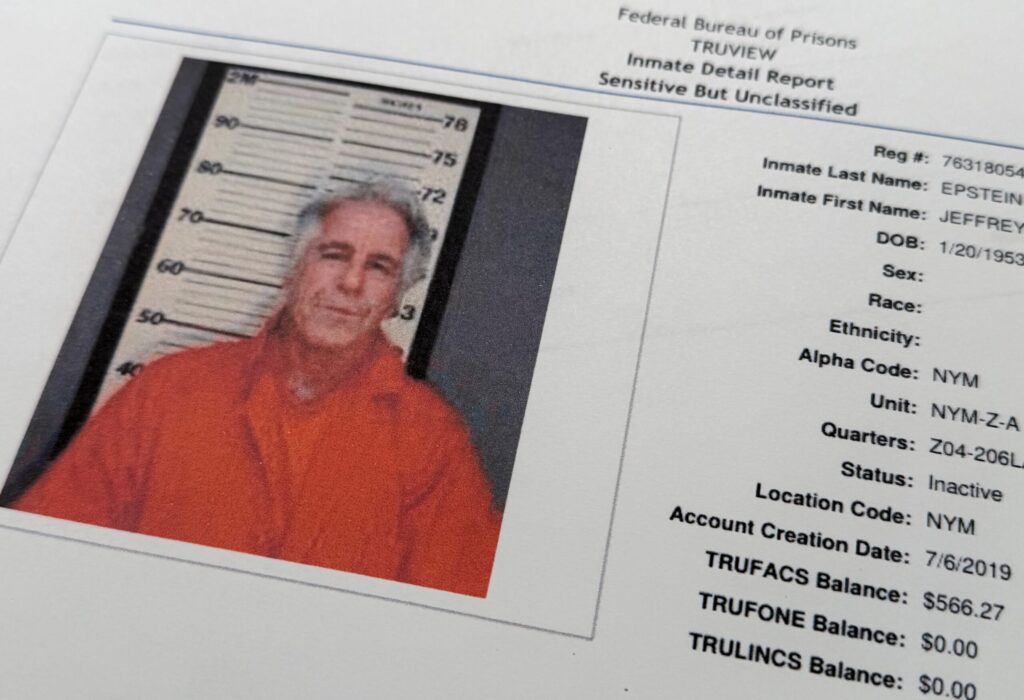
DOJ publishes more Epstein documents mentioning Trump after initial omission
Rena Rowe, Washington Examiner
rena.rowe.washington.examiner@gazetteedit.wpenginepowered.com
Updated 5 hours ago
The Justice Department released additional Epstein files on Thursday, including uncorroborated accusations from a woman claiming she was sexually assaulted by President Donald Trump. Last week, Rep. Robert Garcia (D-CA), the top Democrat on the House Oversight and Government Reform...

Federal judge dismisses developer’s challenge to Denver affordable housing ordinances
Michael Karlik
michael.karlik@coloradopolitics.com
Updated 6 hours ago
A federal judge dismissed a homebuilder’s constitutional challenge on Tuesday to a pair of Denver ordinances that impose obligations on developers related to the affordable housing demands created by new construction. Two related companies, redT Homes and redT Capital Partners,...

Another TABOR fight: Democrats plan to redirect refunds to Colorado residents
Marianne Goodland
marianne.goodland@coloradopolitics.com
Updated 2 hours ago
Colorado voters could decide this fall whether billions of dollars that would otherwise be returned as refunds under the Taxpayer’s Bill of Rights should instead go to public schools under a ballot measure unveiled Thursday by Democrats. Supporters say the...
Analysis: Colorado legislators introduce 18 energy bills amid debate over emissions goals
Scott Weiser
scott.weiser@gazette.com
Updated 5 hours ago
Colorado legislators have introduced 18 energy-related bills so far in the 2026 session, with Democrats sponsoring 14 and Republicans four, highlighting the sharp partisan split over how aggressively the state should pursue its greenhouse gas reduction goals while protecting affordability...

Colorado House committee advances bills regulating AI in therapy, insurance decisions
Marissa Ventrelli
marissa.ventrelli@coloradopolitics.com
Updated 6 hours ago
Colorado lawmakers are moving to place guardrails on the growing use of artificial intelligence in mental health care and insurance decisions. The House Health and Human Services Committee on Thursday approved two bills that would limit how therapists and insurers...

Colorado Democrats, Republicans fight over ballot fiscal information
Marissa Ventrelli
marissa.ventrelli@coloradopolitics.com
Updated 3 hours ago
Republicans and Democrats clashed anew over legislation that would require identifying which programs would see a funding reduction if a ballot measure passed, with the former saying it’s yet another way for the government to control the campaign narrative and...
10th Circuit distances itself from prior decision making it easier to toss prisoner lawsuits
Michael Karlik
michael.karlik@coloradopolitics.com
Updated 9 hours ago
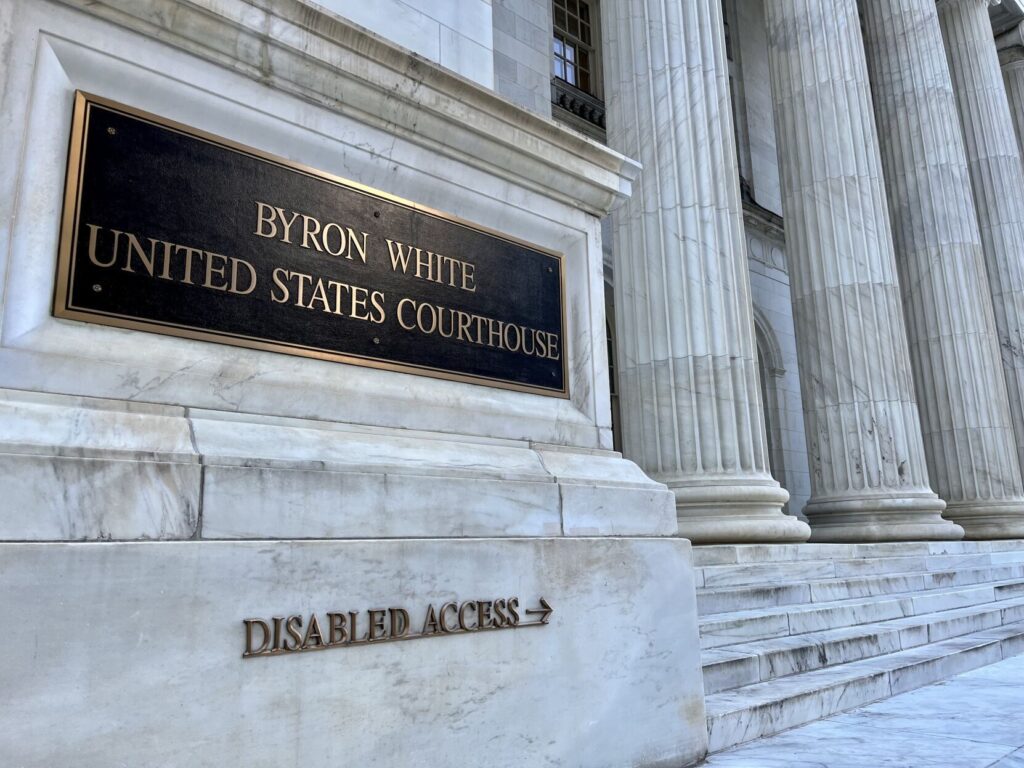
The Denver-based federal appeals court distanced itself on Wednesday from its own recent decision that made it easier for prison officials to end civil lawsuits by transferring incarcerated plaintiffs between facilities. A three-judge panel of the U.S. Court of Appeals...

Legal war over Trump tariffs still raging despite Supreme Court ruling
Jack Birle, Washington Examiner
jack.birle.washington.examiner@gazetteedit.wpenginepowered.com
Updated 8 hours ago
The war in the courts over tariff refunds took a key step forward this week as President Donald Trump’s newly implemented tariffs are facing a new legal challenge, less than a month after the Supreme Court struck down Trump’s sweeping...

Democrat Dwayne Romero jumps in primary to challenge Republican Jeff Hurd in Colorado’s 3rd CD
Ernest Luning
ernest.luning@coloradopolitics.com
Updated 10 hours ago
The Democrat who has been running for nearly a year to unseat Republican U.S. Rep. Jeff Hurd in Colorado’s 3rd Congressional District got some company in the primary this week. Dwayne Romero, a Snowmass Village business owner and decorated Army...

Proposed changes to wildfire code would add protections to eastern edge of Colorado Springs
Brennen Kauffman
brennen-kauffman@coloradopolitics.com
Updated 12 hours ago
New construction rules may be coming to the higher-risk wildfire areas around Colorado Springs, including the grassland on the city’s eastern side. Colorado Springs Fire Marshal Kris Cooper presented an early draft of the proposed changes to the city’s wildfire...
PREV
PREVIOUS

Larimer County conserves 884-acre family ranch
Larimer County Natural Resources announced Tuesday the conservation of an 884-acre ranch in northern Larimer County that has been home to a local family for more than 30 years. The conservation easement, in partnership with landowners Mark and Candee Steputis, was funded by a donation from the Steputis family and a grant from the Great […]

Colorado school districts start announcing plans to return to in-person in January
Following a new push from state officials, several school districts Tuesday announced plans to bring students back to in-person learning in January. District leaders called the plans tentative, and urged their communities to help COVID transmission continue to decrease so that schools can remain open once students return. The plans in Aurora, Adams 14, and Cherry […]