

ANALYSIS | Context drives the moment as lawmakers return early to Denver

Too early, too late for June, the business before Colorado lawmakers starting Monday has to get done. Endangered Colorado businesses and the people they employ and buy from are depending on it.
Gov. Jared Polis called the special session on Nov. 17 to pass a stimulus package of up to $400 million to help bars, restaurants, renters, landlords and students get through the twin crises, health and economic. Colorado’s unemployment rate was 6.4% in October, an improvement from 6.9% in September.
The context, however, is the engine of moment, and the timing is dire, as well.
Last week many counties in Colorado moved into a “red” restriction level, as infection rates reached a summit of 1 in 41 Coloradans carrying the virus.
State officials are concerned the the resurgence of the virus might deepen the economic crater as well.
Sadly enough, Polis tweeted Saturday night that he has tested positive for the virus. He went into quarantine last Wednesday after coming in contact with someone who had tested positive.
That’s likely to cast a pall over the deliberations, since now everyone knows someone who’s sick, and ensure that lawmakers won’t linger to debate side issues. Maybe.
Legislators took a break from the regular session in mid-March and resumed in mid-May, pledging in advance to only consider bills that were “fast, friendly of free.”
A raft of bills seemingly unrelated to the crisis were pushed through before the session ended three weeks later, to the frustration of the business interests that will wind up paying more in fees, paid sick leave and unemployment insurance.
So business interests won’t take anything for granted. Loren Furman, the vice president of state and federal government affairs for the Colorado chamber, said legislators are writing bills that are only tangentially related to the pandemic, which will have to be monitored closely if they get introduced. The last session showed how fast things can move.
“We saw all those bills that impacted business, both positively and negatively, and they were being introduced and heard in committee the very next day,” she said.
“We had to be down there every single day to talk to those legislators, which was a risk to my health and a risk to others that had to be down there, as well.”
Sunday, Democratic leaders said they would try to control the flow, but every introduced bill would get a fair hearing, as long as it fits under the instructions in the governor’s order for the session: provide pandemic relief.
House Republican leader-elect Hugh McKean said lawmakers need to be far-sighted, however, though he expects a bipartisan spirit.
“Those businesses desperately need a long runway to survive the impacts of the changes in consumer behavior and changing government rules and orders,” he said of those receiving relief. “More than anything else the Republican members of the Colorado House of Representatives are prepared to come to Denver safely and responsibly to serve Coloradans from across the entire state, from Grand Junction to Cheyenne Wells and from Rifle to Trinidad. We will find ways to survive this strangest of times and possibly even find ways to help all of Colorado thrive.”
The Capitol is expected to be decked out in prevention for the special session, and House and Senate leaders have vowed to do all they can to protect the health for fellow lawmakers, staff and the public.
Polis said at his last press availability before the holiday that it’s time for elected leaders – state and local – to “ask yourself: are you on the side of the virus or on the side of Colorado?”
Since the crisis mushroomed in March, the governor has used his emergency authority repeatedly to adopt new rules with executive orders. The special session is a departure, and one he surely brokered for a quick resolution to commence just 37 days before the regular session.
Polis got the jump on the session last week, when he signed an executive order extending tax relief to restaurants, bars, food trucks and other such small businesses hobbled by the virus.
After an extra 30 days to pay their state sales taxes for November, exempt businesses won’t have to pay the state up to $2,000 each month until February.
Polis said it was the least the state could do. Some businesses hard hit by shutdown orders and an ever-evolving book of restrictions agree.
“It’s just a Band-Aid,” Chris Fuselier, the owner of Blake Street Tavern in LoDo, told the Denver Gazette. “Here’s the deal, our sales are going to be so much lower this month, because we went from having 25% capacity to shut down indoor dining, so it helps a little bit, but it’s not anything near the relief that we need.”
Sonia Riggs, the CEO of the Colorado Restaurant Association, said restaurants can’t survive another six months with 50% capacity and needs at least 75%.
Dozens of businesses in Larimer County announced last week that they will defy the governor’s order. They want to get a variance like the one Mesa County has. Among the assurances, the Grand Junction Area Chamber of Commerce operates the “Five Star Program” to designate businesses exceeding standards to protect customers and staff.
State Sen. Rob Woodward from Loveland is one of the northern Colorado Republicans pushing back as the governor has leaned on business.
“I appreciate the governor allowing each county to monitor and implement health guidelines because government at the local level is always best,” he said. “Letting communities make local decisions will always lead to new and innovative ways of doing business. Mesa County is at the forefront of finding solutions to keep businesses open even though they have moved to level red.”
The day before, Polis said it was important for consumers to have confidence that the places where they’re trading are safe. He said “a few bad actors” shouldn’t spoil that for businesses doing all they can.
Meanwhile, Larimer County Commissioner Steve Johnson said he might have gotten pneumonia huddling with others around a propane heater last Friday and Saturday nights.
Dozens of Larimer County businesses are threatening to challenge the health restrictions accompanying Colorado’s “red” crisis level, as infections and hospitalizations set records last week. A retired veterinarian and former state senator, Johnson made a plea for restaurants, specifically, in an email to colleagues Saturday night that forwarded to Colorado Politics.
“They have invested months of time and thousands of dollars working with us on changes we have told them will allow them to operate safely,” he wrote. “And they have done exactly that. But they are who we have shut down. We should be ashamed of ourselves. I am. I’m ashamed to show my face as a government representative in these businesses.”
Polis last week also announced he’ll make an aggressive “hands-on” push to get children back to classrooms in January – as long as it can be done safely.
“Based on mounting evidence – we know a lot more than we did in March – I strongly believe based on what I’ve seen it’s the safest place for teachers, safest place for students is at school, regardless of the level of outbreak in the community.”
Rural districts have reopened in-school learning, but most metro school districts haven’t, and many that have opened have closed again sporadically.
The day after the Nov. 3 election, the governor unofficially began his bid for a second term, as opponents begin to size up their chances against the crisis governor who won handily two years ago.
Conservatives will use the pandemic against him, however, in 2022. They’ve already started.
Two recall attempts – one last year and another than fizzled out this month – have sought to oust him prematurely, citing what the petitioners believe is overreach. Those petitioners, however, have mustered a scant few signatures to do it, which might discourage young Republicans thinking of taking on the incumbent governor in two years.
Polis said at his press conference last week, before he announced his own brush with the virus, that it’s time to act.
“Not a time to be fearful, but a time to be very cautious,” he said.
Fiscal conservatives might be saying that when the legislature starts writing big checks on the taxpayer’s dime this week.


Postmaster general spars with Senate Democrats over mail-in ballot restrictions
Molly Parks
molly.parks@washingtonexaminer.com
Updated 6 minutes ago
Senate Democrats sparred with Postmaster General David Steiner on Wednesday over the U.S. Postal Service’s move to stop delivering mail-in ballots in states that don’t hand over their voter rolls to the federal government. Steiner, who has stayed out of...
Postmaster general spars with Senate Democrats over mail-in ballot restrictions
Molly Parks
molly.parks@washingtonexaminer.com
Updated 6 minutes ago
Senate Democrats sparred with Postmaster General David Steiner on Wednesday over the U.S. Postal Service’s move to stop delivering mail-in ballots in states that don’t hand over their voter rolls to the federal government. Steiner, who has stayed out of...
Postmaster general spars with Senate Democrats over mail-in ballot restrictions
Molly Parks
molly.parks@washingtonexaminer.com
Updated 6 minutes ago
Senate Democrats sparred with Postmaster General David Steiner on Wednesday over the U.S. Postal Service’s move to stop delivering mail-in ballots in states that don’t hand over their voter rolls to the federal government. Steiner, who has stayed out of...
Homeless recruits of ‘The Program’ say they were told to sign NDAs amid investigations in Colorado
David Migoya
david.migoya@gazette.com
Updated 18 hours ago
Several formerly homeless people — each drawn into an Aurora-based enterprise known as “The Program” that promised free housing and cash in return for letting a home-health business administer prescriptions they were given — said they were pressed into signing...
Homeless recruits of ‘The Program’ say they were told to sign NDAs amid investigations in Colorado
David Migoya
david.migoya@gazette.com
Updated 18 hours ago
Several formerly homeless people — each drawn into an Aurora-based enterprise known as “The Program” that promised free housing and cash in return for letting a home-health business administer prescriptions they were given — said they were pressed into signing...
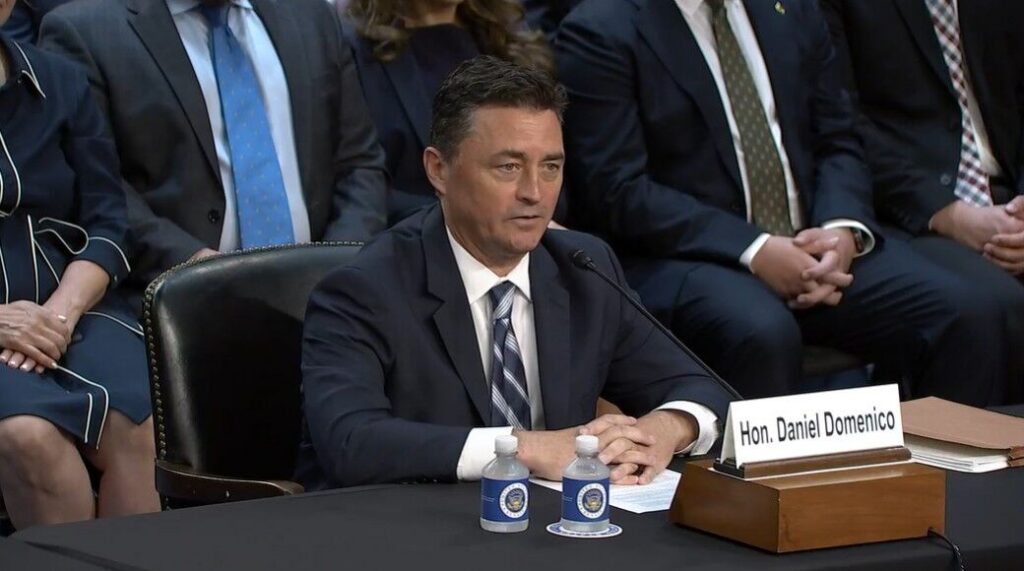
Trump’s 10th Circuit nominee declines to name 2020 election winner, defends immigration decisions
Michael Karlik
michael.karlik@coloradopolitics.com
Updated 23 minutes ago
President Donald Trump’s nominee to the Denver-based federal appeals court declined to say who won the 2020 presidential election during his appearance before the U.S. Senate Judiciary Committee on Wednesday, and defended his recent rulings in immigration detention cases. U.S....
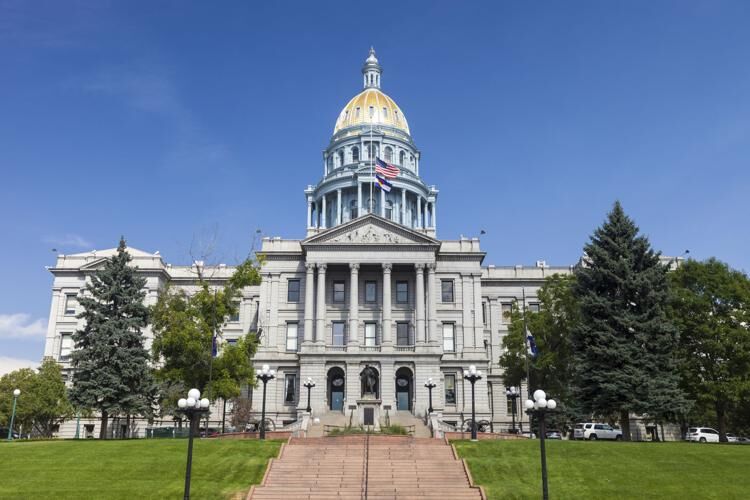
Colorado repeals attorney immigration attestation law after one year
Nico Brambila
nico.brambila@denvergazette.com
Updated 16 hours ago
One year and 12 days. That’s how long a Colorado law requiring attorneys to certify they would not use court data for federal immigration enforcement remained on the books before lawmakers repealed it. Gov. Jared Polis signed the initial legislation,...
Colorado’s ‘right to natural gas’ measure submits signatures to qualify for November ballot
Marissa Ventrelli
marissa.ventrelli@coloradopolitics.com
Updated 19 hours ago
A natural-gas rights initiative backed by Advance Colorado is likely headed to the November ballot, triggering a parallel campaign by environmental groups seeking to impose new liabilities on oil and gas operators. Petitions for Initiative No. 177 were turned in...

Economists: Colorado budget improves slightly, but deficits still loom
Marianne Goodland
marianne.goodland@coloradopolitics.com
Updated 20 hours ago
State economists reported a stronger-than-expected bump in general fund revenue driven largely by higher individual income tax collections, yet warned that Colorado remains on track to begin the next fiscal year with a sizable shortfall. State economists upgraded “significantly” the...

Colorado law allowing lawsuits against ‘conversion therapy’ providers takes effect July 1
Marissa Ventrelli
marissa.ventrelli@coloradopolitics.com
Updated 20 hours ago
With a new law taking effect July 1, Colorado is creating a legal pathway for people to sue licensed providers of “conversion therapy,” even as debate over the practice’s constitutionality continues in the wake of a recent U.S. Supreme Court...
PREV
PREVIOUS
INSIGHTS | Conservatives at the Colorado Capitol can’t afford enemies
Jim Pfaff didn’t mince words, at least not many. He doesn’t work with losers, and that’s what Republicans in the Colorado Capitol are becoming. There’s no arguing with the math and status quo. As with the rest of the state and nation, Republicans are a house divided, fighting among themselves over Donald Trump, doctrine and […]

Bills to be introduced in Monday's special session
Update: A list of more than two dozen bills slated to be introduced in the special session was posted on the General Assembly’s website later Sunday. Sign-up information to testify on the bills can be found here. Monday’s special session of the Colorado General Assembly will focus on seven policy areas. Legislative working groups – working outside […]