

Court greenlights employee class action lawsuit against Natural Grocers

A federal court has granted preliminary approval to a class action lawsuit against Lakewood-based Natural Grocers on behalf of assistant store managers alleging the company improperly exempted them from overtime pay.
Natural Grocers operates more than 150 stores in 20 states, with over 3,000 employees total. The class action suit seeks to represent all assistant managers from Jan. 31, 2017 to the present who did not receive compensation for overtime work.
Plaintiff Michael Levine was an assistant manager in Highlands Ranch for approximately one year between 2018 and 2019, and said he worked on average 50 to 55 hours per week.
“I had to work these hours in order to complete my job duties, help customers, and satisfy Natural Grocers’ business needs. This was a routine and necessary part of my position as an ASM,” Levine wrote in a declaration to the court. He added that his salary was $47,500.
According to his federal complaint, Natural Grocers assigned assistant managers similar duties as hourly, non-exempt employees. Five other people who worked as assistant store managers joined in the legal action, alleging similar treatment. Declarations from assistant mangers in Colorado, Washington, Idaho, North Dakota and Missouri indicated that the hierarchy from store to store “did not vary significantly.”
“The performance of manual and/or clerical labor occupied the majority of the working hours of Plaintiff,” court documents stated. “The work performed by Plaintiff and the members of the ASM Class and ASM Collective constitutes compensable work time under the FLSA.”
The Fair Labor Standards Act generally requires employers to provide one-and-one-half times the rate of pay for overtime work. Executive, administration and professional employees who are salaried are exempt from the overtime mandate. The U.S. Department of Labor notes that the “ultimate burden” of applying an exemption to that rule lies with the employer.
Natural Grocers argued that the tasks of assistant managers were not consistent from person to person, and in some stores the assistant manager was “frequently” the highest-ranking employee on duty. As such, a class action suit covering all such workers was inappropriate.
“The evidence shows that their duties widely varied depending on a host of factors, such as length of time on the job, rapport with and level of delegation by the Store Manager, level of skill, performance, ability to handle increased responsibility, store size and sales volume, and other factors. Collective or class-wide treatment of all ASMs with this varied record is simply untenable,” wrote Steven Gutierrez, an attorney representing the company.
U.S. Magistrate Judge Scott T. Varholak, in giving preliminary certification to the class action suit, rejected Natural Grocers’ request that a notice posted to employees about the lawsuit should describe the “potential burdens of litigation.” Varholak believed such information could discourage assistant store managers from joining the litigation.
The magistrate judge’s Nov. 6 order also cast aside the company’s argument that the notice should not appear in stores. Varholak instead approved the posting of a legal notice in the employee-only section of Natural Grocers stores.
Jason Conway, a Philadelphia-based attorney representing Levine and the other plaintiffs, said he looks forward to sending notice of the class action suit to the approximately 440 assistant store managers nationwide.
“We have received no indication from the company that they have either reclassified the position to bring it into compliance with the Fair Labor Standards Act or have conducted any type of investigation to do that,” Conway said.
The general counsel and vice president of Natural Grocers, Jonathan Dhillon, acknowledged the company did not have plans to change its protocols, arguing the existing classification of assistant managers does not run afoul of federal law.
“We’re really highly focused on our crew and incenting them and rewarding them. We feel strongly that our current policies and classification practices are fair, they are correct and they comply with the law,” he said.
Dhillon added that the magistrate judge had employed a more lenient standard in giving preliminary approval to the lawsuit as a class action, and stressed that the proceedings thus far were based on a relatively small number of plaintiff allegations that the company had not yet rebutted in full.
The case is Levine v. Vitamin Cottage Natural Food Markets Inc.


Federal judge sides with Mesa County school district in ex-student’s First Amendment claims
Michael Karlik
michael.karlik@coloradopolitics.com
Updated 7 hours ago
A federal judge concluded last week that Mesa County Valley School District 51 and three of its administrators did not violate the First Amendment rights of a former student when they imposed minor discipline in response to disruptive behavior. In...

Colorado Supreme Court intervenes in 4 ongoing cases
Michael Karlik
michael.karlik@coloradopolitics.com
Updated 11 hours ago
The Colorado Supreme Court recently moved to intervene in four ongoing cases, including two criminal prosecutions, a civil lawsuit, and a child welfare proceeding. At least four of the court’s seven members must agree to hear a case outside of...

Colorado ski resorts announce early closures amid historic snowpack lows, high temperatures
Kyla Pearce
kyla.pearce@gazette.com
Updated 11 hours ago
Vail Resorts is the latest area to announce season closure Wednesday As Colorado’s historically low snowpack year comes to a close and spring conditions take over the mountains, the state’s major ski resorts are announcing closing dates — some of...

Kentucky Gov. Andy Beshear set to headline Colorado Democrats’ annual fundraising dinner
Ernest Luning
ernest.luning@coloradopolitics.com
Updated 11 hours ago
Kentucky Gov. Andy Beshear, one of the Democrats’ top 2028 presidential prospects, is scheduled to deliver the keynote address at the Colorado Democratic Party’s annual fundraising dinner in June in Denver, the party said Friday. Serving his second term as...
Gov. Polis names new leaders for Colorado health agencies in wake of Medicaid turmoil
Marianne Goodland
marianne.goodland@coloradopolitics.com
Updated 13 hours ago
Gov. Jared Polis, on Thursday, announced he was appointing Gretchen Hammer to serve as acting executive director of the Colorado Department of Health Care Policy and Financing, and deputy executive director Stephanie Beasley to become the next commissioner of the...

Federal judge releases man immediately as consequence for immigration judge disobeying orders
Michael Karlik
michael.karlik@coloradopolitics.com
Updated 11 hours ago
A federal judge ordered a man’s immediate release from immigration detention on Thursday after finding an immigration judge disregarded his prior orders requiring a bond hearing. For the past year, Colorado’s federal district court has faced a flood of “habeas corpus”...
Colorado sues Trump administration, calling new election order ‘unconstitutional’
Marissa Ventrelli
marissa.ventrelli@coloradopolitics.com
Updated 14 hours ago
Colorado Attorney General Phil Weiser has joined a multistate coalition suing President Donald Trump over a new executive order on elections, arguing the directive unlawfully intrudes on states’ authority to run their own voting systems and threatens access to mail...

Why Colorado’s LGBTQ laws keep getting struck down by the Supreme Court
Jack Birle, Washington Examiner
jack.birle.washington.examiner@gazetteedit.wpenginepowered.com
Updated 14 hours ago
The Supreme Court has been a house of horrors for Colorado over the past decade, with the state facing a trio of major losses over laws it claims it has enacted to protect LGBT people but that the justices found...
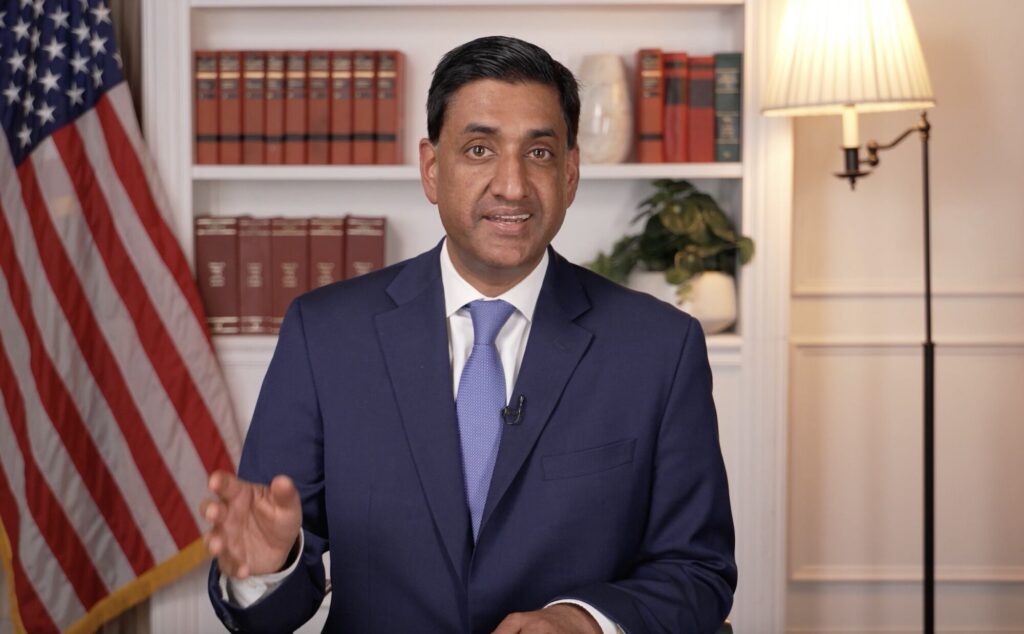
Denver Democrat Neal Walia lands endorsement from Ro Khanna in Colorado’s state House District 9
Ernest Luning
ernest.luning@coloradopolitics.com
Updated 11 hours ago
California Rep. Ro Khanna on Friday endorsed legislative candidate Neal Walia in the race for an open state House seat, praising the Denver Democrat’s commitment to public service and progressive goals. Walia, who mounted an unsuccessful challenge against U.S. Rep....

Denver judge denies Gov. Polis request to dismiss ICE-related records case
Marianne Goodland
marianne.goodland@coloradopolitics.com
Updated 12 hours ago
A year after blocking the release of state records to federal immigration agents, a Denver judge has now denied Gov. Jared Polis’ effort to end the lawsuit at the center of the dispute. The lawsuit filed against the governor in...
PREV
PREVIOUS

Jeffco opens survey about short-term rentals
Jefferson County is seeking input from the public about short-term rentals in the unincorporated part of the county as part of a process to modify housing regulations. Currently, short-term rentals require a one-acre lot at minimum, may only occur in single-family detached houses and necessitate approval from the Board of Adjustment. Guests, through platforms like […]

Court grants immunity to 1 Louisville officer involved in shooting of suspect, puppy
A federal court last week awarded immunity to one of the Louisville officers sued for his involvement in an arrest that left a suspect wounded and a puppy dead. According to the complaint from Nicholas and John Moses, the two were in their truck in a Louisville shopping center’s parking lot on June 7, 2018 when […]