

HUDSON | Democracy no longer is a shared chore

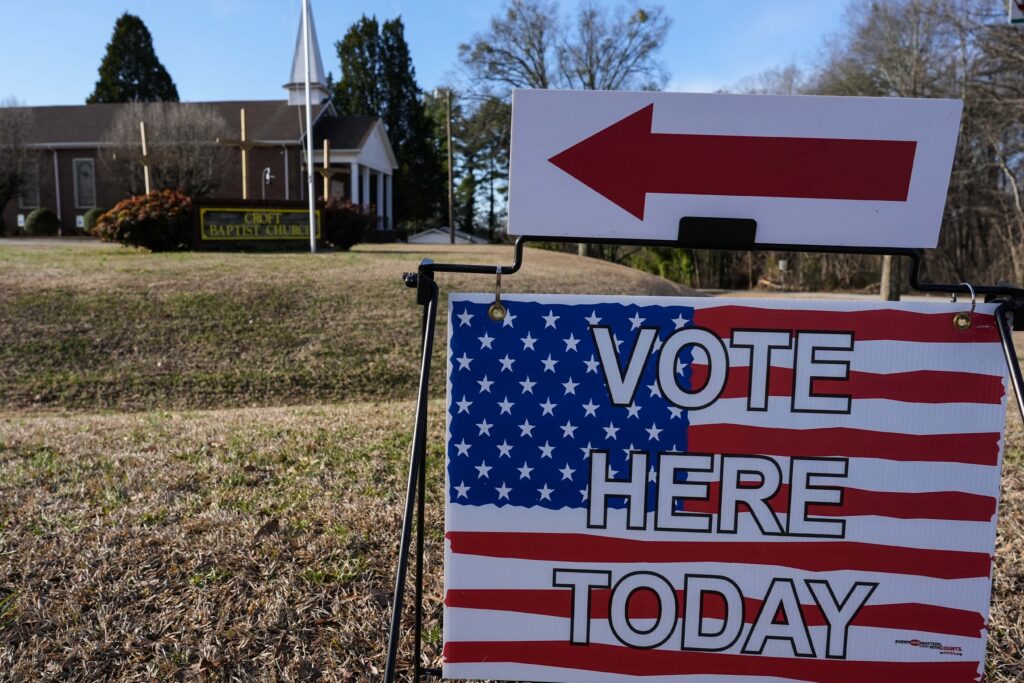
On election day in 1980 I was running for re-election to the Colorado House. I was scheduled to provide rides to the polls for senior voters that day, so I decided to cast my own vote at 7 a.m. just after the doors opened at the Baptist Church a few blocks from home. There were perhaps a dozen early birds standing in line, many of them gripping a thermos of coffee, a few juiced with schnapps I’m sure, carried from home to ward off a brisk morning chill (no Starbucks then). One voter was a close neighbor — a lonely Republican in a heavily Democratic district.
I couldn’t resist the chance to give Jim a hard time and asked why he’d bothered to roll out of bed so early. He responded, “…I wanted to be sure I got here in time to cancel your vote, Miller.” We laughed and I probed a little further, “You’ll still be voting for me though, won’t you?” He grinned and replied, “I’m still considering that.” His wife was an active Democrat, while he was a law enforcement officer working juvenile corrections. We had conferred during the legislative session to add an amendment to a crime bill he wanted. I was fairly confident I had his vote locked down, but neither of us harbored the slightest suspicion this was the “most important election of our lifetimes.”
I recalled all this when I deposited my mail ballot last week at the return box in front of the Carla Madison rec center. What have Colorado voters lost and gained as our election process evolved over the past four decades? And why have these changes occurred? Caucuses used to be held in a large family room belonging to the Republican and Democratic hosts in each precinct. The frail and disabled were rarely excluded from participation as willing hands lifted wheelchairs up porch steps. Usually these party conclaves drew no more than 20-30 activists out of 300-500 registered voters. There were tales told, however, among Democrats about George McGovern’s campaign bursting the seams of caucus meetings in 1972. Recently, in my south City Park precinct, Hillary Clinton and Barack Obama in 2008 and Bernie Sanders again in 2016 attracted 150 supporters — far beyond the capacity of a private home.
Following the passage of the Americans With Disabilities Act (ADA), caucuses started to migrate into public buildings, usually schools. Rather than a single precinct, as many as a dozen caucus meetings began to be scheduled simultaneously in separate classrooms. Voters wandered back and forth down unfamiliar hallways searching for their precinct meeting. When located in elementary schools, full sized adults would comically squeeze beneath desks designed for small children or choose to stand along the wall. Precincts gradually expanded in size, doubling to a thousand voters or more. This contributed to an anonymity that replaced the conviviality of neighbors sharing rumors and catching up with one another’s lives.
Upon the approval of universal primary elections, also open to unaffiliated voters, it is doubtful caucuses will continue to serve any useful purpose — further weakening both political parties. County and state assemblies could also find themselves on the chopping block as well. Mail ballot elections elicit far higher voter participation, which seems a good thing, and they likely prevent any coherent program of voter suppression. There won’t be armed militia monitoring Colorado polling places on Nov. 3 since those, for the most part, no longer exist. Drop-box voting feels less and less like a shared civic project. Choices are increasingly shaped in isolation by messages, often of dubious truthfulness, transmitted within social media silos designed to promote tailored special-interest agendas advanced from both the right and the left.
Perversely, mass demonstrations offer the substitution of one form of anonymity with another. They can, however, relieve the burden of loneliness, even if only temporarily, during enforced COVID-19 distancing. These events, despite the merit of the grievances they address, are not meant to persuade but to declare that participants cannot be moved. They proclaim, “…we are many, we are united, and we are restless.” It should come as no surprise that such appeals agitate others, even when marchers do not perceive themselves as agitators. A structural breakdown has developed in the connection between citizens and their political leaders.
Colorado is caught up in this failure as much as anywhere else in America. We have a failed tax system that is rapidly eroding our civic infrastructure and undermining the state’s economic health, and everyone knows it — yet we do nothing about it. Whatever advantage is won through partisan squabbling, a perilous price is paid in public trust. When democracy ceases to be a shared chore nothing positive can result. Somehow, some way we need to get back to those family rooms.

What exactly makes you a public figure? | Hal Bidlack
Hal Bidlack
hal-bidlack@coloradopolitics.com
Updated 10 hours ago
Well, once again, this non-lawyer columnist is going to jump in the deep end of legal scholarship and will explore a recent Colorado Court of Appeals decision. Buckle up. In yet another terrific Colorado Politics Court Crawl article, we learned...
Modernizing Pinnacol is about its members, not politics | IN RESPONSE
Colorado Politics
colorado-politics@coloradopolitics.com
Updated 23 minutes ago
By Akasha Absher While we share the passion for protecting Colorado’s workers expressed in a recent op-ed from the perspective of trial attorneys and union representatives, the piece paints a picture of Pinnacol Assurance that is more rooted in 1915...
Mum on his own replacement, Bennet disrespects voters | Dick Wadhams
Dick Wadhams
dick-wadhams@coloradopolitics.com
Updated 3 days ago
U.S. Sen. Michael Bennet is playing an arrogant game of hide-and-seek with Colorado voters as he seeks to abandon his Senate seat to become governor. Bennet insists that if he is elected governor in November, he will wait until he...

What kind of energy independence did we pay for? | Miller Hudson
Miller Hudson
miller-hudson@coloradopolitics.com
Updated 3 days ago
It was during the summer of 1972 AT&T published an internal solicitation for installation and repair supervisors with “inner-city” experience to transfer to Mountain Bell. The catch was an applicant’s readiness to work 10 hours a day, six days a...

Those who cannot live without wild things | Rachel Gabel
Rachel Gabel
rachel-gabel@coloradopolitics.com
Updated 3 days ago
Aldo Leopold wrote in his Sand County Almanac, “There are some who can live without wild things and some who cannot.” The collection of essays first published in 1949 was accepted by a publishing house after a steady stream of...

Thank God for Wyoming — the un-Colorado | Jon Caldara
Jon Caldara
jon-caldara@coloradopolitics.com
Updated 3 days ago
Years ago, I interviewed a Canadian health-care broker whose job was helping his countrymen escape their own failing system. When their “free” health care turned into “free to wait until you die,” he’d save his clients by routing them to...
It’s time to let unaffiliated voters caucus | Vince Bzdek
Vince Bzdek
vince.bzdek@gazette.com
Updated 24 hours ago
There’s no getting around it: Colorado’s 3,000 county caucuses, which just wrapped up recently, left half the electorate out in the cold. Since unaffiliated voters now make up 51% of all Colorado voters, a majority of Colorado electors are barred...
A Mile High, again: Capitol M | Week of March 21, 2026
Marianne Goodland
marianne.goodland@coloradopolitics.com
Updated 6 days ago
The lighter side of the Capitol, usually…. Local Journalism Day, except they forgot their very own local journalists. The state Senate on Thursday, March 19, passed a resolution recognizing Local Journalism Day. Everyone voted for it, which is good, because...

The insular bubble of caucuses and assemblies | SONDERMANN
Eric Sondermann
eric-sondermann@coloradopolitics.com
Updated 5 days ago
Nearly 30 years ago, then-Federal Reserve Chairman Alan Greenspan coined the term “irrational exuberance” to describe the overheated stock market. That descriptive phrase could also apply to much of the political realm. The hype in politics often grossly exceeds the...
Set appropriate state guidelines for critical surveillance technology | OPINION
Colorado Politics
colorado-politics@coloradopolitics.com
Updated 4 days ago
I admit it: I’m worried. I’m hearing a lot about surveillance in the public arena. I hear cameras are capturing my car’s license plate wherever I drive, my face as I go in and out of stores and health facilities,...
PREV
PREVIOUS

FEEDBACK | A vote for wolves is a vote for values
Recently we read that Proposition 114 to restore wolves to Colorado is “ballot box biology.” Instead, it is direct democracy. Using direct democracy to demand restoration of the wolf is an audacious and yet eminently practical approach for establishing a self-sustaining population of the species to the great public wildlands of western Colorado. Such a […]

SENGENBERGER | Don't reward shuttered schools
Jimmy Sengenberger I’ll be blunt: School districts are failing their students by pursuing remote learning. Voters should not approve a single tax or bond measure requested by a school district that is not opened for in-person learning or is threatening to go back to full-remote. Unfortunately, districts like Cherry Creek and Aurora are preparing parents for […]