

At halfway point, applicants for redistricting commissions are meager, lack diversity
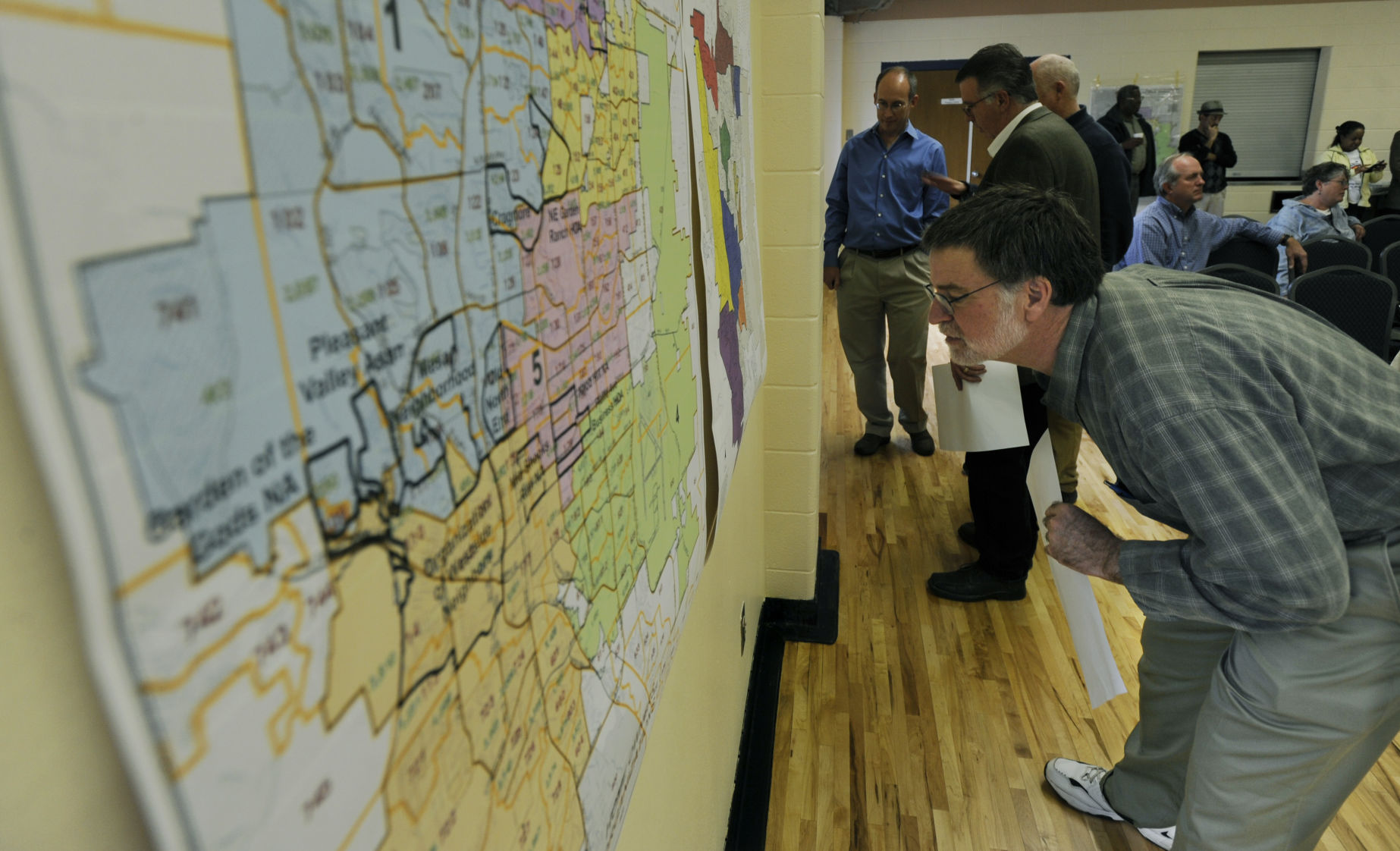
Colorado began accepting applications in early August for the state’s newly-voter-approved independent redistricting commissions, but the responses have been meager, and so far don’t reflect the state’s demographics, skewing older and representing little of the state’s ethnic minority communities.
The low number of applicants and the mismatch between commission applicants and the state’s population have raised concern among those monitoring the application process, and with little less than half of the application period remaining, they’re calling for more applicants, especially from the so-far underrepresented demographic groups. That would mean younger applicants and more female, Black, Hispanic and Asian applicants.
As of Sept. 22, the Independent Congressional Redistricting Commission has received 188 applications, and the Independent Legislative Redistricting Commission has received 109 applications, according to a statement released Friday.
Among early notable applicants is former State Senate president Joan Fitz-Gerald, a Democrat. Full listings of applicants for each commission are available at redistricting.colorado.gov.
Redistricting is a once-in-a-decade process that reallocates voting power, based on population data compiled during each decennial census. States can gain or lose congressional districts, based on relative population growth. And congressional and state legislative districts are redrawn to ensure equal representation. In most states, elected state legislators redraw the maps, without much public input or oversight.
But a growing number of states, including Colorado in 2018, have passed reforms that empower independent commissions, made up of citizens who do the work through public hearings. Colorado will have two commissions, one for congressional maps and one for legislative maps. Each will have 12 commissioners, made up of four Republicans, four Democrats and four unaffiliated registered voters.
As of mid-September, 286 applicants had submitted their names for the 24 slots on the two redistricting commissions. Of those, 230, or a little more than 80%, are white. Eighteen applicants, or 6%, are Hispanic. And only seven, or 2.5%, are Black. The state is 68% white, 22% Hispanic and 4% Black.
The number of applicants is also a fraction of states with similar application processes. In Michigan, a state with about 70% more residents, there were more than 9,000 applicants, or about 30 times the number of applicants in Colorado so far. In California, there were almost 21,000 applicants.
The applicants so far also skew older than the state’s population, with 129 or almost half of the applicants, over the age of 65, despite that age group comprising only 18% of the voting age population.
Roughly three-quarters of the applicants are men.
But the language added to the constitution by Amendments Y and Z, which were overwhelmingly approved by voters, calls for the commission to mirror Colorado’s demographics.
“Each commission must, to the extent possible, reflect Colorado’s racial, ethnic, gender and geographic diversity,” the 2018 amendments to the state constitution instruct.
Toni Larson, the president of the League of Women Voters of Colorado and a leading advocate for the voter-approved redistricting reforms, said during a Sept. 21 redistricting forum the response has not met expectations: “They are not very diverse.”
Larson used her time during the forum, hosted by Colorado College, to urge more people, especially those from minority communities, to apply for the commissions.
“So please, people who are or consider themselves diverse, please look at the application and consider being on one of the commissions,” Larsen said.
The new language in the state constitution also requires commissioners to come from all parts of the state, by mandating at least one commissioner on each commission come from each congressional district. There are as few as 24 applicants in Congressional District 7, representing the northeastern part of the Denver metropolitan area, and as many as 58, or 20% of the applicants, from Congressional District 2, which contains Boulder and Fort Collins.
While the applicants so far don’t reflect the racial, ethnic, gender and, to a lesser extent, the geographic diversity of the state, advocates for the state’s redistricting reforms speaking at the Sept. 21 event emphasized racial and ethnic diversity most.
Denise Maes, public policy director for the local chapter of the American Civil Liberties Union, said it’s crucial for minority groups to have representation on the commission because of the long history of racially discriminatory voting and election practices, which redistricting reforms are intended to combat. The commission will be making decisions that will affect the way people are represented in the state legislature and in Congress, so having commissioners from minority communities can help ensure fair representation for them, she said.
“What we want to see at the ACLU is real true diversity on those redistricting commissions,” she said.
Colorado residents who have been continuously registered in the state with the same political party for the past five years — whether Republican, Democratic or unaffiliated — are qualified to apply.
The deadline for applications is Nov. 10 and people can read more about the application requirements and apply at redistricting.colorado.gov.
Editor’s note: This article has been updated to correct information from Legislative Council to adjust the number of applicants and correct information in the group’s demographic handout.

Colorado auditor finds serious issues with labor agency’s unemployment insurance accounting
Marianne Goodland
marianne.goodland@coloradopolitics.com
Updated 20 minutes ago
Colorado’s state auditors found serious issues with the accounting practices of the unemployment insurance division of the Department of Labor and Employment, concluding the agency underestimated and overestimated figures to the tune of billions of dollars. The auditors labeled the...
Colorado’s newest federal judge speaks about techniques for advancing cases
Michael Karlik
michael.karlik@coloradopolitics.com
Updated 21 minutes ago
U.S. Magistrate Judge Cyrus Y. Chung described on Wednesday the various tactics he employs to resolve court cases, summing up his role with a laxative-based metaphor. “Someone told a group of us federal magistrate judges that magistrate judges are the...

Three cargo ships damaged by ‘projectiles’ in Strait of Hormuz
Brady Knox, Washington Examiner
brady.knox.washington.examiner@gazetteedit.wpenginepowered.com
Updated 4 hours ago
Three cargo ships were damaged by unspecified “projectiles” while navigating the Strait of Hormuz, jeopardizing President Donald Trump’s goal of preserving the shipping lane’s safety. The strait was de facto closed the morning hostilities began on Feb. 28, with announcements...

Trump calls on Thune to be a ‘leader’ and get the votes for the SAVE America Act
NAOMI LIM Washington Examiner
naomi-lim-washington-examiner@coloradopolitics.com
Updated 4 hours ago
President Donald Trump increased pressure on Senate Majority Leader John Thune (R-SD) to pass the SAVE America Act, imploring him to be a “leader” after he expressed concerns that there is not enough support for the measure in his chamber....
The ‘talking filibuster,’ explained
Molly Parks, Washington Examiner
molly.parks.washington.examiner@gazetteedit.wpenginepowered.com
Updated 4 hours ago
Senate Republicans have for weeks been debating the use of the “talking filibuster” to guarantee the passage of the SAVE America Act in the upper chamber, after President Donald Trump called the legislation his “No. 1” priority. The bill, which...
Colorado Gov. Polis joins coalition of governors urging Congress to reject Trump tariffs
Marissa Ventrelli
marissa.ventrelli@coloradopolitics.com
Updated 4 hours ago
Colorado Gov. Jared Polis has joined 18 other governors in writing a letter to members of Congress, urging them to reject President Donald Trump’s efforts to codify tariffs that the Supreme Court recently invalidated. “Governors across the country are witnessing...

Department of Agriculture warns of packages holding potentially invasive seeds
Michael Braithwaite
michael.braithwaite@gazette.com
Updated 4 hours ago
Spring planting is around the corner, and the Colorado Department of Agriculture wants residents to know where their seeds are coming from. Officials with the department warned Tuesday that they received reports of unsolicited packages containing plant seeds mailed internationally...

Federal judge hears ICE agents’ confusion about law, injunction on warrantless arrests
Michael Karlik
michael.karlik@coloradopolitics.com
Updated 19 hours ago
A federal judge heard testimony on Tuesday from U.S. Customs and Immigration Enforcement agents in Colorado, who had trouble describing the requirements of his recent injunction and the training they received on making warrantless arrests pursuant to the law. On...

10th Circuit dismisses challenge to Colorado legislature’s decorum rules
Michael Karlik
michael.karlik@coloradopolitics.com
Updated 7 hours ago
The Denver-based federal appeals court concluded on Tuesday that Colorado lawmakers cannot be sued for creating and enforcing rules of decorum that circumscribe the public commentary allowed at legislative committee hearings. A three-judge panel of the U.S. Court of Appeals...

U.S. energy secretary warns Colorado’s energy policies could drive up prices, deter businesses
Scott Weiser
scott.weiser@gazette.com
Updated 2 hours ago
U.S. Energy Secretary Chris Wright on Monday warned that Colorado’s energy policies could lead to higher electricity prices and deter businesses, such as data centers, from locating in the state. Wright, a former executive of a Colorado-based energy company tapped...
PREV
PREVIOUS

Outdoor dining in the chilly fall and winter months? State public health issues how-to guidelines
With the Broncos slated to play until January, COVID-19 notwithstanding, restaurants and bars with food service are looking at how to keep business going — and fans coming — once the weather turns cold. The Colorado Department of Public Health and Environment (CDPHE) announced new guidelines Thursday on outdoor dining, including how restaurants and bars can continue […]
Trump to nominate Amy Coney Barrett to replace Ginsburg, reports claim
Speculation is building that Amy Coney Barrett will be President Trump’s selection for the Supreme Court vacancy. Sources told The New York Times and The Hill that Trump plans to announce Saturday afternoon that the 7th U.S. Circuit Court of Appeals judge will be his third nominee to the high court, but they stressed caution because the president has a […]