

Court determines trial judge improperly vouched for breathalyzer’s functionality to jury
A judge exceeded his authority by instructing a jury that he found the breathalyzer device used to convict a defendant to be reliable, rather than citing a certification by the Colorado Department of Public Health and Environment, a Court of Appeals panel decided on Thursday.
“Had the trial court taken judicial notice that the CDPHE had determined that the type of device was reliable, it would have complied with the statute,” wrote Judge Ted C. Tow III. “Instead, though, the court only took notice that the device was reliable, neglecting to attribute the finding of reliability to any CDPHE rule.”
Police in Denver pulled over Luke J. Leppek in December 2016. An officer suspected Leppek was inebriated, and Leppek subsequently failed multiple roadside sobriety tests in the officer’s judgment. Following his arrest, Leppek registered a blood alcohol content of .108% on an Intoxilyzer 9000 device.
A jury convicted him of driving while ability impaired, false reporting of information to police, and driving under the influence per se — a charge for those whose BAC exceeds .08%. Leppek’s sentence was four years in prison.
At trial, Leppek’s attorney objected to an instruction that Denver District Judge Michael J. Vallejos gave the jury, indicating “judicial notice” of the breathalyzer’s functionality. Judicial notice is applicable to matters that are well-known within the court’s jurisdiction or not subject to a reasonable dispute.
“There has been evidence introduced before you that an analysis of the defendant’s breath was made by means of an Intoxilyzer 9000 to determine the amount of alcohol in the defendant’s breath at the time of the alleged offense or within a reasonable time thereafter,” Vallejos told the jury.
He continued: “The court takes judicial notice that such testing device is a scientifically and legally reliable and accurate device for determining the alcoholic content of the breath. You may or may not accept this fact as true. You may weigh it as you would any other evidence.”
Colorado’s DUI statute authorizes a court to take judicial notice of drug-testing methods and devices “as certified by the department of public health and environment.”
Judge Lino S. Lipinsky de Orlov, one of the panel members, characterized during oral argument that Vallejos “put his finger on the scale” by telling the jury, in essence, “I, the judge, sitting on the bench with the black robe, have found…the machine is reliable.”
Tow, in the appellate court’s opinion, acknowledged that the determination a court is allowed to make is “fairly nuanced.” While Vallejos did read the CDPHE certification language to the jury as well, the appellate panel determined that trial courts are not permitted to vouch for the Intoxilyzer’s functionality, either as a class of machine or for individual devices, even with the disclaimer. The panel reversed Leppek’s DUI per se conviction and ordered him resentenced for just the offense of driving while ability impaired.
Leppek also challenged the functionality certificate that the breathalyzer issued as a receipt, on the grounds that the CDPHE executive director who had purportedly certified the device to work during calendar year 2016 had not worked at the department since 2015. The law requires the department’s director or deputy to certify the breathalyzers.
“The court deprived Mr. Leppek of the right to present a defense and confront witnesses,” said Jeanne Segil, Leppek’s lawyer, to the panel during oral argument.
A separate appeals panel in July found that defendants have no constitutional right to challenge the admissibility of functionality certificates as evidence. Segil, in Leppek’s case, did not assert that the lack of a firmware update to the device impaired its functionality, but argued the jury had the right to hear any evidence to the contrary. The panel, however, dismissed the challenge as irrelevant.
“[W]e cannot see how the signature had any bearing on the accuracy of the test results,” wrote Tow. “Furthermore, we reject Leppek’s assertion that the inaccuracy on the certificate undermined the reliability of the certification — and thus the reliability of the device in general — as the presence of the signature was irrelevant to whether the device was actually certified by CDPHE.”
The case is People v. Leppek.

Colorado Supreme Court intervenes in 4 ongoing cases
Michael Karlik
michael.karlik@coloradopolitics.com
Updated 2 hours ago
The Colorado Supreme Court recently moved to intervene in four ongoing cases, including two criminal prosecutions, a civil lawsuit, and a child welfare proceeding. At least four of the court’s seven members must agree to hear a case outside of...

Colorado ski resorts announce early closures amid historic snowpack lows, high temperatures
Kyla Pearce
kyla.pearce@gazette.com
Updated 3 hours ago
Vail Resorts is the latest area to announce season closure Wednesday As Colorado’s historically low snowpack year comes to a close and spring conditions take over the mountains, the state’s major ski resorts are announcing closing dates — some of...

Kentucky Gov. Andy Beshear set to headline Colorado Democrats’ annual fundraising dinner
Ernest Luning
ernest.luning@coloradopolitics.com
Updated 3 hours ago
Kentucky Gov. Andy Beshear, one of the Democrats’ top 2028 presidential prospects, is scheduled to deliver the keynote address at the Colorado Democratic Party’s annual fundraising dinner in June in Denver, the party said Friday. Serving his second term as...
Gov. Polis names new leaders for Colorado health agencies in wake of Medicaid turmoil
Marianne Goodland
marianne.goodland@coloradopolitics.com
Updated 5 hours ago
Gov. Jared Polis, on Thursday, announced he was appointing Gretchen Hammer to serve as acting executive director of the Colorado Department of Health Care Policy and Financing, and deputy executive director Stephanie Beasley to become the next commissioner of the...
Federal judge releases man immediately as consequence for immigration judge disobeying orders
Michael Karlik
michael.karlik@coloradopolitics.com
Updated 2 hours ago
A federal judge ordered a man’s immediate release from immigration detention on Thursday after finding an immigration judge disregarded his prior orders requiring a bond hearing. For the past year, Colorado’s federal district court has faced a flood of “habeas corpus”...
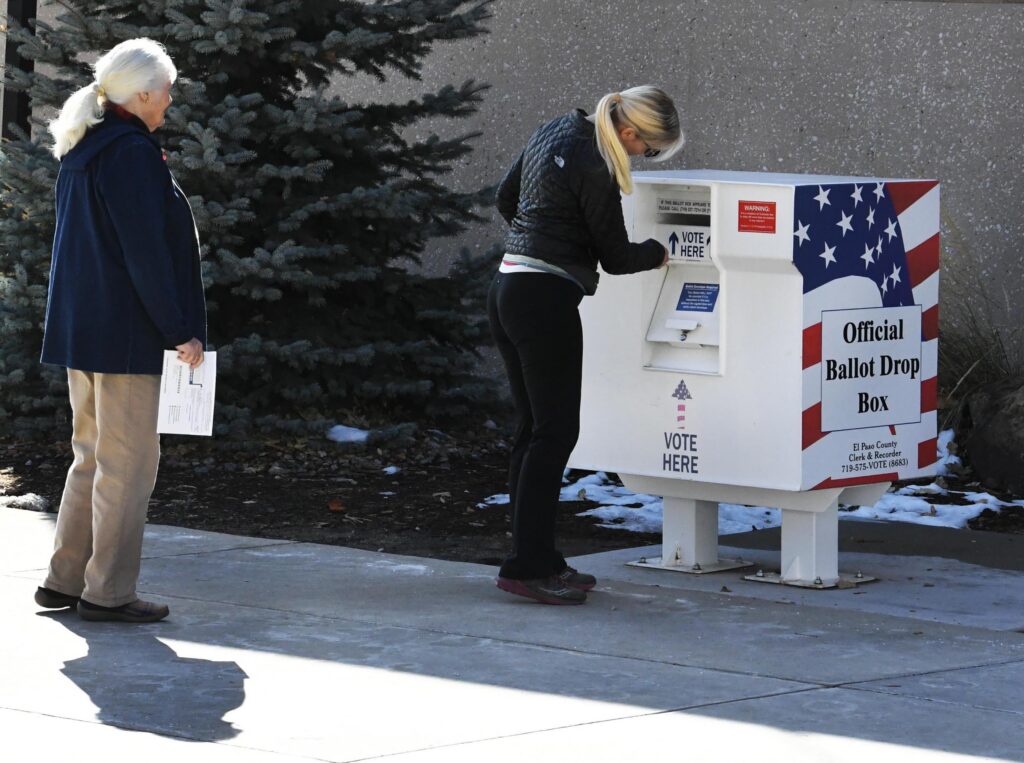
Colorado sues Trump administration, calling new election order ‘unconstitutional’
Marissa Ventrelli
marissa.ventrelli@coloradopolitics.com
Updated 6 hours ago
Colorado Attorney General Phil Weiser has joined a multistate coalition suing President Donald Trump over a new executive order on elections, arguing the directive unlawfully intrudes on states’ authority to run their own voting systems and threatens access to mail...
Federal judge sides with Mesa County school district in ex-student’s First Amendment claims
Michael Karlik
michael.karlik@coloradopolitics.com
Updated 7 hours ago
A federal judge concluded last week that Mesa County Valley School District 51 and three of its administrators did not violate the First Amendment rights of a former student when they imposed minor discipline in response to disruptive behavior. In...
Why Colorado’s LGBTQ laws keep getting struck down by the Supreme Court
Jack Birle, Washington Examiner
jack.birle.washington.examiner@gazetteedit.wpenginepowered.com
Updated 6 hours ago
The Supreme Court has been a house of horrors for Colorado over the past decade, with the state facing a trio of major losses over laws it claims it has enacted to protect LGBT people but that the justices found...
Denver Democrat Neal Walia lands endorsement from Ro Khanna in Colorado’s state House District 9
Ernest Luning
ernest.luning@coloradopolitics.com
Updated 3 hours ago
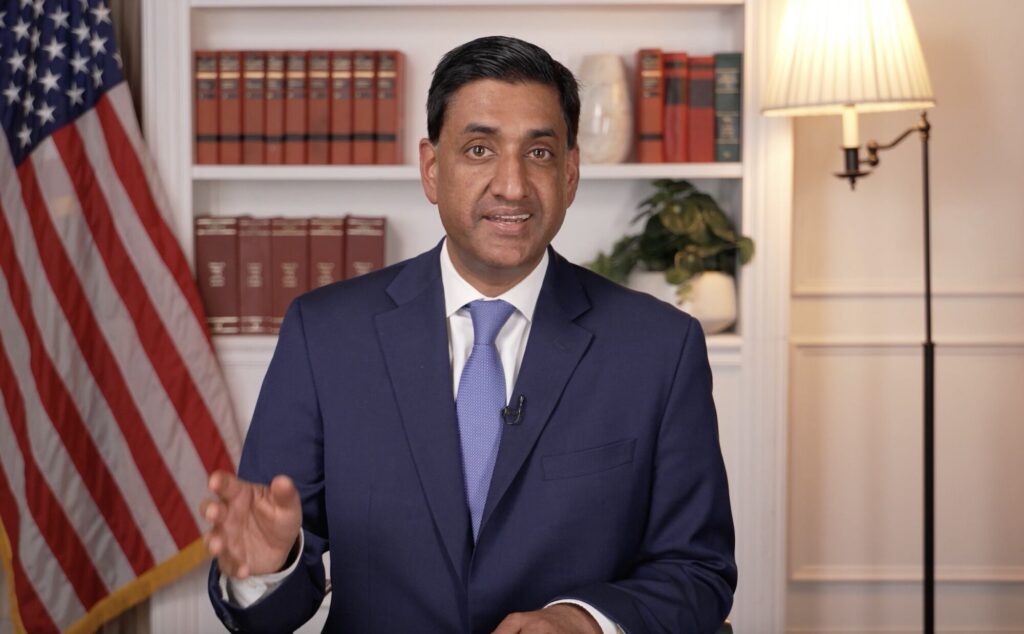
California Rep. Ro Khanna on Friday endorsed legislative candidate Neal Walia in the race for an open state House seat, praising the Denver Democrat’s commitment to public service and progressive goals. Walia, who mounted an unsuccessful challenge against U.S. Rep....

Denver judge denies Gov. Polis request to dismiss ICE-related records case
Marianne Goodland
marianne.goodland@coloradopolitics.com
Updated 3 hours ago
A year after blocking the release of state records to federal immigration agents, a Denver judge has now denied Gov. Jared Polis’ effort to end the lawsuit at the center of the dispute. The lawsuit filed against the governor in...
PREV
PREVIOUS

Weiser, lawn care company enter settlement over automatic renewal practices
Attorney General Phil Weiser and Colorado lawn care company Fit Turf have entered into a settlement agreement following allegations of automatic service renewals without disclosure to customers. “When consumers sign up for a service, they should be given clear and accurate information about the terms and conditions of the service,” said Weiser. “Companies cannot bury […]
The Colorado Education Association has released its member voting recommendations, with a few surprises
The Colorado Education Association, the state’s largest teacher union, has sent out its member voting recommendations for November. It’s got a few surprises, including that it’s not 100% Democratic-leaning. The recommendation for Senate District 35 is the outlier — you’d expect the CEA to endorse the Democrat, Trinidad City Councilman Carlos Lopez, but you’d be wrong. The […]