

Court orders review of former Boulder mayor’s mandated $1 million donation

A judge improperly ordered a defendant to donate $1 million to a charity of the district attorney’s choice as part of his criminal sentence without first establishing what purpose it would serve, the Colorado Court of Appeals determined on Thursday.
Robert Dalton Greenlee, a former mayor of Boulder from 1998-1999, killed Patricia Lucero in a high-speed, head-on crash in 2016 and injured other drivers. He pleaded guilty to criminally negligent homicide, careless driving causing injury and reckless driving. Greenlee, who was in his late seventies during his sentencing in 2018, received 10 years of probation.
The Boulder Daily Camera reported at the time that Lucero’s family and prosecutors asked for a prison sentence, but Costilla County District Court Judge M. Jon Kolomitz believed that incarceration would likely kill Greenlee given his health.
“For the rest of my life, I will be extremely sorry,” Greenlee said at sentencing.
Kolomitz also ordered one year of electronic monitoring, a $100,000 fine and 200 hours of community service. Finally, Greenlee had “to make a $100,000 donation every year of probation . . . to a charity recognized as a 501(c) determined by the 12th Judicial District Attorney’s Office” that was not tax deductible.
On appeal, Greenlee argued that the charitable contribution mandate constituted an illegal sentence. There is precedent in Colorado for the allowance of charitable donations as a component of sentencing.
In the 1986 case of People v. Burleigh, the court of appeals upheld the portion of a 60-year-old retired doctor’s sentence requiring him to make a $5,000 donation for the crime of unlawfully dispensing controlled substances. The court in that instance noted Thomas D. Burleigh, Jr. had no prior record, that his crime was “isolated,” and the donation “would certainly meet not only the rehabilitation and education purposes of probation, but also the best interests of the public.”
“We agree with the division in Burleigh that charitable contributions may be imposed as a condition of probation if the district court makes findings to support the proposition that, in a defendant’s particular case, the contribution serves the purposes of probation,” wrote Judge Gilbert M. Román in Greenlee’s case. “[H]owever, we see no factual findings of this nature in the record.”
Román elaborated that Kolomitz had apparently not determined specifically whether the donation was reasonably related to Greenlee’s rehabilitation or probation, or even whether he had the ability to pay. Nor did the stipulation about the lack of tax-deductibility seem founded.
The appellate judges ordered the trial court to reevaluate the donation directive in light of those questions.
Mark E. Biddison, Greenlee’s attorney, said that charitable contributions are not a statutory condition of probation, and that he believed the $1 million amount was “strictly punitive in nature.” Greenlee has not made any contributions while the case was on appeal.
“The trial court initially did not establish a factual nexus between the incident and the need to make specific charitable contributions,” added Biddison. “Or how it would encourage Mr. Greenlee to be more law-abiding.”
Robert S. Willett, the district attorney for the 12th Judicial District, said on Thursday afternoon that he would need to look at the ruling in depth and determine how to proceed.
The case is People v. Greenlee.

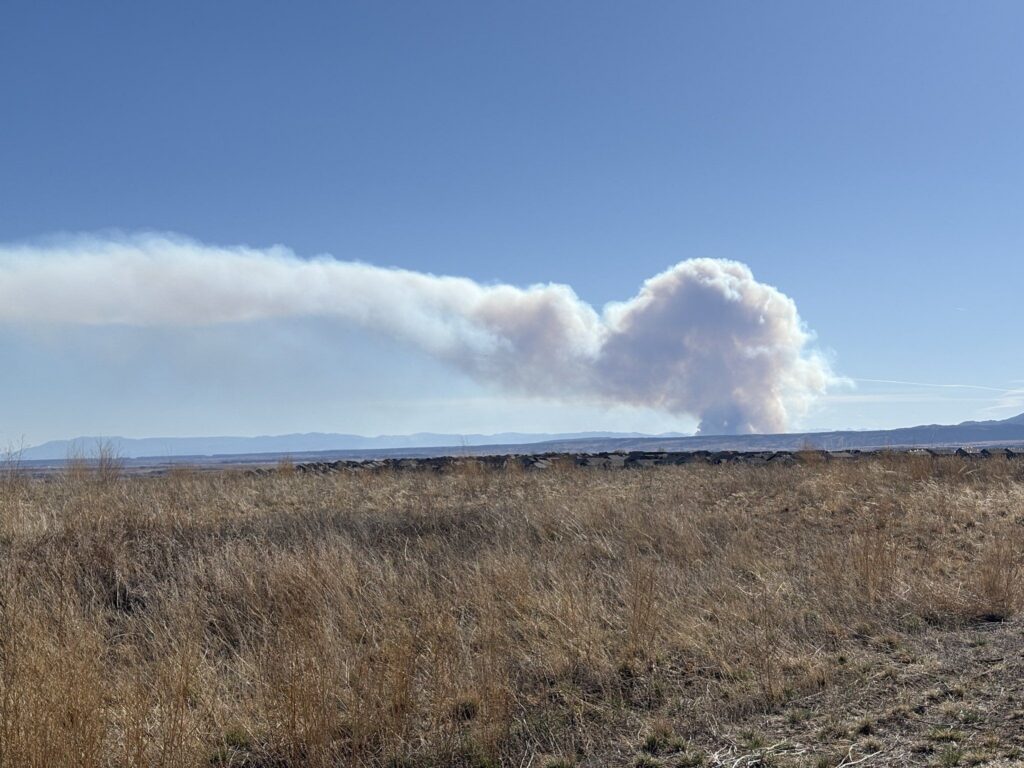
Highway 115 fire blows up, road closed south of Colorado Springs
Nick Smith
nick-smith@coloradopolitics.com
Updated 5 hours ago
A fast-moving fire burning along Colorado 115 south of Colorado Springs blew the containment line Thursday, spreading farther east onto Fort Carson and scorching nearly 700 acres, officials said. The blaze was fully uncontained as of late Thursday afternoon, officials...
Public figures have limited path to sue over accusations of criminality, says appeals court
Michael Karlik
michael.karlik@coloradopolitics.com
Updated 8 hours ago
Colorado’s second-highest court ruled last week that a public figure cannot sue for defamation solely because a person publicly accuses them of committing a crime, as the statement may be constitutionally protected opinion. A three-judge Court of Appeals panel narrowed...
Proposed data center regulation in Colorado draws critics, backers
Scott Weiser
scott.weiser@gazette.com
Updated 6 hours ago
A packed marathon hearing at the state Capitol in Colorado highlighted the sharp divide between two competing approaches to the effects of data centers, one of America’s fastest-growing technology sectors. Data centers are the physical facilities that host the servers,...

Conservation Colorado proposes measures aimed at oil and gas companies
Marissa Ventrelli
marissa.ventrelli@coloradopolitics.com
Updated 8 hours ago
The environmental group Conservation Colorado has introduced four ballot measures it says are in response to an initiative that aims to enshrine Colorado businesses’ and consumers’ right to purchase and sell natural gas in the state’s Constitution. Filed with the...

Colorado revenue forecast worsens, pushing budget shortfall to nearly $1.5B
Marianne Goodland
marianne.goodland@coloradopolitics.com
Updated 6 hours ago
The latest revenue forecasts from economists in both the governor’s office and the Colorado legislature show that the state’s budget predicament has worsened — by hundreds of millions of dollars more. That, in turn, means cuts programs and services in...
Federal judge to consider sanctioning ex-Colorado judicial discipline director
Michael Karlik
michael.karlik@coloradopolitics.com
Updated 7 hours ago
A federal judge ordered Colorado’s former head of judicial discipline on Wednesday to explain why she should not sanction him for making inaccurate statements about the defendants in his lawsuit against the Colorado Supreme Court and related entities. U.S. District...

With jails overcrowding, Gov. Jared Polis asks for new prisons as lawmakers face budget shortfall
Marianne Goodland
marianne.goodland@coloradopolitics.com
Updated 6 hours ago
The Polis administration is asking for hundreds of millions of dollars to expand the state’s prison system, just as Colorado’s legislators are bracing for a worsening fiscal outlook. The request sets up a clash over priorities at a time when...
Costs explode for Colorado program covering pregnant women and children living in the U.S. illegally
Marianne Goodland
marianne.goodland@coloradopolitics.com
Updated 15 hours ago
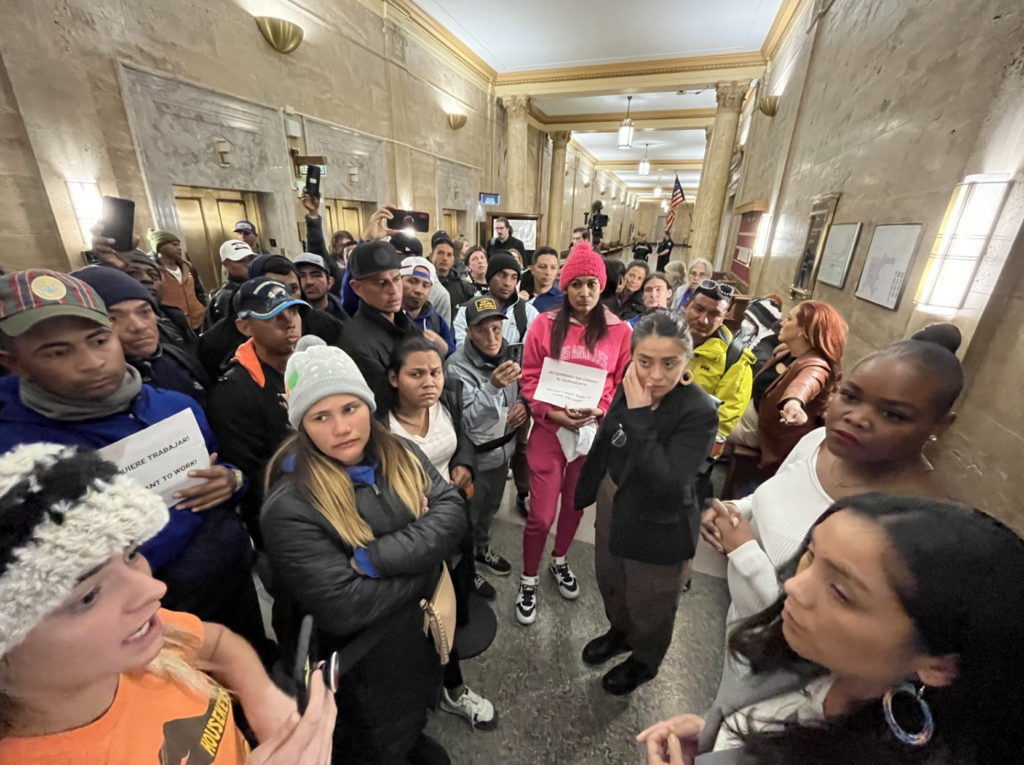
A state program providing health care to pregnant women and children living in the country illegally is costing far more than lawmakers expected, with expenses nearly tripling in just a year and threatening to squeeze Colorado’s budget amid a nearly...

Costs explode for Colorado program covering pregnant women and children living in the U.S. illegally
Marianne Goodland
marianne.goodland@coloradopolitics.com
Updated 1 day ago
A state program providing health care to pregnant women and children living in the country illegally is costing far more than lawmakers expected, with expenses nearly tripling in just a year and threatening to squeeze Colorado’s budget amid a $1...
Universities sue to block dismantling of Boulder’s NCAR
Scott Weiser
scott.weiser@gazette.com
Updated 12 hours ago
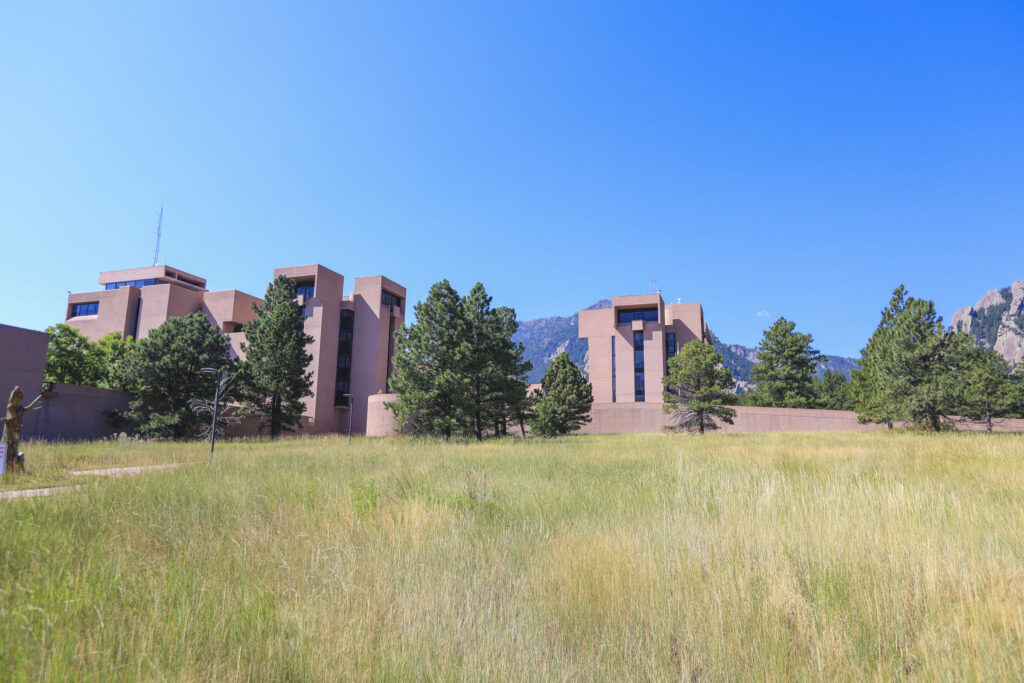
A consortium of universities filed a federal lawsuit Monday, alleging the Trump administration’s plan to dismantle the National Center for Atmospheric Research is unlawful retaliation against Colorado. The group also argued that the move violates federal law. The University Corporation...
PREV
PREVIOUS
Geographic naming board meets, hears name change proposals for Mount Evans
Sixteen proposals to change names of Colorado landmarks — including three offerings for Mount Evans — went in front of the Geographic Naming Board, a 12-member group convened by Gov. Jared Polis , during their first meeting Thursday. Much of Thursday’s meeting focused on a review of those existing proposals with Jennifer Runyon, a senior researcher with […]

Demonstrators arrested following Elijah McClain protests in Aurora
Six demonstrators were arrested in connection to protests held in Aurora earlier this summer, prosecutors announced Thursday. Lillian House, Joel Northam, John Ruch, Terrance Roberts, Whitney Lucero and Trey Quinn all face felonies and are accused of inciting or engaging in a riot, according to news releases from the 17th and 18th Judicial District Attorney’s […]