

Court dismisses Boulder police shooting victim’s claim of excessive force

A federal judge dismissed a Boulder man’s allegations of excessive force and failure to intervene directed at the police officers who shot him in his apartment, but permitted claims related to the plaintiff’s prosecution to continue.
According to court filings, Cole Stewart took a taxi home early on the morning of May 30, 2014. He was “slow to procure” the $4.85 cab fare, and the driver inferred Stewart had no intention of paying. The driver subsequently took Stewart to a nearby Boulder police annex, reportedly alerting officers through “erratic driving and honking.”
Stewart exited the cab and fled, and an officer followed him on foot. Other officers followed, and one of them unlocked the fence to the patio area outside of Stewart’s apartment.
After “only one or two seconds,” according to Stewart, officers thought they saw a gun and shot into his apartment and struck him twice. He received a charge of felony menacing after police found a BB gun in his apartment. Upon conviction, Stewart earned a 45-day sentence of imprisonment, which the Colorado Court of Appeals reversed in July 2017.
One year later, prosecutors dismissed the charge against him. Stewart alleged this was so “the prosecution would not have to publicly account for [the crime scene reconstruction expert’s] report showing that [he] was innocent and that the officers had lied” about him brandishing a BB gun.
After Stewart filed a federal complaint in June 2019 against the city of Boulder and the officers involved, the defendants attempted to dismiss the legal action because it was outside the two-year statute of limitations for the shooting. Stewart countered that he believed he could not begin his lawsuit for excessive force and failure to intervene until after the appeals court invalidated his conviction.
On March 5, 2020, U.S. Magistrate Judge Nina Y. Wang recommended a dismissal of Stewart’s claims, agreeing that the statute of limitations in Colorado began to run in May 2014 and his civil claims could have proceeded regardless of his criminal charge.
“Plaintiff’s claims for excessive force and failure to intervene have a life independent of his criminal conviction,” Judge Raymond P. Moore agreed on Sept. 1, adopting the recommendation.
However, the court rejected the defendants’ move to dismiss Stewart’s other claims of malicious prosecution and infringement on his Fourteenth Amendment right to due process.
This decision was based on Stewart’s assertion that “the Defendant Officers testified falsely and that absent this misconduct, the prosecution of Plaintiff could not and would not have occurred.” He elaborated in his complaint that a crime scene reconstruction showed Stewart could not have been standing at the door with a BB gun because he would have been “riddled with bullets” were that true.
“Cole Stewart’s case is fundamentally about the Boulder police officers’ fabrication of evidence for use against him in making up a criminal charge: felony menacing,” said Stewart’s lawyer, Elizabeth Wang of Loevy & Loevy. “That is the heart of his case and that is what the court has allowed to proceed in this case. The fact that the judge dismissed the excessive force claim on timeliness grounds does not really affect our ability to hold the officers accountable.”
Wang added that physically, Stewart was recovering from his injuries, but still traumatized from the incident. She said “it would be wonderful” to have a formal apology from the city, but her client is primarily seeking a jury trial and compensation for his injuries.
The city could not comment on the pending lawsuit.
The case is Stewart v. Boulder et al.


Trump lowers flags to half-staff for Dolly Parton: ‘The World loves you’
Naomi Lim
naomi-lim@coloradopolitics.com
Updated 6 hours ago
President Donald Trump is honoring the life of country music legend and philanthropist Dolly Parton by ordering federal buildings across the country to lower flags to half-staff for a week. “Very sad to report that Dolly Parton, one of the...
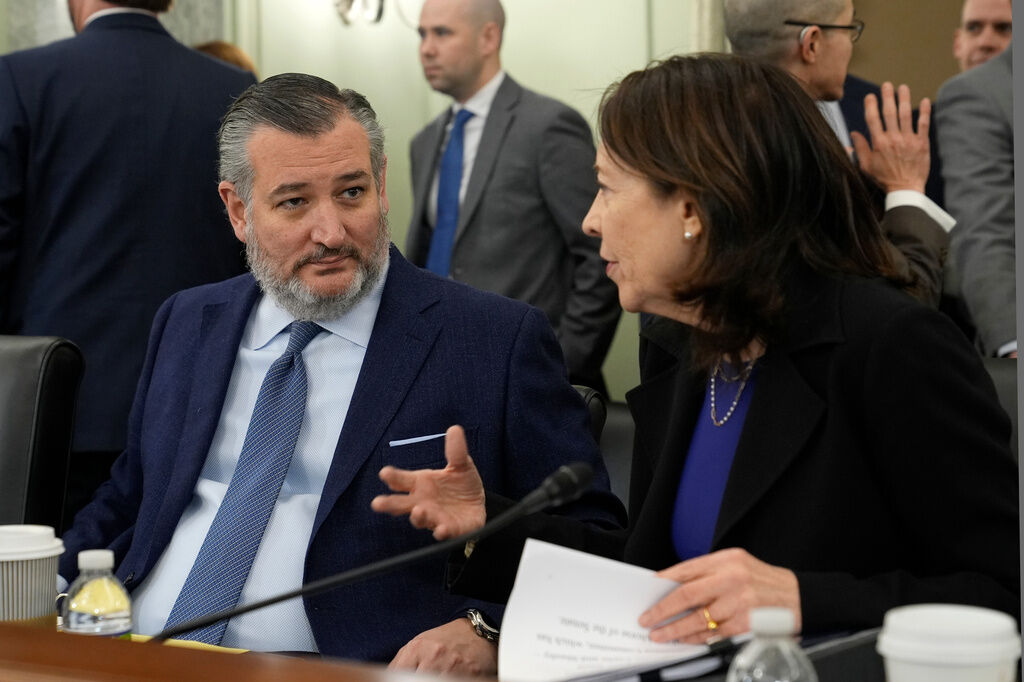
Ted Cruz suggests GOP realignment coming after Trump leaves office
Emily Hallas
emily-hallas@coloradopolitics.com
Updated 6 hours ago
Sen. Ted Cruz (R-TX) on Monday suggested the Republican Party could embrace a directional shift after President Donald Trump leaves office, a transition that promises to leave a gaping hole in the GOP. Cruz is known as a critical ally...
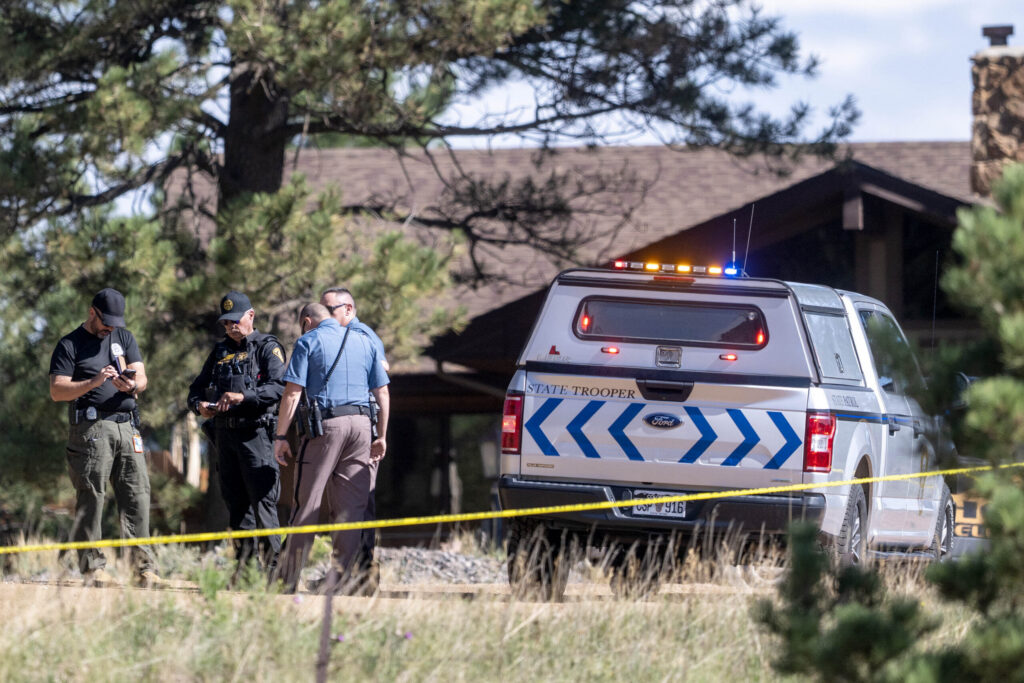
2 Colorado State troopers shot near Woodland Park; suspect killed
DEBBIE KELLEY
debbie-kelley@coloradopolitics.com
Updated 6 hours ago
Two Colorado State Patrol troopers were hospitalized, and a suspect is dead after a shooting during a traffic stop Tuesday. The initial incident happened at about 7:15 a.m., when a resident reported suspicious activity in the area near milepost 286...

Aurora moves forward with data center regulations
Kyla Pearce
kyla.pearce@gazette.com
Updated 6 hours ago
The Aurora City Council approved moving forward with two new regulations on data centers and directed staff to come back at the next study session with others. At a council meeting in early August, council members directed city management to...

Aurora City Council considers stricter food truck regulations
Kyla Pearce
kyla.pearce@gazette.com
Updated 6 hours ago
The Aurora City Council is considering passing laws to limit the number of food trucks on properties in the city and how and when they operate. Councilmember Angela Lawson, who sponsored the ordinance, said she understands the importance of food...

Denver murder conviction reversed for incomplete self-defense instruction
Michael Karlik
michael.karlik@coloradopolitics.com
Updated 4 hours ago
Colorado’s second-highest court reversed a defendant’s murder conviction last week because a Denver judge gave an incomplete instruction to the jury about the man’s right to self-defense. Donald R. Gonzales and Gary McLaughlin met up in a Capitol Hill parking...
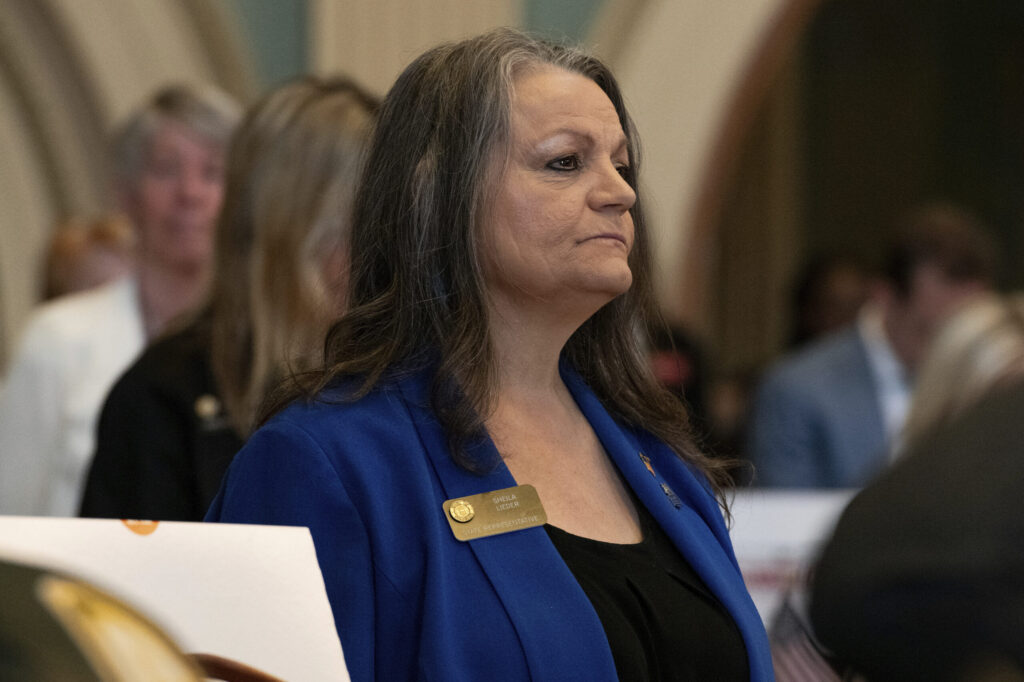
Colorado lawmaker, House leaders named in workplace-retaliation lawsuit
Marianne Goodland
marianne.goodland@coloradopolitics.com
Updated 7 hours ago
A former legislative aide has filed a lawsuit alleging she was mistreated, illegally directed to perform campaign work and harmed by a House leadership structure she charged was fragmented, politicized and ineffective at protecting employees. The lawsuit, filed by Jennifer...

Secret Service confirms awareness of Iranian state media video threatening Barron Trump’s life
The Associated Press
the-associated-press@coloradopolitics.com
Updated 12 hours ago
WASHINGTON (AP) — The U.S. Secret Service has confirmed it is aware that Iranian state media has aired a video that appears to threaten the life of Barron Trump, President Donald Trump’s youngest son. “The U.S. Secret Service is aware...
Federal judge hears arguments about Colorado’s 3-day gun purchase waiting period
Michael Karlik
michael.karlik@coloradopolitics.com
Updated 12 hours ago
A federal judge heard arguments on Monday about the constitutionality of a 2023 Colorado law that generally imposes a three-day waiting period on firearm purchases after the initiation of a background check. The test that the U.S. Supreme Court created...
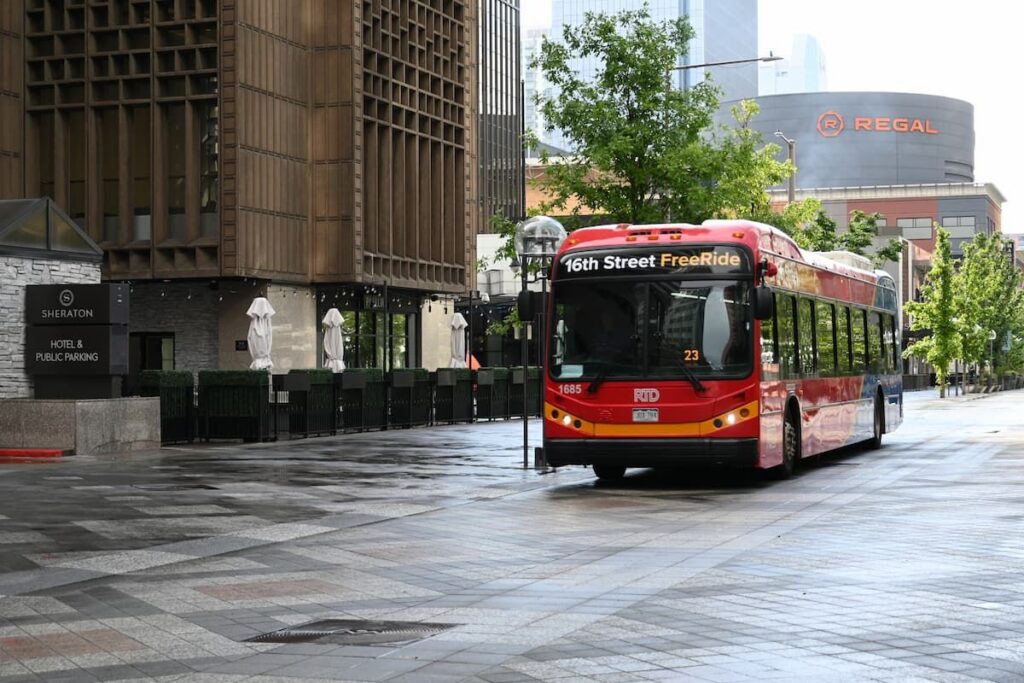
Denver auditor finds oversight failures in $175.6M 16th Street project
Nico Brambila
nico.brambila@denvergazette.com
Updated 6 hours ago
Surprise historic sewer discovery delayed completion a year, cost $18M The Denver Auditor recently found significant oversight and contracting problems with the $175.6 million 16th Street Improvement Project, including an $18 million contract increase and a nearly one-year extension that...
PREV
PREVIOUS

New terminal, hangar open at Rocky Mountain Metropolitan Airport
Sheltair Aviation Services formally opened a new 10,400 square foot terminal and 31,050 square foot hanger at Rocky Mountain Metropolitan Airport in Broomfield, after approximately one year of being under construction. “Every detail — from access points and tenant offices to lounges and restrooms — was designed with the customer’s comfort, privacy and safety in […]

Aviation plan recommends greater coordination, resources from CDOT for airports
The Colorado Department of Transportation was told in a new aviation plan to better coordinate with local jurisdictions and airports to ensure appropriate land use policies, facility needs and funding for fueling facilities are addressed. The 2020 Colorado Aviation System Plan, which the Division of Aeronautics and planning consultancy Kimley-Horn published this week, reviewed existing […]