

Weld County biogas operator may sue state health department for facility shutdown
Governmental immunity does not shield the state’s health department against a lawsuit from a Weld County biogas operator who was forced to shut down after a series of run-ins with state and local bodies, a panel of the Colorado Court of Appeals decided 2-1 on Thursday.
“We acknowledge that tension exists between, on the one hand, case law stating that takings claims under the Colorado Constitution are exempt from the [Colorado Governmental Immunity Act], and, on the other hand, the CGIA’s grant of immunity to public entities,” wrote Judge David H. Yun for the majority.
Heartland Biogas’ facility in Weld County used an anaerobic digester that turned cow manure and other organic waste into renewable natural gas and fertilizer. Heartland bought the facility in 2013, three years after Weld County commissioners approved the previous owner’s application for a solid waste facility. Both the old and new owners talked with the Colorado departments of public health and agriculture about regulation of the fertilizer — formally known as “liquid soil amendment.”
Heartland represented that the Colorado Department of Agriculture would allow the company to sell the fertilizer — deemed “the only viable option” for its business — as a product as long as it complied with testing and labeling rules. If the Colorado Department of Public Health and Environment regulated the fertilizer as solid waste, “it would be impossible to comply with the regulatory restrictions.”
Heartland said it spent in excess of $102 million to modify the facility under the belief it could sell the fertilizer under CDA rules.
However, in April 2016 a county inspector found an odor violation at the facility, chronicling six instances in a single morning during which downwind odors exceeded the allowable limit. Afterward, the board of county commissioners considered revoking the company’s permit. Heartland later claimed that 80% of the odor complaints came from “only 10 people.”
Prior to the hearing, the attorney general’s office wrote to the county that Heartland was “technically operating in violation” without the appropriate solid waste certification. The board subsequently suspended Heartland’s permit.
The company suffered a series of other blows: CDPHE announced that the fertilizer was solid waste and needed a discharge permit. Weld County’s health department ordered Heartland to stop distributing the fertilizer. Then, the Heartland storage lagoons reached capacity for the fertilizer. Heartland began to shut down its facility in January 2017.
Later that year, Heartland sued CDA and CDPHE, alleging the state had deprived them of the value of their property and that it was reasonable for the company to rely on the promises of the agencies. The departments countered that the governmental immunity law shielded them from a liability claim.
After a series of amended complaints, Denver District Court Judge Robert L. McGahey, Jr. denied the defendants’ motion to dismiss the case, concluding the Governmental Immunity Act did not apply to the deprivation claim. Although the act generally precludes actual or potential liability lawsuits against government, the Colorado constitution prohibits private property to be “taken or damaged, for public or private use, without just compensation.”
The appellate court’s majority agreed with that view.
“Put simply, Heartland maintains that, because of the CDPHE’s regulatory actions,” wrote Yun, “it can no longer produce and sell the liquid soil amendment and that, as a result, the facility has effectively been taken from it without just compensation.”
During the appeal, Maritza Dominguez Braswell with the attorney general’s office told the panel that the government bodies were not taking Heartland’s property in violation of he constitution, but rather enforcing regulations.
“CDPHE and Weld County here, if anything, were simply exercising ordinary police power, ordinary power to regulate,” she said. “Weld County didn’t come in to take property for public use. They were simply regulating hazardous waste, exercising the power that has to be exercised in order to protect the public.”
Judge David J. Richman echoed that sentiment in his dissent, believing Heartland’s case was actually a civil liability claim masquerading as a constitutional argument, and ignoring Weld County’s already-existing and unrelated problems with the facility.
“A close review of Heartland’s third amended complaint leads me to conclude that its claim against CDPHE is, at most, an assertion that CDPHE improperly exercised its police power, and therefore,” he wrote, “does not implicate the Just Compensation Clause of the Colorado Constitution.”
In 2016, Heartland entered into a consent agreement with the Air Pollution Control Division over its odor violations, pledging to install an odor capture and control system and ensure all unloading and storage of materials happened indoors. Heartland’s plant manager wrote in a November 2016 update that the company planned to have a permanent odor control system in place by March 2017.
“You may have heard that the Weld Board of County Commissioners has issued an order to suspend our Modified Use by Special Review and Use by Special Review permits,” he added a month later. “We will advise if this action negatively affects the timeline of our odor mitigation efforts.”
Richman also noted there was no enforcement action that CDPHE took against the company that forced Weld County to shut the facility down, and that Heartland only pivoted to the government takings argument after the district court dismissed its other contentions.
The case is Heartland Biogas, LLC v. CDPHE.


Unsustainable: How Colorado’s Medicaid spending exploded
Nico Brambila
nico.brambila@denvergazette.com
Updated 10 hours ago
The state’s Medicaid program — which covers about one in four Coloradans — is poised for its largest single-year jump in at least two decades, with officials proposing a $2.3 billion increase, even as lawmakers face a $1.5 billion budget...

Phil Weiser wins top spot in Colorado’s Democratic gubernatorial primary at party’s state assembly
Ernest Luning
ernest.luning@coloradopolitics.com
Updated 1 day ago
Attorney General Phil Weiser’s name will appear first on Colorado’s Democratic gubernatorial primary ballot after his overwhelming win Saturday at the party’s state assembly in Pueblo. Weiser joins U.S. Sen. Michael Bennet in the June 30 primary for the office...
‘No Kings’ protest draws tens of thousands to Colorado state Capitol
Matt Kyle
matt.kyle@denvergazette.com
Updated 1 day ago
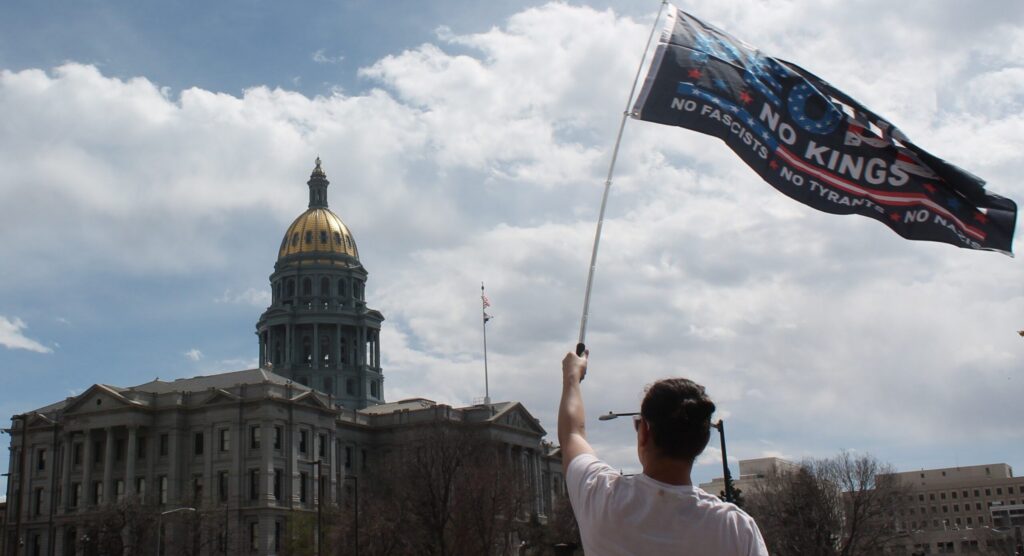
The third round of the national No Kings Day protests hit Denver Saturday, when tens of thousands gathered near the Colorado state Capitol to criticize the Trump administration. Organizers addressing the crowd estimated there were 30,000 present for the Saturday...
Denver Democrat Diana DeGette trails challenger Melat Kiros at assembly as both qualify for primary
Ernest Luning
ernest.luning@coloradopolitics.com
Updated 2 days ago
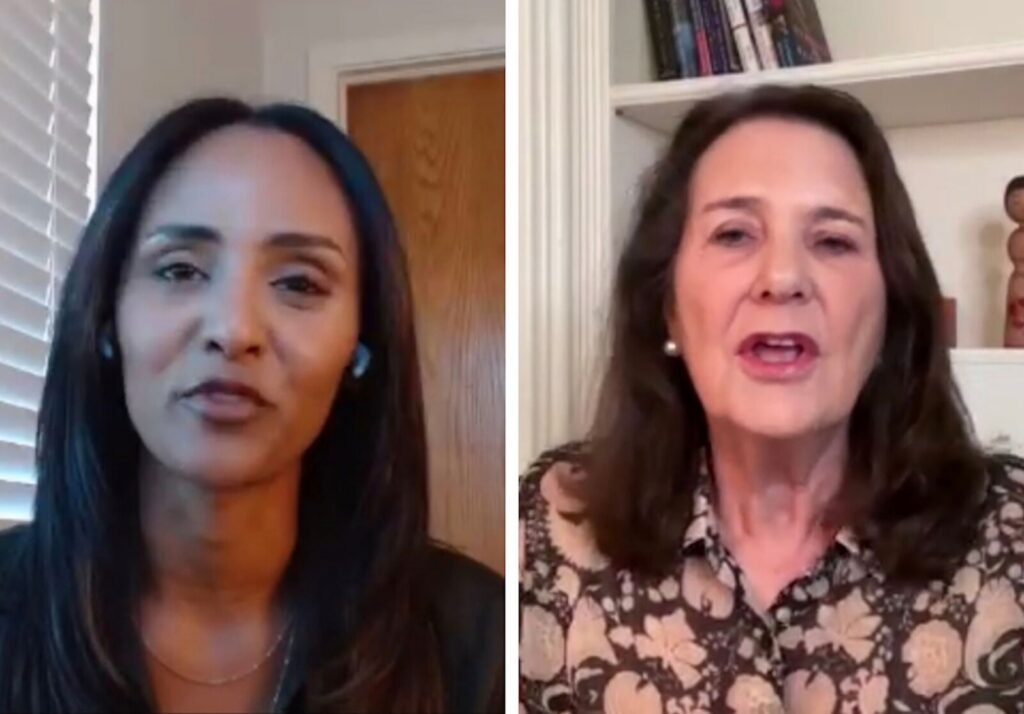
U.S. Rep Diana DeGette, a Denver Democrat, qualified for Colorado’s June primary by the skin of her teeth Friday at the party’s district assembly, where the 15-term incumbent received fewer than half as many delegate votes as her challenger, 28-year-old...

Kwame Spearman warrants plenty of criticism, not cancellation | SONDERMANN
By Eric Sondermann
by-eric-sondermann@coloradopolitics.com
Updated 4 days ago
All of us are flawed humans, some more so than others. This is the tale of Kwame Spearman who burst onto Denver’s business and political scene a handful of years back. His ride has taken a downhill trajectory. Within the...
Colorado Politics Calendar Mar. 30-Apr. 5
Rachael Wright, Special to Colorado Politics
rachael.wright@coloradopolitics.com
Updated 3 days ago
CoPo’s weekly political calendar will help you find political and public-policy events throughout Colorado. It includes candidate and issue campaign events, public policy meetings, court hearings, state and local party conventions, assemblies, debates, rallies, parades, speaking engagements, traveling dignitary appearances,...
Federal judge upholds constitutionality of Colorado campaign contribution limits
Michael Karlik
michael.karlik@coloradopolitics.com
Updated 2 days ago
A federal judge upheld Colorado’s individual campaign contribution limits as constitutional on Thursday, finding that three Republican plaintiffs failed to prove the campaign finance framework violates their First Amendment rights. U.S. District Court Senior Judge John L. Kane recognized that...
Appeals court rejects theory that existing tax revenue undermines need for new fees
Michael Karlik
michael.karlik@coloradopolitics.com
Updated 2 days ago
Colorado’s second-highest court rejected a plaintiff’s claim on Thursday that the tax revenue generated by an existing activity should prevent local governments from imposing new fees aimed at regulating the activity. The question stemmed from Colorado’s unique constraints on taxation...

Colorado ski resorts announce early closures amid historic snowpack lows, high temperatures
Kyla Pearce
kyla.pearce@gazette.com
Updated 2 days ago
As Colorado’s historically low snowpack year comes to a close and spring conditions take over the mountains, the state’s major ski resorts are announcing closing dates — some of which are weeks before historic closing dates. Most of Colorado’s ski...

Marco Rubio’s star power rises at CPAC 2026
Mabinty Quarshie and Samantha-Jo Roth, Washington Examiner
mabinty.quarshie.and.samantha-jo.roth.washington.examiner@gazetteedit.wpenginepowered.com
Updated 3 days ago
GRAPEVINE, Texas — Secretary of State Marco Rubio’s popularity is growing and could possibly boost him to one of the top two spots in the 2028 GOP presidential race, if attendees at the Conservative Political Action Conference are to be believed. ...
PREV
PREVIOUS

Lawsuit dismissed against El Paso sheriff over ICE detainers
After two inmates sued the sheriff of El Paso County for detaining people longer than state law allowed at the request of immigration authorities, the Court of Appeals on Thursday dismissed the case because new legislation rendered the issue moot. Sheriff Bill Elder detained individuals at the El Paso County jail following detainer requests and […]
Colorado Rising State Action cries foul over Blue Book changes on Gallagher repeal
Colorado Rising State Action is complaining this week about changes made by the Legislative Council to Blue Book language over Amendment B. The Legislative Council, an 18-member group of lawmakers — 11 Democrats and seven Republicans — finalized the Blue Book Thursday. Amendment B, which would require a 50% plus one vote for approval, would […]