

Court of Appeals decides 2-1 on new limits for ineffective counsel claims

A divided Court of Appeals panel has ruled that a lawyer who fails to advance novel legal arguments at trial challenging existing law is not providing ineffective counsel.
Law enforcement charged Douglas County resident Timothy Charles Houser with patronizing a 16-year-old prostitute, to which Houser countered that he believed the girl was at least 18, according to court documents. Prosecutors objected on the grounds that state law provides “no defense that the defendant did not know the child’s age” in prostitution cases. The trial court agreed, and prohibited Houser from asserting that defense at trial.
Although Houser said he did not have sex with her because he could not prove her age and only paid her “for her time,” prosecutors still deemed that that a criminal offense. A jury convicted Houser and he received a 30-day jail sentence and sex offender supervised probation. The court subsequently ordered him to serve two years to life in prison after he violated conditions of his probation.
After one panel of the Court of Appeals upheld his conviction, Houser appealed a second time, raising arguments of ineffective counsel. Specifically, he claimed that his attorney should have challenged the constitutionality of the ignorance-of-age prohibition, argued his conviction was a violation of equal protection under the law, and claimed the underlying offense of patronizing a child prostitute as unconstitutionally vague.
The second appellate panel, which ruled on Thursday, determined that procedurally it could only weigh in on the vagueness argument. Houser contended that because the law defined “performing or offering or agreeing to perform” sexual acts as illegal for the child, it was unclear how an adult could avoid liability. For example, if a child prostitute “agreed to perform” sex in a Craigslist ad, merely reading the offer could merit a conviction.
The court rejected that representation, deciding that the crime of patronizing a prostitute implicated anyone who participated in such acts. However, to the question of whether Houser’s attorney provided ineffective assistance by failing to challenge the constitutionality of that and other statutes, the panel split 2-1.
While Houser’s attorney at trial pointed to a conflicting Colorado law that did allow for an ignorance-of-age defense for children older than 15, Houser claimed on appeal that the attorney should have gone further and challenged the ignorance-of-age prohibition in prostitution cases as unconstitutional.
“Houser’s counsel was not ineffective for not challenging the constitutionality,” wrote Judge Lino S. Lipinsky de Orlov, “and instead making the reasonable strategic choice to argue that the statute did not apply to Houser. If successful, the argument would have allowed Houser to raise the defense of reasonable mistake of age.”
The majority noted that the standard for ineffective counsel involved establishing whether their performance was “outside the range of professionally competent assistance” that resulted in a prejudice against the defendant. While it is possible for an attorney to be ineffective for failing to present an argument that had no basis in precedent, the court said, a lawyer’s strategic choices are “virtually unchallengeable.”
“Finding that an attorney commits malpractice by not seeking this type of change in the law would flood the courts with new professional negligence lawsuits, as well as novel claims filed by attorneys practicing defensive lawyering,” wrote Lipinsky. He added that at the time of Houser’s trial, there was no definitive ruling from the Court of Appeals about which ignorance-of-age rule applied to his crime.
Judge Michael H. Berger in his dissent called the majority’s decision a “new bright line rule.” He decried the notion that a lawyer who fails to argue points lacking precedent can therefore never commit ineffective assistance.
“[T]he fact that the burden is daunting, and that most such challenges will fail for any number of reasons, is not a warrant for creating, as the majority has done, a rule that prohibits, as a matter of law, all such challenges,” Berger wrote.
Lipinsky disputed that characterization, countering that allowing such claims from defendants could trigger appeals even for arguments that ran “directly contrary to the law at the time of the trial.”
Faisal Salahuddin, a criminal defense attorney at Frank & Salahuddin in Denver, agreed with the dissent, saying that Houser should have been able to present arguments challenging the constitutionality of the relevant laws. To the majority’s worry about a “flood” of lawsuits from defendants challenging their lawyers’ work, “the question must be put back to them, since when is our justice system more concerned with a comfortable judge’s workload than ensuring that justice is done to the individual?” asked Salahuddin.
“Before becoming a lawyer, I would have thought that question would necessarily resolve in favor of the accused.”
Aurora defense attorney Lain A. Lawrence also saw merit in the dissent, observing that a lawyer has an obligation to provide zealous representation, but not necessarily to raise arguments that are unlikely to prevail.
“I don’t want to say there is a set formula to litigation. Litigation, criminal in particular, is not formulaic. You have to pick and choose the battles you fight,” he said, adding that arguing before a judge was different than making a case to a jury. “You have to careful with a jury, if you argue anything under the sun to them you may lose credibility and hurt your good argument by arguing nonsense arguments.”
The appellate panel did, however, order the trial court to hear Houser’s argument that his lawyer provided ineffective assistance by not raising the “outrageous conduct” of prosecutors. Houser’s first defense attorney, Charles Leidner, allegedly told the child’s mother that he would “drag [her] over the coals, embarrass her and eat her alive” if the child testified. Houser received a new lawyer, but he maintained that the prosecution pressured Leidner to withdraw, conduct which could have resulted in a dismissal of charges had his second lawyer argued the point.
Berger added in his dissent that he would have ordered a review of Houser’s lifetime sentence, calling it disproportionate to the offense given there was no established intent for his patronizing of a child prostitute.
The case is People v. Houser.


Victor Marx says he’ll only debate Phil Weiser once in Colorado governor’s race — without a moderator
Ernest Luning
ernest.luning@coloradopolitics.com
Updated 3 hours ago
Colorado Republican gubernatorial nominee Victor Marx said on Tuesday that he will participate in only one debate with Attorney General Phil Weiser before the November election — and he challenged the Democratic nominee to hold the event without a moderator....
10th Circuit finds no fair housing violation by Littleton landlord for worker’s alleged rape of tenant
Michael Karlik
michael.karlik@coloradopolitics.com
Updated 5 hours ago
The Denver-based federal appeals court concluded on Monday that Littleton’s housing authority could not be held liable for a maintenance worker’s alleged rape of a tenant, as the worker’s employment did not provide any special access to the victim. A...
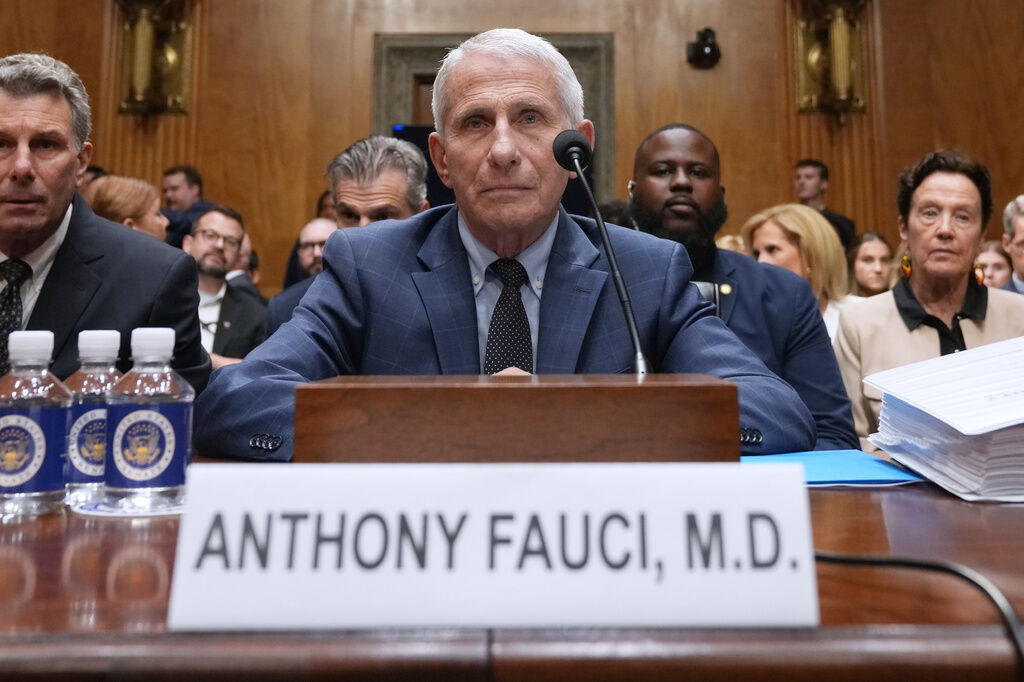
Fauci’s Fifth Amendment answers may test Biden pardon as GOP eyes contempt
Kaelan Deese
kaelan-deese@coloradopolitics.com
Updated 5 hours ago
Dr. Anthony Fauci invoked his Fifth Amendment right against self-incrimination more than 100 times on Wednesday, a move legal experts described as strategically sound despite the politically damaging optics. Sen. Rand Paul (R-KY), chairman of the U.S. Senate Committee on...

Democrats must win 57 out of 77 competitive House seats to take majority: Cook Political Report
Hailey Bullis
hailey-bullis@coloradopolitics.com
Updated 7 hours ago
Democrats’ path to retaking the House in November has significantly slimmed as a result of the mid-decade redistricting war this cycle, a new analysis found. The nonpartisan Cook Political Report found that under the newly drawn maps across 10 states,...

Denver labor acknowledgment proposal faces council committee questions
Deborah Grigsby
deborah.smith@denvergazette.com
Updated 11 hours ago
A proposal to add a labor acknowledgment to Denver City Council proceedings has been delayed by the Finance and Business Committee after members raised questions about its wording, intentions and place in the council’s opening proceedings. The proposal, put forth...
Fauci invokes the Fifth Amendment and declines to testify in GOP-led Senate panel’s COVID-19 hearing
The Associated Press
the-associated-press@coloradopolitics.com
Updated 12 hours ago
WASHINGTON (AP) — Dr. Anthony Fauci on Wednesday invoked the Fifth Amendment and declined to answer questions from senators in a Republican-led committee hearing about his handling of the COVID-19 pandemic. The move injects new drama into the lingering tensions...

Colorado residents rush to buy guns ahead of new restrictions, breaking sales records for several stores
By Debbie Kelley
by-debbie-kelley@coloradopolitics.com
Updated 11 hours ago
Colorado residents are lining up to buy guns ahead of the latest weapons restrictions set to take effect this Saturday. The new law mandates individuals seeking to purchase semiautomatic firearms with detachable magazines to first complete a firearm safety course...

Crime continues to decline in Aurora, police chief says
Kyla Pearce
kyla.pearce@gazette.com
Updated 12 hours ago
Crime in Aurora continued to decline in the first half of 2026, according to Aurora Police Department officials. Crime overall in the city has been on a downward trend since 2024, according to APD. Between Jan. 1 and June 30,...

El Paso County rejects multi-family zoning request near Monument Academy
Savannah Eller
savannah-eller@coloradopolitics.com
Updated 11 hours ago
The El Paso County Board of Commissioners narrowly rejected a developer’s bid to convert land from low- to high-density residential zoning. The request, made by MA Infrastructure, LLC, would have allowed 12 units per acre on half of a 14-acre...

Atop taxes, here’s how much each Colorado resident pays in fees
Marissa Ventrelli
marissa.ventrelli@coloradopolitics.com
Updated 1 day ago
Each Colorado resident paid nearly $5,000 in state-sanctioned fees last year, according to a report by a policy think tank. The report, which analyzed how fees have affected Colorado’s economy, found that fee revenue has more than tripled since 2008...
PREV
PREVIOUS

State issues marijuana contamination notice to consumers
The state’s Marijuana Enforcement Division issued an advisory on Wednesday about potentially unsafe levels of microbials in batches of cannabis from Denver cultivator Sundance Gardens. The Colorado Department of Public Health and Environment considers the contamination “a threat to public health and safety when marijuana is found to have levels of Total Yeast and Mold […]

Polis signs diversity, inclusion order for state workforce
Gov. Jared Polis signed an executive order on Thursday that laid out a series of steps to foster diversity, inclusion and equity in the state’s workforce. “Our state government is one of the largest employers in the state, over 30,000 people,” Polis said during a press conference at the Governor’s Residence. “Inherently the public sector […]