

INSIGHTS | Colorado has a juicy stake in an accurate census
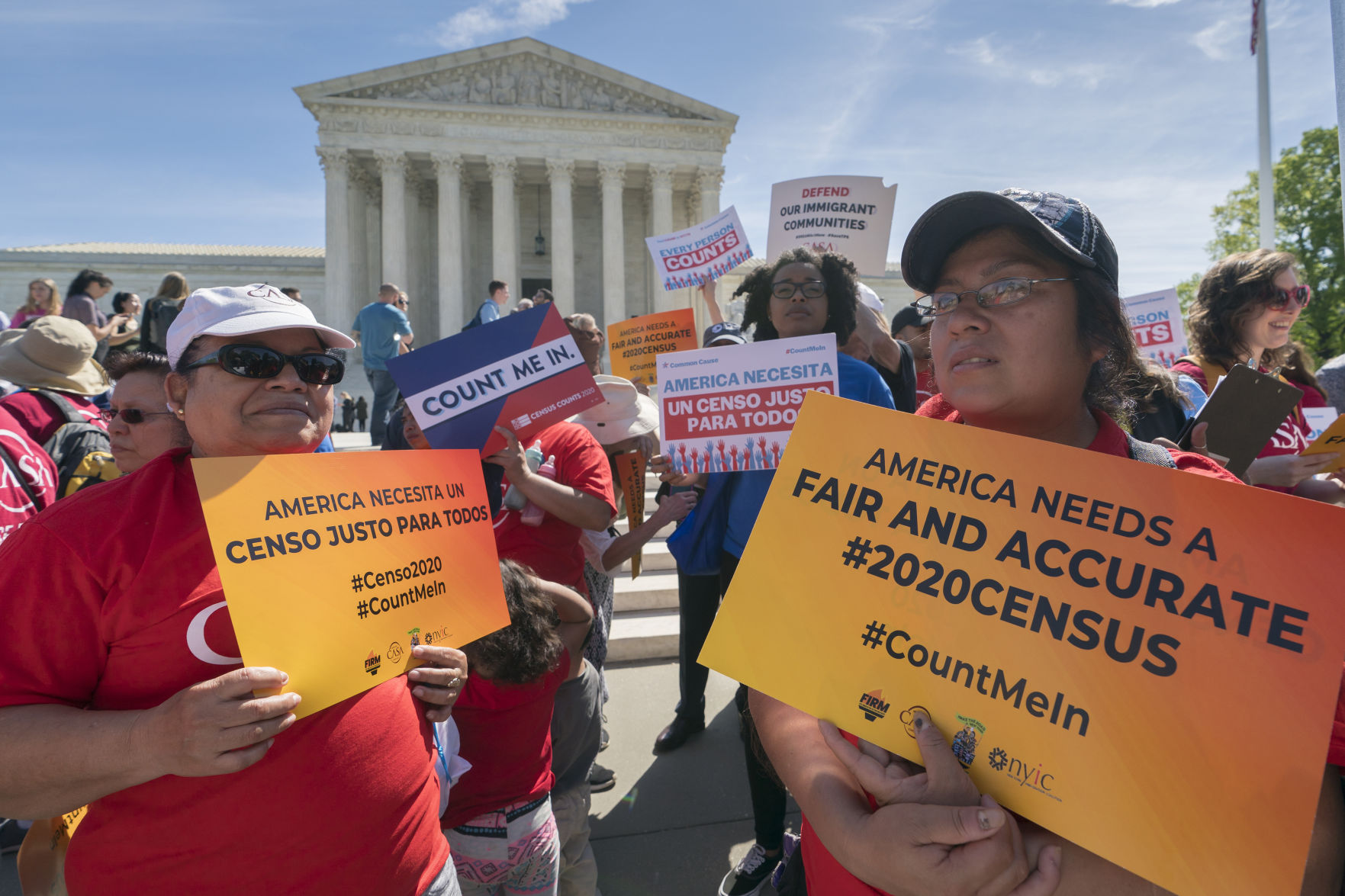
How the U.S. Census plays out in the next few months presents big implications for Colorado, so add that to the mix of demands for your attention here in the dog days of summer. The question of politics only raises the temperature.
How Colorado is counted, however, could have longer-lasting and more direct impacts on people’s lives than even the presidency, maybe. That’s partly what makes it so interesting that President Donald Trump is trying to leave his permanent imprint on the process.
The practical questions are as big as the political questions, yet it’s more about the tangible matters Colorado could lose.
A little context: The official decennial count of the nation means everything in government. It drives where federal and state dollars wind up for schools, roads, social programs and more.
It’s also inherently political because it’s the way political boundaries are drawn.
Trump is making it even more political.
He doesn’t want undocumented immigrants counted, red meat to a base that gobbled up warnings about rapists and drug dealers, bad hombres and caravans of troublemakers, who didn’t “boo” when the president moved money from the military to his border wall.
While they can’t vote, undocumented people still place needs on government — schools, roads, the size of a political district. Unless the full population is accounted for, local governments don’t have the federal or state money to support their accurate population. A crowded classroom without the dollars it needs affects every child, not just the immigrants.
Reapportionment for seats in Congress is based on the final census count, and that’s where Colorado has the most to lose.
The state’s growth over the past decade means we should pick up a House seat, most likely in east metro Denver. If the lines fall to the south into Douglas County, it could tilt Republican. If it’s in Aurora and east Denver, then add another seat to the Democratic caucus.
If metro Denver can’t get that seat because of a different way of counting, the winner could be a place such as Alabama, which expects to lose a seat from the count. Six of Alabama’s seven seats are solidly Republican.
There was supposed to be less politics than ever when political districts are drawn in Colorado next time around.
A new independent commission, created by Amendment Z in 2018, will do it with balance in mind. That’s different than in the past, when the legislature drew them in tune with the party in the majority.
Fair maps depend on a fair census, free of the same old politics and suspicion.
“This is a critically important process that will literally determine the rules of the game for our democracy for the next decade,” said Republican strategist and former state Senate President Josh Penry, who worked on the ballot measure. “The stakes are very high. And for those who are just fed up with the games, the gridlock and the partisanship, this is a chance to make a real true impact.”
Trump initially wanted census takers to ask people about their immigration status. No dice, said the Supreme Court last year. The maneuver was a way to intimidate immigrants and undercut typically Democratic districts with large Latino communities.
Chief Justice John Roberts, a Republican appointee, sided against Trump, saying the rationale behind the move “seems to have been contrived” and was “more of a distraction” than a threat to voting rights.
When he lost, Trump said he might try to delay the census to take another run at the issue, including a new government database to identify undocumented people.
The Census Bureau was given a pandemic postponement from July 31 until Oct. 31 to finish the work, but last week the Bureau, likely pressured by the Trump administration, abruptly dialed the date back by a month. That means the bureau will use estimates that critics argue undercount Black and Latino communities.
Looking at you, east metro.
It’s not just undocumented people who won’t be counted. It will also be those intimidated by a visit from the government, who might have one undocumented family member or just a general distrust of Uncle Sam.
Self-response rates tend to be low in minority communities such as the Rio Grande Valley in Texas and the Bronx in New York, the Washington Post noted.
And therein lies the solution: personal responsibility. In Colorado, 2 out of 3 households answered the census online or by mail.
Tuesday, mask-wearing, clipboard-toting census workers began knocking on doors of those who did not.
Folks who want to avoid that face-to-face can still fill out the census remotely until Sept. 30.
“It has never been easier to respond to the 2020 Census on your own, whether online, by phone or by mail — all without having to meet a census taker,” said Laurie Cipriano, Colorado’s spokesperson for the census. “We encourage Coloradans to make their voices heard and self-respond as soon as possible.”
The web address is 2020census.gov.
“Cross it off your list today,” Cipriano said.
There’s never been a year that necessitated an online census more, but it’s an idea whose time has come.
The pandemic may have created an opportunity to streamline this massive exercise in bureaucracy. Maybe door-knocking will go the way of the dinosaur, when the world evolves. Only time will tell.


10th Circuit rules cognitively impaired man’s risk of lobotomy, mistreatment in Mexico not ‘torture’
Michael Karlik
michael.karlik@coloradopolitics.com
Updated 1 hour ago
The Denver-based federal appeals court concluded last month that a man’s risk of mistreatment or forced lobotomy in his native Mexico did not amount to “torture” that should shield him from deportation. A three-judge panel of the U.S. Court of...
Colorado justices side with news organizations for disclosure of high-level child abuse data
Michael Karlik
michael.karlik@coloradopolitics.com
Updated 4 hours ago
The Colorado Supreme Court ruled on Monday that the state must disclose the number of child abuse reports at individual group living facilities in response to an open records request, as the addresses are already in the public domain. The...
Divided Colorado Supreme Court finds Denver detective did not violate defendant’s Miranda rights
Michael Karlik
michael.karlik@coloradopolitics.com
Updated 4 hours ago
The Colorado Supreme Court determined on Monday that a Denver detective did not improperly resume questioning of a defendant in custody after he invoked his right to counsel. By 4-3, the justices reversed a trial judge’s order that found a...

Colorado Gov. Polis signs social media warrant bill after last year’s veto
Marissa Ventrelli
marissa.ventrelli@coloradopolitics.com
Updated 1 hour ago
Colorado law enforcement will soon have faster access to digital evidence after Gov. Jared Polis signed a pared‑down bill requiring social media companies to acknowledge and respond to search warrants on a tight timeline, a shift from a broader proposal...
Under fire from legislators and critics, Colorado’s top Medicaid official resigns
Marianne Goodland
marianne.goodland@coloradopolitics.com
Updated 4 hours ago
Colorado’s top Medicaid official stepped down on Monday, just as a bipartisan bloc of state senators prepared to formally urge Gov. Jared Polis to remove her over what they called years of mismanagement, waste and costly errors inside the state’s...

Usha Vance launches story time podcast in latest second lady venture
Asher Notheis, Washington Examiner
asher.notheis.washington.examiner@gazetteedit.wpenginepowered.com
Updated 10 hours ago
Second lady Usha Vance unveiled her new story time podcast of reading children’s stories on Monday. The podcast, Storytime with the Second Lady, features either her reading books or inviting a special guest to read, and is part of her...

Out-of-state judges address ex-discipline director’s lawsuit, Colorado justices accept federal invitation | COURT CRAWL
Michael Karlik
michael.karlik@coloradopolitics.com
Updated 12 hours ago
Welcome to Court Crawl, Colorado Politics’ roundup of news from the third branch of government. A pair of out-of-state judges got down to business in a lawsuit brought by Colorado’s former judicial discipline director, plus the state Supreme Court has...
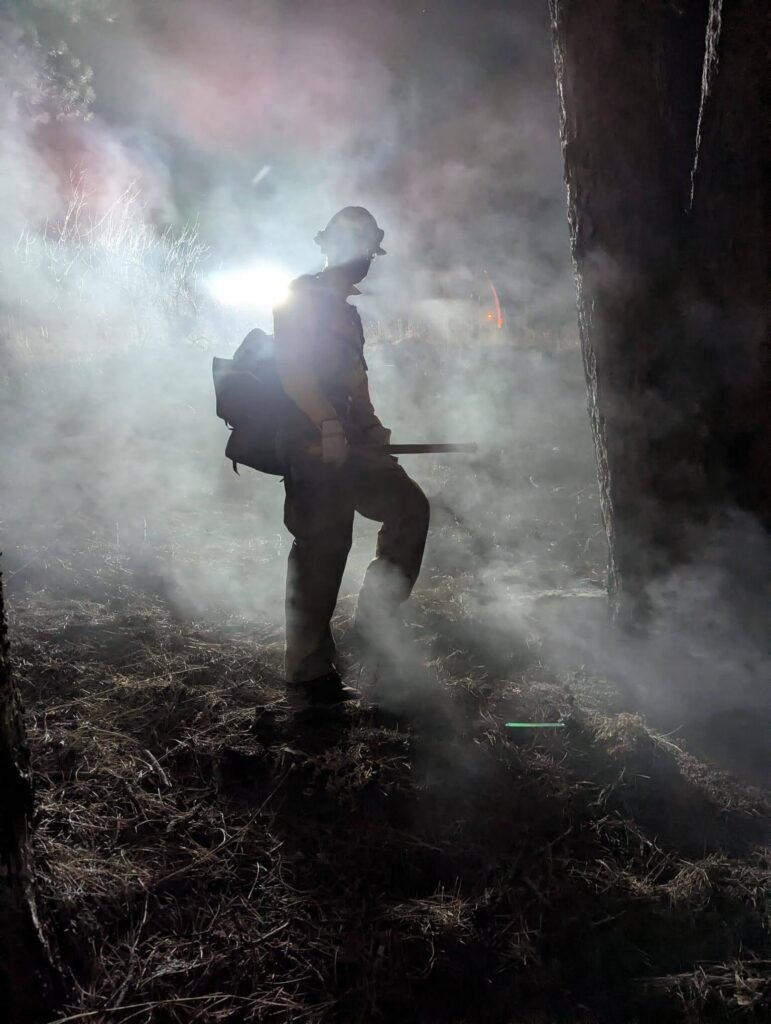
Power grid shutdowns in Colorado bring protection — and problems
Scott Weiser
scott.weiser@gazette.com
Updated 1 hour ago
A downed power line in Sunshine Canyon in the mountains west of Boulder in December posed an electrocution risk to firefighters and bystanders after Xcel Energy re-energized it without repairing it, despite being notified of the break the day before....
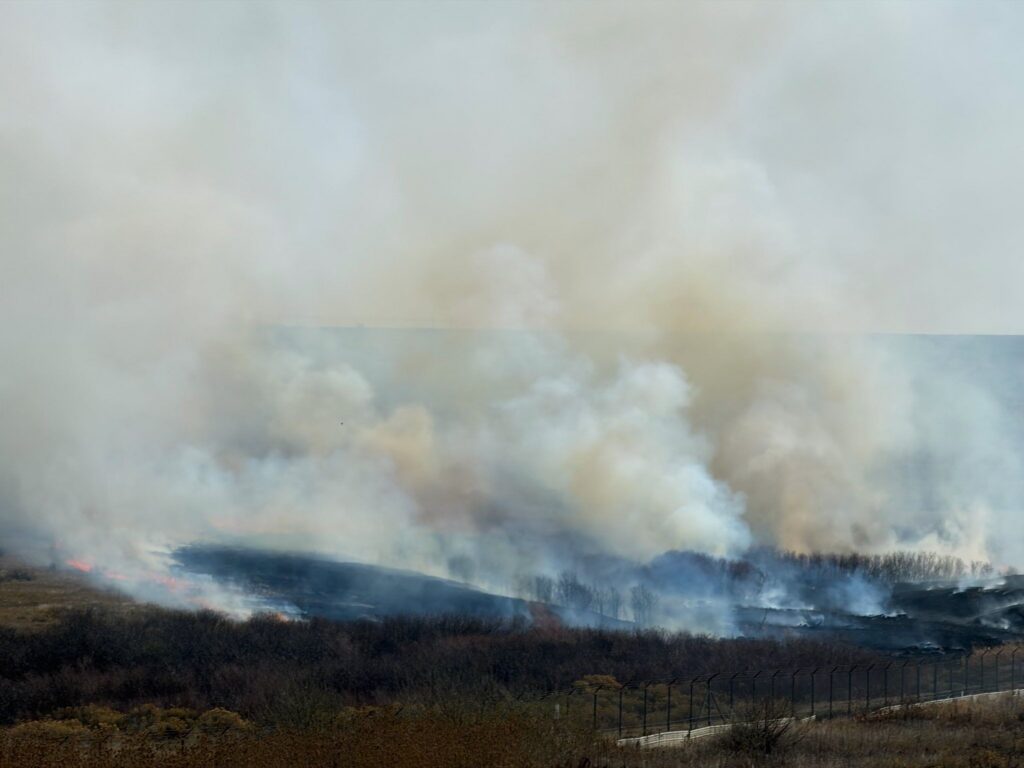
Aurora wildland fire contained at Buckley Space Force Base
Nicholas Fogleman
nicholas.fogleman@denvergazette.com
Updated 12 hours ago
A wildland fire burned Sunday morning on the southwest end of Buckley Space Force Base in Aurora, authorities said. The fire no longer posed a threat and crews were clearing the scene as of 10:53 a.m., according to Aurora Fire...
Unsustainable: How Colorado’s Medicaid spending exploded
Nico Brambila
nico.brambila@denvergazette.com
Updated 13 hours ago
The state’s Medicaid program — which covers about one in four Coloradans — is poised for its largest single-year jump in at least two decades, with officials proposing a $2.3 billion increase, even as lawmakers face a $1.5 billion budget...
PREV
PREVIOUS
Entire state now in drought, says US Drought Monitor
The entire state of Colorado is now in drought, according to the National Drought Monitor Center and the U.S. Drought Monitor. But it’s not quite as bad as 2012, which has been viewed as the most recent high watermark for drought, nor as bad as 2002, when Colorado experienced its worst-ever drought since monitoring began. […]

State's IT leader to move on from Polis Administration
Colorado’s Chief Information Officer will be leaving her post on Sept. 4, after serving for just under two years as the state government’s information technology leader. Theresa Szczurek, who is also the executive director of the Governor’s Office of Information Technology and a cabinet official, was involved with the launch of the Colorado Digital ID, which […]