

Colo. Supreme Court defines ‘rescue doctrine’ in case of Denver cab assault
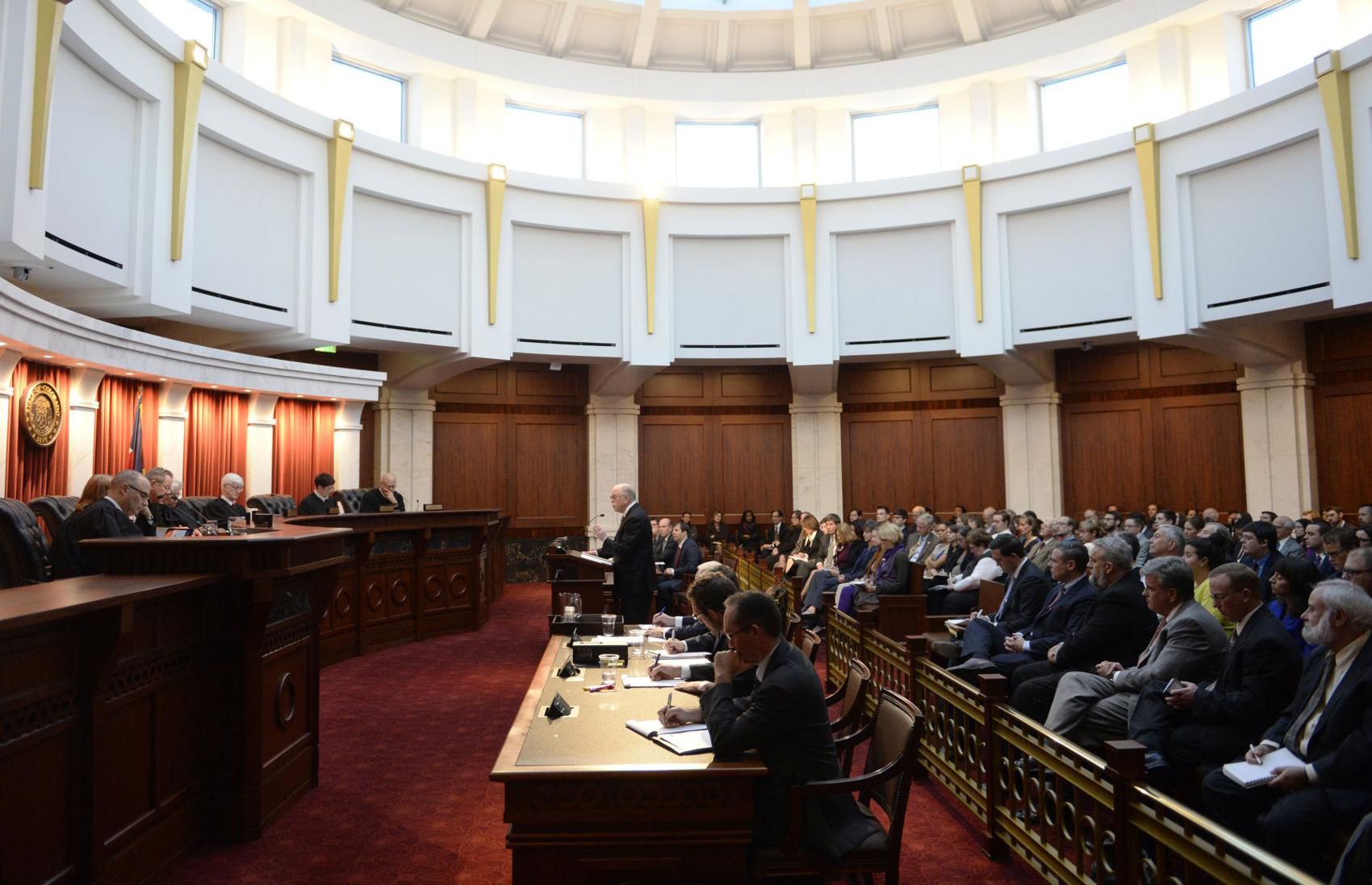
The state Supreme Court has created a new three-part test to determine whether a person qualifies as a rescuer, broadening the Court of Appeals’ ruling that the “rescue doctrine” requires the person to physically intervene to save someone.
“The doctrine seeks to encourage the instinct to help,” wrote Justice Brian D. Boatright for the high court. “Requiring physical intervention does not further that goal and may, in fact, increase the risk of harm.”
A Colorado Cab Company driver picked up Curt Glinton and a friend in Denver, both of whom were intoxicated. The passengers did not provide an address, instead directing the driver where to turn. When they arrived at the Northwest Denver location, Glinton became upset at the fare and physically attacked the driver.
Jose Garcia, who was in the vicinity and thought that this was the taxi he previously called, approached the vehicle and reportedly heard the driver yell, “Help me, help me; they’re hurting me; they’re trying to kill me.” Garcia put his head inside and told Glinton to leave the driver alone, to which Glinton profanely told Garcia to mind his own business. When the driver and Glinton got out of the car and continued to argue, someone hit Garcia on the head from behind.
Glinton got in the driver’s seat and swung the taxi around, running over Garcia and dragging him down the street. He suffered multiple traumatic injuries as a result. Garcia subsequently sued the cab company, alleging that they knew of 44 passenger attacks on drivers in recent years but failed to install cameras or protective partitions.
In his suit, he cited the rescue doctrine, which allows a person trying to rescue an individual to sue if a third party negligently endangers the rescuer, resulting in injury. In a 1921 case in New York involving a man who was injured on a railroad bridge while trying to save his cousin who was thrown from the train, a trial judge ruled that the railroad was not liable for the man’s injuries.
The appellate court, in reversing the decision, introduced the rescue doctrine. By way of example, wrote Judge Benjamin N. Cardozo, “The railroad company whose train approaches without signal is a wrongdoer toward the traveler surprised between the rails, but a wrongdoer also to the bystander who drags him from the path.”
In Garcia’s case, he argued that Colorado Cab Company had a duty to protect him against attack, which a trial court agreed with. A jury awarded him $1.6 million, and found that the cab company was 45% liable for Garcia’s injuries.
On appeal, the Colorado Court of Appeals reversed the decision, finding that “it was mere coincidence” that Garcia was on the scene, as there was no relationship between him and the cab company at that point. Furthermore, the court did not find Garcia to be the cab driver’s rescuer.
“There’s no evidence in the record that he attempted to physically intervene; he didn’t, for example, get between the two men or try to pull one away from the other,” wrote Judge Jerry N. Jones.
“We conclude that such a requirement goes too far,” countered Boatright in the Supreme Court’s opinion. “The human instinct to help those in distress will not always take the form of overt physical exertion, and it would be unwise and perhaps unsafe to always require physical intervention.”
To mandate such intervention may escalate a dangerous scenario or preclude people from stepping in entirely, Boatright reasoned. If the appellate court’s threshold prevailed, “a plaintiff who threw a punch at an attacker would have a better chance at qualifying as a rescuer than a plaintiff like Garcia who saw the same altercation but instead approached the attacker and yelled at him to stop.”
The court devised a three-part test to determine whether someone is entitled to compensation under the rescue doctrine. First, to be a rescuer, a person must intend to aid or rescue a party. Second, they must have a reasonable belief that the party is in imminent peril. Finally, the intervention “must stand a chance at substantially helping the person(s) in peril.”
Kate S. Hulme, an attorney at Cannon Law in Fort Collins, said that the court’s reasoning parallels the “Good Samaritan” law, which exists in all 50 states to protect those rendering aid voluntarily. “The broader interpretation of this legal doctrine extends much needed legal redress for Good Samaritans in Colorado who will now be protected both from liability for their actions and will be compensated for injuries they may suffer when they act to protect others in imminent peril,” she said.
The court concluded that Garcia was a rescuer, reversing the appellate court’s decision. The case is Garcia v. Colorado Cab Co.

Colorado state Senate: Meet the primary election candidates
Marianne Goodland
marianne.goodland@coloradopolitics.com
Updated 8 minutes ago
Colorado’s June 30 primary will feature a slate of state Senate contests, with several incumbents stepping aside and competitive fields emerging in both parties. These are some of the races to watch as voters begin to submit ballots. Senate District...
Appeals court clarifies offense of impersonating a peace officer
Michael Karlik
michael.karlik@coloradopolitics.com
Updated 3 hours ago
Colorado’s second-highest court clarified this month that a person commits the offense of impersonating a peace officer if they engage in “any conduct” while pretending to be law enforcement. In a case out of El Paso County, Richard James Coulier...

Hickenlooper raises $900K since April, heads into primary with almost $3 million on hand
Ernest Luning
ernest.luning@coloradopolitics.com
Updated 3 hours ago
U.S. Sen. John Hickenlooper raised just over $900,000 for his reelection bid in the 10-week pre-primary reporting period, the Colorado Democrat’s campaign said Wednesday. The campaign finished the period with almost $3 million in the bank, with more than 80%...
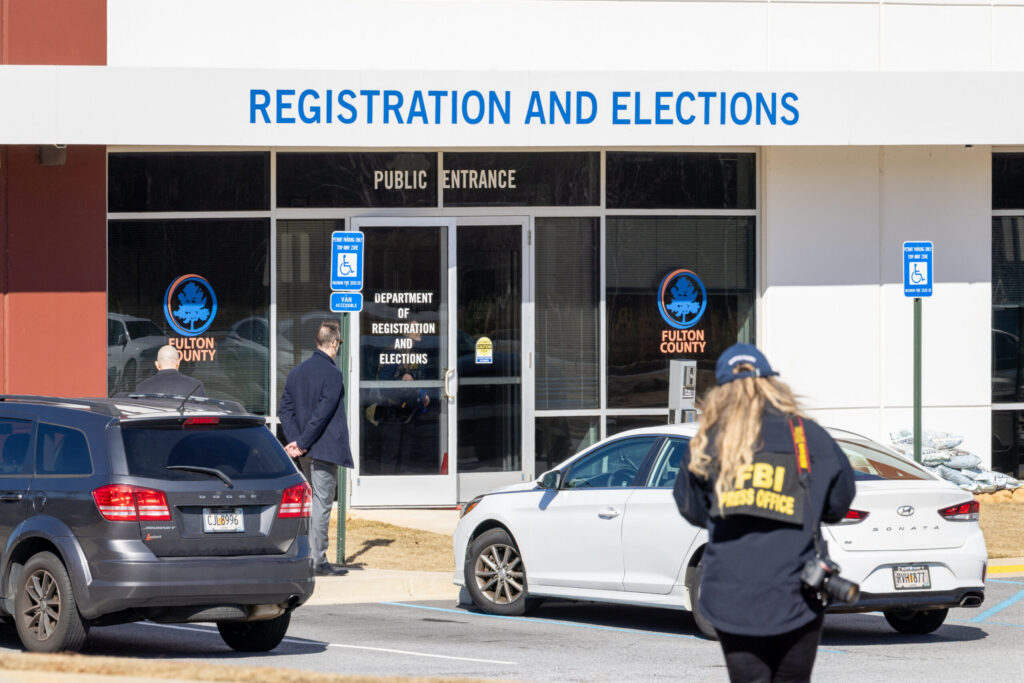
Four takeaways from Georgia, DC, Alabama, and Oklahoma primary elections
Rena Rowe, Washington Examiner
rena.rowe.washington.examiner@gazetteedit.wpenginepowered.com
Updated 2 hours ago
Voters across the country delivered a mixed verdict in a series of high-profile primary contests Tuesday, elevating political outsiders, boosting progressive candidates in deep-blue jurisdictions, and offering fresh clues about President Donald Trump’s hold on the GOP ahead of the...

Trump and Obama lock horns as White House tries to sell new Iran deal
NAOMI LIM Washington Examiner
naomi-lim-washington-examiner@coloradopolitics.com
Updated 2 hours ago
Former President Barack Obama‘s reemergence is looming over President Donald Trump‘s peace deal with Iran as the incumbent tries to sell his deal to an increasingly skeptical public after the nearly four-month war. Obama’s return to the headlines as he...

Littleton approves $1M for Starlight affordable housing project
Nicholas Fogleman
nicholas.fogleman@denvergazette.com
Updated 5 hours ago
The Littleton City Council on Tuesday approved a $1 million funding request to support construction of a new affordable housing development known as the Starlight Apartments. The council authorized the contribution from the city’s Affordable Housing Fund for the project,...
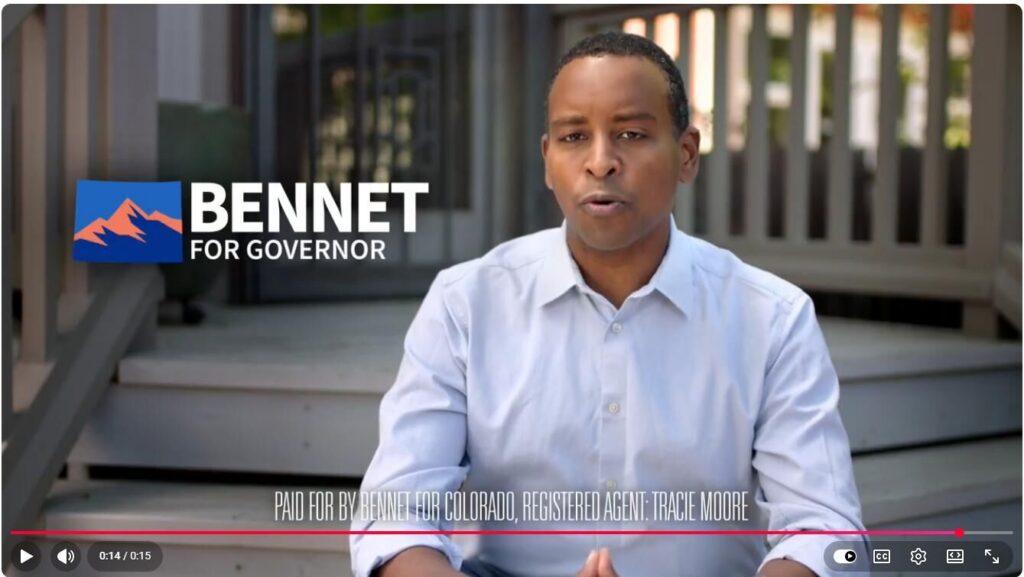
Bennet’s gubernatorial ads say U.S. Senate committee paid for them
Marianne Goodland
marianne.goodland@coloradopolitics.com
Updated 7 minutes ago
Update: as of Wednesday morning, at least one of the ads, featuring Colorado’s Democratic congressional delegation, has been changed to include the disclaimer “paid for by Bennet for Governor.” A series of TV commercials for U.S. Sen. Michael Bennet’s gubernatorial...

Democratic candidates for the 8th Congressional District: Meet Manny Rutinel and Shannon Bird
Thelma Grimes
thelma.grimes@coloradopolitics.com
Updated 23 hours ago
Colorado’s 8th Congressional District is once more the site of a hard‑fought Democratic primary, with candidates competing for the chance to challenge Republican incumbent Gabe Evans this November. A once‑crowded field has narrowed to state Rep. Manny Rutinel and former...
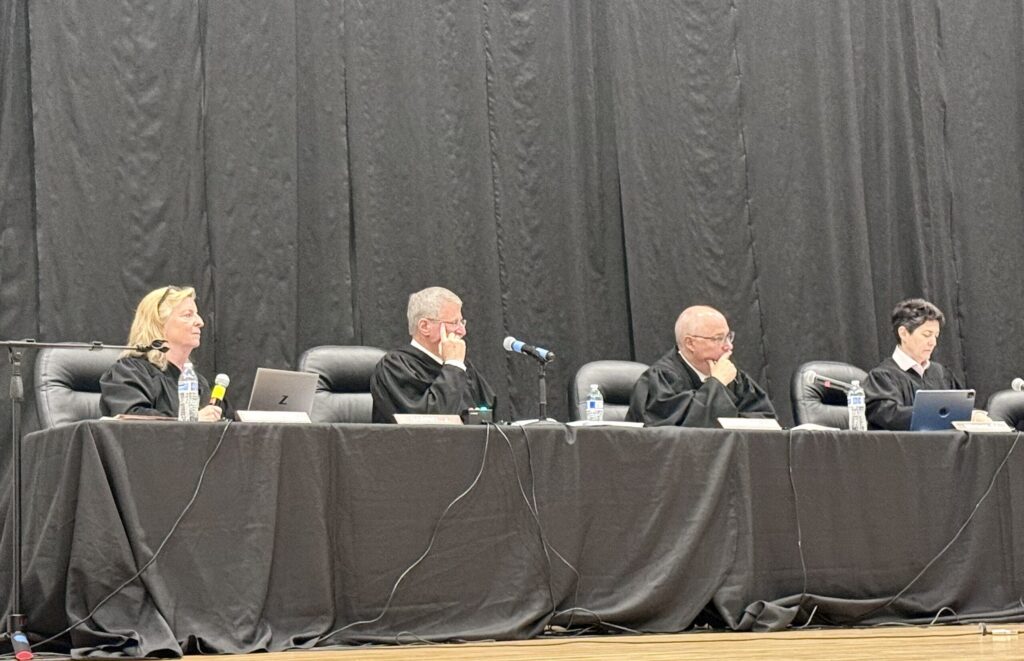
Colorado Supreme Court reverses 2 Chaffee County judges for imposing fee on habeas petitioner
Michael Karlik
michael.karlik@coloradopolitics.com
Updated 23 hours ago
The Colorado Supreme Court rejected two separate appeals earlier this month from an incarcerated defendant seeking immediate release from prison, but concluded that two Chaffee County judges incorrectly required him to prepay filing fees for his cases. David J. Gottorff...

A graduated tax plan could undercut Colorado’s business competitiveness, analysis warns
Marissa Ventrelli
marissa.ventrelli@coloradopolitics.com
Updated 23 hours ago
A proposal to move Colorado to a graduated income tax — taxing individuals and businesses at different rates based on their earnings — could generate more than $2 billion in its first year, but it may also weaken the state’s...
PREV
PREVIOUS

LEGISLATURE 2020 | Last day ends with a flourish
The normal 120-day session of the Colorado General Assembly called it quits Monday after 84 days, though it was 160 days in the making. The legislature worked on Saturday (and the Sunday before that) to gavel out on Monday, so some could hit the campaign trail (and raise money from lobbyists, which they can’t do […]

Cell data: Coloradans getting out more, staying home less
As restrictions aimed at slowing the spread of the novel coronavirus have been eased, Colorado residents are spending their days at home far less than in recent months, recently collected cellphone data show, nearing pre-pandemic levels. On Saturday, June 6, the portion of Coloradans who stayed at home dropped to the lowest point since March […]