

Resolution to repeal Gallagher Amendment on fast-track through the General Assembly
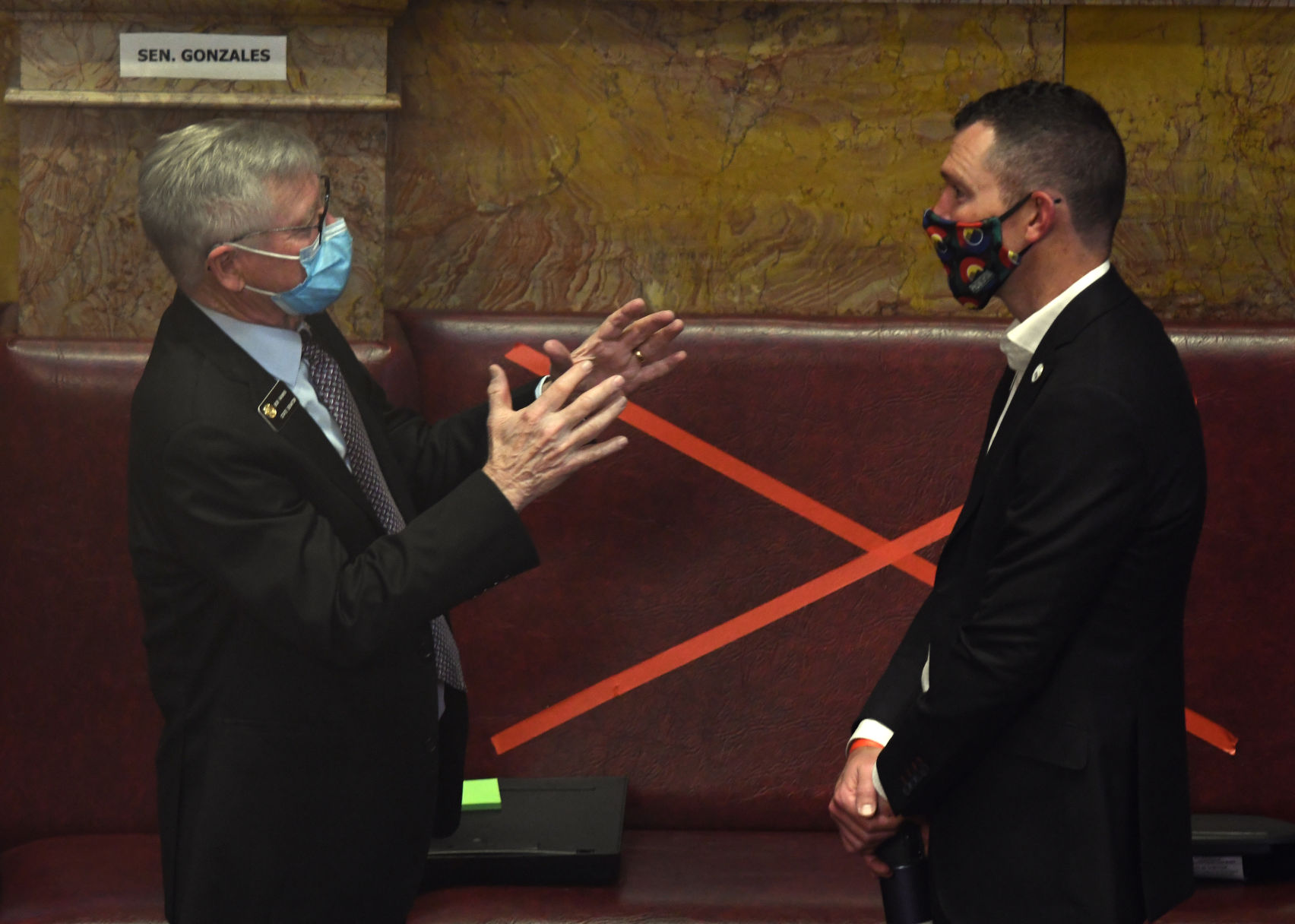
Facing a nearly 18% drop in property tax revenue, largely due to the pandemic, a Senate committee on Tuesday gave unanimous approval to a resolution that will ask voters to repeal the Gallagher Amendment, a move that would allow property taxes to again contribute more to school districts and local governments.
The measure, Senate Concurrent Resolution 1, has bipartisan support, and likely enough votes to get the two-thirds required in the House. In the Senate, it’s a little less certain, given that at least five Republican senators would have to support it. But with a 7-0 vote Tuesday, including three Republicans in the Senate Finance Committee supporting, it’s better than halfway there.
Voters approved Gallagher, named for the former state senator Dennis Gallagher, in 1982 as a way to stabilize residential property taxes, which had increased by 15% between 1958 and 1982.
But the amendment has instead become part of what elected officials and others call the “fiscal thicket,” and its biggest outcome has been to shift the cost of K-12 education away from local property taxes and onto the state.
And in the coming fiscal year, the state simply cannot pick up any more of the cost .
Property taxes come from more than just homes and businesses. Those taxes are also paid by oil and gas companies, mining, agriculture and even vacant land.
JoAnn Groff, the state’s property tax administrator, told the Joint Budget Committee on May 12 that the state’s school general fund gets the largest chunk of those taxes, around 25.6%. But that isn’t all of it: an additional 24.7% goes to mill levy overrides and other school-related needs.
Counties get about 10.4%; local and special districts, which include fire departments, hospitals and water, get 19.4%
Gallagher requires a 45/55 split between residential and commercial property taxes. Residential property taxes bring in 46% of property taxes; commercial taxes are about 30% and oil and gas brings in 10% of property taxes.
But the pandemic, and a drop in oil and gas prices that has led to less production, has resulted in a precipitous drop in commercial property taxes. And in order to maintain the 45/55 ratio, residential property taxes have to be decreased, even as those property values are going up.
And that would cost local governments that rely on property taxes.
The valuation rate, which is tied to the ratio, is set statewide. Home values in urban and suburban communities have been on the rise for at least the past eight years. In 2019, home values went up 17%; commercial values rose by 16%.
Every two years, the state readjusts the assessment rate to maintain that 45/55 split. Prior to 1983, residential property values were assessed at 30%. But rising home values have required the state to readjust the assessment rate in order to maintain the 45/55 split. In 2019, when it was last adjusted, it dropped to its lowest rate ever, at 7.15%.
The same cannot be said for rural communities, and that’s a big part of the problem. A lot of rural communities have had to go to voters and ask for what’s known as a mill levy override, where more property taxes are paid to keep the schools open and to keep fire departments, law enforcement, libraries and hospitals running.
The recent pandemic, and the economic crisis that came with it, has put thousands of businesses – big and small – into a bad situation. Not only are they not making money to pay sales and use taxes, but their property values aren’t doing well either.
Residential home values are up 10%. But the value of commercial properties have dropped by 20%, and oil and gas values are down 35%. That means that without a repeal of Gallagher, officials would have to maintain the 45/55 split, and the rate assessed for home property tax would have to drop yet again.
Groff said that would cost school districts $490 million next year. Counties would get hit hard, too, losing about $203 million in tax revenues.
That was more than enough for lawmakers to react.
The Gallagher repeal appears to be on a fast track in the statehouse. Not only did the Senate Finance Committee give it unanimous approval, they put it on the consent calendar, where bills likely to face little opposition are passed with a single vote. The Senate is scheduled to hold that vote Thursday.
Sen. Jack Tate, a Republican from Centennial who is not seeking a second term this year, called it a mathematical function in the tax law that makes residential taxes a function of commercial real estate statewide.
“By repealing the Gallagher Amendment we’re repealing the requirement that the state adjust upward or downward the residential assessment rate,” Tate said.
Another sponsor, Sen. Chris Hansen, a Democrat from Denver, said that since the amendment was passed by voters in 1982 and took effect in 1983 residential and commercial real estate values have “diverged greatly.”
“It’s causing significant damage to the fiscal health of the state,’ he said, citing a “massive impact to K-12 funding.”
He said backfilling with the state general fund will not be an option in the next few years, which makes a Gallagher repeal critical.
The formula dominated by real estate prices in the Denver metro area leaves rural Colorado unable to pay its bills, proponents said Tuesday.
“A repeal would mean to freeze the rates where they are right now,” Hansen said. “We could only decrease them in the future with a statute. Raising them would still require a TABOR vote.”
He said it would have no impact on agriculture property taxation.
Hundreds of millions of dollars in future tax burden, however, would be transferred to the commercial sector.
“There’s going to be a significant level of tax increase on business at a time we know businesses can’t afford it,” he cautioned.
Sen, Rob Woodward, a Republican from Loveland, asked if the resolution was, then, a tax increase proposal.
Not without a TABOR vote, Hansen said, though future legislatures could vote to decrease the evaluation.
“The reason we feel it’s urgent and vital to repeal Gallagher is that without repeal, automatic tax increases would happen for most businesses, and there would be massive funding shortages for K-12, fire districts, etc.,” he said. “That is the urgency of this moment, and we don’t feel like the state can be fiscally sound if we continue to go down the path Gallagher forces, because of that ratio in the constitution.”
Should the bill make it to the November ballot, it would need only 50% voter approval to repeal it. That’s because of an interpretation that says measures passed prior to 2016’s Raise the Bar amendment, which requires a 55% vote to amend the constitution, can be repealed under the same voter approval law in effect at the time of passage.
The only opposition to date is from Colorado Rising Action. Executive Director Michael Fields said this week that “repealing Gallagher would only lead to even higher property taxes for Coloradans without fixing the real issue which is the state’s obligation to back-fill school district funding. A repeal would certainly have an uphill battle with voters in November, but the legislature can fix the funding formula during their session.”
However, lawmakers, including Rep. Julie McCluskie, a Dillon Democrat, have been working on a fix for three years to the school finance formula have said they will not introduce that bill during what’s left of the 2020 legislative season.


Republican Victor Marx taps George Markert as his lieutenant governor pick in Colorado’s gubernatorial race
Ernest Luning
ernest.luning@coloradopolitics.com
Updated 1 minute ago
Colorado Republican gubernatorial nominee Victor Marx named George Markert, a retired Marine colonel, as his running mate for lieutenant governor Friday morning, saying the former U.S. Senate candidate will bring “exceptional character, proven leadership and a lifetime of serving others”...
Misconduct complaints from ex-Colorado judicial discipline director dismissed against federal judges
Michael Karlik
michael.karlik@coloradopolitics.com
Updated 12 hours ago
The administrative body for the Denver-based federal appeals court upheld a finding last week that misconduct complaints against Colorado’s chief federal trial judge and the chief appeals judge warranted dismissal and appeared to be a “litigation tactic” by the complaining...

First-ever Red Rocks naturalization ceremony draws most diverse group of new citizens
Michael Karlik
michael.karlik@coloradopolitics.com
Updated 15 hours ago
Colorado’s federal trial court held its first-ever naturalization ceremony for nearly 300 new citizens on Thursday at Red Rocks Park and Amphitheater. “We’re doing it to commemorate the 250th anniversary of the Declaration of Independence and the United States. Red...
Colorado lawmakers start crafting strategy to manage $200 million in federal rural health funds
Marissa Ventrelli
marissa.ventrelli@coloradopolitics.com
Updated 16 hours ago
Members of the Colorado legislature’s new Commission on Medicaid raised concerns Wednesday about the federal Rural Health Transformation Program created under H.R. 1. The bipartisan, bicameral commission, created in the last legislative session to guide implementation of Medicaid changes under...

Democrat Jessica Killin’s internal poll shows dead heat with U.S. Rep. Jeff Crank in Colorado’s 5th CD
Ernest Luning
ernest.luning@coloradopolitics.com
Updated 14 hours ago
Jessica Killin, the Democratic nominee in Colorado’s 5th Congressional District, is in a statistical tie with Republican U.S. Rep. Jeff Crank, according to an internal poll released this week by Killin’s campaign. The poll of likely general election voters, conducted...

Thousands of migrants bull-rush Spanish border, sparking ‘total humanitarian and social emergency’
Timothy Nerozzi
timothy-nerozzi@coloradopolitics.com
Updated 18 hours ago
Hundreds of migrants in Morocco have bull-rushed through the Spanish border into the European Union, exacerbating the migration crisis. A mob of African migrants plowed past border guards and circumvented barriers into the Spanish territory of Ceuta this week, creating...

Violent and property crimes decreased in Colorado in 2025, according to new data
Marissa Ventrelli
marissa.ventrelli@coloradopolitics.com
Updated 17 hours ago
Violent and property crime rates in Colorado decreased significantly in 2025, according to data from the state’s public safety agency. The violent crime rate decreased by 10.7% from 2024 to 2025, resulting in over 3,300 fewer crimes reported statewide, while...

Colorado Springs D-11 may present voters with $775 million bond measure
Eric Young
eric.young@gazette.com
Updated 22 hours ago
Colorado Springs’ oldest school district could see new capital funding for the first time in over 20 years. Colorado Springs District 11’s Board of Education will decide whether to present a new, districtwide bond totaling $775 million to voters this...

Victor Marx says he’ll only debate Phil Weiser once in Colorado governor’s race — without a moderator
Ernest Luning
ernest.luning@coloradopolitics.com
Updated 17 hours ago
Colorado Republican gubernatorial nominee Victor Marx said on Tuesday that he will participate in only one debate with Attorney General Phil Weiser before the November election — and he challenged the Democratic nominee to hold the event without a moderator....

Denver seeks to move more than $18 million to cover George Floyd protest claims
Deborah Grigsby
deborah.smith@denvergazette.com
Updated 1 day ago
City officials want to move millions from Denver’s General Fund contingency account to the City Attorney’s Liability Claims Fund to cover legal settlements and claims stemming from the 2020 George Floyd protests. The hefty shift of cash, proposed in Council...
PREV
PREVIOUS

800 AmeriCorps, Senior Corps members to assist with contact tracing
More than 800 AmeriCorps and Senior Corps members will assist with contact tracing and other COVID-19 related activities in Colorado. The Corporation for National and Community Service, which oversees the country’s service programs, has provided $2 million to deploy participants in the National Civilian Community Corps, AmeriCorps VISTA and Senior Corps programs. Participants typically receive […]

CBI saw increase in firearm denials, nearly half million offender DNA entries in 2019
The state’s database of DNA profiles reached nearly half a million entries by the end of 2019, and the number of firearm purchase denials rose compared to the year prior, the Colorado Bureau of Investigation reports. These findings were part of the CBI’s 2019 annual report, which the agency released in April. CBI, which has […]