

NOONAN | CU regents race draws big bucks
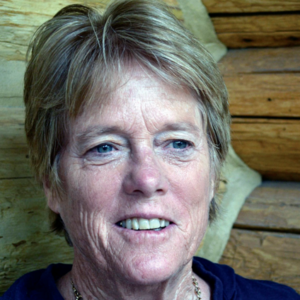
Elections for the University of Colorado Board of Regents are collecting buckets of money. These positions have mostly been low-funded affairs, but like so many others these days, they’re now attracting big-gun political attention.
Two CU Regent spots, CD2 and CD6, have expensive and competitive races. The most expensive is the Democratic primary in CD-2 in Boulder, the University’s home seat. Two CU faculty and one Denver PBS Channel 12 personality are running. So far the candidates have collected $185,000, including $63,400 in loans. This seat will be won in the primary.
The biggest dollar number comes from Dave Gross, Leeds School of Business faculty since 1996. He’s currently the Associate Chair of the Finance Division with $53,649 in contributions and a $55,000 loan. Second in money is Callie Rennison, a faculty member and administrator at CU-Denver with $38,773 in contributions and $4,000 in loans. Third place is Channel 12 opinion personality Aaron Harber at $30,680 in contributions and $2,821 in loans.
Republicans have a primary in CD6, Aurora, Centennial, and Highlands Ranch. Richard Murray, attorney and former student body president for the entire CU campus, has ginned up $23,549. His GOP opponent, Priscilla Rahn, master teacher and teacher educator, has collected $9,028. Whoever wins this battle takes on Ilana Spiegel, education consultant, who has $54,019 already in her pocket and won’t have to spend anything on a primary.
The CU regent role has taken on greater visibility with the controversial appointment of Mark Kennedy as president of the four-campus enterprise. The current Board of Regents, majority Republican, has been very close to the chest concerning its selection of Kennedy to replace Bruce Benson, who was in the role for more than 11 years.
The regents also face challenges with CU’s budget that will receive substantial cuts due to statewide COVID-19 tax revenue declines. U.S. Secretary of Education Betsy DeVos has put forward revised sexual harassment policies creating more controversy in that arena. Another potential debate concerns the recent dismissal of Detlev Helmig, formerly a CU air quality and climate researcher whose work has formed the air quality basis for recent oil and gas legislation, including SB-181, vigorously protested by the energy industry.
The endorsement competition among the three candidates is startling. Harber boasts Gary Hart, Pat Schroeder, and House Majority Leader Alec Garnett. Gross has 63 faculty endorsements, including many from his home department at Leeds. He also lists numerous Boulder community leaders. Rennison has cornered the current CU regent Dem endorsements plus state Senate Majority Leader Steve Fenberg and numerous other state legislators.
Republican Murray got former CU President Bruce Benson’s endorsement. Current CU GOP regents are behind him, too. Rahn, whose mother is Korean, has many supporters in the Colorado Asian community and among Aurora local political leaders.
The candidates see accessibility, affordability, and diversity as important CU challenges. They acknowledge the challenge of tuition and student loans, sexual harassment policies from the U.S. Department of Education, and excessive administrative overhead.
The Gross and Rennison candidacies can be seen from two perspectives: a conflict of interest as they become the overseer of their employer or insiders who offer unique insight on administrative waste and hassle. Harber argues that his work gives him independence.
Rahn asserts that her experience as a career public school educator and business woman brings her important understanding of education from the public and private sector point of view. Murray has an alumnus’ commitment to his university. One of his main points is to promote CU-Boulder’s athletic success and its value to student-athletes. Spiegel points out her defense of academic freedom and opportunity for all students.
How these issue statements relate to political contribution money is up in the air. Ten years of brutal higher education battles places money as the basis of most higher ed issues. Other states have tackled in-state tuition by making it free, as with New York state, or reducing community college expense and smoothing transition from two-year to four-year institutions, as with California. That’s not going to happen here without everyone running for regent and the state legislature and governor taking on Colorado’s taxing apparatus.
Meantime, Colorado’s peaks shine as the Front Range remains under COVID-19 pollution protection.
Paula Noonan owns Colorado Capitol Watch, the state’s premier legislature tracking platform.


Colorado’s GOP at its best — and worst | Dick Wadhams
Dick Wadhams
dick-wadhams@coloradopolitics.com
Updated 2 days ago
By Dick Wadhams Colorado Republicans are fighting to be relevant in the face of gross mismanagement by Democrats who totally control state government. While the Colorado Republican Party is mired in controversy, several Republican elected officials and candidates represent the...

Someone’s lying in latest activist embarrassment for Polis’ CPW Commission | Rachel Gabel
Rachel Gabel
rachel-gabel@coloradopolitics.com
Updated 2 days ago
Either Samantha Miller is lying, or Gov. Jared Polis is. If Miller is lying, she is so secure in the red carpet rolled out for animal activists by this administration she is willing to put words in the governor’s mouth....

Ask Secretary of State candidates if they’re in favor of independent election audits | Jon Caldara
Jon Caldara
jon-caldara@coloradopolitics.com
Updated 4 days ago
This part will disappoint angry people on Twitter: Relax. Put the pitchforks down. I am not relitigating the 2020 election or mail ballots or even Tina Peters. But I am saying people don’t trust elections like they used to. And...
Redistricting plan to give Colorado Dems 7 members of the U.S. House will split El Paso County | Bob Loevy
Bob Loevy
bob-loevy@coloradopolitics.com
Updated 2 days ago
A proposed redistricting plan, which would give Colorado seven Democratic members of the U.S. House of Representatives and only one Republican, will split El Paso County into two parts and thereby weaken the county’s influence in Congress. El Paso County,...

Can deliberation save democracy? | Vince Bzdek
Vince Bzdek
vince.bzdek@gazette.com
Updated 9 hours ago
In September 2019, 523 Americans traveled to Dallas for an experiment called “America in One Room.” The gathering was designed to test a theory: Could representative citizens deliberate productively even in an era of intense polarization? The event focused on...
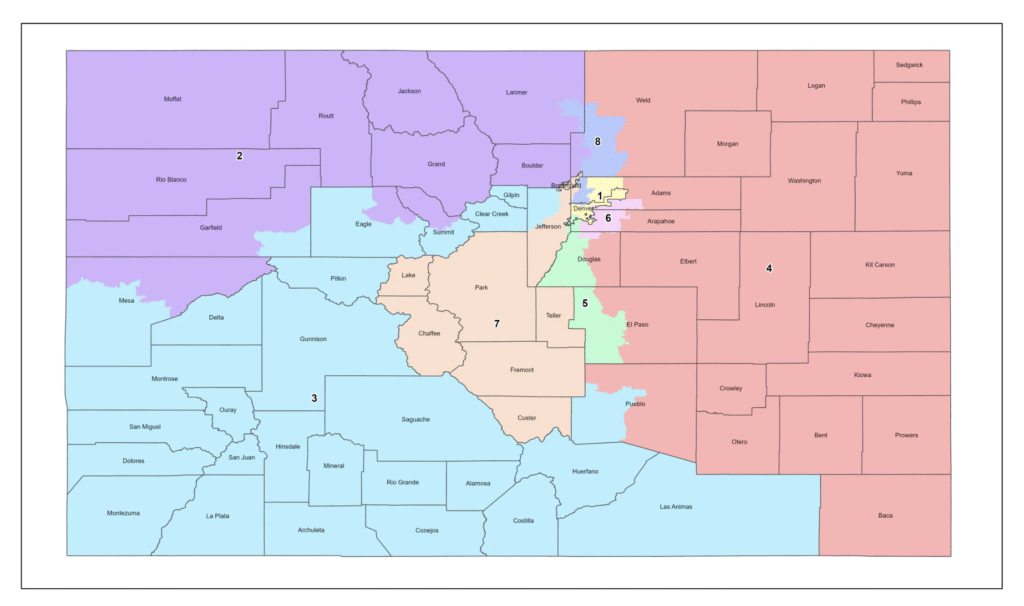
Redistricting scheme would give Colorado Democrats seven House members, split El Paso County | Bob Loevy
Bob Loevy
bob-loevy@coloradopolitics.com
Updated 2 days ago
A proposed redistricting plan, which could give Colorado seven Democratic members of the U.S. House of Representatives and only one Republican, would split El Paso County into two parts and thereby weaken the county’s influence in Congress. El Paso County,...

Is Trump a builder or just a latter-day headhunter? | SONDERMANN
By Eric Sondermann
by-eric-sondermann@coloradopolitics.com
Updated 4 days ago
It was well under 100 hours after President Donald Trump’s overly long, overly theatrical State of the Union speech that he unleashed American bombers across Iran. As I write, it is now less than 100 hours since those bombers started...
Pueblo board violates Open Meetings Law | Dennis Maes
Dennis Maes
dennis-maes@coloradopolitics.com
Updated 3 days ago
By Dennis Maes I recently witnessed two serious violations of the Colorado Open Meetings Law by the Pueblo Urban Renewal Authority (PURA) board. Both were brought to the attention of the board in an open meeting and entered on the...

Legislation would undermine educational opportunity | OPINION
Colorado Politics
colorado-politics@coloradopolitics.com
Updated 4 days ago
By Norton Rainey and Weston Kurz New legislation under consideration by Colorado lawmakers could have far-reaching consequences for Colorado students and families looking for new educational options. HB26-1292, currently under consideration by the Colorado General Assembly, would severely limit the...
Medicaid cuts for critical care hurts providers, reduces access to the best care for patients | OPINION
Colorado Politics
colorado-politics@coloradopolitics.com
Updated 4 days ago
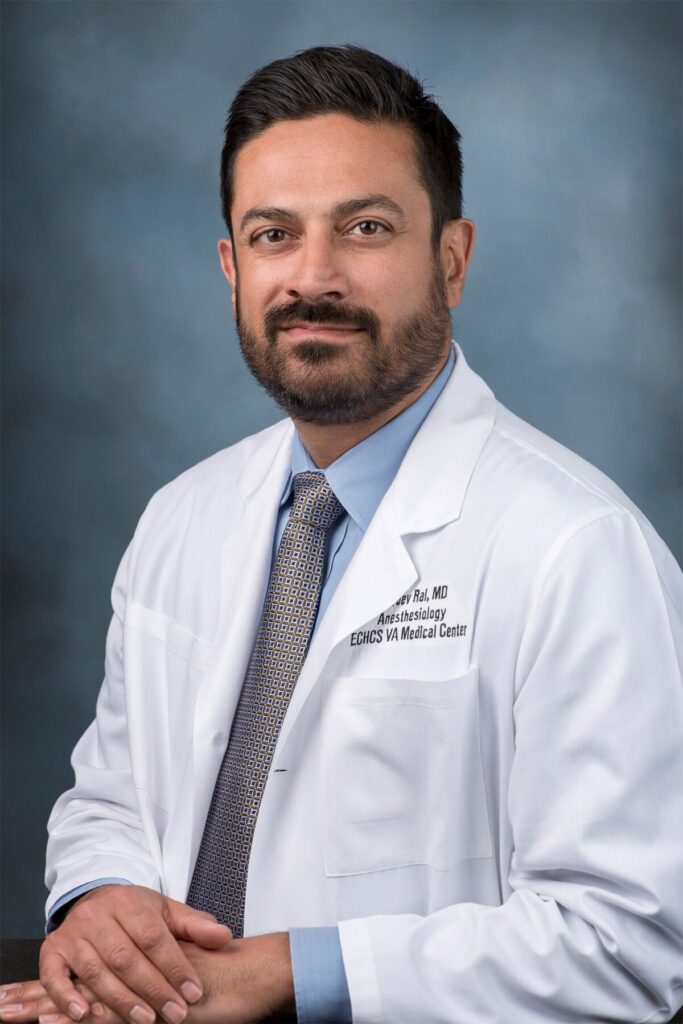
By Gurdev Rai This year, the legislative session started with one thing on everyone’s minds: the state budget, and the major hole created by Congress’ HR 1 law. Costs, including for health care, have ballooned across the board, and we...
PREV
PREVIOUS

SLOAN | Do Polis' emergency powers reach too far?
Kelly Sloan The Colorado state legislature is back in session this week, albeit in a rather surreal manner, mostly cleaning up the remnants of the interrupted regular session, carving out a budget with a $3 billion-and-then-some hole to contend with, and introducing a handful of other bills in one way or another connected with the […]

If we prioritize, we can fund the essentials
Kevin Van Winkle The Colorado legislature has finally resumed its duties, and we are obliged by our constitution to pass a balanced budget and provide for public school funding. But the pandemic and the ongoing crushing economic shutdown means we must do more to revive Colorado. Constitutionally, our shrinking state budget must be balanced – […]