

Q&A with Elliot Goldbaum | Policy point man

BIO
-
Director of strategic communications, Colorado Fiscal Institute, since 2018.
-
Former government affairs manager for the Colorado Public Employees’ Retirement Association.
-
Holds a bachelor’s degree from the University of Colorado at Denver.
Colorado Politics: The irony amid Colorado’s current bout with COVID-19 is that progressives were poised at last to leave their mark on policy making in the state – having wrested complete control of state government in 2018 – only to be blindsided by the pandemic. It crushed the economy and slowed to a trickle the stream of revenue to state coffers. Now, lawmakers face billions of dollars in cuts that will gut the state budget – and dash high hopes of bolstering social and other programs. Give us the latest casualty report: What budget lines and areas that are important to your organization are most threatened, and by how much?
Elliot Goldbaum: It’s hard to pick. Nothing will be spared unless we get more revenue at the legislature, the ballot, or by an act of Congress this year. There have been some amazing legislative accomplishments over the past year or so, many of which weren’t expensive, but rather innovative. For example, the law that now allows lawmakers to request demographic notes that show how legislation affects groups of people by, among other things, race, ethnicity, or geography comes to mind. Thankfully, the virus won’t be able to take everything away from us.
But fundamentally, the idea that the state budget was awash with cash before the virus hit doesn’t really hold up when you dive into the data.
If you look at 2019 General Fund revenue per capita including inflation and population growth, Colorado was actually behind where we were in 2000. That’s because, while the state has experienced incredible growth over the past two decades, we’re stuck with an unfair tax code that drives inequality and inequities and fails to meet our needs. Despite the fact that Colorado’s economy was booming before the pandemic, our tax code prevented us from investing a lot of that growth, and now we’re left scrambling to figure out how to spare our communities from the devastation just as the demand for the services our tax dollars pay for spikes.
Unless lawmakers act to pass a temporary emergency tax at the Capitol; voters pass the fair-tax measure at the ballot, or Congress steps in with fiscal relief, we’re going to see hundreds of millions of dollars cut from K-12; state support for higher education shrink to the point where some communities may lose their colleges and universities altogether, and kids will even get kicked off their health care in the middle of a global pandemic. That’s not right, and we need to do everything in our power to stop it.?
CP: Why in your estimation did Colorado voters handily defeat last fall’s Proposition CC, which would have let the state keep excess tax revenue to fund schools and transportation? Why is it so hard – a decades-long saga, really – to pass a statewide tax hike??
Goldbaum: Well first of all I’d push back a little bit on Prop CC being defeated “handily.” Aside from Referendum C in 2005 – which by the way only passed with 52% of the vote despite very visible bipartisan support from then-governor Owens and others – Prop CC did better than all the previous off-year revenue measures. A growing share of voters see the problems created by our unfair, upside-down tax code that allows the rich to pay less of their income in taxes than families who earn low and moderate incomes and want to do something about it.
That being said, Prop CC certainly did not get the result we were hoping for. There are a lot of reasons why it’s tough to pass statewide revenue measures in Colorado, though local measures do fare much better. For one, we have extremely well-funded special interests that revel in confusing the truth about revenue in the state. Those are the same exact groups who frequently call for “prioritizing” the budget but tend to shy away from actually telling voters how they think lawmakers should do that. They point to a growing state budget while ignoring the economics of inflation and population growth that really keep the budget from growing much in real terms. They talk about the total state budget as if lawmakers can control all of it, even though the General Assembly only decides how to spend about 40% of it. Combine that with constitutionally mandated ballot language designed to YELL AT VOTERS IN ALL CAPITAL LETTERS and obscure who would actually pay if the measure passed, and it’s already an uphill battle.
Ultimately, ballot measures aren’t that different from legislation at the Capitol: Just as it’s much easier to kill a bill than it is to pass it, it’s much easier to run a “no” campaign than it is to run a “yes” campaign.
CP: There are by one count at least two dozen institutes, policy-advocacy groups and related think tank-type organizations spanning the political spectrum in Colorado. What space does the Colorado Fiscal Institute fill after all its years in operation that still sets it apart from the crowd???
Goldbaum: There’s a reason why we’re proud to call ourselves the “nerd herd.” What CFI is known best for is the way we explain some of these complicated parts of Colorado’s fiscal policy landscape in a concise and engaging way. Our best-known product, “The Purple Book: A Colorado Compendium of Useful Fiscal Facts,” is probably the best example of that. In a little over 100 pages, we go over some of the most important facets of our state budget, our tax code, our sometimes conflicting constitutional amendments (AKA the “fiscal thicket”), and other issues like PERA and the minimum wage, all while providing context and clarity in ways that have earned us the respect and attention of casual observers and policy makers alike.
At the end of the day, even though we sometimes compete for funding and media attention, I’m glad I get to work with so many of the folks at those other institutes, advocacy groups, and think tank-type organizations, especially now.
CP: In a recent commentary in Colorado Politics, you called on lawmakers to adopt HB20-1203 when the legislative session resumes May 26. The bill would expand the state earned income tax credit and fund the Colorado child tax credit. What else – within the realm of possibility – do you want to see lawmakers pass???
Goldbaum: I’m really passionate about refundable tax credits like the Earned Income Tax Credit and the Child Tax Credit. Not only because they put money in the pockets of families who earn low and moderate incomes, especially people of color, but there’s been endless research linking them to better health outcomes for moms and babies, and kids whose parents get those kinds of credits tend to do better in school and even earn more income later on in life. It’s the ideal way for the state legislature to act to provide long-term relief.??
The much bigger question for lawmakers is whether they can do what it’s going to take to put aside partisan differences and pass a temporary emergency tax as authorized by TABOR. The political will is there – recent polling showed Coloradans support increasing taxes on the wealthiest 5% over budget cuts by a wide margin – but it remains to be seen if the pre-pandemic political dynamic at the Capitol will all but guarantee a stymied recovery as these budget cuts make it even tougher for Colorado to come back.?
CP: You have an extensive history in Colorado. What keeps you here?
Goldbaum: I’m a proud, lifelong Coloradan, and there’s a strong possibility I will never live anywhere else. In addition to my loving wife Kate – who has been my best friend and remains the smartest and most capable candidate who will sadly never run for office despite all of my best efforts to recruit her – our son Simon, and our extended family and friends, I remain a diehard believer in the promise of this state. I also remain convinced I need to be a part of making it a better place for my son and all the children who will inherit it from us one day in the near future



Senate panel advances bill to tighten Colorado sports betting rules amid youth addiction concerns
Marissa Ventrelli
marissa.ventrelli@coloradopolitics.com
Updated 2 minutes ago
A divided Senate Finance Committee on Tuesday narrowly advanced a bill to impose new restrictions on Colorado’s booming sports betting industry, as lawmakers cited rising concerns about youth gambling and addiction while operators warned the changes could drive bettors to...

Federal judge green-lights trial against Denver officer over race-based enforcement
Michael Karlik
michael.karlik@coloradopolitics.com
Updated 24 minutes ago
A federal judge green-lit a jury trial last week on a man’s claim that a Denver police officer engaged in racially selective enforcement of the law by arresting him for video recording at a police station, while not arresting a...
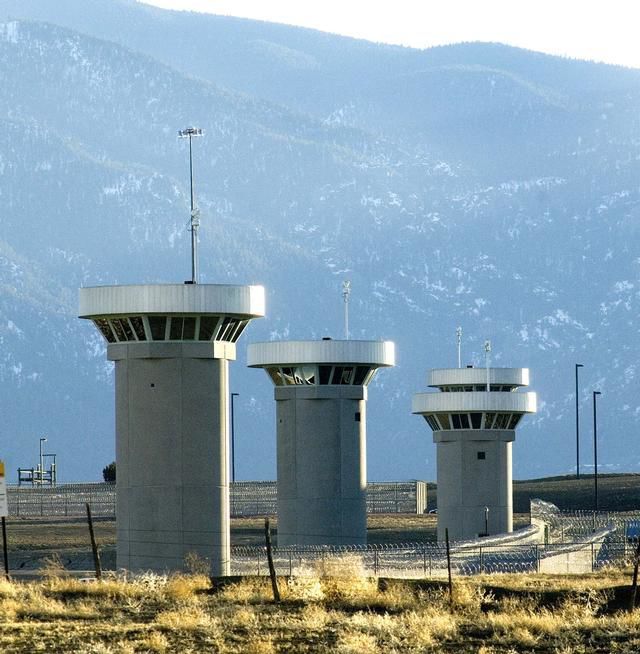
Federal judge says 8 years in solitary confinement not grounds to reduce man’s sentence
Michael Karlik
michael.karlik@coloradopolitics.com
Updated 37 minutes ago
A federal judge concluded earlier this month that a man’s eight years allegedly spent in solitary confinement did not justify granting his request for a sentence reduction. However, U.S. District Court Senior Judge William J. Martínez signaled his willingness to...

Democrat Matt Cavanaugh ends campaign in Colorado’s 5th CD, says petition firm came up short
Ernest Luning
ernest.luning@coloradopolitics.com
Updated 42 minutes ago
Democratic congressional candidate Matt Cavanaugh said Wednesday that he was ending his bid to challenge Republican U.S. Rep. Jeff Crank in Colorado’s 5th District because the firm his campaign hired to gather petition signatures failed to deliver. Cavanaugh, an Army...

Colorado voters to decide proposed ban on gender-affirming surgeries for minors in November
Marissa Ventrelli
marissa.ventrelli@coloradopolitics.com
Updated 59 minutes ago
A newly qualified ballot measure would ask Colorado voters to decide whether to prohibit gender-affirming surgeries for minors and bar public funding or insurance coverage for procedures that alter biological sex characteristics. The measure would bar health care professionals from...

Democrats want to bar use of consumer data to set Colorado prices, employee wages
Marissa Ventrelli
marissa.ventrelli@coloradopolitics.com
Updated 17 minutes ago
A closely divided House committee advanced a bill aimed at curbing the use of personal data to set individualized prices and wages, reviving a proposal that failed last year and setting up a broader debate over how far the state...

10th Circuit rejects ‘potential for violence’ when police arrest vehicle occupant’s romantic partner
Michael Karlik
michael.karlik@coloradopolitics.com
Updated 4 hours ago
The Denver-based federal appeals court rejected the idea on Tuesday that a vehicle occupant poses a danger to police solely because they are romantically involved with another occupant who officers are arresting. By 2-1, a three-judge panel of the U.S....

Colorado justices grill debt collector about compliance with law
Michael Karlik
michael.karlik@coloradopolitics.com
Updated 16 hours ago
The Colorado Supreme Court repeatedly pressed a debt collection company last week to explain how its lawsuit against a Boulder woman for an unpaid credit card balance complied with the specific requirements that state lawmakers have created. Portfolio Recovery Associates,...

Artificial intelligence working group agrees on framework to replace Colorado law
Marianne Goodland
marianne.goodland@coloradopolitics.com
Updated 22 hours ago
A group that has been working on artificial intelligence policy has reached an agreement on a framework that would replace the regulations adopted by Colorado legislators two years ago. The agreement has the backing of Gov. Jared Polis, who reluctantly...

Proposal to levy new fees on alcohol products in Colorado dies
Marissa Ventrelli
marissa.ventrelli@coloradopolitics.com
Updated 5 hours ago
The proposal to collect millions in new fees on alcohol products — dollars to be earmarked for Colorado programs aimed at addressing the behavioral and physical health effects of alcohol abuse — died on Tuesday. House Bill 1271 sought to...
PREV
PREVIOUS

BECKER | Nearly everyone will feel the impact
Two months ago, the General Assembly paused floor and committee work to help slow the spread of COVID-19 and protect the public, lawmakers and everyone who works in or visits the Capitol. During this pause, lawmakers have been helping constituents and connecting Coloradans with critical information, services and essential resources. House Democrats have held over […]

Denver restaurants join state's in getting green light to reopen on Wednesday
On Monday Denver Mayor Michael Hancock said the city’s eateries will reopen their dining rooms and counters on Wednesday, joining those across the state. Restaurants statewide can open for dine-in service as of Wednesday at half capacity or 50 people, whichever is less, but bars will remain closed, Colorado Gov. Jared Polis announced Monday. The prohibition […]