

SONDERMANN | A socially distant political season


Think back just to January and the start of the 2020 legislative session. Handshakes and hugs were plentiful. Optimism reigned, and Colorado seemed in the catbird seat. Most top-of-mind problems were those of growth, prosperity and excess.
The opening-day speeches made note of the ultra-ambitious agenda of the prior year’s session (Democrats pointing with pride; Republicans with alarm) and put forth a more modest list of remaining priorities. Included among such topics were a possible revamp of Colorado’s arcane system of school finance; the perpetual challenge of transportation funding; and the contentious issue of mandated family leave.
A day later, Gov. Polis delivered his annual State of the State address, highlighting such ambitious items as further expansion of preschool and the creation of a state-managed public health care option.
What passed for early drama was provided by a slew of anti-fracking absolutists who tried to interrupt the governor’s speech and were summarily removed from the House gallery.
Now fast forward to May 18 and the planned legislative restart. It’s still anyone’s guess as to whether that will be yet feasible a couple of weeks hence. Whenever it happens, it will be quite a different scene with legislators giving each other a wide physical berth and delivering impassioned speeches through facial garb.
Not to even contemplate the picture around the brass rail where the cadre of lobbyists usually congregate. How do you apply social distance to a political process that is most often up close and personal?
In last week’s column, we explored the magnitude of the COVID-induced budgetary challenge that will confront Colorado policymakers and define the balance of Polis’ term.
Here, let’s take a glance at what this altered political reality means for the conclusion of this legislative session and this fall’s potential ballot issues.
Republicans at the Colorado Capitol are akin to women at a sperm donation center. They’re nice to have around, but rather superfluous.
Now and for the foreseeable future, both floors of the Capitol are Democratic domain. Democrats hold all executive offices. And consider that there are more Democrats in the State House (41) than Republicans in both the House and Senate combined (40).
The prototypical Republican is a born budget-cutter. The standard issue Democrat is anything but.
However, the fiscal reality is that a state of abundance has quickly morphed into one of extreme austerity. The political reality is that Democrats bear the burden of the major budget-cutting to come. Those elected with bold, new programmatic promises will spend much of their tenure doing subtraction instead of addition.
Democrats will return to the Capitol to find that any proposal with a fiscal impact is dead on arrival. And that other ideas once central to the agenda – think family leave legislation, for one – are no longer attuned to the political moment.
A few issues are already slated for this fall’s ballot. Coloradans will be treated to a robust debate on the wisdom of joining the National Popular Vote Compact and on the reintroduction of gray wolves into our state. (Some might suggest that the Popular Vote Compact is tantamount to throwing Colorado to the wolves, but we’ll save that discussion for another time.)
In addition to these two as well as a transportation bonding measure, the usual plethora of proposals are in the queue, but the petitioning process is largely frozen by the epidemic. It’s hard to imagine a lot of Coloradans will be anxious to grab a clipboard this summer when accosted by some stranger in front of a grocery store.
Given that the Colorado Constitution seems to mean whatever four State Supreme Court justices read into it at any instant, perhaps electronic signature-gathering will be authorized. Short of that, the virus might pare the November ballot down to an abbreviated version of its usual form.
Two of those propositions at risk of not making it to the starting line, much less the November finish line, are tax measures. One of those is a Polis-inspired initiative to further increase the state’s tobacco tax to fund an expansion of preschool programs. Even if it can somehow clear the petition hurdle, and as appealing as “sin taxes” can be, voters may ask whether this is the best use of such new funds given the decimation that is about to ensue for K-12 education budgets as well as those for countless long-established, long-supported programs.
The other comes from the Bell Policy Center and allied groups who have been focused for years on TABOR and the so-called “fiscal thicket” and would replace Colorado’s flat tax with a graduated state income tax toward the end of generating increased revenues.
In an ordinary political year, such a proposal might well gain traction. At a minimum, it would spur a worthwhile debate on the relative merits of a flat tax (Colorado’s long-held tradition) versus a graduated plan.
Again, the virus-affected odds are against the proponents being able to manage the petitioning gauntlet in 35 Senate districts spread hither and yon. Even if they pull off that improbable feat, other impediments loom. Many will ask whether this is the time for such a fundamental tax shift. Given the plight of so many small businesses, increasing taxes on many such proprietors is not likely to draw a sympathetic ear.
And, of course, there’s the politically existential question of who’s out there to fund such a campaign given the economic trials that confront so many.
Back to January, exactly no one foresaw where we’d be at the onset of May. With that in mind, anyone predicting the political environment come November should do so with a humble dose of uncertainty.
But one bit of political analysis can be safely stated. Namely, that 2020 is a political year like no other.
Eric Sondermann is a Colorado-based independent political commentator. His column appears regularly on Sundays in ColoradoPolitics. Reach him at EWS@EricSondermann.com; follow him at @EricSondermann


Secret Service confirms awareness of Iranian state media video threatening Barron Trump’s life
The Associated Press
the-associated-press@coloradopolitics.com
Updated 1 hour ago
WASHINGTON (AP) — The U.S. Secret Service has confirmed it is aware that Iranian state media has aired a video that appears to threaten the life of Barron Trump, President Donald Trump’s youngest son. “The U.S. Secret Service is aware...

Federal judge hears arguments about Colorado’s 3-day gun purchase waiting period
Michael Karlik
michael.karlik@coloradopolitics.com
Updated 1 hour ago
A federal judge heard arguments on Monday about the constitutionality of a 2023 Colorado law that generally imposes a three-day waiting period on firearm purchases after the initiation of a background check. The test that the U.S. Supreme Court created...
US set for largest mass visa revocation in history targeting up to 200,000 foreigners, officials say
The Associated Press
the-associated-press@coloradopolitics.com
Updated 1 hour ago
WASHINGTON (AP) — The Trump administration is preparing to revoke the business and tourism visas of up to 200,000 foreigners who have applied for or are currently seeking asylum status in the United States. If it happens, the move would...

U.S. Supreme Court clears way for Trump mail voting order in advance of midterms
Wire Services
wire-services@coloradopolitics.com
Updated 17 hours ago
WASHINGTON • The U.S. Supreme Court on Monday cleared the way for President Donald Trump to move ahead with an executive order that seeks to restrict the mailing of ballots to American citizens in an eligible voters list. The executive...
Colorado Supreme Court intervenes in Weld County prosecution dismissed due to Missy Woods misconduct
Michael Karlik
michael.karlik@coloradopolitics.com
Updated 16 hours ago
The Colorado Supreme Court ordered a Weld County trial judge last week to respond to the district attorney’s claim that he improperly dismissed a criminal case because of “outrageous” conduct by the Colorado Bureau of Investigation. Daniel Lee Eatinger stood...

Trump opens ‘economic D-Day’ offensive against Iran as war nears six-month mark
Christian Datoc
christian-datoc@coloradopolitics.com
Updated 21 hours ago
President Donald Trump is seeking to increase the financial pressure on Iran with new secondary sanctions on nations and foreign actors propping up the regime’s economy as the war between the United States and Tehran nears the six-month mark. Treasury...
Trump announces 50% tariffs on Canadian cars, auto parts, and steel
Naomi Lim
naomi-lim@coloradopolitics.com
Updated 21 hours ago
President Donald Trump escalated the trade war with Canada after talks collapsed last week, announcing Monday that the United States would impose 50% tariffs on cars, trucks, automotive components, and steel starting Jan. 1, 2027. “Canada has been ripping off...
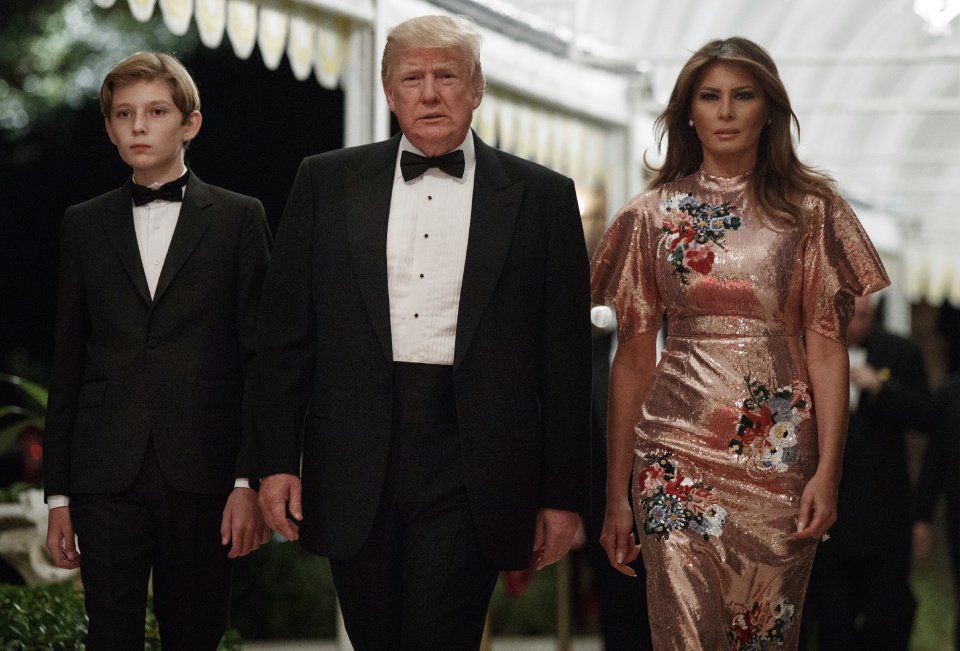
Iran puts out propaganda video tracking Barron Trump’s location, offering $10 million for his assassination
Timothy Nerozzi
timothy-nerozzi@coloradopolitics.com
Updated 23 hours ago
The Islamic Revolutionary Guard Corps is putting a hit out on President Donald Trump’s son, Barron Trump, with an inflammatory video claiming to track his location. State-run television in Iran is broadcasting a propaganda video claiming to show the locations...
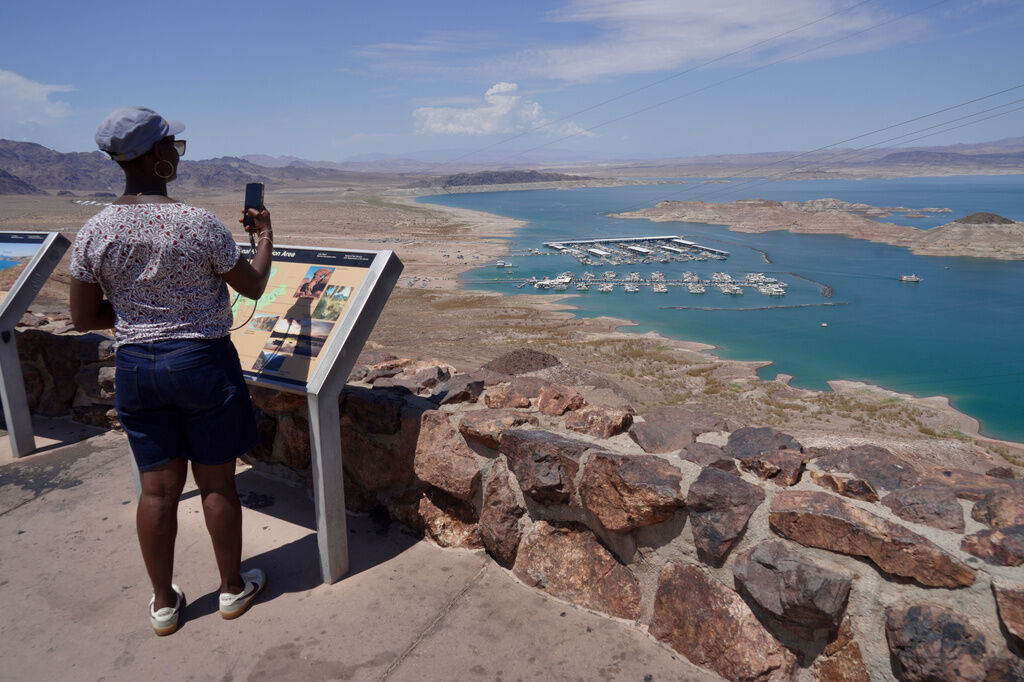
Nevada sues Trump administration over Colorado River cuts
Marianne Goodland
marianne.goodland@coloradopolitics.com
Updated 15 hours ago
On Monday, the state of Nevada filed a lawsuit against the Trump administration and Interior Secretary Doug Burgum, seeking to block the Colorado River management plan. On Friday, Burgum released a “record of decision” that would reduce water allocations to...

Healthcare Freefall: Longer drives, fewer options for maternity care in Colorado
Thelma Grimes
thelma.grimes@coloradopolitics.com
Updated 1 day ago
Editor’s Note: Colorado’s healthcare system is entering a period of accelerating instability — a “tsunami,” as multiple leaders describe it — driven by collapsing hospital finances, shrinking Medicaid reimbursements, disappearing services and a political fight over who is responsible for...
PREV
PREVIOUS

COVID-19 slams into Colorado's prison system, with Sterling facility state's largest outbreak
COVID-19 has slammed into Colorado’s prison system, which already was struggling to keep corrections officers from quitting amid rising chaos, according to state data, interviews and legislative reports. As of Thursday, mass testing revealed that 241 prisoners and 11 staff members at Sterling Correctional Facility had COVID-19, making the prison located east of Denver in […]

Medical experts: 'Stay-at-home' order helped Colorado avoid catastrophe
During Colorado’s monthlong statewide quarantine, the coronavirus’ spread slowed, deaths climbed, ventilators went unused and unemployment exploded. Which is to say, it went mostly as expected. As life in Colorado begins inching back toward normalcy, executives of the state’s major hospitals and some El Paso County business leaders are in broad agreement that the unprecedented […]