

State Supreme Court to decide on interpretation of wage law

The Colorado Supreme Court announced this week that it will hear a case involving whether an employment agreement that places conditions upon the payout of a departing employee’s unused vacation time violates state wage law.
Carmen Nieto was an employee of Clark’s Market, a chain of grocery stores on the Western Slope. She accrued vacation time, to which she was entitled per the company’s handbook to a payout if she quit voluntarily with two week’s notice. However, Clark’s employees forfeit the compensation if they quit without sufficient notice or are fired – the latter of which occurred .
She sued, claiming that her former employer denied payment of earned wages under the Colorado Wage Claim Act. The law mandates that upon separation, “the wages or compensation for labor or service earned, vested, determinable, and unpaid at the time of such discharge is due and payable immediately.” In addition, “wages” explicitly include vacation time, although only time that is “in accordance with the terms of any agreement between the employer and the employee.”
A state district court ruled against her, and the Colorado Court of Appeals affirmed that judgment. Writing for the three-member appeals panel, Judge Jerry N. Jones concluded that “Nothing in the CWCA creates a substantive right to payment for accrued but unused vacation time.”
Jones wrote that the conditions of compensation are matters of negotiation with employers. For questions of whether there is a payout for vacation time, such an agreement is the “sole potential source of any substantive right to payment.” The law, in the court’s view, did not provide an absolute right to receive money regardless of employment terms.
The case is Carmen Nieto v. Clark’s Market, Inc.


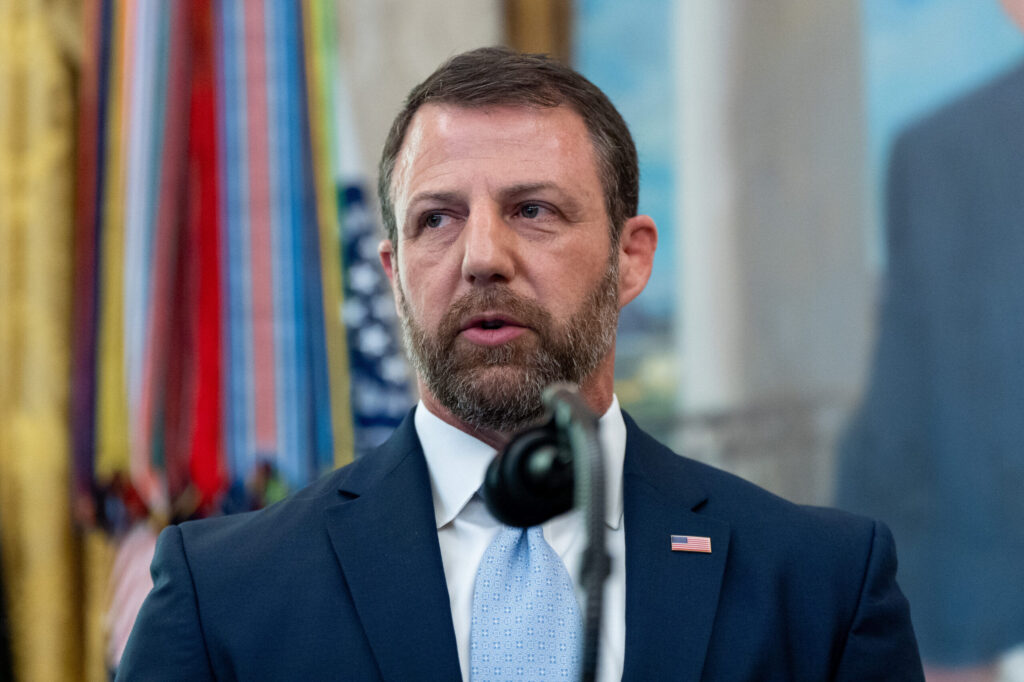
Five ways Mullin is already pushing DHS in a new direction
Anna Giaritelli Washington Examiner
anna-giaritelli-washington-examiner@coloradopolitics.com
Updated 24 minutes ago
The Trump administration’s newest Cabinet secretary, Markwayne Mullin, has already begun to implement major changes across the Department of Homeland Security Mullin replaced President Donald Trump’s first DHS secretary, Kristi Noem, and was an unexpected pick to lead the department...
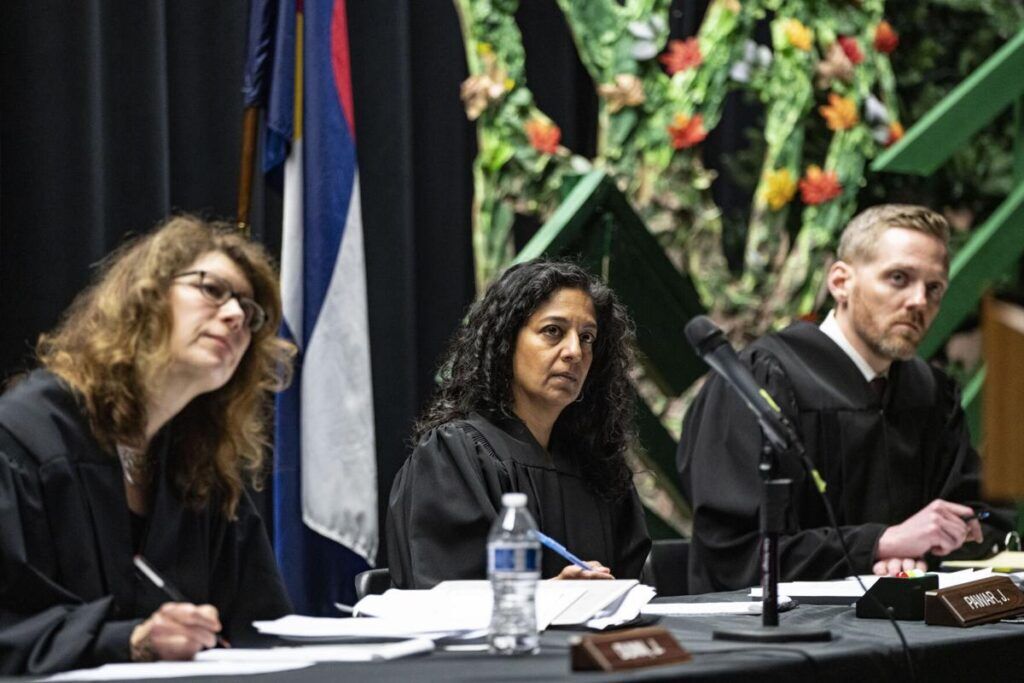
Appeals court finds Prowers County judge incorrectly analyzed firetruck collision lawsuit
Michael Karlik
michael.karlik@coloradopolitics.com
Updated 40 minutes ago
Colorado’s second-highest court directed a Prowers County judge last month to take a second look at whether a firetruck operator and the county itself can be held liable for a collision with a motorist. Donald Williamson was driving through a...
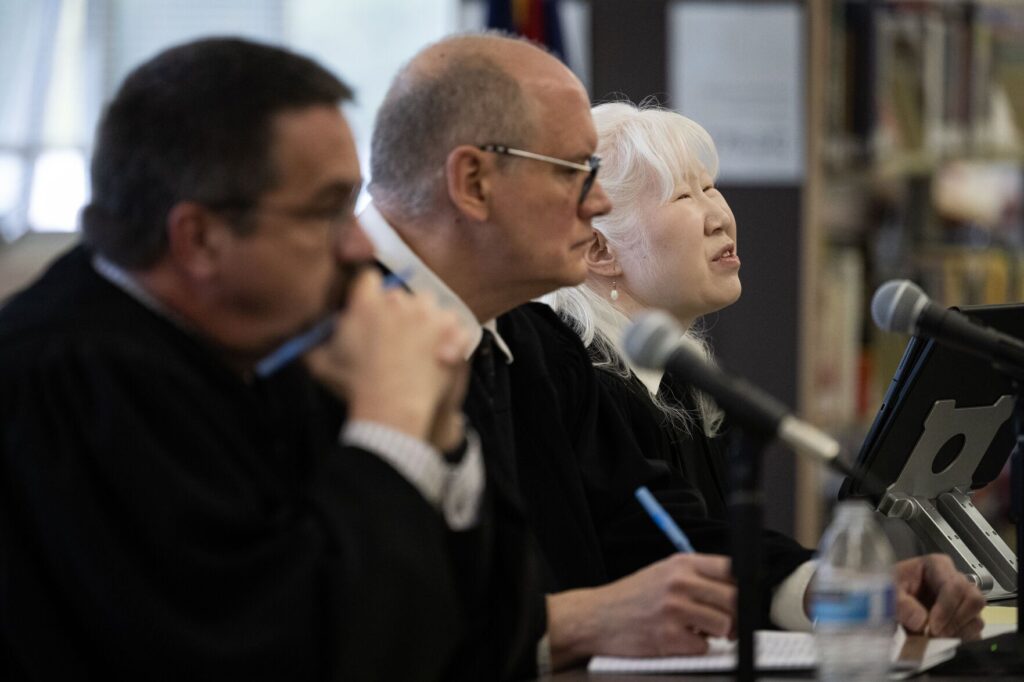
Appeals court reverses assault convictions after jury received no definition of ‘harm’
Michael Karlik
michael.karlik@coloradopolitics.com
Updated 2 hours ago
Colorado’s second-highest court reversed an Arapahoe County defendant’s assault convictions last week, concluding the trial judge neglected to define a key, ambiguous term for jurors. Police officers arrested David Cristobal Aragon at a house party for allegedly violating a restraining...
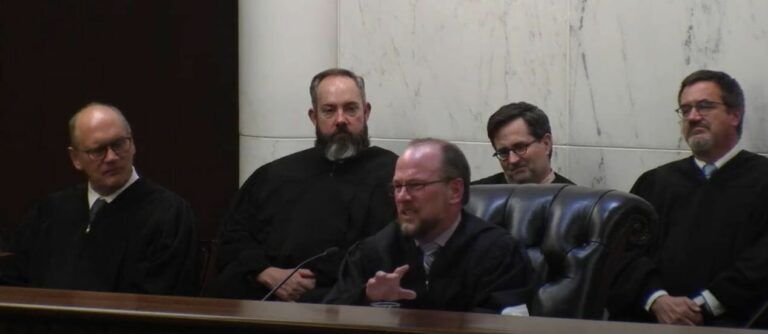
Colorado counties cannot challenge state law restricting immigration contracts, appeals court says
Michael Karlik
michael.karlik@coloradopolitics.com
Updated 33 minutes ago
Colorado’s second-highest court ruled on Thursday that counties lack standing to challenge a 2023 state law that restricts their ability to contract with the federal government or private entities for immigration detention. A three-judge Court of Appeals panel agreed with...

House GOP stalls Colorado budget debate by forcing full reading of 661-page bill
Marianne Goodland
marianne.goodland@coloradopolitics.com
Updated 2 hours ago
A procedural battle at the Colorado Capitol boiled over Wednesday night, when a House Republican triggered one of the chamber’s most time‑consuming tactics, demanding the 661‑page state budget be read aloud in full — a move that halted progress on...

Colorado lawmakers propose changes to family court procedures | Bills in Brief
Marissa Ventrelli
marissa.ventrelli@coloradopolitics.com
Updated 20 hours ago
Colorado lawmakers introduce hundreds of bills each year. Bills in brief cuts through the noise by explaining which proposals matter, what’s at stake, and how decisions at the Capitol could affect everyday life across the state. Colorado lawmakers from both parties are...

Aurora City Council delays vote on operating agreement for ICE, police
Kyla Pearce
kyla.pearce@gazette.com
Updated 5 hours ago
Aurora City Council members delayed a vote Monday on a memorandum of understanding that outlines guidelines for Aurora police officers responding to the GEO Immigration and Customs Enforcement facility. Since the facility is in Aurora, the Aurora Police Department is...
Federal judge partially allows second World Cup trafficking lawsuit to move forward
Michael Karlik
michael.karlik@coloradopolitics.com
Updated 22 hours ago
A federal judge allowed some claims to move forward last month against companies operating out of Colorado that allegedly participated in a human trafficking venture involving Filipino laborers who constructed facilities for the 2022 World Cup in Qatar. There are...

Melania Trump hails first conviction under new law banning AI-generated child sex abuse images
Rena Rowe, Washington Examiner
rena.rowe.washington.examiner@gazetteedit.wpenginepowered.com
Updated 23 hours ago
First lady Melania Trump highlighted on Tuesday the first arrest tied to a law she championed targeting cyberstalking, threats of violence, and non-consensual explicit content generated using artificial intelligence. James Strahler II, 37, of Columbus, Ohio, pleaded guilty Tuesday to...
Federal judge dismisses lawsuit seeking to force Colorado secretary of state to screen out scam filings
Michael Karlik
michael.karlik@coloradopolitics.com
Updated 17 hours ago
A federal judge dismissed a lawsuit last week that sought to require Colorado’s secretary of state to verify corporate filings in the state’s database to reduce the risk of future fraud. Bernard Butts of Florida, who was 83 when he...
PREV
PREVIOUS

Denver PrideFest is 'all but certain' to be virtual this year due to COVID-19, organizers say
For the first time ever, Denver’s annual PrideFest will likely be virtual this year to help curb the spread of the coronavirus. It wouldn’t be the first Pride celebration to go digital. LGBTQ celebrations are being canceled or postponed in major cities across the country, including Los Angeles, New York City, San Francisco and Seattle, […]

10th Circuit upholds Springs man's conviction despite no physical possession of firearm, drugs
The U.S. Court of Appeals for the 10th Circuit upheld the conviction of a man for firearm and drug possession despite his contention that there was insufficient evidence to prove his physical custody of both items. In April 2018, law enforcement was surveilling a Colorado Springs residence and attempting to locate a male suspect. Two […]