

Title Board to consider 18 ballot initiatives, rehear 7 others

On Wednesday, the Title Board will consider 18 ballot initiatives to strengthen the regulatory process over oil and gas development, outlaw animal cruelty, and eliminate political parties’ assemblies as a method of getting candidates onto a primary ballot, among other topics.
The three-member board must determine whether proposals adhere to a single subject and, if so, set a ballot title that appears before voters. The title should be brief, but also encompass the central features of the measure. If the board sets a title, the initiative moves forward to the signature-gathering phase, although Secretary of State Jena Griswold has advised a halt to that process while the COVID-19 stay-at-home order is in effect.
The proposals to be heard are:
Local Government Authority Pertaining to Oil and Natural Gas Development (Initiative 300): This measure would amend the constitution, allowing local governments to regulate oil and natural gas operations within their boundaries if they so choose. Jurisdictions may also create intergovernmental agreements to coordinate extraction among counties and cities. However, the amendment would not allow for moratoriums on oil and gas development. The designated representatives are Sam Bradley of Loveland and Greg Brophy of Holyoke.
Require Regulatory Impact Analysis for Oil and Gas Conservation Commission Rules (Initiative 301): This measure would require the state entity that regulates oil and gas development to include as part of its rulemaking an analysis of the cost of any new rule to extraction companies. New rules would also need to estimate the expected effects on employment within the oil and gas sector, the changes in payments to state and local governments, and the “growth or retraction” of the industry that would result from the rule. The designated representatives are Bradley and Brophy.
Minimum Age for Workers at Certain Entertainment Establishments (Initiative 302): This measure would set the minimum age for workers at “sexually-oriented businesses” at 21. However, the Colorado Legislative Council, which reviews proposals and works with designated representatives to hone their language, cautioned that the proponents “have submitted an idea, rather than the actual language that would be added to the Colorado constitution or Colorado Revised Statutes.” The designated representatives are Megan Augustine and Wendy Augustine, residence unknown.
Required Child Death Investigations (Initiative 303): This measure would require the investigation of unexpected child deaths. The Colorado Legislative Council found that the proponents lacked any legal text to achieve that end. The designated representatives are the Augustines.
Filings with the Independent Ethics Commission (Initiative 305): This measure would lengthen the amount of time from 12 months to eight years that someone could file an ethics complaint against a public official or government employee after the alleged violation took place. The designated representatives are Frank McNulty and Suzanne Staiert, residence unknown.
State Income Tax Rate Reduction (Initiative 306): This measure would reduce the individual and corporate state income tax rates. It also lowers the alternative minimum tax rate and changes the state income tax rate in years when the Taxpayer Bill of Rights mandates a lower assessment. The designated representatives are Jon Caldara of Denver and Jerry Sonnenberg of Sterling.
Establish the Independent Oil and Gas Board (Initiatives 307-311): These measures would replace the Colorado Oil and Gas Conservation Commission with a new regulatory board charged with balancing the protection of public health and safety with the responsible extraction of fuels. The board would statewide establish minimum setback requirements from oil and gas operations and give local governments the authority to require enhanced health and safety training for industry workers, regulate flowlines, and mandate air quality monitoring. Some of the variations would prohibit the board from repealing less stringent regulations. The designated representatives are Diane Marie Schwenke of Grand Junction and David Davia of Denver.
Oil and Gas Development Rules (Initiatives 312-313): These measures would shield various rules pertaining to emissions, flowlines, noise controls, and safety for oil and gas operations from being repealed or weakened. One version would amend the constitution, while the other would change state statute. The designated representatives are Schwenke and Davia.
Concerning Farm Animal Confinement (Initiative 314): This measure would outlaw various practices deemed animal cruelty. Prohibitions include confining pregnant pigs, veal calves, or egg-laying hens in a cruel manner, and knowingly selling animal products that were the result of cruel treatment. The definition of cruel treatment includes an animal’s ability to lie down, stand up, turn around freely or extend its limbs. Penalties would amount to $1,000 per violation per day, although there are exceptions to confinement for medical research, transportation and temporary needs. The designated representatives are John Surenkamp of Boulder and John Seber of Denver.
Tobacco Tax Revenue for New State Preschool Program (Initiative 315): This measure would amend the constitution to require that $100 million of tobacco and cigarette tax revenue go to preschool programming. Additional money from the tobacco master settlement would also be diverted. Some areas traditionally funded from such money would see their allocations cut, including the nurse home visitor program, AIDS and HIV prevention, youth services, autism treatment, dental loan repayment and the Colorado Health Service Corps. The designated representatives are Caldara and Monica Vondruska of Denver.
Amend Laws Pertaining to Ballot Access by Candidates (Initiatives 316-318): These measures would eliminate political parties’ assemblies and only allow a candidate to appear on a primary election ballot by petitioning. There would be revised requirements for the number of valid signatures candidates need to obtain, as well as to procedures for replacing candidates in the primary. The designated representatives are Hattie Lou Reed of Castle Rock and Mike Melanson of Golden.
Board members will also hold a rehearing for seven initiatives that generated an objection to the previously-set title:
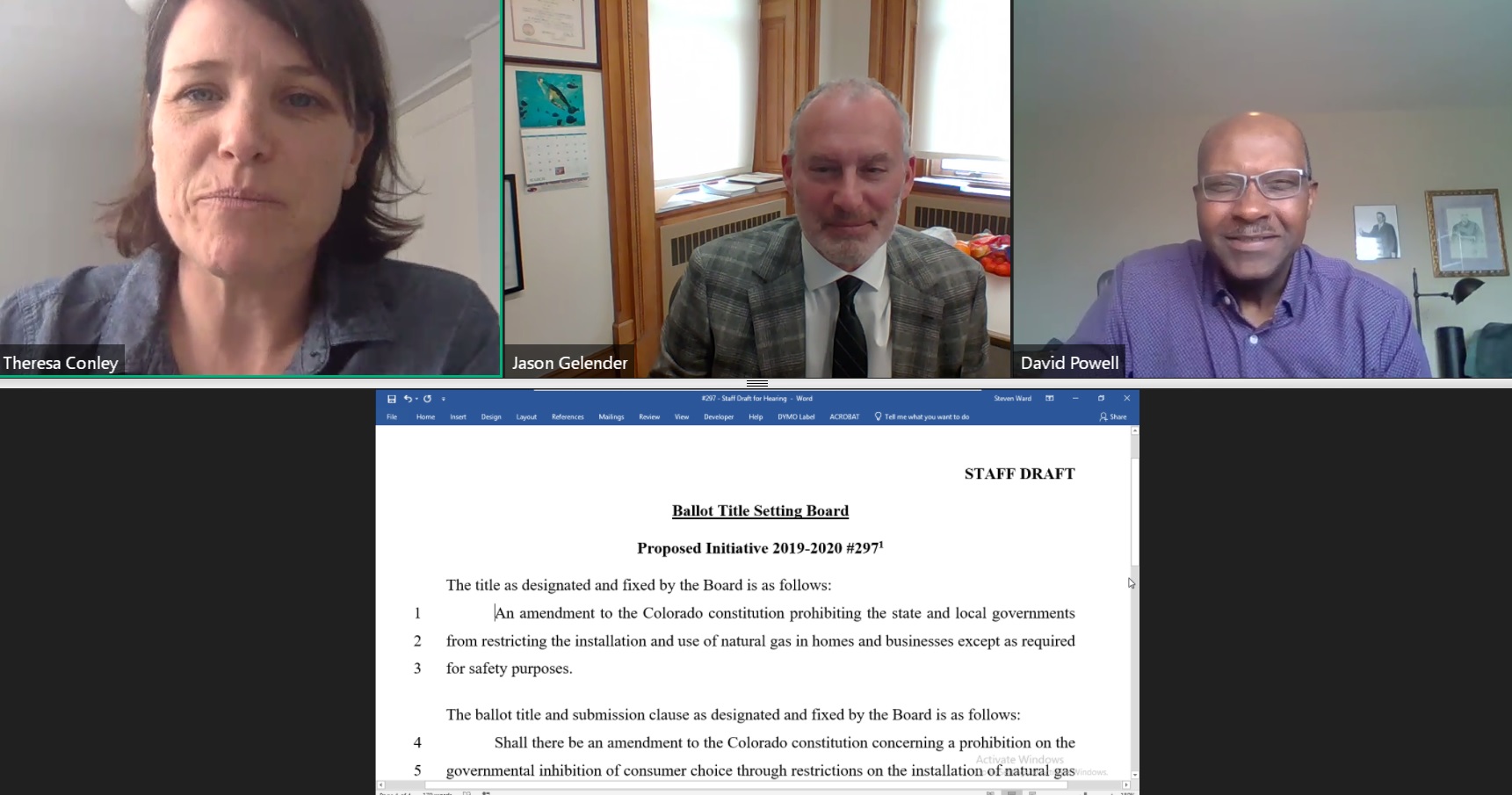
Prohibit Restrictions on the Utilization of Natural Gas (Initiatives 284 and 297): The designated representatives of the measures – Greg Kishiyama and Keith Venable for 284 and Kishiyama and Ned Southwick for 297 – have asked for the Title Board to reconsider its language to clarify that their measures would prohibit restrictions on natural gas use for cooking, hot water systems, generators and heating systems. Janette Susan Rose submitted a second objection agreeing with the need for clarity, but also alleged that there are multiple subjects. She claimed that those included inspection requirements for natural gas appliances, collection of state and local taxes, energy efficiency in building codes, and compliance with state emissions targets, among others.
Tobacco Tax Revenue for New State Preschool Program (Initiative 293): Anna Jo Haynes objected to this measure, which is similar to Initiative 315, claiming that the reallocation of cigarette and tobacco tax revenue included a second subject by withholding state allocations to localities that enact bans on tobacco and nicotine products. Haynes also argued that the title should include the list of programs to experience funding cuts from the measure.
Voter Approval Requirement for Creation of Certain Fee-Based Enterprises (Initiatives 293-296): William Hunter Railey argued that these measures to require voter approval for enterprises – or government-owned businesses exempt from revenue limits – that meet certain criteria contained more than one subject. He referenced three other previous variations for which the board set a title, during which time board members expressed “confusion” about how the initiatives would operate. Board members turned away those objections in previous rehearing for those measures.
Petitions (Initiative 299): Kelly Brough pointed to the measure’s wide-ranging changes to the ballot initiative process at most levels of state and local government, calling the one-page document “so vague, unclear and incomprehensible that the measure’s meaning cannot be ascertained.” She believed that there was no clear answer about whether the proposal would eliminate the single-subject rule for initiatives, and was therefore too “incomprehensible” to receive a title. Brough is also challenging a similar initiative, 245, in the Colorado Supreme Court on similar grounds.

Energy secretary says U.S. must grow capacity, lower price during Colorado visit
Mark Samuelson Special to The Denver Gazette
mark.samuelson@denvergazette.com
Updated 7 hours ago
As a heatwave in the U.S. and Europe punctuated widespread calls for recommitments to solar and other “renewable” sources, U.S. Secretary of Energy Chris Wright doubled down on America’s current policy, telling a Thornton crowd on Monday that energy goals...
Colorado Supreme Court upholds child abuse convictions despite faulty jury instruction
Michael Karlik
michael.karlik@coloradopolitics.com
Updated 9 hours ago
The Colorado Supreme Court decided on Monday that a San Miguel County jury properly convicted a defendant of child abuse resulting in death, even though the instructions potentially allowed jurors to avoid finding that the child abuse resulted in death....

Gov. Polis asks residents not to use fireworks as wildfires burn
Rachael Wright, Special to Colorado Politics
rachael.wright@coloradopolitics.com
Updated 8 hours ago
While Gov. Jared Polis said he will not issue a statewide fire ban, Colorado’s top political leader urged residents against using fireworks as the country heads into the July 4 weekend. “We are encouraging the people of Colorado to exercise...

Trump says communism greater threat than WWI, WWII, 9/11, and Pearl Harbor
Naomi Lim
naomi-lim@coloradopolitics.com
Updated 10 hours ago
President Donald Trump compared the rise of socialism to the Sept. 11 terrorist attacks. Trump was asked about the possible rise of more socialist candidates after three candidates New York City Mayor Zohran Mamdani endorsed last week won their Democratic...
GOP doubles down on SAVE America Act after Supreme Court allows mail ballots to be counted late
Lauren Green
lauren-green@coloradopolitics.com
Updated 10 hours ago
Congressional Republicans continue to push the voter identification bill — that has left Washington in grid lock for months — after the Supreme Court ruled states can count mail-in ballots that arrive after Election Day. The 5-4 decision rejected a...

US and Iran to cease strikes and discuss Strait of Hormuz this week: Report
Carter Schroppe
carter.schroppe@washingtonexaminer.com
Updated 12 hours ago
Officials from the United States and Iran will meet in Qatar this week to discuss the Strait of Hormuz after agreeing to “halt strikes” following a weekend of intermittent fighting between the two countries. The meeting, scheduled for Tuesday in...
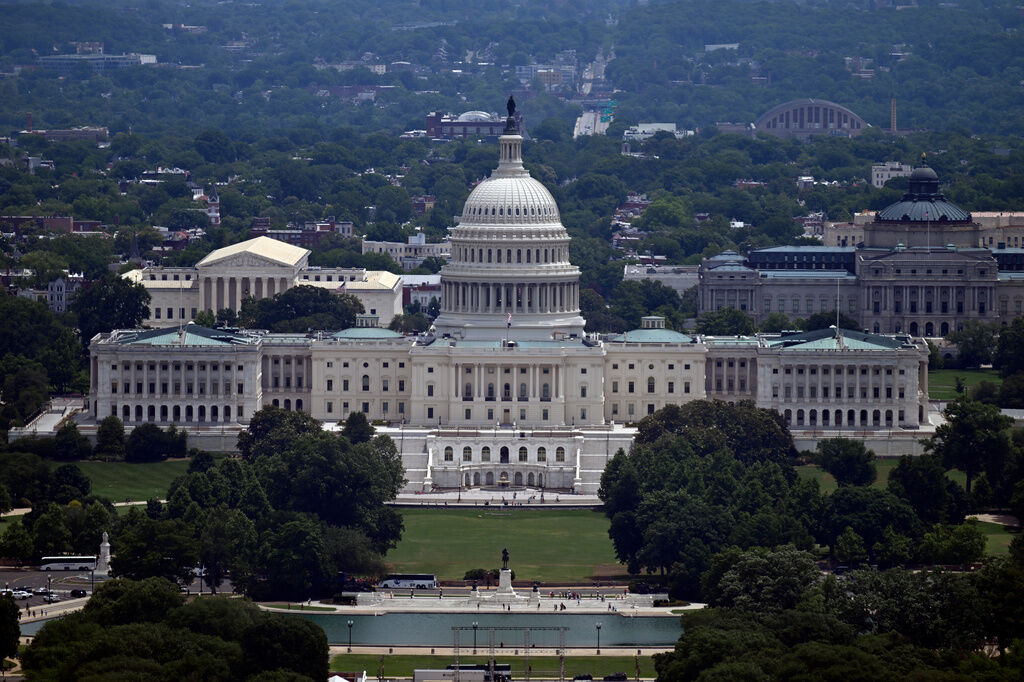
Congress is struggling to get its work done and a new report argues for 21st-century upgrades
Kevin R. Kosar
kevin-r-kosar@coloradopolitics.com
Updated 12 hours ago
The news coming from Capitol Hill over the past couple of weeks has left much to be desired. Congress has had difficulty discharging its lawmaking duties. The Senate’s appropriations committee is at loggerheads over how much spending to authorize. The...
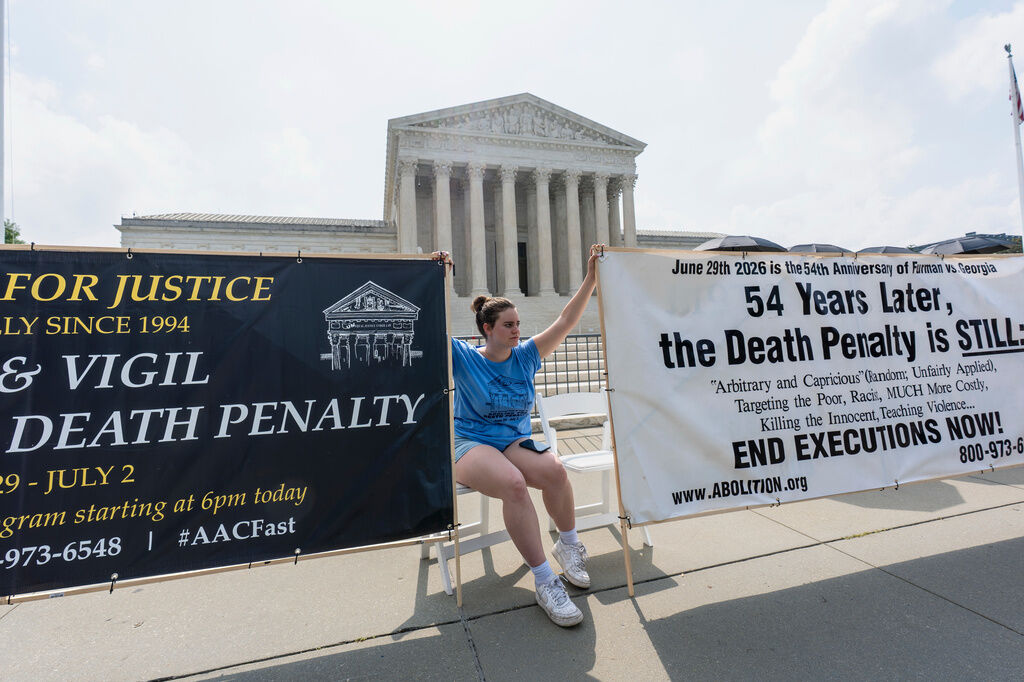
Supreme Court rules constitutional privacy protections apply to cellphone users location history
The Associated Press
the-associated-press@coloradopolitics.com
Updated 12 hours ago
WASHINGTON (AP) — The Supreme Court held Monday that constitutional privacy protections extend to cellphone location information, ruling in the case of a bank robber whose identity was discovered through a geofence warrant. Justice Elena Kagan wrote for the 6-3...
Colorado justices say group that spent $4M on ballot initiatives does not have to disclose donors
Michael Karlik
michael.karlik@coloradopolitics.com
Updated 12 hours ago
The Colorado Supreme Court ruled on Monday that an organization that spent $4 million to advocate on ballot initiatives in the 2020 election is not required to disclose its donors and spending. The Supreme Court acknowledged that multiple factors suggested...

Colorado–Nebraska water clash heads to US Supreme Court as canal fight intensifies
Marianne Goodland
marianne.goodland@coloradopolitics.com
Updated 8 hours ago
The U.S. Supreme Court on Monday agreed to hear Nebraska’s lawsuit against Colorado over the Perkins County canal, a move that advances a legal dispute likely to take years to resolve. The proposed Perkins County canal would run through land...
PREV
PREVIOUS

Former Weld County teacher alleges discrimination against students, herself in lawsuit
A former special education teacher in Weld County School District RE-8 has filed a lawsuit alleging that her school administration created a hostile work environment for her on the basis of her developmental disorder, and discriminated against her students in violation of federal law. Laura Anderson wrote in her complaint in U.S. District Court that […]

State Supreme Court finds lower court violated right to speedy trial
Exercising its authority to bypass the state’s appellate court, the Colorado Supreme Court on Monday ruled that even though a criminal defendant had some role in the delay to his trial, a lower court and prosecutors violated his right to a speedy trial because it was their responsibility to commerce the proceedings in a timely […]