

State Supreme Court finds lower court violated right to speedy trial
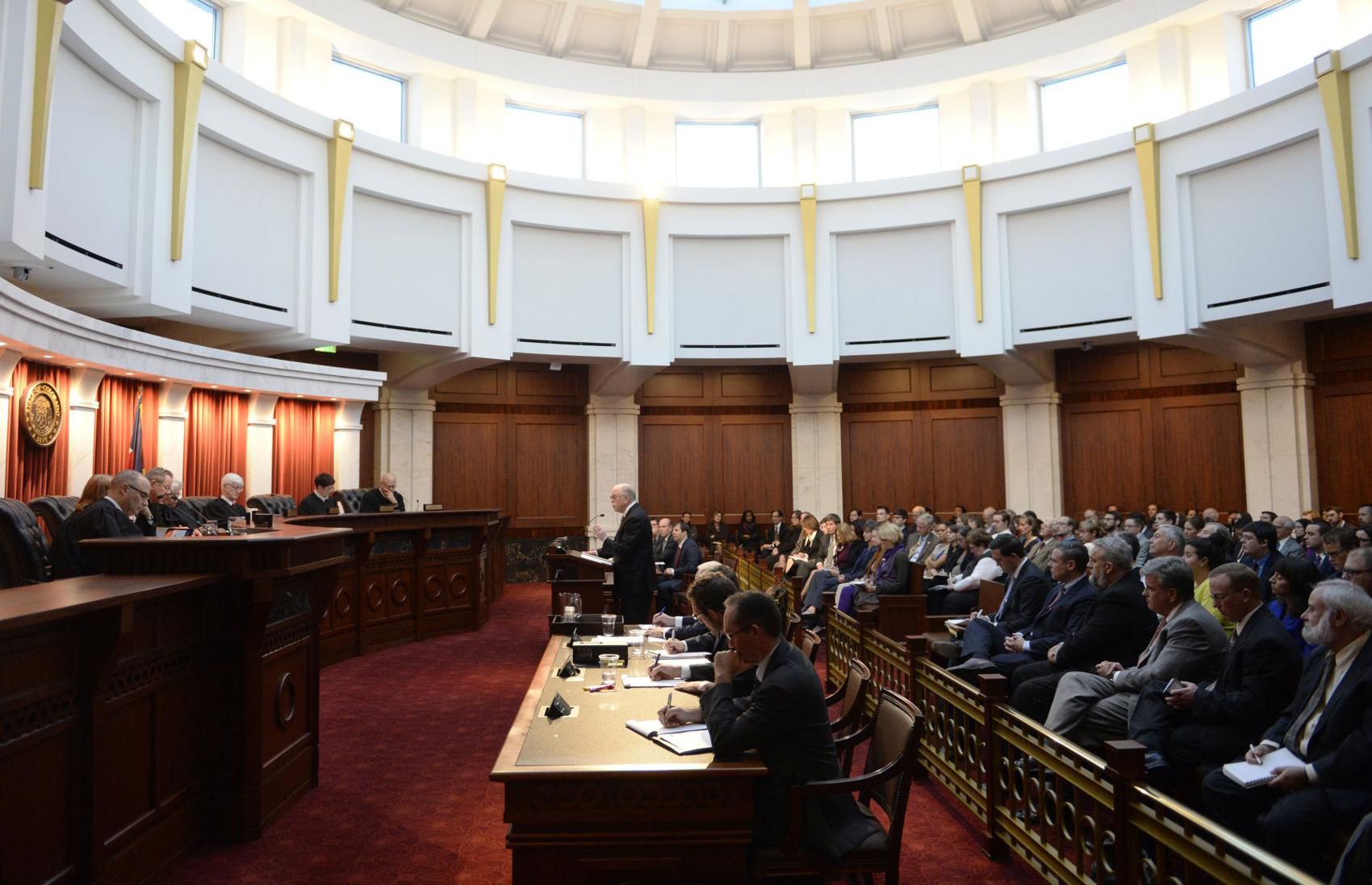
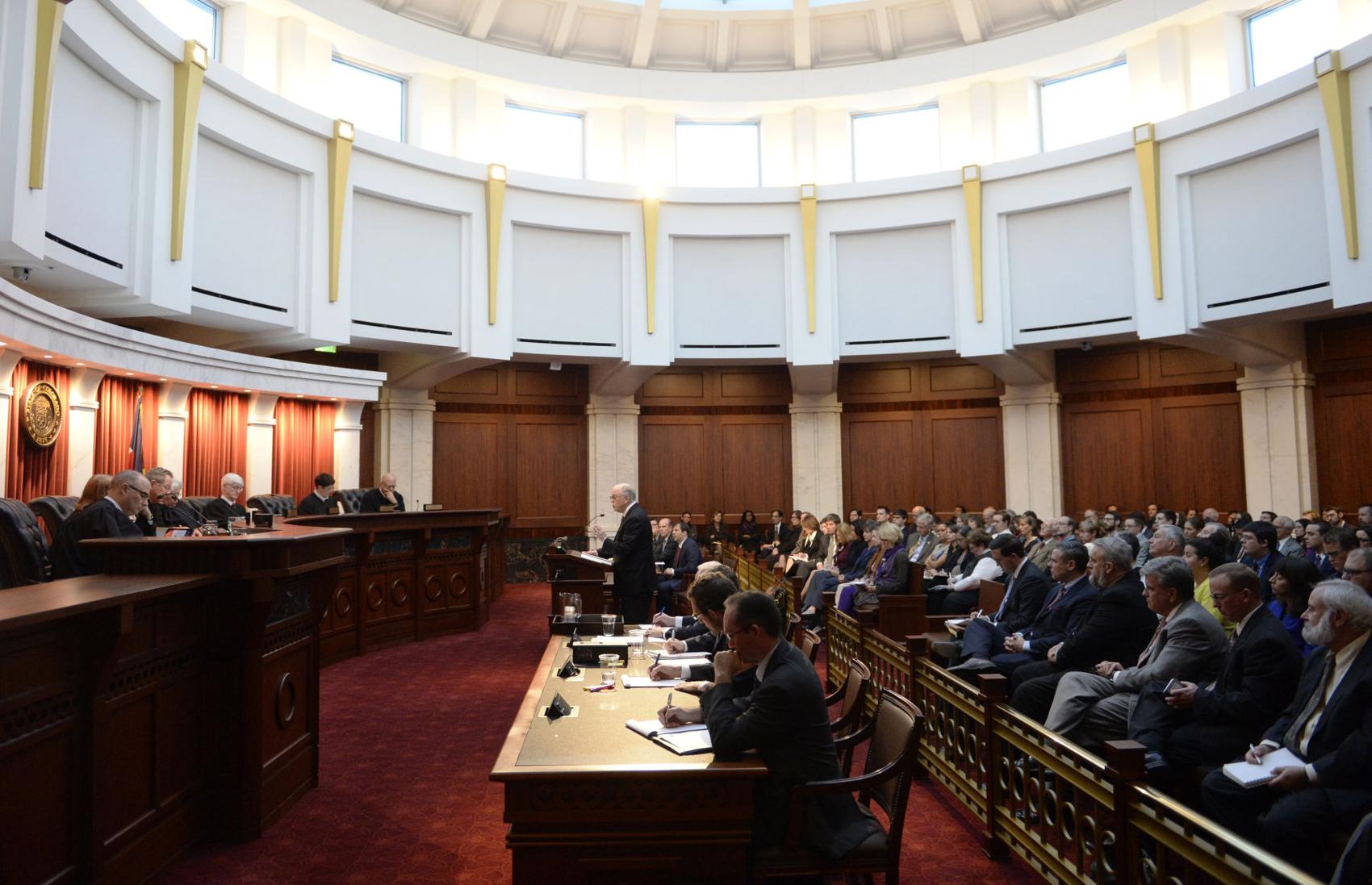
Exercising its authority to bypass the state’s appellate court, the Colorado Supreme Court on Monday ruled that even though a criminal defendant had some role in the delay to his trial, a lower court and prosecutors violated his right to a speedy trial because it was their responsibility to commerce the proceedings in a timely manner.
In October 2018, the Supreme Court affirmed the reversal of Edward Kevin DeGreat’s conviction for aggravated robbery and ordered a new trial where DeGreat could introduce evidence to prove that his actions were self-defense. Two months later, the district court asked for a status conference between the attorneys to lay out a timeline for the trial. However, neither the defense nor the prosecution of the 18th Judicial District attempted to schedule the conference, and the judge did not pursue it further.
It was not until June 2019 that DeGreat filed a motion to dismiss the case, arguing that the state violated his right to a speedy trial. Colorado statute requires new trials to occur within six months after a district court receives such a mandate. Another four months passed without any response from the district court or the prosecution. Then in October, one year after the Supreme Court’s order, the district court denied DeGreat’s motion, citing the failure of “both the People and Defendant” to schedule a conference.
DeGreat appealed directly to the Supreme Court again, claiming that the district court no longer had jurisdiction to try him. The high court, exercising the “extraordinary remedy” under Rule 21 to bypass the normal appeals process, found that the district court “would be proceeding without jurisdiction if it were to try DeGreat in violation of his rights under Colorado’s speedy trial statute.”
Writing for the court, Justice Melissa Hart acknowledged that DeGreat’s public defender did not comply with the scheduling order, but that was not the same thing as DeGreat’s consent to delay his retrial.
“A defendant has no duty to bring himself to trial. Rather, that responsibility rests with the prosecution and the trial court,” she wrote. “Because respondents in this case failed to pursue retrial within the statutory speedy trial period, the remedy is dismissal with prejudice.”
There is an exception if the defendant causes the delay, which means he demonstrated an “express consent to the delay or other affirmative conduct.” Even though the prosecution and defense in DeGreat’s case agreed that he was partially responsible for the delay, Hart rejected that consensus.
“It is well-settled law that the burden of compliance with the speedy trial requirement rests with the prosecution and the trial court,” she concluded. “It was not DeGreat’s responsibility to pursue his own trial.”
The court dismissed the charges.
The case is The People of the State of Colorado v. Edward Kevin DeGreat.

Energy secretary says U.S. must grow capacity, lower price during Colorado visit
Mark Samuelson Special to The Denver Gazette
mark.samuelson@denvergazette.com
Updated 6 hours ago
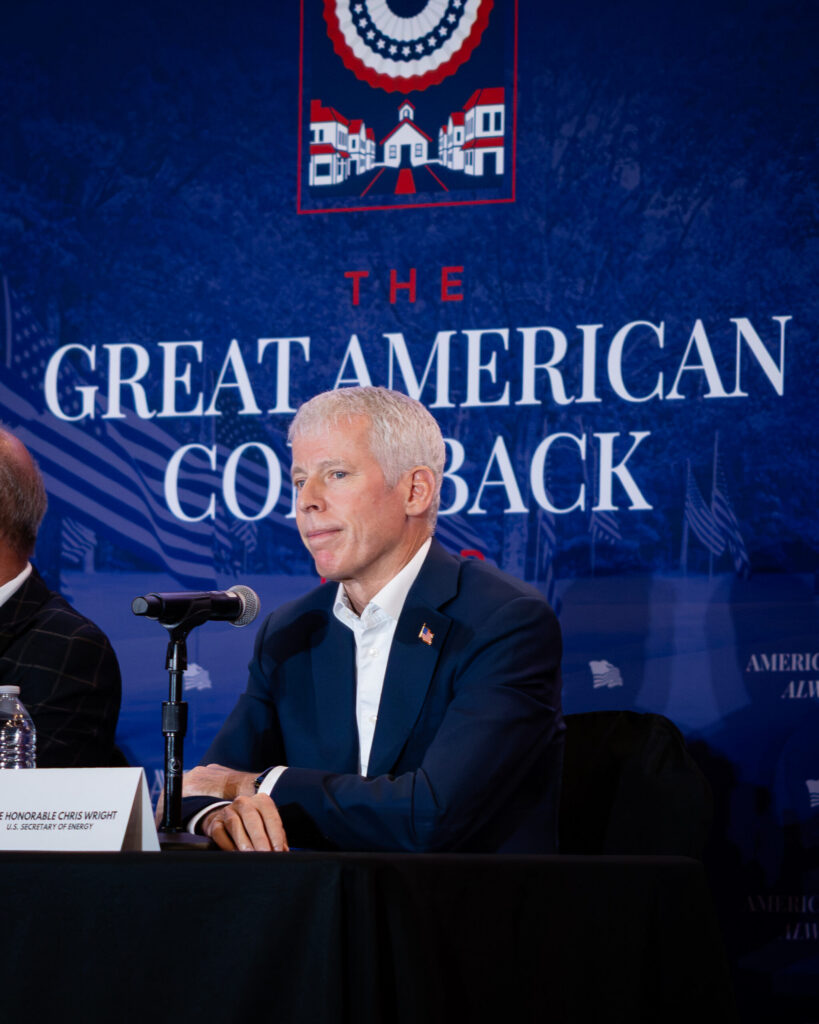
As a heatwave in the U.S. and Europe punctuated widespread calls for recommitments to solar and other “renewable” sources, U.S. Secretary of Energy Chris Wright doubled down on America’s current policy, telling a Thornton crowd on Monday that energy goals...
Colorado Supreme Court upholds child abuse convictions despite faulty jury instruction
Michael Karlik
michael.karlik@coloradopolitics.com
Updated 8 hours ago
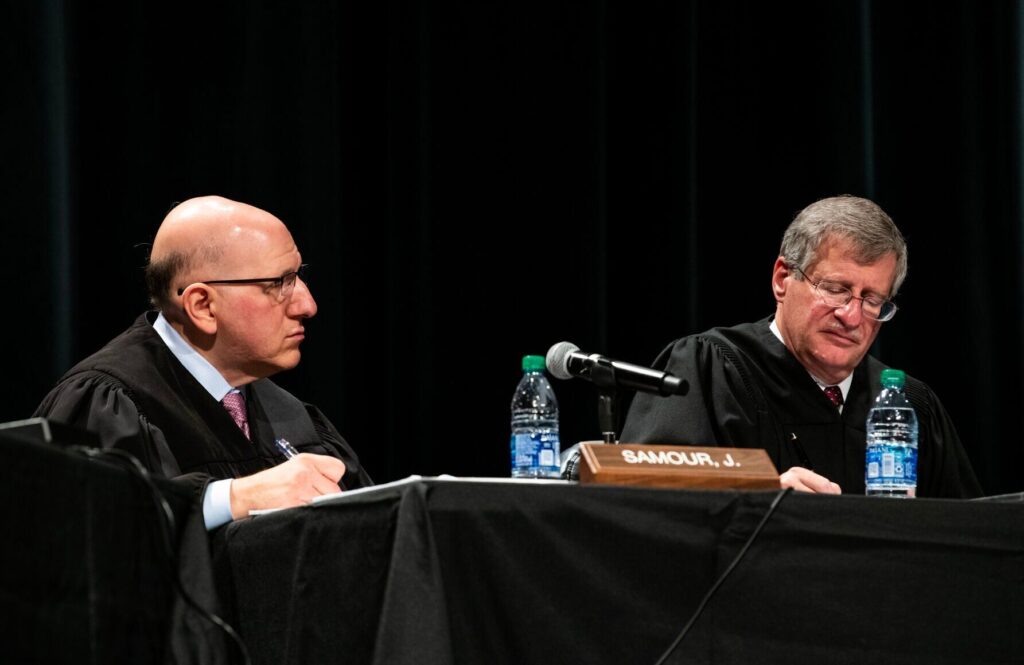
The Colorado Supreme Court decided on Monday that a San Miguel County jury properly convicted a defendant of child abuse resulting in death, even though the instructions potentially allowed jurors to avoid finding that the child abuse resulted in death....

Gov. Polis asks residents not to use fireworks as wildfires burn
Rachael Wright, Special to Colorado Politics
rachael.wright@coloradopolitics.com
Updated 6 hours ago
While Gov. Jared Polis said he will not issue a statewide fire ban, Colorado’s top political leader urged residents against using fireworks as the country heads into the July 4 weekend. “We are encouraging the people of Colorado to exercise...

Trump says communism greater threat than WWI, WWII, 9/11, and Pearl Harbor
Naomi Lim
naomi-lim@coloradopolitics.com
Updated 9 hours ago
President Donald Trump compared the rise of socialism to the Sept. 11 terrorist attacks. Trump was asked about the possible rise of more socialist candidates after three candidates New York City Mayor Zohran Mamdani endorsed last week won their Democratic...

GOP doubles down on SAVE America Act after Supreme Court allows mail ballots to be counted late
Lauren Green
lauren-green@coloradopolitics.com
Updated 9 hours ago
Congressional Republicans continue to push the voter identification bill — that has left Washington in grid lock for months — after the Supreme Court ruled states can count mail-in ballots that arrive after Election Day. The 5-4 decision rejected a...

US and Iran to cease strikes and discuss Strait of Hormuz this week: Report
Carter Schroppe
carter.schroppe@washingtonexaminer.com
Updated 10 hours ago
Officials from the United States and Iran will meet in Qatar this week to discuss the Strait of Hormuz after agreeing to “halt strikes” following a weekend of intermittent fighting between the two countries. The meeting, scheduled for Tuesday in...
Congress is struggling to get its work done and a new report argues for 21st-century upgrades
Kevin R. Kosar
kevin-r-kosar@coloradopolitics.com
Updated 10 hours ago
The news coming from Capitol Hill over the past couple of weeks has left much to be desired. Congress has had difficulty discharging its lawmaking duties. The Senate’s appropriations committee is at loggerheads over how much spending to authorize. The...
Supreme Court rules constitutional privacy protections apply to cellphone users location history
The Associated Press
the-associated-press@coloradopolitics.com
Updated 11 hours ago
WASHINGTON (AP) — The Supreme Court held Monday that constitutional privacy protections extend to cellphone location information, ruling in the case of a bank robber whose identity was discovered through a geofence warrant. Justice Elena Kagan wrote for the 6-3...
Colorado justices say group that spent $4M on ballot initiatives does not have to disclose donors
Michael Karlik
michael.karlik@coloradopolitics.com
Updated 11 hours ago
The Colorado Supreme Court ruled on Monday that an organization that spent $4 million to advocate on ballot initiatives in the 2020 election is not required to disclose its donors and spending. The Supreme Court acknowledged that multiple factors suggested...

Colorado–Nebraska water clash heads to US Supreme Court as canal fight intensifies
Marianne Goodland
marianne.goodland@coloradopolitics.com
Updated 7 hours ago
The U.S. Supreme Court on Monday agreed to hear Nebraska’s lawsuit against Colorado over the Perkins County canal, a move that advances a legal dispute likely to take years to resolve. The proposed Perkins County canal would run through land...
PREV
PREVIOUS

Title Board to consider 18 ballot initiatives, rehear 7 others
On Wednesday, the Title Board will consider 18 ballot initiatives to strengthen the regulatory process over oil and gas development, outlaw animal cruelty, and eliminate political parties’ assemblies as a method of getting candidates onto a primary ballot, among other topics. The three-member board must determine whether proposals adhere to a single subject and, if […]

Q&A with Debbie Brown | Colorado Business Roundtable
President, Colorado Business Roundtable, a public policy organization that includes some of the state’s top business execs. Was president and founder of Amplify Strategies, a strategic communications and public policy consulting firm. Recognized as one of the Top 25 Most Powerful Women in Colorado by the Colorado Women’s Chamber of Commerce. Colorado Politics: By all […]