

Slowdown in coronavirus growth a sign that social distancing in Colorado has worked, doctors say

The spread of the novel coronavirus in Colorado has, for the past several days, trended away from the accelerating growth that drove case counts up in the state in early and mid-March, encouraging researchers who have been waiting for signs of social distancing impacts.
As of Friday afternoon, the state counted 6,510 positive COVID-19 cases, and 1,312 related hospitalizations. While the numbers continue to rise, the growth has slowed.
Dr. Jennifer Nuzzo, an epidemiologist and professor at Johns Hopkins University in Baltimore, said Friday that although interpreting new data is challenging because reporting lags, “in many parts of the U.S., we are hearing stories about the rate of growth slowing, which is good news for sure.”
Members of a local team of experts monitoring the pandemic said Friday the same trend appears to be emerging in Colorado. Dr. Jonathan Samet, the dean of the University of Colorado School of Public Health, who is leading the effort to model the virus’s spread in the state, said the latest numbers could be the indication they’re looking for that social interactions have been effectively cut down enough to reduce the immediate number of cases and lessen the burden on the health care system.
An April 6 report from Dr. Samet and the researchers he’s working with concluded that social distancing measures put in place March 17 had the effect of reducing social interactions by around 45%, which they estimated cut the number of known cases in the state by 1,200 during the last week of March.
“What we’re looking for now is the effect of March 26 measures,” Dr. Samet said, “and what we might see now is another bending of the curve.”
Prior to March 28, the growth of total known positive cases increasingly correlated with an exponential curve, meaning a growing rate of growth. But since then, the correlation has steadily weakened and its slope has declined, indicating a flattening curve.
Researchers agree that the number of known positive cases is a drastic undercount and lacks precision. But since April 2, the same pattern has shown up for COVID-19 deaths, which are agreed to be a better indication of the virus’s prevalence.
Dr. David Bortz, an applied mathematics professor at CU-Boulder who worked on the local model being used by state officials, said the latest data show social distancing measures appear to have had the intended effects: “The numbers are headed in the right direction, and we expect this trend to continue as long as the stay-at-home order is respected.”
Nuzzo emphasized that signs of slowing growth might be coming from areas that are further along the cycle of an epidemic viral spread, or from areas that had rapid growth but put social distancing measures into place.
“There are other parts of the country,” Nuzzo pointed out, “that are experiencing a much faster increase in cases.”
And the cases tracked by the state are still far below what the local experts believe is the true number of cases. The local researchers believe that the 6,510 tracked cases is close to about one-quarter of the actual number of symptomatic cases, which are now estimated to be above 20,000 in Colorado. And their research estimates another 30,000 asymptomatic cases, meaning around 1% of the total population of Colorado may have already been infected.
Dr. Daniel Larremore, a CU-Boulder computer science professor, cautioned that it’s possible the testing capacity could be creating the appearance of a decelerating growth. If there aren’t enough tests, he said, it’s possible greater numbers of cases aren’t being tracked.
Dr. Drew Harris, a public health professor at Thomas Jefferson University in Philadelphia, said it would take a more widespread testing program to make concrete conclusions now.
“A more robust testing program that included random community members,” Harris said, “would give a better sense of what’s to come rather than this rear view mirror view.”
Scott Bookman, the state’s coronavirus critical incident commander, said Thursday that the state has effectively slowed the spread of the virus.
“Social distancing has worked, and we have pushed that curve to the right as we’ve hoped to,” Bookman said.
If the virus’s spread in Colorado has been slowed by social distancing, Samet said, that’s good news for access to health care: “Maybe we’ve avoided a peak that we can’t handle with our health care system.”
If social distancing measures reduce interactions by 70% or more, the models developed by the team led by Samet predict a steady number of cases for many months without a dramatic peak. If 80% reduction is achieved, as few as 1,400 people might die from the disease by the end of the year, Samet’s model predicts, but, if only 60% is achieved, that number could be as high as 43,000, according to the model.
Tough policy choices await, because the virus will continue to spread, he said, and there is still a large susceptible population. So the degree to which social distancing measures can be relaxed isn’t clear.
In some areas where the spread of the virus was initially effectively slowed, like in South Korea, Taiwan and Singapore, Samet said, there’s evidence of second waves of spread.

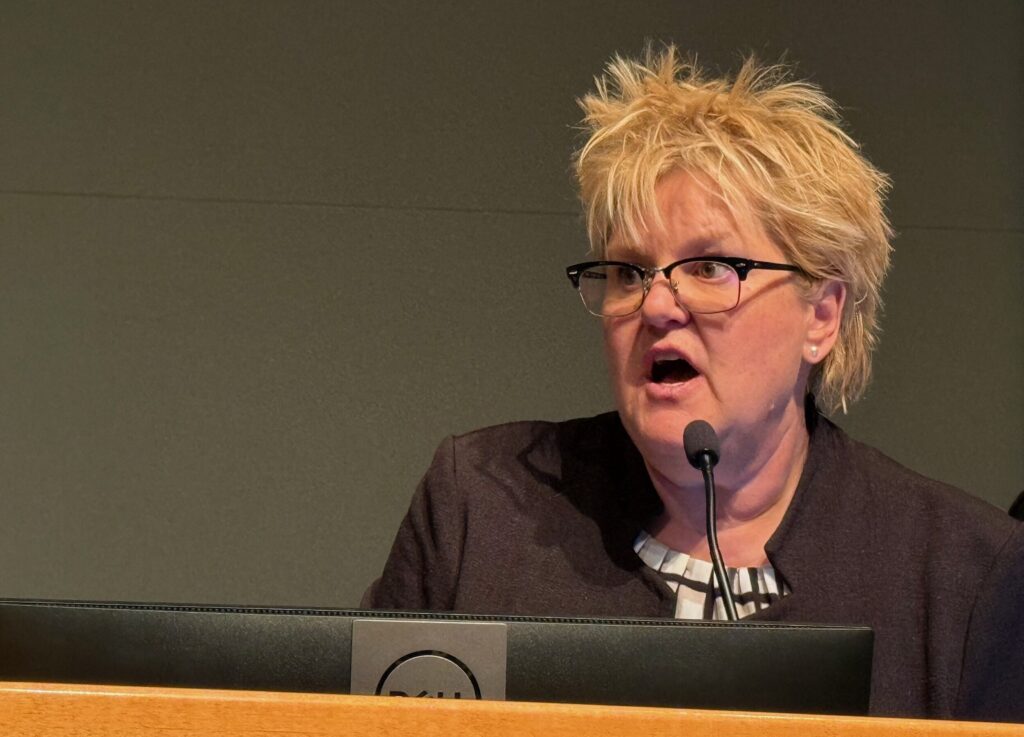
In a meeting Colorado GOP chair Brita Horn calls ‘illegal,’ Republicans vote to demand her resignation
Ernest Luning
ernest.luning@coloradopolitics.com
Updated 53 minutes ago
Roughly half the membership of the Colorado Republican Party’s state central committee on Saturday voted overwhelmingly to approve a resolution expressing “no confidence” in state GOP Chairman Brita Horn’s leadership and calling for her immediate resignation in an online meeting...

Colorado Medicaid probe uncovers millions of dollars in alleged transport fraud ring
Nico Brambila
nico.brambila@denvergazette.com
Updated 2 hours ago
Colorado Medicaid officials detected $25 million in abnormal billing over just four months two years ago — a surge that prompted a new state law and the suspension of dozens of providers in what authorities now describe as an organized...
One small step for dialing back the partisanship | SONDERMANN
Eric Sondermann
eric-sondermann@coloradopolitics.com
Updated 2 days ago
Much ink, including a good deal of my own, has been spilled on the excesses of super-charged, toxic partisanship in this current era. Except for true believers along with those who profit from this all-consuming poison, there is broad agreement...
Greeley voters to decide fate of project that includes minor league hockey arena
Hap Fry, Special to The Gazette
hap-fry@gazette.com
Updated 3 hours ago
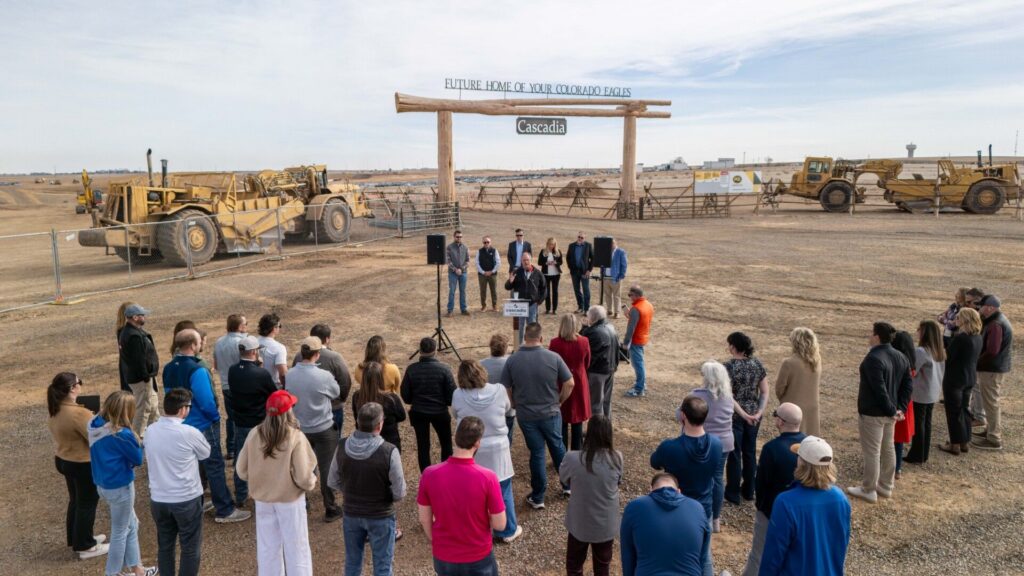
GREELEY • The fate of the Cascadia development — and quite possibly the future direction of the city — is in the hands of Greeley voters this Tuesday during a special city election on whether the landscape-altering project should be...

Colorado Politics Calendar Feb. 23-Mar. 1
Rachael Wright, Special to Colorado Politics
rachael.wright@coloradopolitics.com
Updated 3 days ago
CoPo’s weekly political calendar helps you find political and public policy events throughout Colorado. It includes candidate and issue campaign events, public policy meetings, court hearings, state and local party conventions, assemblies, debates, rallies, parades, speaking engagements, traveling dignitary appearances,...
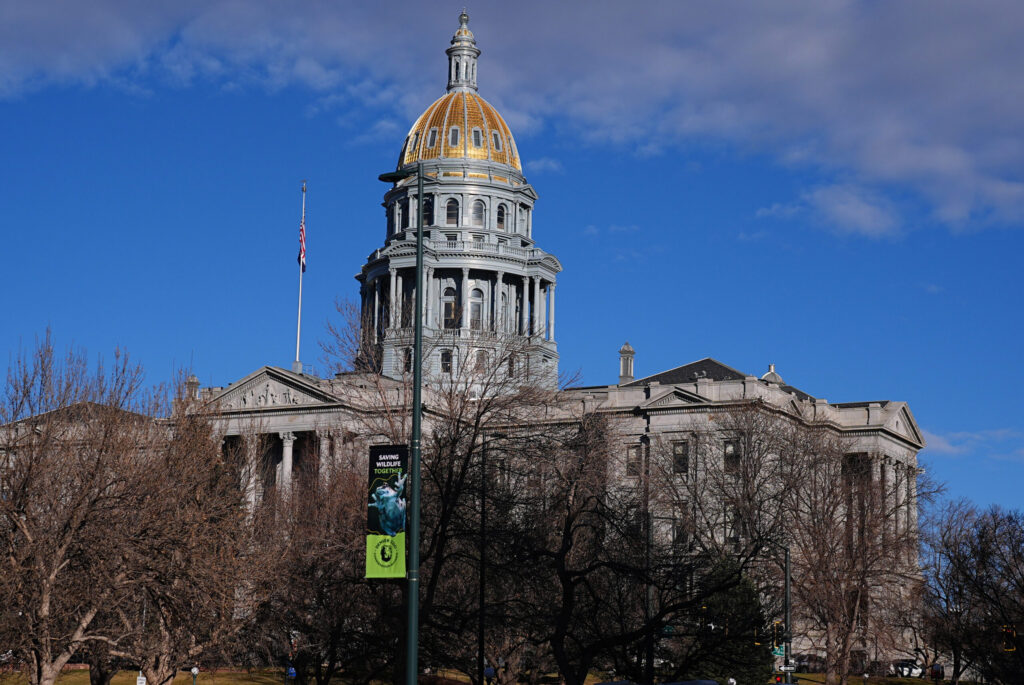
Meeker rancher leads one of Colorado’s earliest attempts to transfer federal lands | A LOOK BACK
Rachael Wright, Special to Colorado Politics
rachael.wright@coloradopolitics.com
Updated 2 days ago
Forty-Five Years Ago This Week: Former state Rep. Nick Theos, R-Meeker, was one of several people testifying before the Senate Agriculture Committee on Senate Bill 81-170, which would transfer ownership of public lands from the federal government to state control....

Democrats Michael Bennet, Phil Weiser make their cases to be Colorado’s next governor ahead of primary
Ernest Luning
ernest.luning@coloradopolitics.com
Updated 2 days ago
Nearly eight months before ballots will be counted in Colorado’s race for the its open gubernatorial seat, voters are lining up behind two of the state’s leading Democrats, who are facing off in a primary that will likely determine which...
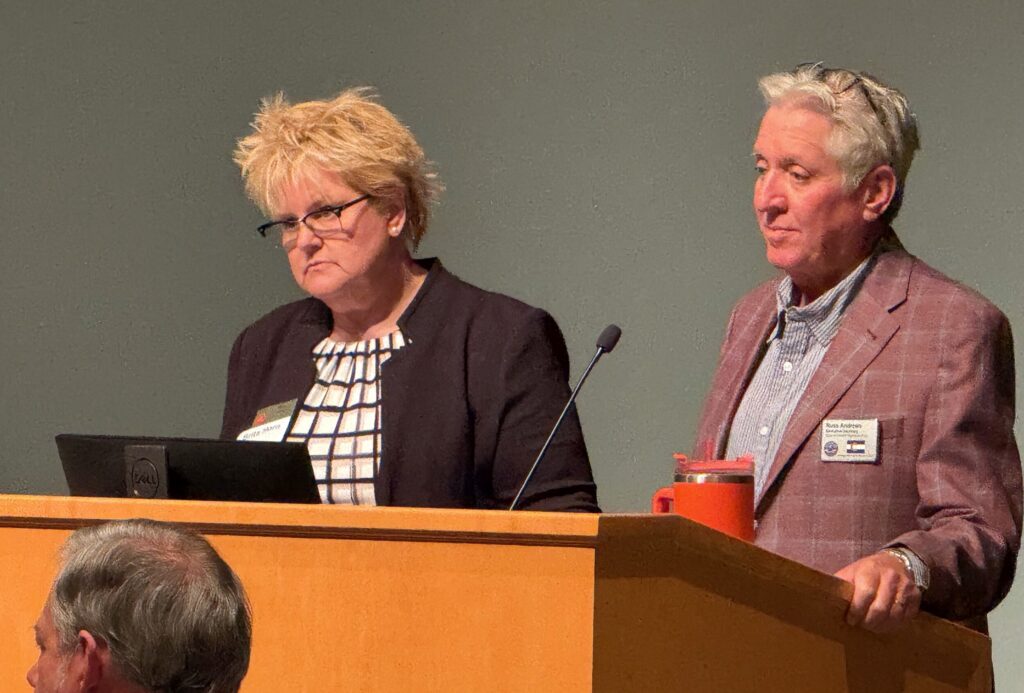
Colorado GOP officers set competing meetings to hold ‘no-confidence’ votes on state chair Brita Horn
Ernest Luning
ernest.luning@coloradopolitics.com
Updated 19 hours ago
Once again, members of the Colorado Republican Party’s central committee have scheduled separate, competing meetings to consider whether the state GOP’s governing body supports its chair, but this time neither meeting will be held under a bridge. State GOP Chair...
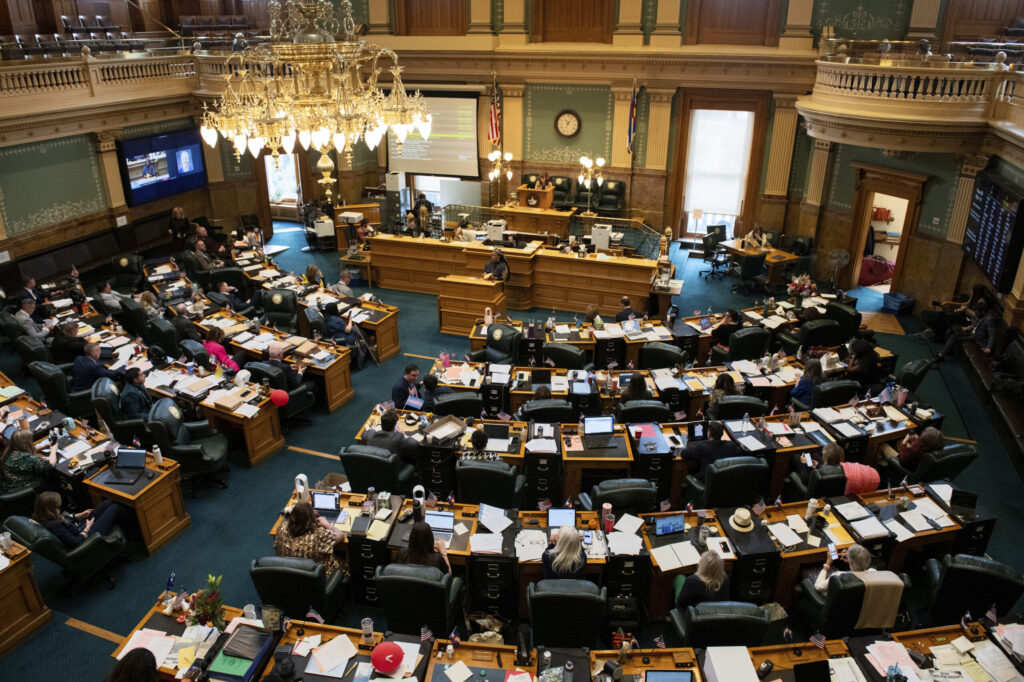
Colorado Democratic candidate submitted 1,600 signatures — only 29 were valid
Marianne Goodland
marianne.goodland@coloradopolitics.com
Updated 1 day ago
When he turned in some 1,600 signatures last month, Eric Nelson said it demonstrated “strong grassroots support from voters” across the district and a “growing momentum” for his “inclusive, community-centered leadership.” On Thursday, the Secretary of State rejected Nelson’s petition...
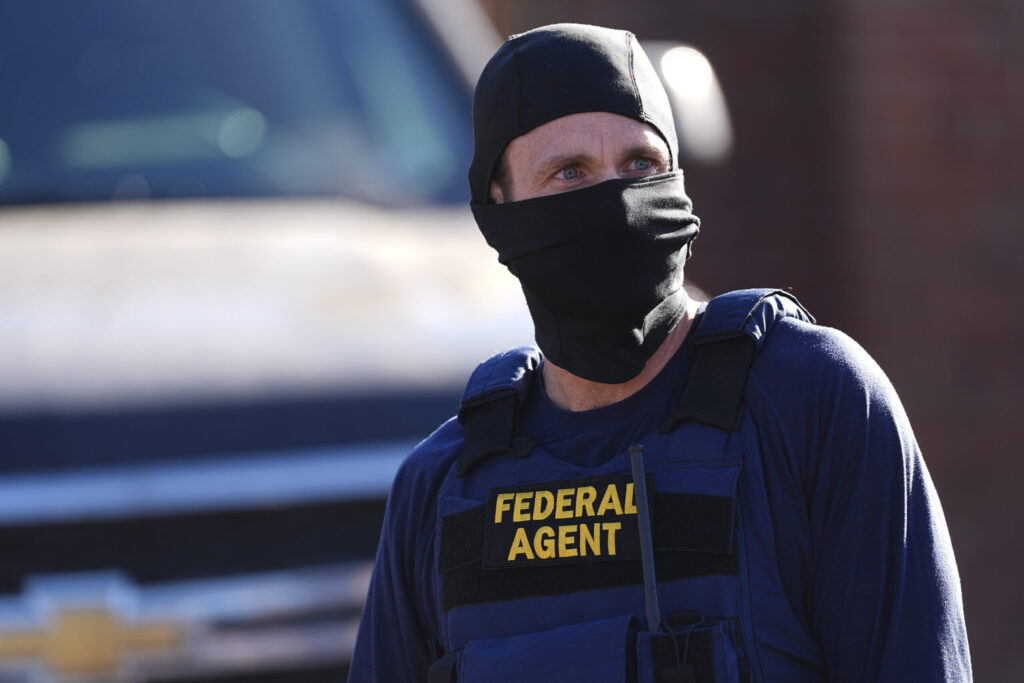
Colorado bill disqualifies former ICE agents from getting job in local law enforcement | Bills in Brief
Marissa Ventrelli
marissa.ventrelli@coloradopolitics.com
Updated 1 day ago
Colorado lawmakers introduce hundreds of bills each year. Bills in brief cuts through the noise by explaining which proposals matter, what’s at stake, and how decisions at the Capitol could affect everyday life across the state. Colorado legislators are pushing legislation to...
PREV
PREVIOUS
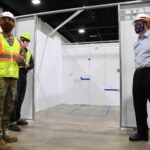
Joint state/federal effort to set up field hospital at Colorado Convention Center underway (PHOTOS)
Gov. Jared Polis on Friday unveiled the beginnings of a makeshift field hospital, set in the heart of the Colorado Convention Center in downtown Denver, that could hold up to 1,962 COVID-19 patients who are well on their way to recovery. The facility is being built under the auspices of the Army Corps of Engineers, […]
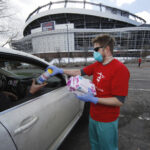
Coronavirus case update for April 10: Deaths at 250, with 6,510 cases, 1,312 hospitalized; 61 centers with outbreaks
The Colorado Department of Public Health and Environment on Friday updated its COVID-19 case numbers to 6,510 cases, with 1,312 patients hospitalized and 250 deaths. The virus has spread across 56 counties in the state. Denver County has the most cases, with 1,113. Denver also has lost the most people to the virus, with the number of deaths at 42. El Paso and Weld […]