

The COVID-19 crisis feels ’10 times the scale’ of SARS outbreak, Denver Health doctor says

When Dr. Connie Price, chief medical officer of Denver Health, traveled to Toronto in 2003 to help combat the SARS outbreak, she thought she’d never see anything like it again.
“I walked off the plane in the middle of this outbreak,” she told Colorado Politics over the phone the morning of April 3. “Nothing was open. Restaurants were closed. People had been forced to leave their jobs. It was very similar to what we’re seeing in Denver and across the country.”
But one thing’s quite different about the coronavirus outbreak, she said: “It feels like 10 times the scale.”
Since the beginning of March, work has been “nonstop,” Price said. She’s clocking in 12-hour days, spending most of her time on the phone “day after day” with state officials, personal protective equipment suppliers and laboratory staff, to name a few.
“It’s just this constant trying to keep up with all of those pieces to make sure our response is successful,” she said.
Denver Health has seen an influx of COVID-19 patients over the last few weeks, but Price notes the volume of patients is slower in uptick than some of the initial projections showed.
In about two weeks, she said, conclusions can begin to be made about how effective social distancing guidelines have been.
Public health officials estimate that Colorado’s social distancing efforts have reduced the spread of the coronavirus from cases doubling every two days to every five. Gov. Jared Polis on April 9 said that the state is just days away from early results.
Price also said that, as of the week of March 23, Denver Health has started to see an increase in stock of key supplies, including N-95 respirators.
“That’s been really reassuring,” she said.
Denver Mayor Michael Hancock said on April 8 that President Donald Trump has “failed our nation” by leaving cities and state to fend for themselves when it comes to equipment needed to respond to the COVID-19 emergency.
Hancock was one of 114 mayors who called on the Trump administration to increase production and delivery of medical supplies immediately.
As of April 4, the city had requested nearly 323,000 masks, but received less than 19,000. Of the 1.1 million surgical masks Denver asked for, only 25,000 were delivered. The city also requested 60,000 gowns but netted only about 10,300.
Polis also has been largely critical of the federal government for its delayed response to the pandemic and its deployment of resources to the state.
Denver Health has recently started “reprocessing” its respirators, meaning they’re collected at the end of every day and wrapped in sterilization pouches before being put through a low-temperature sterilizer that uses hydrogen peroxide gas. Once they’re cleaned, the respirators are inspected to make sure they’re intact before they’re redistributed again to front-line workers.
On April 2, Price said Denver Health had 30 coronavirus patients, but that by April 3, patients had increased to 43, marking the largest increase the hospital had seen to date.
“If you drew a trend line going back to March 25, we’re seeing a steady increase,” she said, “but it’s not an off-the-charts influx like places, such as Italy, have experienced. It’s gradual, but not exponential.”
As far as testing goes, Price said that Denver Health has had the capability to conduct about 550 tests a day, which is not yet full capacity because the hospital is short on testing kits. For that reason, tests have been limited to those who would benefit most from them, she said, including hospital patients and health care workers.
However, in the coming weeks more tests will be made available to the greater community, she said, although still not to everyone.
“In my mind,” she said, “the important folks to focus on will be anybody in an institutional setting,” including residents of long-term care facilities, correctional care inmates, hospitalized patients, dialysis populations and other particularly vulnerable populations.
With more testing capabilities, Price said, the state has a real shot of slowing transmission.
Nevertheless, the state is working with hospitals to develop a plan should a surge of patients overwhelm the health care system.
Colorado’s health officials are asking hospitals to submit data on PPE supply, staffing needs and more to gather data on what’s needed to accommodate a potential surge.
“Denver Health has done a lot of work setting up infrastructure to be able to turn on a dime,” Price said. For example, it’s converted its general ward to an intensive care unit because the ICU “isn’t big enough at baseline,” and the hospital has also expanded its existing bed supply to accommodate COVID-19 patients.
According to new data released by the Harvard Global Health Institute, in a “moderate scenario” wherein 40% of Denver’s adult population contracted the disease, hospitals across the city, including Denver Health, could see an estimated 195,000 coronavirus patients over a one-year period.
The influx of patients would require nearly three times the number of available beds in that time period, the report found.
Price called the findings a “big reality check” and said Denver Health as a result is now planning to need to accommodate about three times more ICU patients than it normally would.
Reflecting on her experiences during the current coronavirus outbreak and the severe acute respiratory syndrome that was first identified in Asia in 2003, Price said one major difference stands out: the availability of supplies.
“There weren’t any PPE shortages or testing shortages or anything like that,” she said. “Gosh, when I think about it, if we just had all of our supplies, in some ways, it’d be so much easier.”

Divided Colorado Supreme Court finds Denver detective did not violate defendant’s Miranda rights
Michael Karlik
michael.karlik@coloradopolitics.com
Updated 60 minutes ago
The Colorado Supreme Court determined on Monday that a Denver detective did not improperly resume questioning of a defendant in custody after he invoked his right to counsel. By 4-3, the justices reversed a trial judge’s order that found a...

Colorado Gov. Polis signs social media warrant bill after last year’s veto
Marissa Ventrelli
marissa.ventrelli@coloradopolitics.com
Updated 1 hour ago
Colorado law enforcement will soon have faster access to digital evidence after Gov. Jared Polis signed a pared‑down bill requiring social media companies to acknowledge and respond to search warrants on a tight timeline, a shift from a broader proposal...
Under fire from legislators and critics, Colorado’s top Medicaid official resigns
Marianne Goodland
marianne.goodland@coloradopolitics.com
Updated 1 hour ago
Kim Bimestefer resigned Monday as Colorado’s top Medicaid official, stepping down just as a bipartisan bloc of state senators prepared to formally urge Gov. Jared Polis to remove her over what they called years of mismanagement, waste and costly errors...

Usha Vance launches story time podcast in latest second lady venture
Asher Notheis, Washington Examiner
asher.notheis.washington.examiner@gazetteedit.wpenginepowered.com
Updated 4 hours ago
Second lady Usha Vance unveiled her new story time podcast of reading children’s stories on Monday. The podcast, Storytime with the Second Lady, features either her reading books or inviting a special guest to read, and is part of her...

Out-of-state judges address ex-discipline director’s lawsuit, Colorado justices accept federal invitation | COURT CRAWL
Michael Karlik
michael.karlik@coloradopolitics.com
Updated 5 hours ago
Welcome to Court Crawl, Colorado Politics’ roundup of news from the third branch of government. A pair of out-of-state judges got down to business in a lawsuit brought by Colorado’s former judicial discipline director, plus the state Supreme Court has...
Power grid shutdowns in Colorado bring protection — and problems
Scott Weiser
scott.weiser@gazette.com
Updated 5 hours ago
A downed power line in Sunshine Canyon in the mountains west of Boulder in December posed an electrocution risk to firefighters and bystanders after Xcel Energy re-energized it without repairing it, despite being notified of the break the day before....
Aurora wildland fire contained at Buckley Space Force Base
Nicholas Fogleman
nicholas.fogleman@denvergazette.com
Updated 5 hours ago
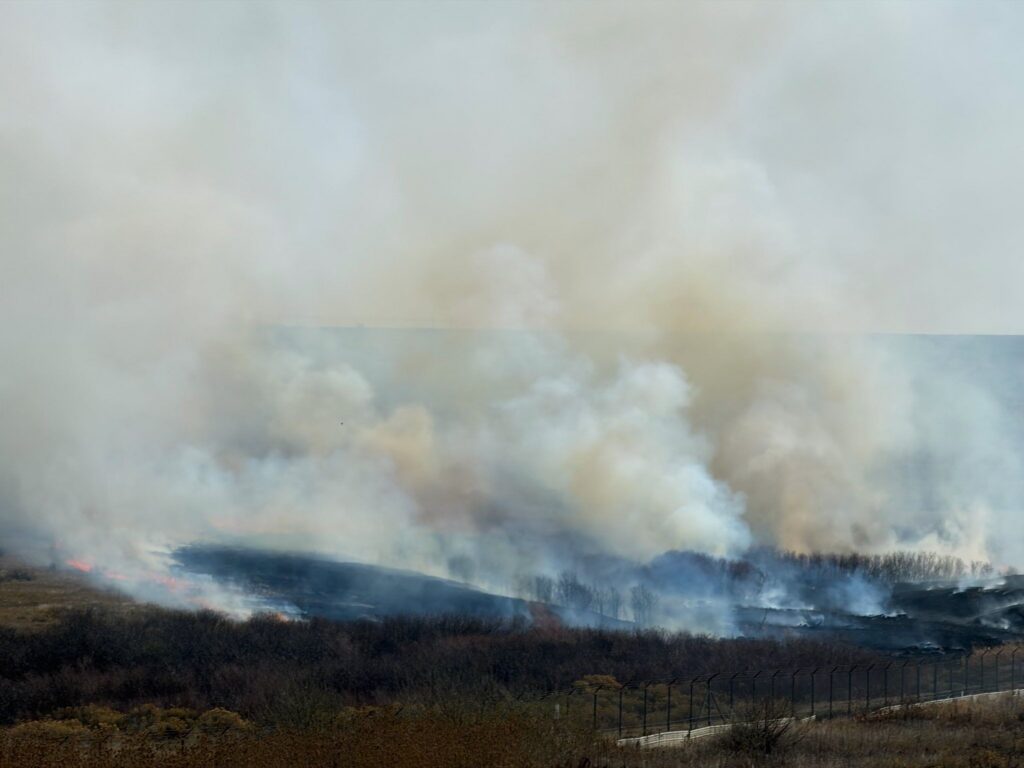
A wildland fire burned Sunday morning on the southwest end of Buckley Space Force Base in Aurora, authorities said. The fire no longer posed a threat and crews were clearing the scene as of 10:53 a.m., according to Aurora Fire...

Unsustainable: How Colorado’s Medicaid spending exploded
Nico Brambila
nico.brambila@denvergazette.com
Updated 7 hours ago
The state’s Medicaid program — which covers about one in four Coloradans — is poised for its largest single-year jump in at least two decades, with officials proposing a $2.3 billion increase, even as lawmakers face a $1.5 billion budget...
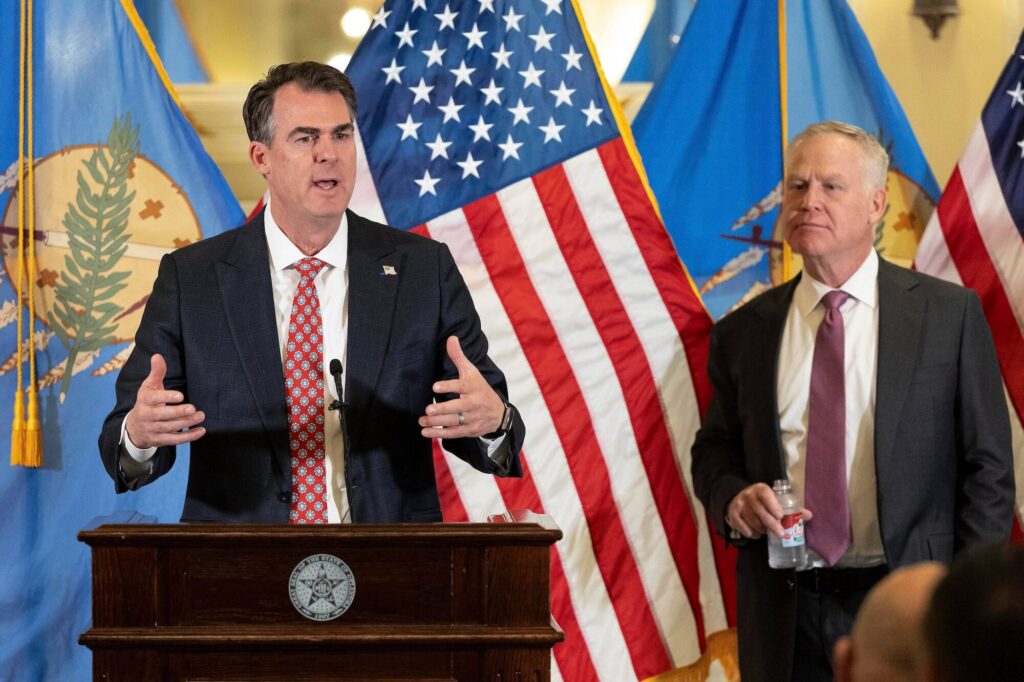
Oklahoma’s governor picks energy executive Alan Armstrong to fill US Senate seat | OUT WEST ROUNDUP
The Associated Press
the-associated-press@coloradopolitics.com
Updated 5 hours ago
OKLAHOMA Governor makes US Senate pick OKLAHOMA CITY — Oklahoma’s governor on March 24 appointed energy executive Alan Armstrong to serve in the U.S. Senate through the end of the year and finish the term of Republican Markwayne Mullin, the...

Phil Weiser wins top spot in Colorado’s Democratic gubernatorial primary at party’s state assembly
Ernest Luning
ernest.luning@coloradopolitics.com
Updated 2 days ago
Attorney General Phil Weiser’s name will appear first on Colorado’s Democratic gubernatorial primary ballot after his overwhelming win Saturday at the party’s state assembly in Pueblo. Weiser joins U.S. Sen. Michael Bennet in the June 30 primary for the office...
PREV
PREVIOUS

'People are afraid': Changing federal guidance affected RTD’s plan to protect operators
On March 12, Mike Meader visited the office of Amalgamated Transit Union Local 1001 for a meeting with the president, Lance Longenbohn. Meader, the chief safety and security officer for the Regional Transportation District, told him that RTD had an order of roughly 21,000 surgical masks and N95 respirators pending for bus and light rail […]

Joint Budget Committee announces plan to develop state budget
The Colorado legislature’s budget writers, the six members of the Joint Budget Committee, announced a plan of action on Thursday that will help move them forward on dealing with the state budget, both for the remainder of 2019-20 and for the upcoming 2020-21 fiscal year. A letter sent to the General Assembly Thursday said the […]