

Title Board turns away challenge to paid leave initiative
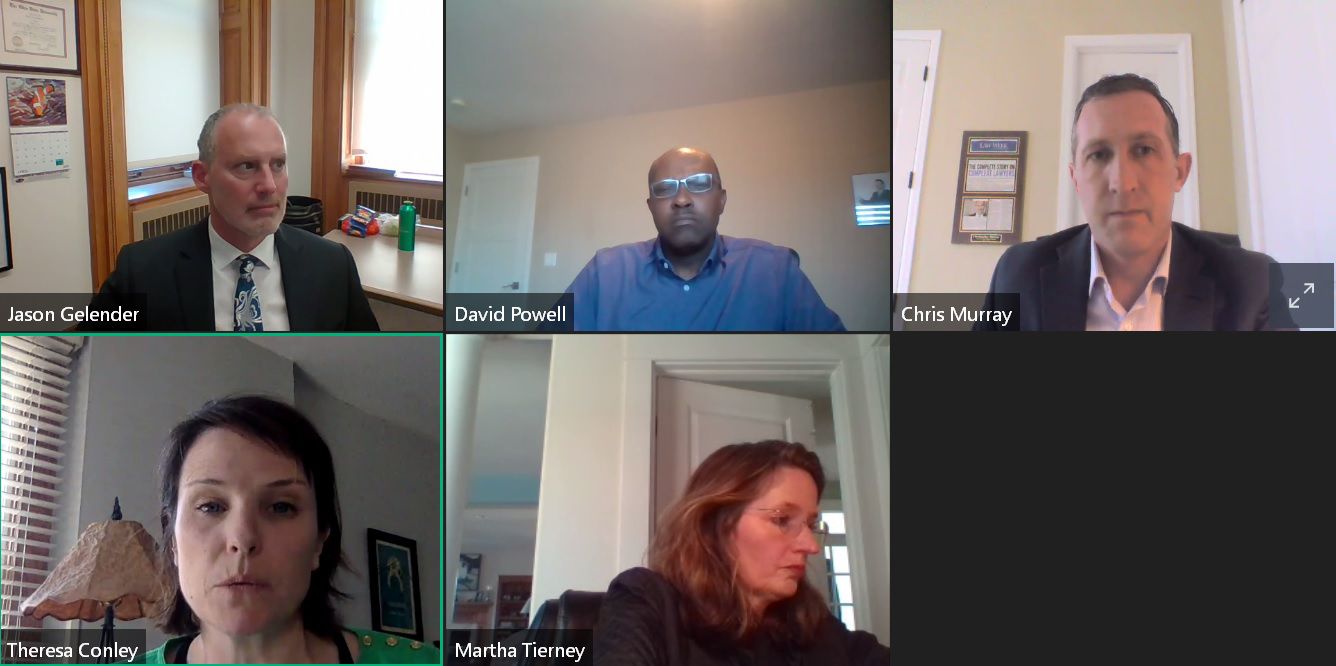
The Colorado Initiative Title Setting Review Board upheld its prior decision to set a ballot title for Initiative 283, which would establish 12 weeks of paid family and medical leave, with payroll premiums split between the employee and their employer.
Kelly Brough, the president and CEO of the Denver Metro Chamber of Commerce, objected to the title that voters will see on grounds that it should include tax increase template language required by the Taxpayer Bill of Rights, and also that the new division to administer the program is described as an “enterprise.” Under Colorado law, enterprises are government-owned businesses that receive no more than 10% of their revenue from state and local sources and are exempt from revenue caps.
“The Division as contemplated will have significant enforcement, regulatory and rate-setting powers which are inconsistent with the ordinary understanding of a business,” Brough wrote in her objection. “No ordinary business has the ability to regulate and police its competitors.”
Martha Tierney, the attorney for the initiative’s designated representatives, defended the enterprise designation by arguing that Colorado’s unemployment insurance program works in a similar way. Jason Gelender, a board member representing the Office of Legislative Legal Services, asked Brough’s attorney, Christopher Murray, what he thought about the comparison.
“I’m not entirely sure that it is constitutional,” Murray cautioned, referring to unemployment insurance. Nevertheless, he said that the paid leave proposal presumes that individuals will “buy” their leave from the government-sponsored program, unless the government authorizes private plans.
Board Chair Theresa Conley, representing Secretary of State Jena Griswold, referred to a legislative memo from 2019 that analyzed whether a proposed paid leave program would qualify as an enterprise. Legislative staff deemed that an enterprise “pursues a benefit and generates revenue by collecting fees from service users,” and therefore the answer was yes. The memo further argued that the relationship between fees collected and services provided was stronger in the proposed paid leave entity than with unemployment insurance, which also operates as an enterprise.
Board members unanimously dismissed the objection. Brough is challenging the titles of two variations on the paid leave proposal in the Colorado Supreme Court on similar grounds.


Governor signs bill expanding who can petition for weapons restrictions
Marissa Ventrelli
marissa.ventrelli@coloradopolitics.com
Updated 25 minutes ago
Gov. Jared Polis on Monday signed a bill into law expanding who can ask a judge to temporarily restrict a person’s access to firearms. Established in 2019, 0Colorado’s extreme risk protection law (ERPO) initially allowed a family member or law...

Colorado justices restore RTD subcontractor’s award, reject ‘drastic’ view of public works law
Michael Karlik
michael.karlik@coloradopolitics.com
Updated 2 hours ago
The Colorado Supreme Court on Monday restored a $5.7 million award to a company that helped build a commuter rail line and, in doing so, rejected a view of state law that would nullify a subcontractor’s entitlement to any compensation...
As Colorado passes 6 million residents, housing initiatives take center stage
Marianne Goodland
marianne.goodland@coloradopolitics.com
Updated 30 minutes ago
New Census data confirming Colorado’s population has topped six million is fueling renewed debate over Gov. Jared Polis’ housing agenda, as he tied the population increases to home construction. The governor said the counties experiencing the largest increases in new...

Congress urged to open antitrust investigation into Apple and OpenAI over ‘left-leaning bias’
Kaelan Deese, Washington Examiner
kaelan.deese.washington.examiner@gazetteedit.wpenginepowered.com
Updated 3 hours ago
A conservative legal group founded by senior White House adviser Stephen Miller is urging Congress to investigate a partnership between Apple and OpenAI, arguing the companies have effectively locked millions of people into a single, politically biased artificial intelligence system....

Trump threatens jail time over downed US fighter jet ‘leak’
Christian Datoc and Mabinty Quarshie, Washington Examiner
christian.datoc.and.mabinty.quarshie.washington.examiner@gazetteedit.wpenginepowered.com
Updated 3 hours ago
President Donald Trump threatened jail time Monday for the journalist who first reported that an airman was still missing after a fighter jet went down in Iran last week. The high-risk and eventually successful attempt to rescue the weapons officer...

Bill to accelerate police access to online threats clears Colorado committee
Marissa Ventrelli
marissa.ventrelli@coloradopolitics.com
Updated 2 hours ago
A proposal to speed up law‑enforcement access to social‑media data is advancing in the Colorado Legislature, drawing emotional testimony from the Evergreen community and questions from opponents who are worried about privacy and constitutional limits. On Sept. 10, 16-year-old Desmond...

Colorado justices confirm lawyers may ‘borrow’ allegations from elsewhere
Michael Karlik
michael.karlik@coloradopolitics.com
Updated 4 hours ago
The Colorado Supreme Court ruled on Monday that plaintiffs’ lawyers can use allegations made elsewhere to bolster their own clients’ claims, so long as the attorney first performs some degree of investigation into the “borrowed” assertions. Under Colorado’s rules for...

El Paso County defendant’s speedy trial rights violated, Colorado justices find in overturning convictions
Michael Karlik
michael.karlik@coloradopolitics.com
Updated 5 hours ago
The Colorado Supreme Court concluded on Monday that an El Paso County prosecutor made an unjustified decision to file a mid-case appeal, pushing the trial beyond the legal deadline and requiring that the defendant’s convictions be overturned. In Colorado, the...

SCOTUS decides Colorado case, state’s newest justice authors first opinion | COURT CRAWL
Michael Karlik
michael.karlik@coloradopolitics.com
Updated 6 hours ago
Welcome to Court Crawl, Colorado Politics’ roundup of news from the third branch of government. The nation’s highest court decided a First Amendment case out of Colorado, plus the state’s newest justice issued her first opinion since joining the Colorado...

US service member missing after Iran shot down fighter jet has been rescued, US officials say
Associated Press
associated-press@coloradopolitics.com
Updated 1 day ago
JERUSALEM — President Donald Trump announced early Sunday that the U.S. had rescued an aviator nearly two days after he was shot down over Iran. The extraction came after a frantic search in what appears to be a remote, mountainous region of...
PREV
PREVIOUS

Polis updates COVID-19 guidelines on religious observances before Passover, Easter, Ramadan
Easter, Passover and Ramadan observances should proceed virtually, or perhaps through drive-through services, according to advice provided today by Gov. Jared Polis. Joined by Rev. Amanda Henderson, representing the Interfaith Alliance of Colorado, Polis said this is both a wonderful and challenging time of year. Passover begins Wednesday night, Easter Sunday is in four days […]

Lawmakers say they need more time to solve the state budget
If the state legislature does little more than it has to – passing a budget and a School Finance Act – when they’re able to reconvene, that’s still going to be a heavy lift, legislative leaders said Wednesday afternoon. Next year’s budget will be $2 billion to $3 billion less than last year, and the […]