

Boulder man files suit challenging city, state stay-at-home orders

A Boulder man has filed a lawsuit against the city and the state alleging that the stay-at-home orders in response to the COVID-19 pandemic violate his rights to freedom of movement, of assembly and of religion, asserting that “there are no exceptions in the constitution for emergencies.”
Benjamin K. Piilani wrote in his complaint that the economy is interconnected and that no person could distinguish between “essential” and “nonessential” activities that should continue during an emergency. Although he admitted that the goal of the orders may have merit, the method of requiring home sheltering with many exceptions was not “narrowly tailored.”
He cited a potential fine or imprisonment for leaving his home to exercise his constitutional right to assemble in a faith group or to freely move, a punishment which does not fit the crime, in his opinion.
“No proof exists that these Orders are effective in controlling the spread of COVID-19,” Piilani claimed. “Defendants know less than they should and all projections come with uncertainty”.
On Monday, Gov. Jared Polis explained in a televised address that positive cases of the virus were doubling every five to six days instead of every two days, which he attributed to distancing behavior.
“That is a remarkable achievement by the people of this state,” he said. “I want to thank each and every one of you who has been taking this seriously. You are truly helping to turn the tide against this virus.”
A Denver man previously filed a similar lawsuit against Mayor Michael Hancock and Polis challenging the state and local orders, and argued that they were destroying the state’s economy and depriving him of his livelihood and his freedom to attend church services. At the time, Polis’s office said that he could not comment on pending litigation.
Jane S. Brautigam, the city manager for Boulder who issued a stay-at-home order on March 24 and is a named defendant in Piilani’s claim, did not immediately respond to a request for comment.
Alleging that there is no clear and present danger, Piilani in his lawsuit concluded that “there are no exceptions in the constitution for emergencies.” However, he seemed to concede the unpopularity of that argument at a time when nearly 200 Coloradans have died from COVID-19.
“During a time of national distress, Plaintiff appears to be a ‘jerk and pariah’ by filing this Complaint,” Piilani wrote.
Alan Chen, a professor at the University of Denver’s Sturm College of Law, felt that the Boulder and Denver lawsuits were “highly likely” to be dismissed. “To the extent that any person’s constitutional rights are being impaired by the stay-at-home orders, they are likely to be overridden by the real and compelling government interest in preventing deaths from COVID-19,” Chen said.
He added that the alleged infringement on freedom of religious exercise does not single out any one religion, and would not violate the First Amendment. Although governments can use a crisis as a pretext to violate civil rights, such as the internment of Japanese Americans during World War II, a perceived emergency does affect courts’ application of the law.
“There are numerous examples of the Supreme Court deferring to government action that would be impermissible in non-emergency situations because of the exigencies of war, economic devastation, or other unforeseeable situations,” Chen said.

Piilani v. Colorado


Victor Marx says he’ll only debate Phil Weiser once in Colorado governor’s race — without a moderator
Ernest Luning
ernest.luning@coloradopolitics.com
Updated 11 hours ago
Colorado Republican gubernatorial nominee Victor Marx said on Tuesday that he will participate in only one debate with Attorney General Phil Weiser before the November election — and he challenged the Democratic nominee to hold the event without a moderator....
10th Circuit finds no fair housing violation by Littleton landlord for worker’s alleged rape of tenant
Michael Karlik
michael.karlik@coloradopolitics.com
Updated 13 hours ago
The Denver-based federal appeals court concluded on Monday that Littleton’s housing authority could not be held liable for a maintenance worker’s alleged rape of a tenant, as the worker’s employment did not provide any special access to the victim. A...
Fauci’s Fifth Amendment answers may test Biden pardon as GOP eyes contempt
Kaelan Deese
kaelan-deese@coloradopolitics.com
Updated 13 hours ago
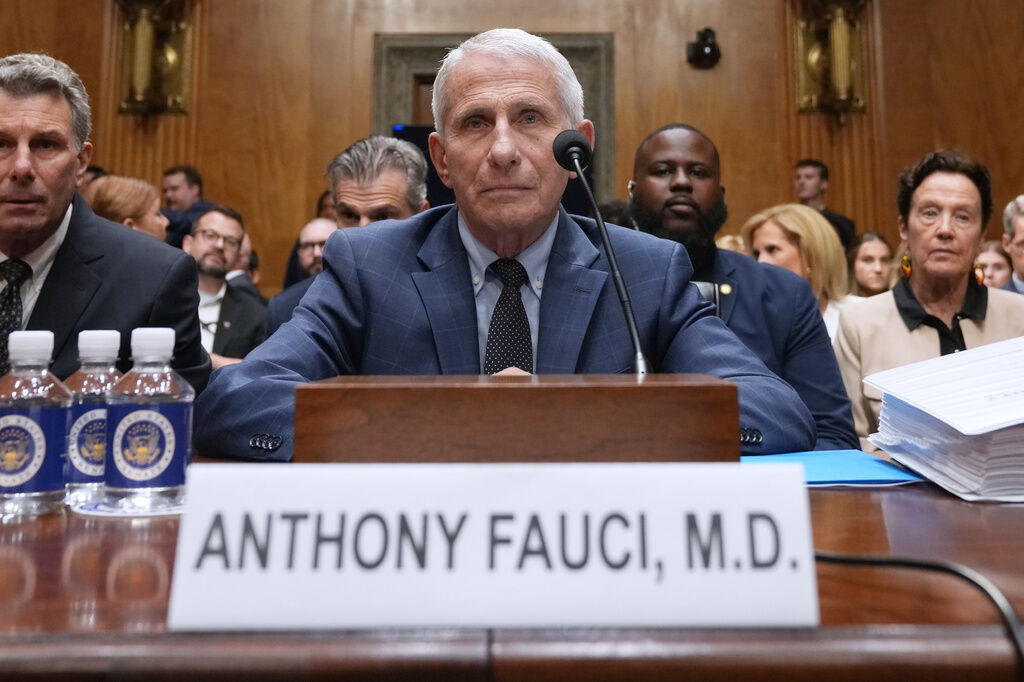
Dr. Anthony Fauci invoked his Fifth Amendment right against self-incrimination more than 100 times on Wednesday, a move legal experts described as strategically sound despite the politically damaging optics. Sen. Rand Paul (R-KY), chairman of the U.S. Senate Committee on...

Democrats must win 57 out of 77 competitive House seats to take majority: Cook Political Report
Hailey Bullis
hailey-bullis@coloradopolitics.com
Updated 15 hours ago
Democrats’ path to retaking the House in November has significantly slimmed as a result of the mid-decade redistricting war this cycle, a new analysis found. The nonpartisan Cook Political Report found that under the newly drawn maps across 10 states,...

Denver labor acknowledgment proposal faces council committee questions
Deborah Grigsby
deborah.smith@denvergazette.com
Updated 19 hours ago
A proposal to add a labor acknowledgment to Denver City Council proceedings has been delayed by the Finance and Business Committee after members raised questions about its wording, intentions and place in the council’s opening proceedings. The proposal, put forth...
Fauci invokes the Fifth Amendment and declines to testify in GOP-led Senate panel’s COVID-19 hearing
The Associated Press
the-associated-press@coloradopolitics.com
Updated 20 hours ago
WASHINGTON (AP) — Dr. Anthony Fauci on Wednesday invoked the Fifth Amendment and declined to answer questions from senators in a Republican-led committee hearing about his handling of the COVID-19 pandemic. The move injects new drama into the lingering tensions...

Colorado residents rush to buy guns ahead of new restrictions, breaking sales records for several stores
By Debbie Kelley
by-debbie-kelley@coloradopolitics.com
Updated 19 hours ago
Colorado residents are lining up to buy guns ahead of the latest weapons restrictions set to take effect this Saturday. The new law mandates individuals seeking to purchase semiautomatic firearms with detachable magazines to first complete a firearm safety course...

Crime continues to decline in Aurora, police chief says
Kyla Pearce
kyla.pearce@gazette.com
Updated 19 hours ago
Crime in Aurora continued to decline in the first half of 2026, according to Aurora Police Department officials. Crime overall in the city has been on a downward trend since 2024, according to APD. Between Jan. 1 and June 30,...

El Paso County rejects multi-family zoning request near Monument Academy
Savannah Eller
savannah-eller@coloradopolitics.com
Updated 18 hours ago
The El Paso County Board of Commissioners narrowly rejected a developer’s bid to convert land from low- to high-density residential zoning. The request, made by MA Infrastructure, LLC, would have allowed 12 units per acre on half of a 14-acre...

Atop taxes, here’s how much each Colorado resident pays in fees
Marissa Ventrelli
marissa.ventrelli@coloradopolitics.com
Updated 1 day ago
Each Colorado resident paid nearly $5,000 in state-sanctioned fees last year, according to a report by a policy think tank. The report, which analyzed how fees have affected Colorado’s economy, found that fee revenue has more than tripled since 2008...
PREV
PREVIOUS

Recall efforts appear to fail in Elizabeth, Idaho Springs
Voters rejected three recall questions for local officials in the town of Elizabeth and city of Idaho Springs, unofficial results showed. By 15 votes out of 365 cast, Mayor Megan Vasquez survived her attempted recall in the Elbert County town of approximately 1,400 people. Board of Trustees member Tammy Payne also kept her seat by an […]

Charlotte Figi, whose battle with Dravet syndrome changed the lives of thousands of children, dies from suspected COVID-19 at age 13
Thousands are mourning the passing of Charlotte Figi, a 13-year-old Colorado Springs girl whose battle with Dravet Syndrome changed the lives of countless children around the United States. Charlotte died Tuesday after an illness that hospitalized her multiple times over two weeks. When coronavirus testing was finally obtained for her, it came back negative, but […]