

State public health officials say those who recover from COVID-19 will have immunity
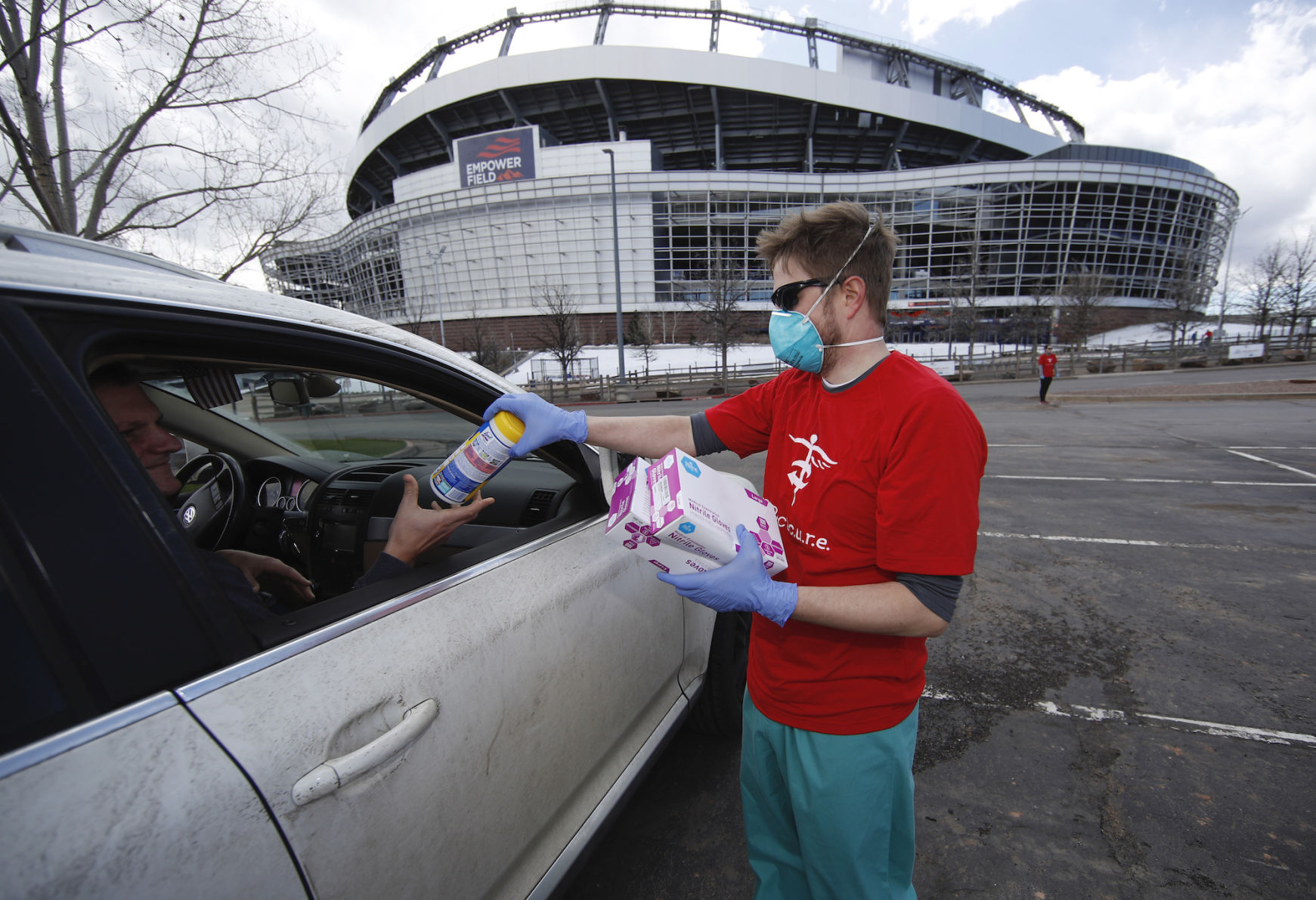
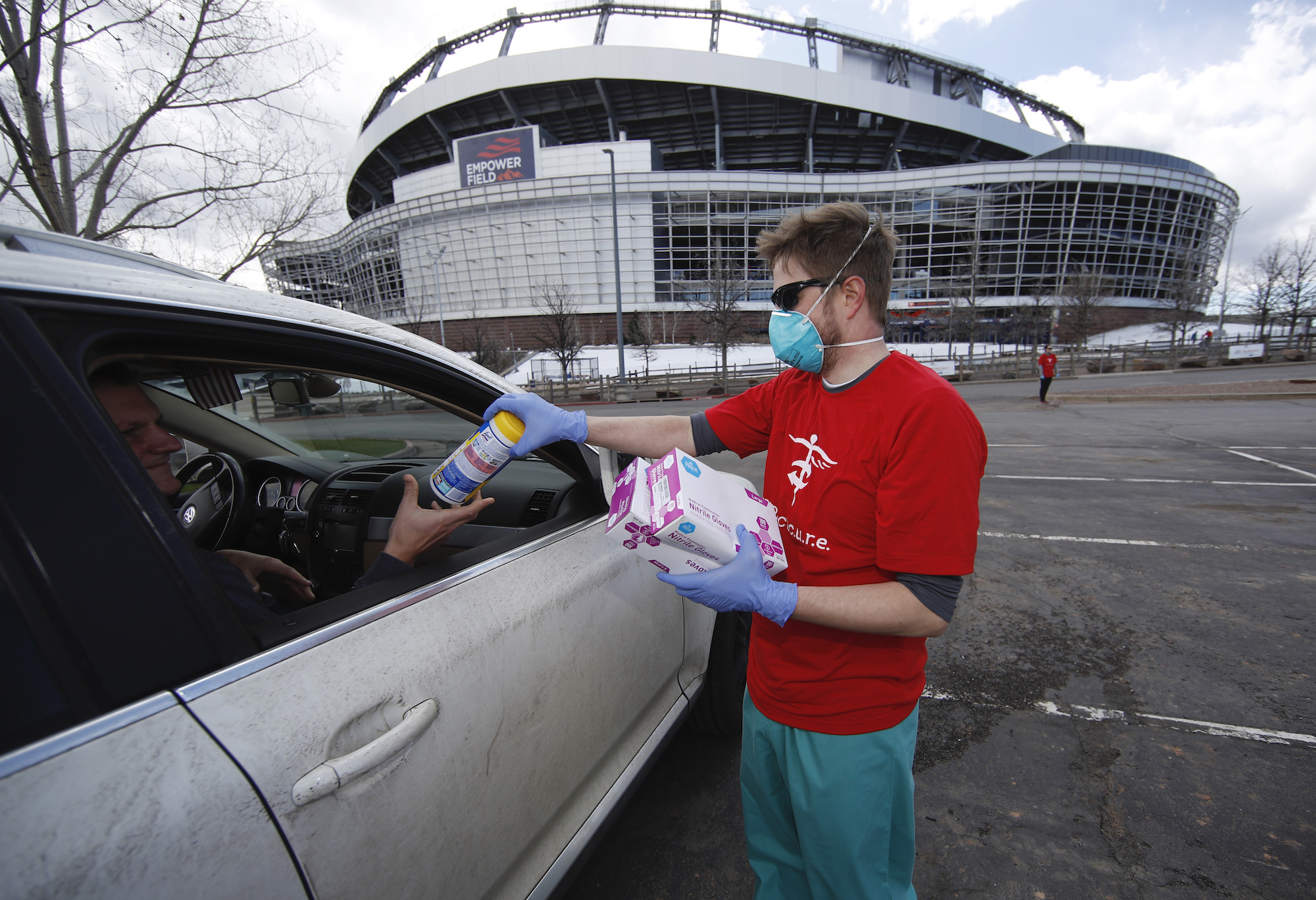
The Colorado Department of Public Health and Environment said in a Monday afternoon news conference that while the state has recorded 5,172 cases of COVID-19, the real number is likely closer to 17,000 to 18,000 cases, or as much as 0.3% of the state’s total population.
“It’s more than we’ve been talking about,” said Dr. Jill Hunsaker Ryan, the CDPHE executive director. She also said that more people are recovering or will recover soon, and will have immunity, but “we are still at the beginning of this epidemic.” And hospitals are feeling the strain, she said.
CDPHE officials addressed a model from the Institute for Health Metrics and Evaluation, from the University of Washington in Seattle, that showed Colorado had reached its peak infection rate.
Sadly, that’s not true, according to state Epidemiologist Rachel Herlihy. While the state is considering the IHME model, the best model is one developed by the Colorado School of Public Health, using real-time Colorado data. She said the IHME model uses different assumptions than the ones modeled by the School of Public Health.
Herlihy said the IHME model uses social distancing strategies from the pandemic when it hit Wuhan, China, not the same strategies employed in Colorado, she said. In addition, the Colorado model assumes those in intensive care units will need ventilators, an assumption not built into the IHME model. “We are certain the peak has not hit,” Ryan said.
It’s too soon to know when the peak will happen, Herlihy said, although the social distancing efforts, including the stay at home order, are showing that people are taking those orders seriously. The disease is spreading more slowly in Colorado than it was a month ago, she said. At that time, cases were doubling every two days; now it’s down to five or six days.
Dr. Eric France, the state’s chief medical officer, also explained the Crisis Standards of Care, approved on Sunday by the governor, and how that will be used to determine who gets ventilators and health care for COVID-19.
The standards have four tiers, with a scoring system.
- Tier one: acuity of illness and morbidity; if there is a tie,
- Points to pediatric patients, health care workers and first responders. If there is a tie:
- Special considerations, such as pregnancy or a primary caregiver, or the number of years of life the patent is expected to have, with more points for younger people.
- In case of a tie: A random allocation to choose how to use scarce resources
“It’s clear this is a difficult time. We are in crisis,” France said. Those standards of care also are applied to the use of personal protective equipment .
France also said that he expects 30% to 40% of Coloradans to eventually catch COVID-19. About 5% of those patients will need to be hospitalized, and 40% of those patients will be in an intensive care unit, with half on ventilators.
“With that kind of burden facing us, we may run the risk of scarce healthcare resources,” France said. Every hospital and/or health care system is expected to have a standards of care triage team that does not include doctors or nurses working on the front lines of the pandemic, he explained.
The triage team will make those difficult decisions, blind to irrelevant information such as race or nationality that doesn’t predict health care outcomes.
The social distancing strategies, from closing restaurants, bars, schools, limiting the size of gatherings, and finally the stay-at-home order on March 26, has so far reduced the spread by 45%, Herlihy said, although the state goal is to get to 60% to 80%.
One of the goals of social distancing, Herlihy said, is to flatten the curve and reduce the need for ICU beds. At a 60%, Colorado would hit its threshold on May 15. Anything above that, Colorado would never reach maximum capacity for COVID-19, she said.
“Now is not the time to back off, or to pat ourselves on the back,” she said.
Testing is still an issue; the public health officials did not answer a question on whether or when more tests would be available, instead talking about the number of tests being processed by the state lab and commercial partners.
Mid-day numbers on Monday show that 148 people in Colorado have died from COVID-19, up eight from Sunday; 5,172 cases, up 222 from Sunday, and 976 people have been hospitalized, up 52 from Sunday.
And 41 non-hospital health care facilities – nursing homes, assisted living and rehab centers – now have a COVID-19 outbreak.
On Friday, Gov. Jared Polis asked Coloradans to wear non-surgical masks, which people can make out of t-shirts or even shop towels, no sewing required. “We are asking the public not to buy surgical masks,” as those should be saved for hospital and health care workers, Ryan said.
Polis will address Coloradans in a statewide-broadcast speech at 6:30 p.m. Monday.


Trump lowers flags to half-staff for Dolly Parton: ‘The World loves you’
Naomi Lim
naomi-lim@coloradopolitics.com
Updated 6 hours ago
President Donald Trump is honoring the life of country music legend and philanthropist Dolly Parton by ordering federal buildings across the country to lower flags to half-staff for a week. “Very sad to report that Dolly Parton, one of the...
Ted Cruz suggests GOP realignment coming after Trump leaves office
Emily Hallas
emily-hallas@coloradopolitics.com
Updated 6 hours ago
Sen. Ted Cruz (R-TX) on Monday suggested the Republican Party could embrace a directional shift after President Donald Trump leaves office, a transition that promises to leave a gaping hole in the GOP. Cruz is known as a critical ally...
2 Colorado State troopers shot near Woodland Park; suspect killed
DEBBIE KELLEY
debbie-kelley@coloradopolitics.com
Updated 6 hours ago
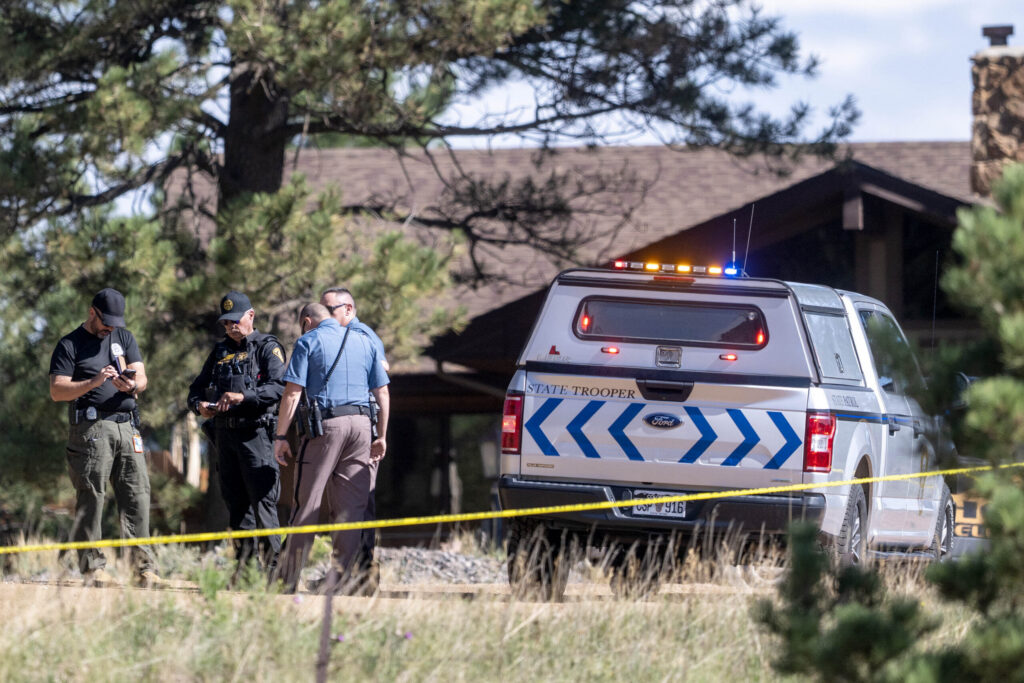
Two Colorado State Patrol troopers were hospitalized, and a suspect is dead after a shooting during a traffic stop Tuesday. The initial incident happened at about 7:15 a.m., when a resident reported suspicious activity in the area near milepost 286...

Aurora moves forward with data center regulations
Kyla Pearce
kyla.pearce@gazette.com
Updated 6 hours ago
The Aurora City Council approved moving forward with two new regulations on data centers and directed staff to come back at the next study session with others. At a council meeting in early August, council members directed city management to...

Aurora City Council considers stricter food truck regulations
Kyla Pearce
kyla.pearce@gazette.com
Updated 6 hours ago
The Aurora City Council is considering passing laws to limit the number of food trucks on properties in the city and how and when they operate. Councilmember Angela Lawson, who sponsored the ordinance, said she understands the importance of food...
Denver murder conviction reversed for incomplete self-defense instruction
Michael Karlik
michael.karlik@coloradopolitics.com
Updated 4 hours ago
Colorado’s second-highest court reversed a defendant’s murder conviction last week because a Denver judge gave an incomplete instruction to the jury about the man’s right to self-defense. Donald R. Gonzales and Gary McLaughlin met up in a Capitol Hill parking...
Colorado lawmaker, House leaders named in workplace-retaliation lawsuit
Marianne Goodland
marianne.goodland@coloradopolitics.com
Updated 7 hours ago
A former legislative aide has filed a lawsuit alleging she was mistreated, illegally directed to perform campaign work and harmed by a House leadership structure she charged was fragmented, politicized and ineffective at protecting employees. The lawsuit, filed by Jennifer...
Secret Service confirms awareness of Iranian state media video threatening Barron Trump’s life
The Associated Press
the-associated-press@coloradopolitics.com
Updated 12 hours ago
WASHINGTON (AP) — The U.S. Secret Service has confirmed it is aware that Iranian state media has aired a video that appears to threaten the life of Barron Trump, President Donald Trump’s youngest son. “The U.S. Secret Service is aware...

Federal judge hears arguments about Colorado’s 3-day gun purchase waiting period
Michael Karlik
michael.karlik@coloradopolitics.com
Updated 11 hours ago
A federal judge heard arguments on Monday about the constitutionality of a 2023 Colorado law that generally imposes a three-day waiting period on firearm purchases after the initiation of a background check. The test that the U.S. Supreme Court created...

Denver auditor finds oversight failures in $175.6M 16th Street project
Nico Brambila
nico.brambila@denvergazette.com
Updated 6 hours ago
Surprise historic sewer discovery delayed completion a year, cost $18M The Denver Auditor recently found significant oversight and contracting problems with the $175.6 million 16th Street Improvement Project, including an $18 million contract increase and a nearly one-year extension that...
PREV
PREVIOUS

Scott Tipton qualifies for GOP primary ballot by petition in bid for 6th term
Republican U.S. Rep. Scott Tipton has qualified for the primary ballot in Colorado’s 3rd Congressional District after submitting a sufficient number of valid signatures on his nominating petitions, the Colorado Secretary of State’s Office said. Tipton, who is seeking a sixth term representing the sprawling district, is facing a primary challenge from Lauren Boebert, the […]

10th Circuit dismisses case challenging 'unreasonable' traffic stop, edited video
The U.S. Court of Appeals for the 10th Circuit on Monday denied a man’s claim that he was subjected to an unreasonably long traffic stop, and that a trial court’s use of edited police camera footage should have been inadmissible. A traffic stop involving Richard Thornton lasted 85 minutes, with a drug-detection dog finding 45 […]