

Governor’s budget office directs state agencies to pare millions from last 3 months of 2019-20 budgets

The Governor’s Office of State Planning and Budgeting has directed most state agencies to pare more than $43 million in general and cash funds from their 2019-20 budgets. But that’s only the start – the budget office warns that revenue reductions may continue for the next three years.
The budget cuts will be a tall order for agencies that are less than three months from the end of the fiscal year. Most hard hit: the Department of Health Care Policy and Financing, which has been given a target of $20 million.
To put those numbers into perspective, that’s equivalent to an $80 million cut for an entire fiscal year.
Few agencies are spared. Human Services has a goal of $16.8 million; Public Safety, $1.2 million and Corrections, $800,000, at a time when the agency is struggling to find (and pay for) beds in the wake of the closure of the Cheyenne Mountain Re-entry Center, which closed for good on March 7.
Even the state Department of Public Health and Environment, the lead agency for dealing with COVID-19, isn’t spared: their cut is $217,842.
The OSPB March 30 memo directing agencies to cut their budgets.
Among the agencies exempted from cuts: agriculture, transportation, labor and employment and judicial, as well as the constitutional offices: treasury, secretary of state and law/attorney general.
The governor’s office has a $1.3 million target*.
The March 30 OSPB memo doesn’t stop at providing budget targets. It also discourages agencies from hiring, either for vacant or new positions, and instructs agencies to delay entering into new contracts unless those contracts “supply critical necessary work.” Contracts that are no longer essential should be terminated, the memo said.
Agencies also should hold off on implementing programs that came out of legislation in the 2018 and 2019 sessions, the memo said, and if an executive order is needed to accomplish that, ask for it.
Existing grants that have not been awarded or disbursed should be put on hold, as should capital or information technology projects.
“Once non-essential funds and commitments go out the door, resources are hard to reclaim,” the memo concludes. “Departments must act now to ensure the State is prepared to manage what may be a minimum of three years of revenue reductions.”
The one caveat is that revenue reductions must not impact emergency spending, limit the ability of an agency to meet “Wildly Important Goals” (a term used by the Polis administration to talk about key strategies) nor reduce customer service for “public-facing technology and processes.”
Several agencies contacted by Colorado Politics gave some indication of how they plan to manage those cuts, and whether they have any programs they intend to put on hold.
The Department of Human Services does have programs that could fit the criteria that seeks 2018 and 2019 programs to put on hold. Spokeswoman Madlynn Ruble said Friday that “we have many programs that fit the criteria, but at this time we don’t know of any that will be delayed. We do not have a fully agreed upon plan” at this time, she said. As to the budget cut, the agency has not yet come up with a plan on how to manage it.
Corrections spokeswoman Annie Skinner said in an email that the department “typically reverts a small percentage of the annual general fund budget each fiscal year due to underutilization in budget lines set for specific expenditures.” That should cover the cut, she explained. Corrections also does not have any programs tied to legislation from 2018 or 2019 that would meet the criteria “in a material way,” hence, they will meet their reduction obligations “using other resources.”
At Health Care Policy and Financing, the reductions will be covered by spending less on elective surgeries – already on hold due to executive orders from the governor – and dentistry, according to spokesman Marc Williams.
The directive comes in the wake of revenue forecasts on March 17 that said state revenues could be down more than $800 million from December 2019 projections. Numbers since then indicate a budget shortfall in 2020-21 of $2 billion to $3 billion, according to Speaker of the House KC Becker of Boulder, who spoke to reporters earlier Thursday.
“We can deal with the current budget year with reserves,” Becker said, but writing the 2020-21 budget will be “incredibly difficult … . Every week, the numbers get worse,” she said, and how short the state will be changes from week to week. “We have at least a $2 billion shortfall” heading into the next budget year. “Where we will find $2 billion to $3 billion in cuts, that’s what folks are working on right now.”
Correction: a previous version left out the target for the governor’s office.



How Melat Kiros pulled Democratic Party left in upset win over Diana DeGette
Ernest Luning
ernest.luning@coloradopolitics.com
Updated 6 hours ago
“It’s time for change,” Democratic congressional candidate Melat Kiros, a political newcomer and self-described democratic socialist, said in her campaign’s TV ad. On Tuesday night, primary voters in Denver agreed, giving the nomination to the 29-year-old, while at the same...
Colorado justices weigh ‘extreme’ proposals for civil jury trial requests
Michael Karlik
michael.karlik@coloradopolitics.com
Updated 6 hours ago
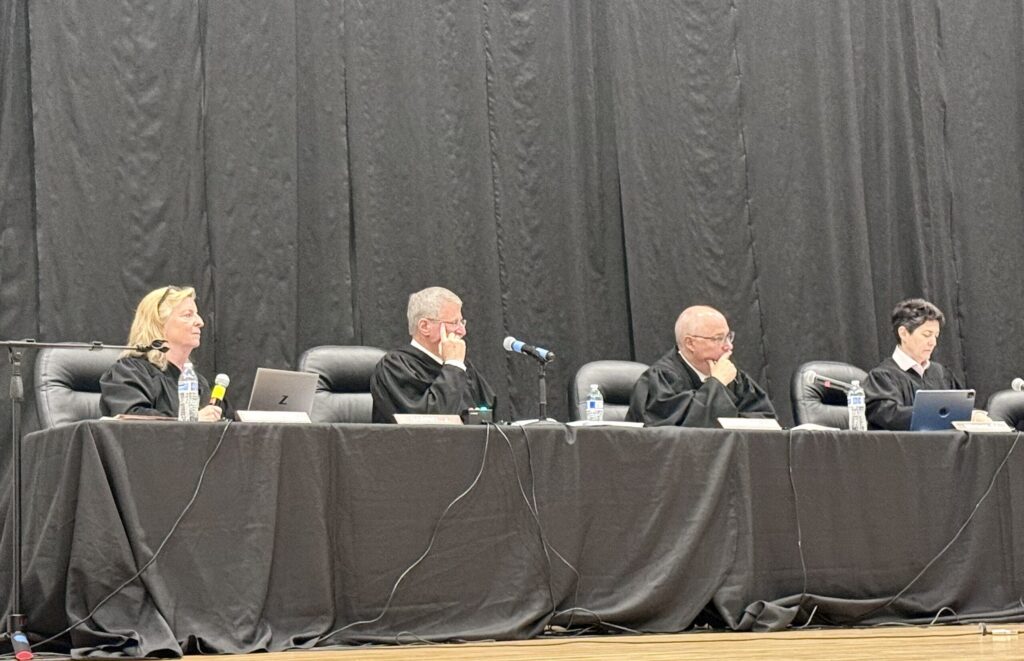
Members of the Colorado Supreme Court grappled last week with two vastly different proposals for evaluating when it is appropriate for a civil litigant to ask for a jury trial, as opposed to a bench trial before a judge. The...
Colorado justices weigh ‘extreme’ proposals for civil jury trial requests
Michael Karlik
michael.karlik@coloradopolitics.com
Updated 9 hours ago
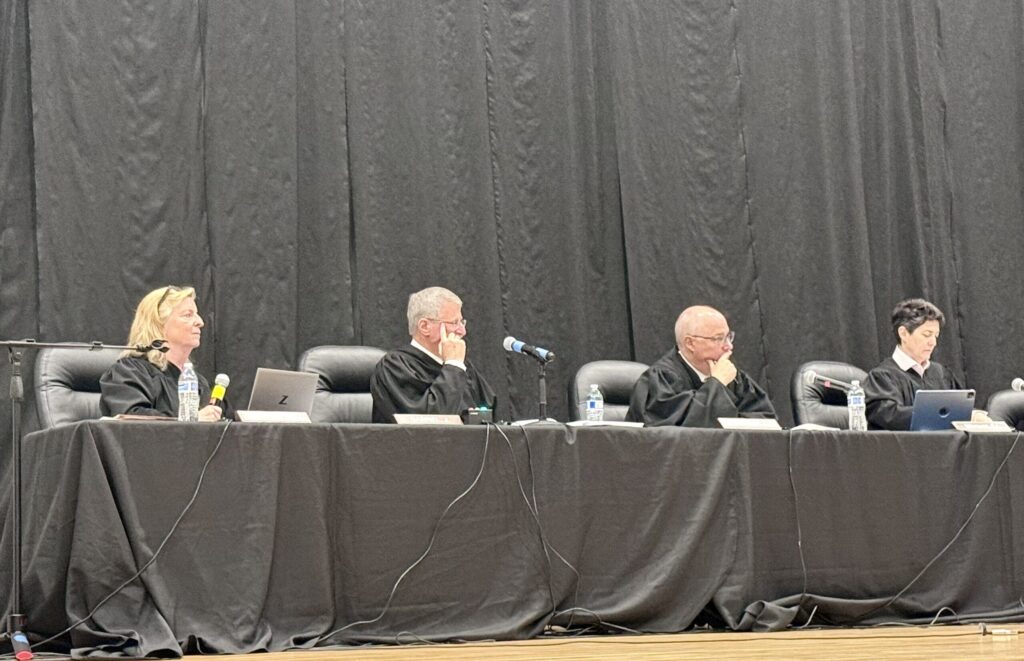
Members of the Colorado Supreme Court grappled last week with two vastly different proposals for evaluating when it is appropriate for a civil litigant to ask for a jury trial, as opposed to a bench trial before a judge. The...

Victor Marx’s lead sits outside of recount threshold in Republican race for Colorado governor
Luige DelPuerto
luige.delpuerto@gazette.com
Updated 8 hours ago
Ministry leader Victor Marx on Wednesday night overtook state Sen. Barb Kirkmeyer in the Republican primary for Colorado governor, securing enough votes that — for now — put the race beyond the mandatory recount threshold. The Republican primary race between Kirkmeyer...

Large Colorado counties hunker down to count ballots as Republican race for governor tightens
Marissa Ventrelli
marissa.ventrelli@coloradopolitics.com
Updated 10 hours ago
Nearly 24 hours after ballot boxes closed for Colorado’s 2026 primary election, the Republican nominee for governor remained undecided as counties hunker down to tally more ballots. As of 3 p.m. Wednesday, several counties were still processing tens of thousands...
House dismissed for July 4 holiday amid SAVE America Act impasse
Hailey Bullis
hailey-bullis@coloradopolitics.com
Updated 13 hours ago
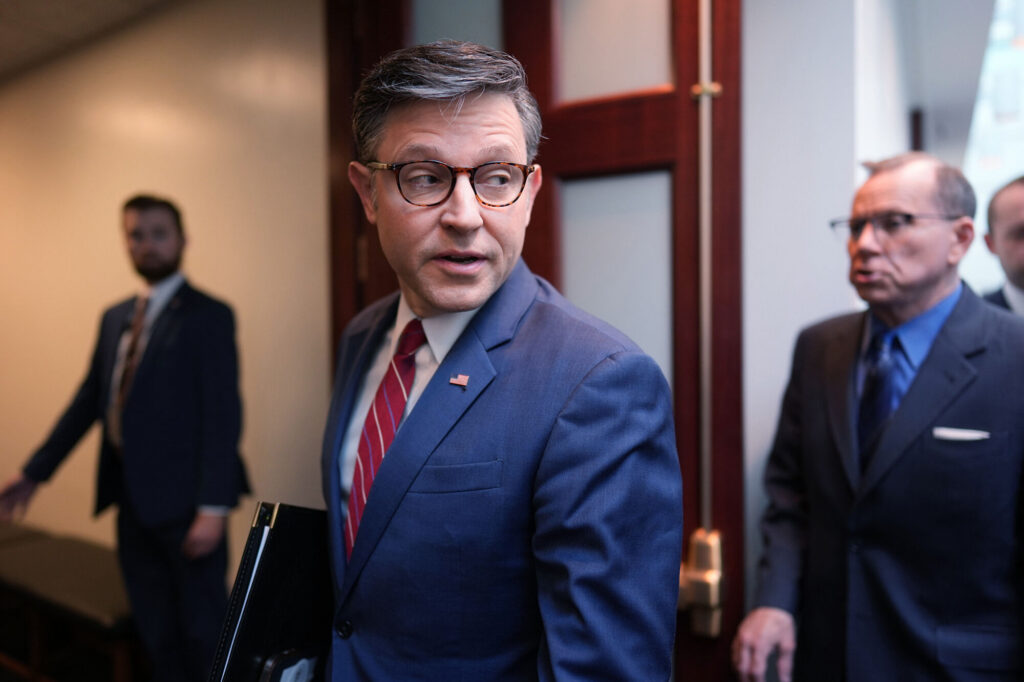
House GOP leadership is sending members home early for the weeklong July 4 recess, after a GOP blockade shut down the floor for the second week in a row. Speaker Mike Johnson (R-LA) canceled scheduled votes over his inability to...
Clarence Thomas shreds ruling that ‘devalues’ citizenship in Supreme Court dissent
Jack Birle
jack-birle@coloradopolitics.com
Updated 13 hours ago
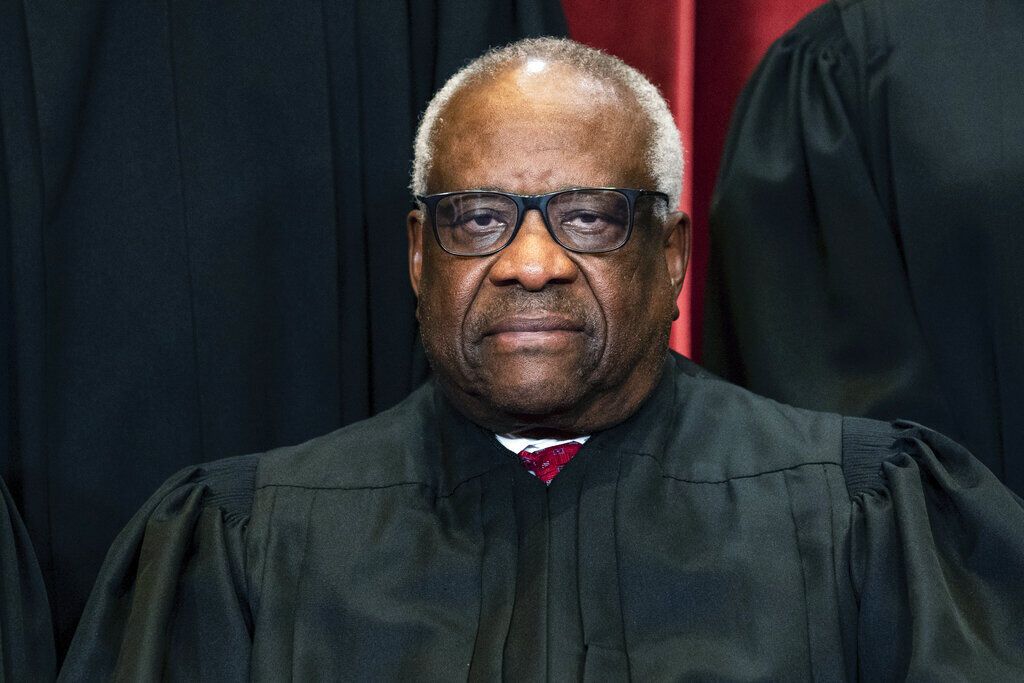
Justice Clarence Thomas shredded the Supreme Court‘s ruling striking down President Donald Trump‘s birthright citizenship order on Tuesday, accusing the majority ruling of using an “alternative history” of the 14th Amendment and expressing dismay over how it “devalues” citizenship. The...

Trump made over $1 billion from crypto businesses in 2025, filing shows
Molly Parks
molly.parks@washingtonexaminer.com
Updated 14 hours ago
President Donald Trump raked in over $1 billion from his cryptocurrency dealings in 2025, according to a recent Office of Government Ethics filing. The 937-page filing shows his employment assets and income, including the hundreds of millions of dollars he...

GOP poised to flex midterm cash advantage after Supreme Court win
Ramsey Touchberry
ramsey-touchberry@coloradopolitics.com
Updated 14 hours ago
Republican Party campaign committees are gearing up to pump tens of millions of dollars into campaigns across the country as they try to protect narrow House and Senate majorities. Thanks to the Supreme Court, they can now coordinate with candidates...
Colorado’s Diana DeGette concedes defeat to Democratic socialist Melat Kiros
Ernest Luning
ernest.luning@coloradopolitics.com
Updated 14 hours ago
U.S. Rep. Diana DeGette — the dean of Colorado’s congressional delegation — conceded defeat in the race for the 1st Congressional District a day after losing to Democrat rival Melat Kiros in their party’s primary contest. “I want to congratulate...
PREV
PREVIOUS

Gardner calls for investigation of inoperative ventilators
One day after The New York Times reported that more than 2,100 ventilators from the government’s national stockpile were inoperative due to a lapsed federal contract, U.S. Sen. Cory Gardner demanded an investigation into the maintenance history of the devices. “How long did the ventilators go without maintenance compared to industry standards?” Gardner wrote in […]

Pitkin County files suit against JUUL, Altria for alleged youth marketing
Pitkin County joined Denver on Wednesday in filing a federal lawsuit against vaping company JUUL Labs and its owner, Altria Group, Inc., for their marketing to youth, which the county alleges was drawn directly from the tactics of tobacco companies from generations past. In 2013, only 20% of teenagers had tried electronic cigarettes in the […]