

RTD to receive $232 million through federal relief as workers demand protective equipment

The Regional Transportation District will receive more than $232 million through the CARES Act, the $2.2 trillion relief package Congress passed amid a wave of COVID-19-related unemployment, while its transit union is demanding that the agency purchase protective equipment for operators.
“Since the coronavirus pandemic began, RTD bus drivers have put themselves in harm’s way to get the essential workers to the front lines to fight this crisis, often with little or no protection from the virus,” said Yvette Trujillo, international vice president at the Amalgamated Transit Union.
The ATU is requesting that RTD use its portion of the $25 billion awarded to transit systems nationwide to institute rear-door entry and suspend fare collection, as well as provide gloves and masks to bus operators. RTD Director Shontel Lewis, District B, echoed the union’s position and created an online petition asking Gov. Jared Polis to mandate that RTD change its protocols.
“The average age of RTD Rail Operators is 47 and the average age of RTD Bus Operators is 51,” Lewis wrote. “While age alone may put rail and bus operators at risk, many of these employees also have underlying conditions that could put them at greater risk for a severe COVID-19 disease course if they were to fall ill.”
Emails and text messages to multiple members of the RTD board seeking comment went unanswered.
Christine Jaquez, the agency’s director of public relations, said that N95 respirators were challenging to order because there is a large demand from hospitals and other frontline responders. RTD does, however, have a supply of 7,000 boxes of sanitary gloves.
“It is absolutely our priority and definitely part of our core values to make sure that we’re upholding our standards of safety, so we’re doing everything we can to provide material that ensures” personal protection, she said.
In the meantime, the agency is asking employees to sanitize and reuse masks if they already have them. RTD has hand sanitizer on order from a Colorado Springs company, and has picked up 1,000 spray hand sanitizers.
“It was difficult, as you might imagine, to get hand sanitizer because that’s in high demand. And our operators need that because they don’t always have access to a sink and water to wash their hands,” Jaquez explained.
CPR reports that RTD has deemed as unfeasible the operational changes that ATU is calling for in light of the lack of protective equipment. Mike Meader, the chief safety officer, told RTD board members that it is easier for drivers to help disabled passengers through the front doors of buses, where the kneeling feature and wheelchair ramp are available.
“It really isn’t, from the perspective of public health, a major risk,” he said of the possibility of driver infections from passengers entering the vehicle. “It’s not even considered a medium to high risk from the transit operator perspective.”
Agencies in other cities have waived fares and instituted rear-door boarding. The latter practice predated the pandemic in some systems, although not all transit buses have two sets of doors. RTD reported that it has experienced a 70% drop in ridership due to the pandemic, which is similar to transit operators nationwide. Beginning on April 19, RTD will institute a weekend schedule through September.
Lewis, the RTD director, called on the agency to implement the service reductions immediately, empowering drivers to skip stops and refuse passengers if vehicles became too crowded to ensure safe distancing.
“If RTD is unable to comply by April 13, 2020, then we call on the State of Colorado to shut down RTD’s service,” she wrote.


Colorado Politics Calendar June 29-July 5
Rachael Wright, Special to Colorado Politics
rachael.wright@coloradopolitics.com
Updated 3 days ago
CoPo’s weekly political calendar will help you find political and public-policy events throughout Colorado. It includes candidate and issue campaign events, public policy meetings, court hearings, state and local party conventions, assemblies, debates, rallies, parades, speaking engagements, traveling dignitary appearances,...

Gov. Lamm’s GOP challenger gives insights into his campaign | A LOOK BACK
Rachael Wright, Special to Colorado Politics
rachael.wright@coloradopolitics.com
Updated 3 days ago
Forty-five years ago this week: “I see Gov. (Richard) Lamm is fairly popular in general,” said gubernatorial candidate and state Sen. Bill Hughes, R-Colorado Springs. “ … And he’ll be hard to beat.” Hughes was on a whirlwind campaign trail...

Giving credit to Polis where credit is due | SONDERMANN
Eric Sondermann
eric-sondermann@coloradopolitics.com
Updated 3 days ago
It is an understatement to suggest that Gov. Jared Polis has had a tough couple of months. The bloom was already off the rose and Coloradans were paying far more attention to the choice of his replacement than they were...

Bennet, Hickenlooper to vote against Trump’s 10th Circuit nominee from Colorado
Michael Karlik
michael.karlik@coloradopolitics.com
Updated 12 hours ago
Colorado’s two Democratic senators will not vote to confirm President Donald Trump’s nominee to a vacancy on the Denver-based federal appeals court. Trump has selected U.S. District Court Chief Judge Daniel D. Domenico, who he appointed as a federal trial...
Who’s spending in Colorado to get your vote?
Marianne Goodland
marianne.goodland@coloradopolitics.com
Updated 9 hours ago
Groups that raise unlimited amounts of money have spent about $20 million in May and June to try and influence Colorado voters’ choices in the upcoming June 30 primaries. By law, these groups cannot coordinate with the candidates they support....
U.S. government declines to oppose multiple challenges to immigration detention in Colorado
Michael Karlik
michael.karlik@coloradopolitics.com
Updated 12 hours ago
Multiple federal judges in Colorado granted petitions from people challenging the lawfulness of their immigration detention this week after the government took the unusual step of declining to submit arguments in opposition. Colorado’s federal trial court is facing a flood of...
Tina Peters tells supporters to ‘stand up and fight back’ at Castle Rock event
Marissa Ventrelli
marissa.ventrelli@coloradopolitics.com
Updated 11 hours ago
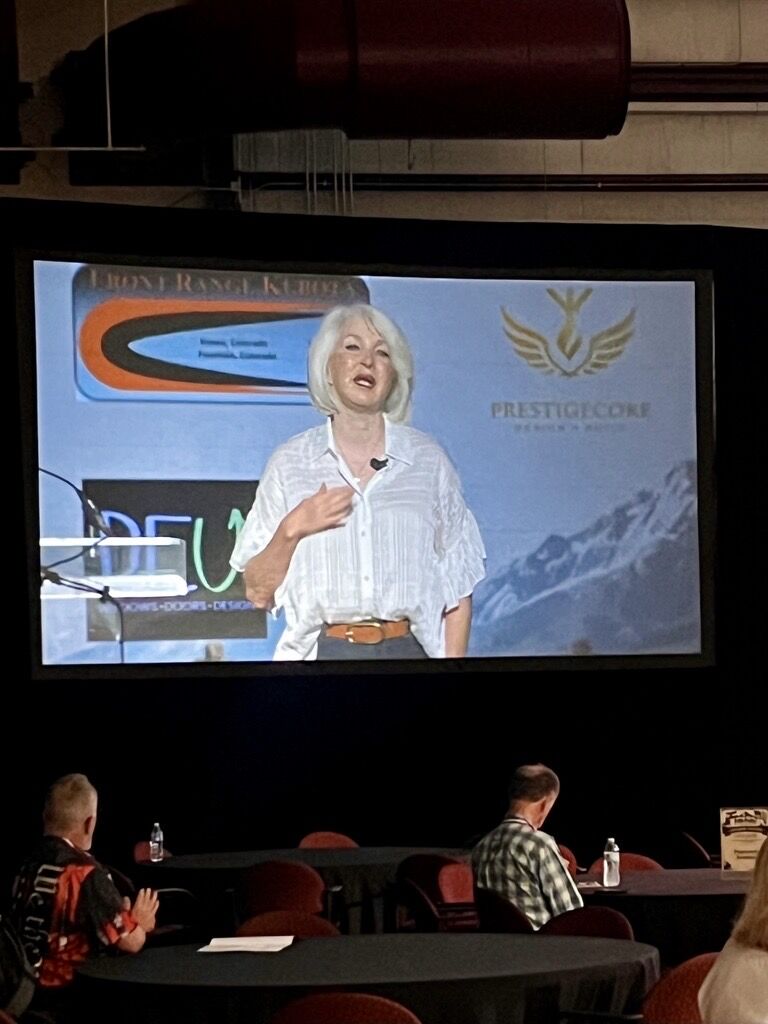
Tina Peters, the former Mesa County clerk recently released from prison, warned supporters that what happened to her could happen to them, too, if they did not “stand up and fight back” at an event at the Douglas County Fairgrounds....

Iran strikes cargo ship in Strait of Hormuz, endangering Trump’s peace
Christian Datoc
christian-datoc@coloradopolitics.com
Updated 18 hours ago
Iran attacked a cargo ship traveling through the Strait of Hormuz on Thursday, possibly upending President Donald Trump‘s diplomatic end to the war with Iran. A U.S. official confirmed to the Washington Examiner that the Islamic Revolutionary Guard Corps “struck...

Senate GOP tries to mend fences with Trump after heated lunch
David Sivak
david-sivak@coloradopolitics.com
Updated 16 hours ago
Senate Republicans are trying to turn the page on a heated lunch with President Donald Trump that brought weeks of tensions to a new high-water mark. In a symbolic gesture, Senate Republicans took another vote on the Iran war Wednesday...
Colorado justices discuss solution to confusion from prior criminal ruling
Michael Karlik
michael.karlik@coloradopolitics.com
Updated 10 hours ago
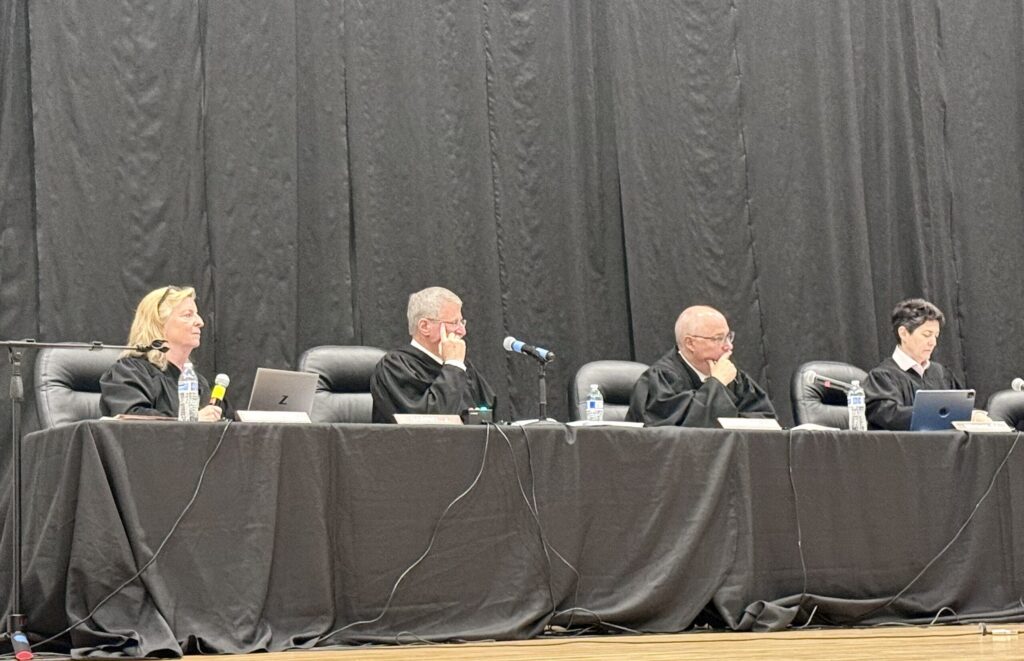
The Colorado Supreme Court pondered the fallout on Tuesday from its nearly six-year-old decision interpreting the state’s impaired driving laws, with the justices now addressing how defendants affected by the legal change must seek postconviction relief. In contrast to other...
PREV
PREVIOUS

Former professor files suit against CCD alleging sexual harassment, retaliation
A former professor at the Community College of Denver filed a lawsuit against the school on Monday alleging that she was the victim of sexual harassment, which led to retaliation once she complained about it. Jacqueline “Jackie” Carpio started work in 2004 at CCD as a business technology instructor. In summer 2017, she met with […]

Homeless advocacy groups file lawsuit against state urging better shelter
Calling the traditional setup of homeless shelters inadequate and dangerous during a pandemic, several groups filed a lawsuit in state court asking the Department of Public Health and Environment to provide safe and sanitary housing to Colorado’s homeless community. “Plaintiffs take pains here not to cast a negative light on the efforts of those managing […]