

Colorado General Assembly gavels in, gavels out
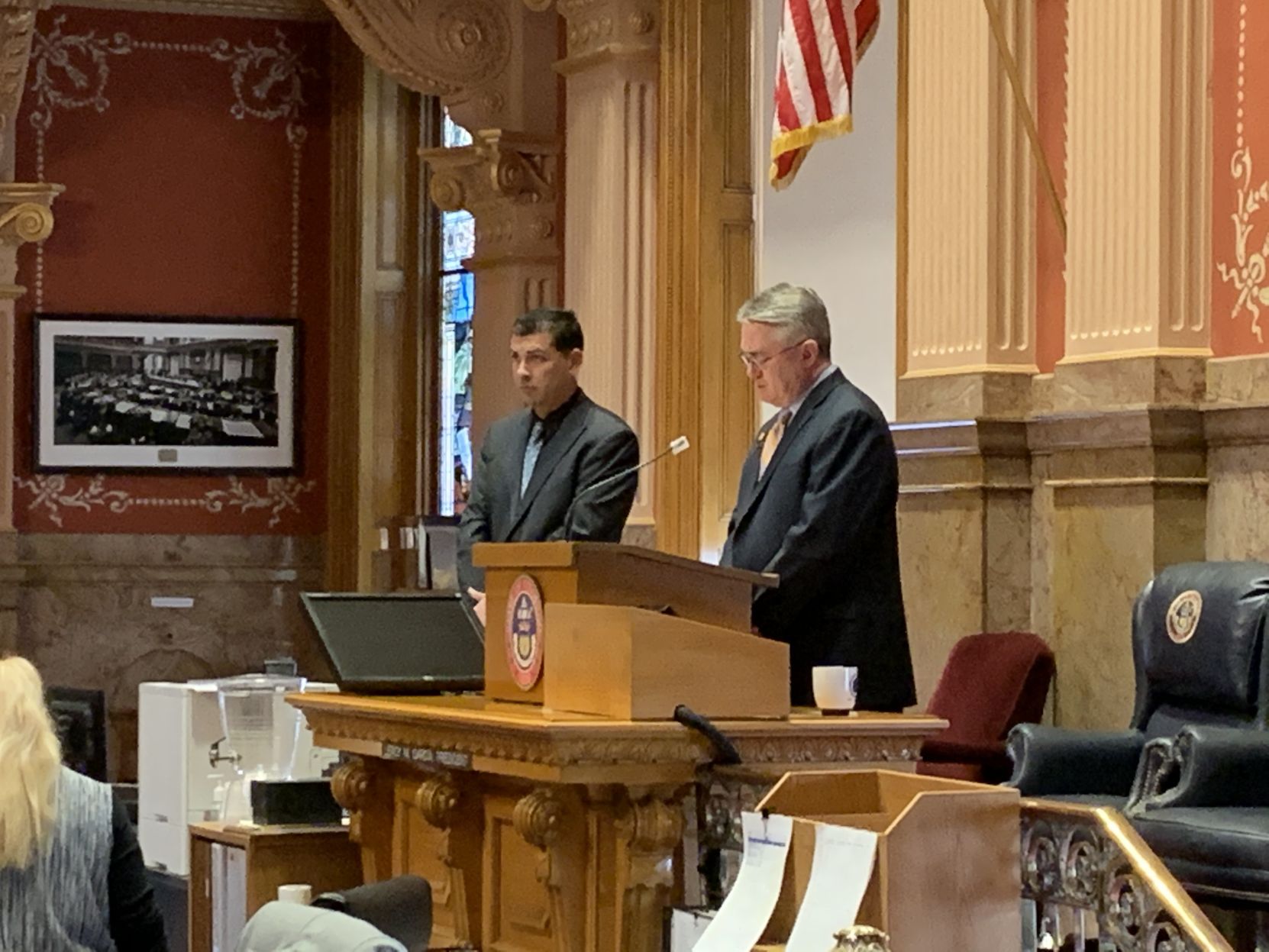
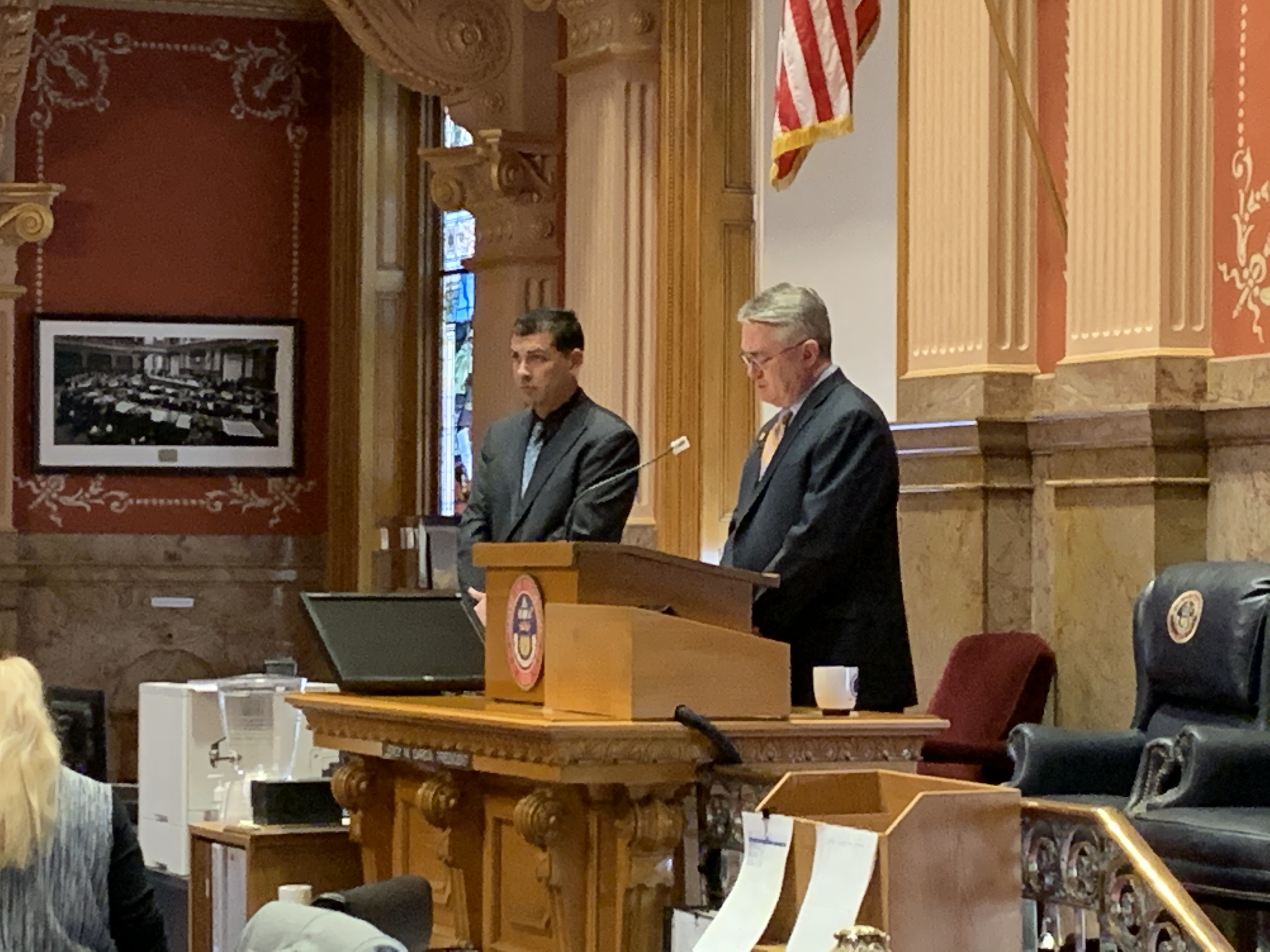
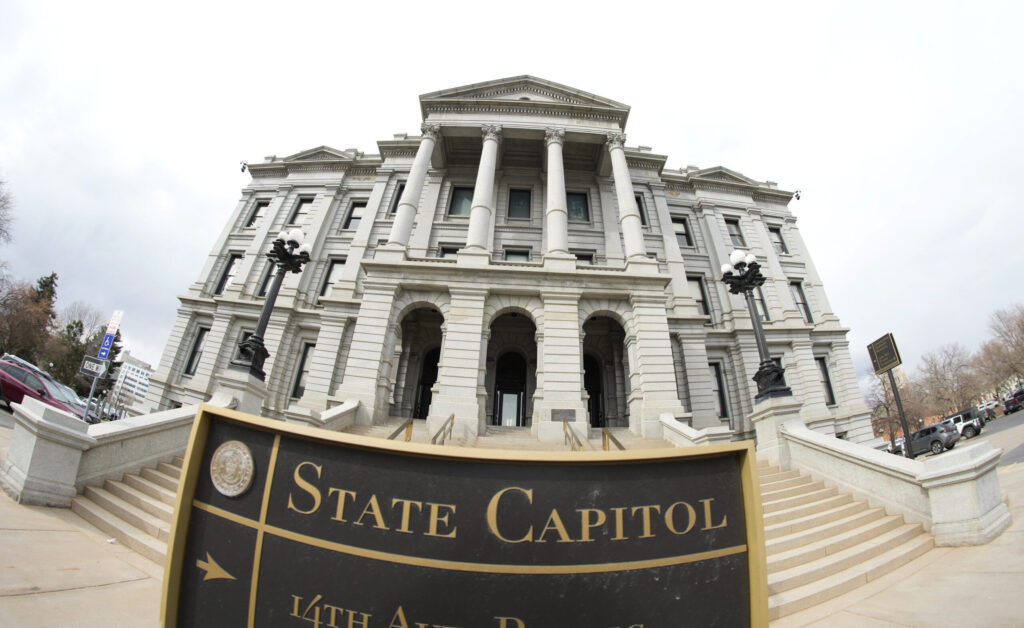
Senate President Leroy Garcia of Pueblo presided over a chamber Monday morning where something happened that he said has never happened before in state history: a lack of a quorum to conduct its business.
Out of the 35 members, only 13 showed up, but that was by design. The lack of a quorum meant Garcia could dismiss the Senate for a few more days. The rules say no more than three days, but Garcia told Colorado Politics he believes there may be some flexibility in that.
“We should be listening to health care officials. We find ourselves in an unprecedented time… . We want to make sure we’re not keeping people on a yo-yo,” he said, adding that as soon as it’s safe to be there, they’ll come back.
Of those who showed up in the Senate, three were Democrats, including Garcia and Senate Majority Leader Steve Fenberg of Boulder. The other 10 were Republicans, and some came a pretty long way to be at the Capitol for a very short session on Monday. They came from Sterling, Montrose, Fountain, Greeley, Colorado Springs and Loveland.
In the House, it was much of the same. Out of the eight House members, two, including House Majority Leader Alec Garnett of Denver, were Democrats. The other eight came from places as far away as Loveland and Colorado Springs.
Garnett gaveled in the House, declared a lack of a quorum, and gaveled back out for three days. That adjournment will take them until Thursday.
Originally, legislative leaders toyed with the idea of adjourning until April 13, which is just after the end of the first 30-day state of emergency declared by Gov. Jared Polis.
Minority Leader Chris Holbert of Parker told Colorado Politics that there’s two reasons for them to hold off on a recess until the 13th or beyond that.
The first is the decision from the Colorado Supreme Court on whether the General Assembly’s 120-day calendar is consecutive days, or separate working days under a declared state of emergency. Both Garcia and Garnett said they’re hopeful that they’ll have an answer on that this week.
“If we don’t have that guidance, [the remainder of the session] could look significantly different,” Garcia said. The decision could result in changes to how the General Assembly pursues policy, not just on relief from the outbreak but on other legislative priorities , he said.
But more pressing that that, perhaps, is the potential that lawmakers may have to be nimble on their feet in the coming weeks as money from the $2 trillion federal COVID-19 relief package comes to Colorado.
Holbert said the state could be in for as much as $2.2 billion, and there’s a lot of questions around that money as it applies to legislative work. Is that money that would be applied in the 2019-20 fiscal year, or would it be counted in the following fiscal year?
The larger issue is likely to be that any money from that package spent by the state has to be appropriated by the General Assembly, Holbert pointed out. That means lawmakers have to be ready to come back pretty quickly once the amount of money and where it’s going becomes clear.
“The legislature serves the role as appropriators,” Holbert said, “and that contributed to the current format of adjourning day-to-day or until Thursday… Being away until April 13 was not as good as an idea.”
Once they know what the state itself will receive, “it’s a good reason to stay closer than not,” Holbert said.
Several Republican legislators in both the House and Senate told Colorado Politics that they were elected by the people to do a job, and their job was to be at the Capitol on Monday, even if only for a little while.
Sen. Jerry Sonnenberg of Sterling said that if “I don’t show up today on behalf of my constituents, how can I tell all those people who are in essential jobs, [like] prison workers, ‘you have to go to work but I don’t?’
“I’ll come up here, represent them and take the risk, just like they’re taking the risk. Its important, the work they do. It’s important that we figure out to handle this.”

Appeals court finds no requirement for different judge to handle attorney-client conflict hearings
Michael Karlik
michael.karlik@coloradopolitics.com
Updated 26 minutes ago
Colorado’s second-highest court rejected a defendant’s argument on Thursday that a judge improperly heard about a potential conflict between himself and his lawyer right before sentencing, and the man’s reaction could have “tainted” the sentencing decision. In September 2023, Anthony...
The influencers? Some Colorado appeals judges outpace colleagues in setting legal precedent
Michael Karlik
michael.karlik@coloradopolitics.com
Updated 12 minutes ago
A handful of judges on Colorado’s second-highest court are producing substantially more precedent-setting opinions than their colleagues, which create binding interpretations of the law that reach beyond individual cases. The Court of Appeals issues approximately 1,700 opinions each year. A...

DeGette challenger Melat Kiros trounces 15-term Democratic incumbent in Denver delegate vote
Ernest Luning
ernest.luning@coloradopolitics.com
Updated 23 hours ago
The 28-year-old, first-time candidate challenging Democratic U.S. Rep. Diana DeGette in this year’s primary soundly defeated the 15-term incumbent in a delegate preference poll conducted Saturday at a county party assembly in Denver. Melat Kiros, the daughter of Ethiopian immigrants...

Army veterans Jessica Killin, Joe Reagan qualify for Democratic primary ballot in Colorado’s 5th CD
Ernest Luning
ernest.luning@coloradopolitics.com
Updated 20 hours ago
Democratic congressional candidates Jessica Killin and Joe Reagan secured spots Saturday in Colorado’s June primary to decide who will run against Republican U.S. Rep. Jeff Crank in a district that’s only ever sent GOP lawmakers to Congress. The two Democrats,...

Who has the power to declare war? | Cronin and Loevy
Tom Cronin Bob Loevy
tom-cronin-bob-loevy@coloradopolitics.com
Updated 2 days ago
Our constitutional framers boldly and ambitiously granted Congress the power to declare war yet granted the executive the responsibility, after war is declared, to supervise war as the commander-in-chief. That worked well until the Cold War began. The U.S. has been...

Latest death brings down wolves’ survival rate to 44% in Colorado
Marianne Goodland
marianne.goodland@coloradopolitics.com
Updated 2 days ago
The female wolf of the mating pair for the King Mountain pack has died, bringing total fatalities to 14 out of the 25 animals reintroduced in Colorado. The wolf, identified as No. 2310, was among the 10 wolves brought to...

The delicate, ever-changing dance between politics and religion | SONDERMANN
By Eric Sondermann
by-eric-sondermann@coloradopolitics.com
Updated 2 days ago
The dance, really a marathon that brings to mind the classic movie “They Shoot Horses, Don’t They?”, has been going on as long as there have been governments and organized religion. That is to say that this delicate tango has...
Roasts, get yer roasts, here: Capitol M | Week of March 14, 2026
Marianne Goodland
marianne.goodland@coloradopolitics.com
Updated 5 days ago
The lighter side of the Capitol, especially in the past week Apparently, the pending and eventual switch to daylight stupid time has put people in some pretty funny moods. And thank goodness! On March 4, the Senate approved the appointments...
Polly Baca elected to DNC | A LOOK BACK
Rachael Wright, Special to Colorado Politics
rachael.wright@coloradopolitics.com
Updated 5 days ago
Forty-Five Years Ago This Week: After her loss to Republican U.S. Rep. Hank Brown the previous year in the race for the 4th Congressional District, state. Sen Polly Baca-Barragan, D-Thortnon, was elected as one of the three vice-chairs of the...

Colorado Politics Calendar Mar. 16-22
Rachael Wright, Special to Colorado Politics
rachael.wright@coloradopolitics.com
Updated 5 days ago
CoPo’s weekly political calendar will help you find political and public-policy events throughout Colorado. It includes candidate and issue campaign events, public policy meetings, court hearings, state and local party conventions, assemblies, debates, rallies, parades, speaking engagements, traveling dignitary appearances,...
PREV
PREVIOUS

Gun safety group decries labeling of firearms industry as critical infrastructure
After an agency of the U.S. Department of Homeland Security deemed gun manufacturers, retailers and operators of shooting ranges as “critical infrastructure” amid the COVID-19 pandemic, a national gun safety group is pushing back against the designation. “It is false and irresponsible for gun store owners or industry lobbyists to claim that gun dealers are […]

Title Board to consider 11 proposals related to economic impacts, enterprises, preschool
On Wednesday, the Title Board will consider whether to set ballot titles for 11 proposed initiatives, which include proposals to dictate how economic impacts are calculated, funnel cigarette and tobacco tax revenue to preschools, and guarantee consumers’ access to natural gas. The three-member panel will meet remotely due to distancing requirements during the COVID-19 pandemic. […]