

Stay-at-home order likely passes legal muster, former Colo. solicitor general says

The statewide stay-at-home order that is in effect until April 11 would likely survive a legal challenge based on the emergency it is designed to address, former Colorado solicitor general Fred Yarger said on Thursday.
Yarger, speaking on a webinar hosted by Colorado Christian University’s conservative-leaning Centennial Institute, explained that Gov. Jared Polis relied on statutory authority and the Constitution’s delegation of powers to the states in issuing his order, and that courts are reluctant to second-guess restrictions on people’s rights to gather during emergencies.
“We’ve already abridged the rights of people to assemble for religious purposes and clearly we’re abridging the right to gather and speak,” Yarger said. However, in his opinion, “the courts are going to be okay with that for as long as the emergency is real.”
He added that there is not much case law on the subject, given that emergency declarations typically extend to natural disasters like floods and fires instead of pandemics.
In describing the different authorities vested in the state and national governments, Yarger said that only states are empowered to limit travel and impose quarantines throughout their populations. The national government through its enumerated powers can only impose limits on foreign and interstate travel. However, there is an important role that federal officials can play in a pandemic, and that is to marshal resources.
“Folks tend to think that the federal government is extremely powerful in our system, and it is. It’s wealthy. It has a lot of resources to throw around,” he said. “The big thing the federal government can do is spend money.”
In Yarger’s reading of the order, the intent is to urge voluntary compliance, rather than mobilize local law enforcement to arrest violators. In response to a question from Centennial Institute director Jeff Hunt about how an “unelected bureaucrat” in the Denver-area Tri-County Health Department could impose a local-level stay-at-home order, Yarger explained that local and state governments share powers in some policy areas. Although the governor’s order allowed localities to take additional measures, Tri-County rescinded its order on Thursday to ensure consistency across the state.
He added that he doubts the federal government will in turn produce a nationwide stay-at-home directive, noting that “it’s questionable whether they have that authority.”
Hunt closed the webinar by predicting that there will be lawsuits over what businesses are considered “essential” under the order because the government was “picking winners and losers.” Yarger in turn felt that lawmakers would have “a lot to think about when things get back to normal” about how to handle future crisis responses.


Colorado’s Western Slope magistrate judges describe unique role in federal judiciary
Michael Karlik
michael.karlik@coloradopolitics.com
Updated 35 minutes ago
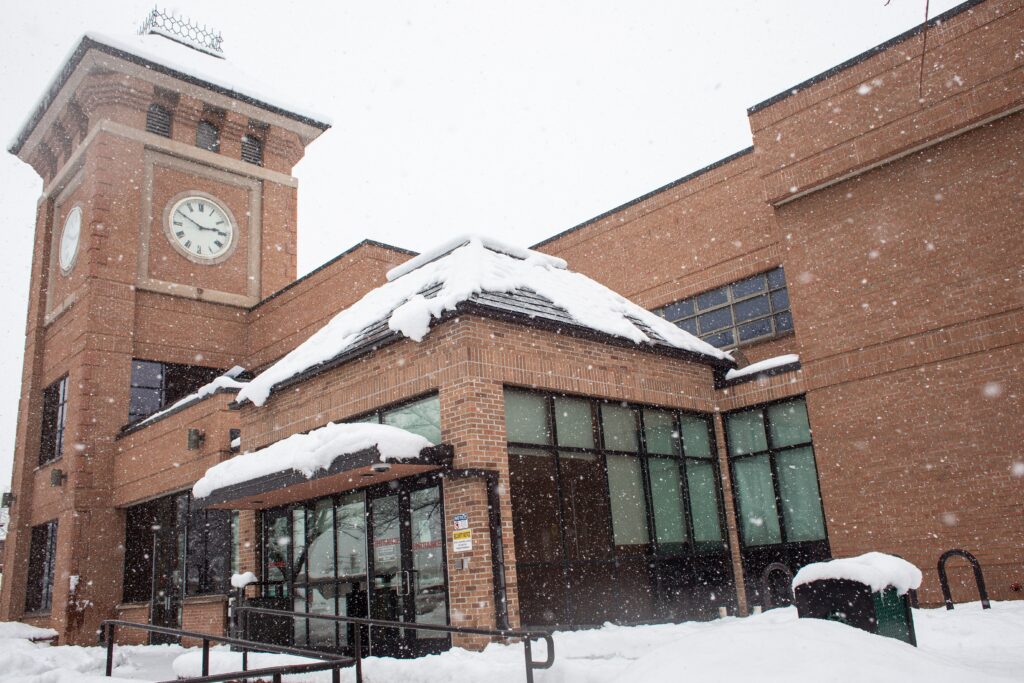
Two of Colorado’s federal judges stationed on the Western Slope spoke to lawyers on Wednesday about their unique roles, the ways their workloads differ, and the need for more criminal defense lawyers to take cases outside the Front Range. “Here...
‘Ticked off’: Third-party US Senate candidate in Colorado launches $1.3 million TV ad campaign
Ernest Luning
ernest.luning@coloradopolitics.com
Updated 3 hours ago
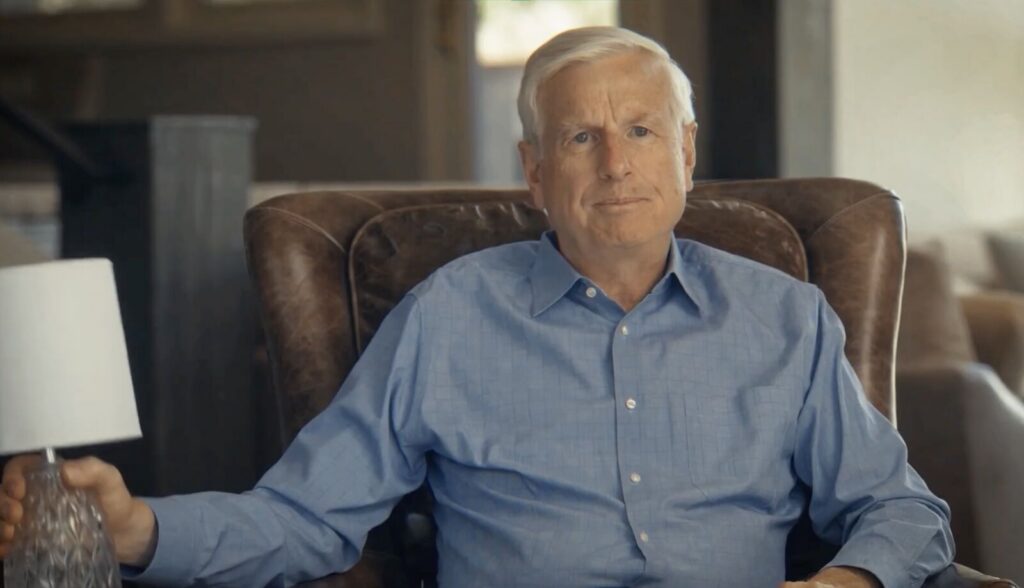
Bob Chew, the Forward Party nominee for U.S. Senate in Colorado, sends household objects flying in a TV ad set to run statewide through September, backed by $1.3 million across multiple platforms, his campaign told Colorado Politics. Meant to demonstrate...
Federal judge rules that request for bond hearing not necessary to challenge immigration detention
Michael Karlik
michael.karlik@coloradopolitics.com
Updated 36 minutes ago
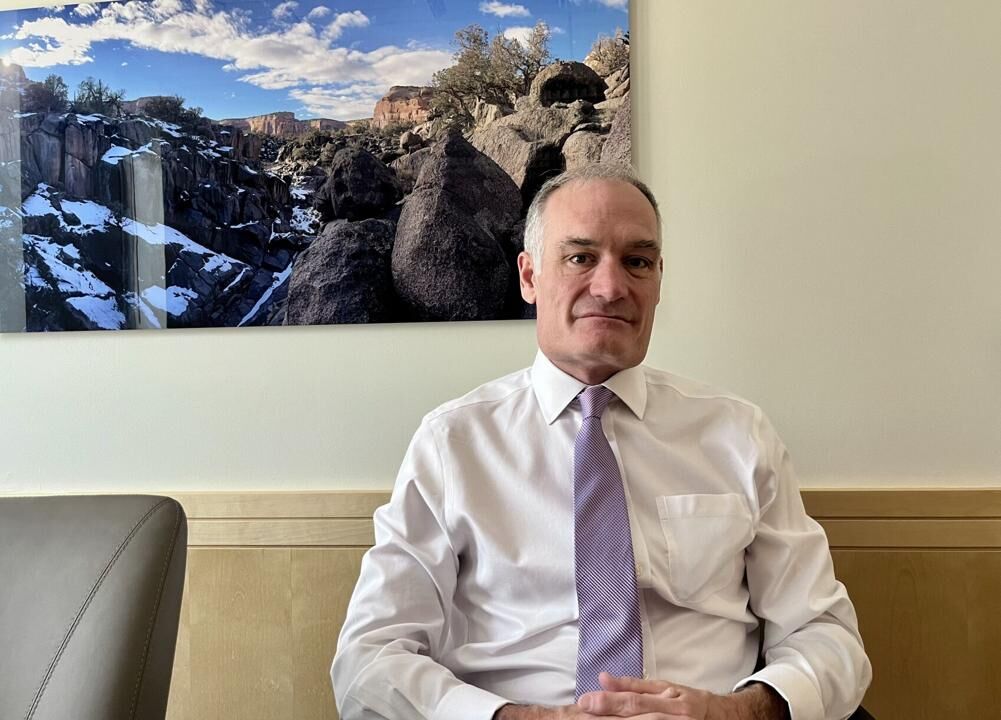
A federal judge in Colorado ruled last week that it is not mandatory for a person to seek a bond hearing with an immigration judge before they challenge the lawfulness of their detention in federal court. For the past year,...

Colorado shifts vaccine authority to state as Trump administration revises childhood framework
Marissa Ventrelli
marissa.ventrelli@coloradopolitics.com
Updated 2 hours ago
As the Trump administration rolls out a revised childhood vaccine framework, Colorado’s law allowing the state to set its own immunization schedule has now taken effect. Issued Monday, President Donald Trump’s executive order separates childhood and adolescent vaccines into three...
Boulder Valley School District introduces new policies following antisemitism lawsuit
Marissa Ventrelli
marissa.ventrelli@coloradopolitics.com
Updated 3 hours ago
The chief of Boulder Valley School unveiled new policies for the 2026-2027 school year following a lawsuit filed on behalf of a student alleging antisemitic harassment. In June, the Anti-Defamation League filed a federal civil rights complaint against the school...

Golden city manager fired after ‘racist incident’ at fire station
Matt Kyle
matt.kyle@denvergazette.com
Updated 15 minutes ago
The Golden City Council on Tuesday voted to terminate City Manager Scott Vargo following a reported “racist incident” at a city fire station. The alleged incident happened in March. Reportedly, a “Snoop on a Stoop” doll, which resembles an “Elf...

Colorado NRA chapter seeks injunction against new gun‑training requirement
Marissa Ventrelli
marissa.ventrelli@coloradopolitics.com
Updated 2 hours ago
The Colorado chapter of the National Rifle Association is seeking an injunction to stop the state from enforcing a new law that took effect earlier this month. The new law requires anyone buying or selling certain firearms to first complete...

Trump’s approval rating sinks to new low at 33%
Molly Parks
molly.parks@washingtonexaminer.com
Updated 10 hours ago
President Donald Trump’s approval rating has reached a new low, sitting at 33% approval and 62% disapproval, according to the latest YouGov/Economist poll. The one-third approval standing in early August is the lowest net job approval Trump has seen across...
Denver moves to dismiss Trump challenge to ‘assault-style’ weapons ban
Deborah Grigsby
deborah.smith@denvergazette.com
Updated 2 hours ago
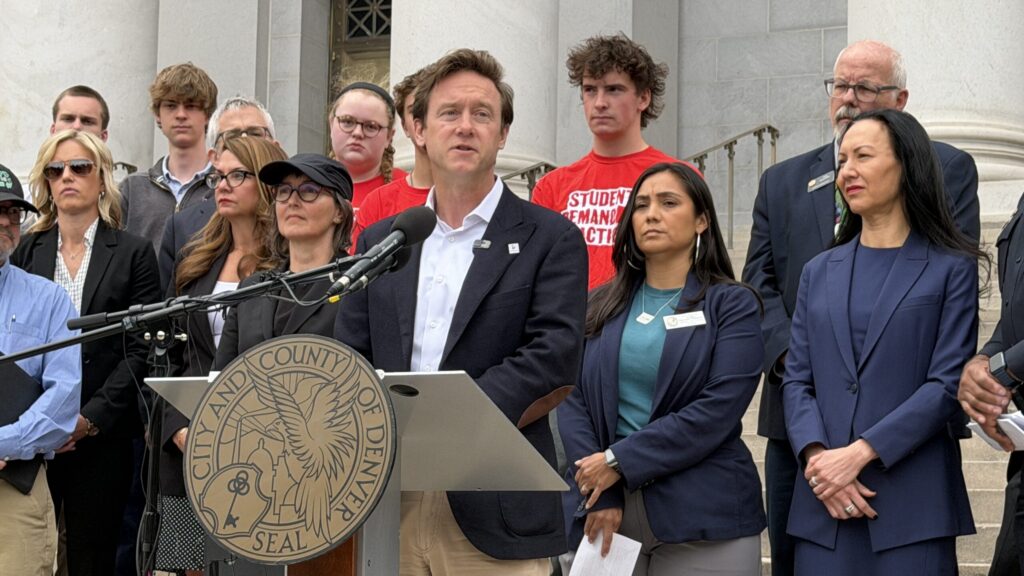
Denver has filed a motion to dismiss a lawsuit brought by the Trump administration challenging the city’s ban on “assault-style” weapons and magazines exceeding a 15-round capacity. The U.S. Department of Justice filed a suit in federal court in May,...
Denver City Council committee looks to ease affordable housing metrics
Deborah Grigsby
deborah.smith@denvergazette.com
Updated 1 day ago
Denver’s Department of Housing Stability is asking the city to rewrite some of the key performance metrics in the city’s agreement with the Denver Housing Authority to deliver affordable housing. HOST is asking the city to amend parts of a...
PREV
PREVIOUS

Corrections department announces protocol changes during pandemic
In response to a March 25 executive order from Gov. Jared Polis, the Colorado Department of Corrections has temporarily halted intakes from county jails and will open additional bed spaces at the recently upgraded Centennial Correctional Facility South in Canon City. CDOC’s executive director, Dean Williams, said that the order “allows us to pursue potential […]

Crow schedules telephone town hall Friday to talk coronavirus
U.S. Jason Crow will update constituents about response to the coronavirus outbreak in a telephone town hall Friday at 7:20 p.m., his office said. The Democratic congressman from Aurora will be joined by Dr. Eric France, chief medical officer of the Colorado Department of Public Health and Environment. Crow plans to answer questions about the […]