

ELECTION 2020 | Romanoff leading in Democratic preference poll
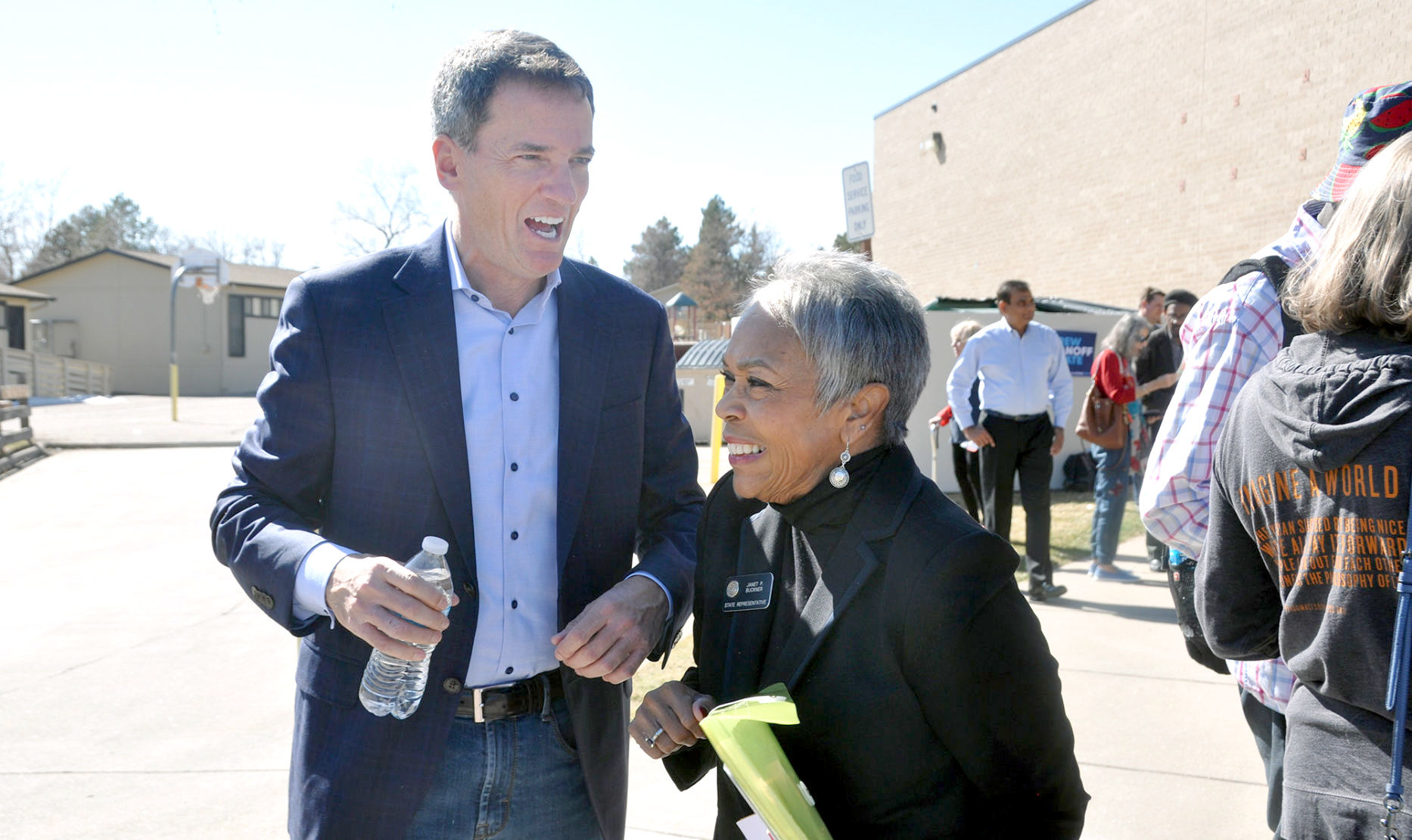
Former state House Speaker Andrew Romanoff appeared to have won Colorado’s Democratic precinct caucuses Saturday over former Gov. John Hickenlooper in the first test of electoral strength in the party’s crowded U.S. Senate primary.
Three other candidates trailed in early, partial results in a statewide preference poll, the start of a winnowing process for a wide field of Democrats that are scrambling for the chance to take on Republican U.S. Sen. Cory Gardner.
“Our grassroots campaign just crushed the DC machine & won today’s caucuses!” Romanoff tweeted after results posted by state Democrats showed him with a solid lead. “The powerbrokers & party bosses in Washington didn’t get the memo, but it turns out a lot of people in (Colorado) want to replace (Cory Gardner) with a progressive champion.”
Romanoff has run a shoestring campaign against Hickenlooper, who was recruited into the primary by national Democrats after ending his presidential campaign last summer.
According to partial results posted online by the Colorado Democratic Party, at 8:30 p.m. with 39 of Colorado’s 64 counties reporting, Romanoff had 53% of the vote, Hickenlooper had 32%, former congressional candidate Stephany Rose Spaulding and scientist and educator Trish Zornio each had 6%, and entrepreneur Erik Underwood had 0.03%, with 2% uncommitted.
Colorado Democrats caucused in more than 3,000 precincts across the state Saturday, kicking off the caucus and assembly route to send candidates for local, state and federal office onto the June 30 primary ballot.
In addition to conducting the Senate preference poll and taking care of party business, Democrats elected delegates to county assemblies, the first step in a process that culminates at the party’s state assembly on April 18. It takes the support of 30% of delegates to land a spot in the primary.
Republicans held their caucuses Saturday morning but didn’t have any competitive statewide races to decide.
Attendance at both parties’ caucuses was down from previous years, likely because the state holding a presidential primary earlier this week, for the first time in 20 years.
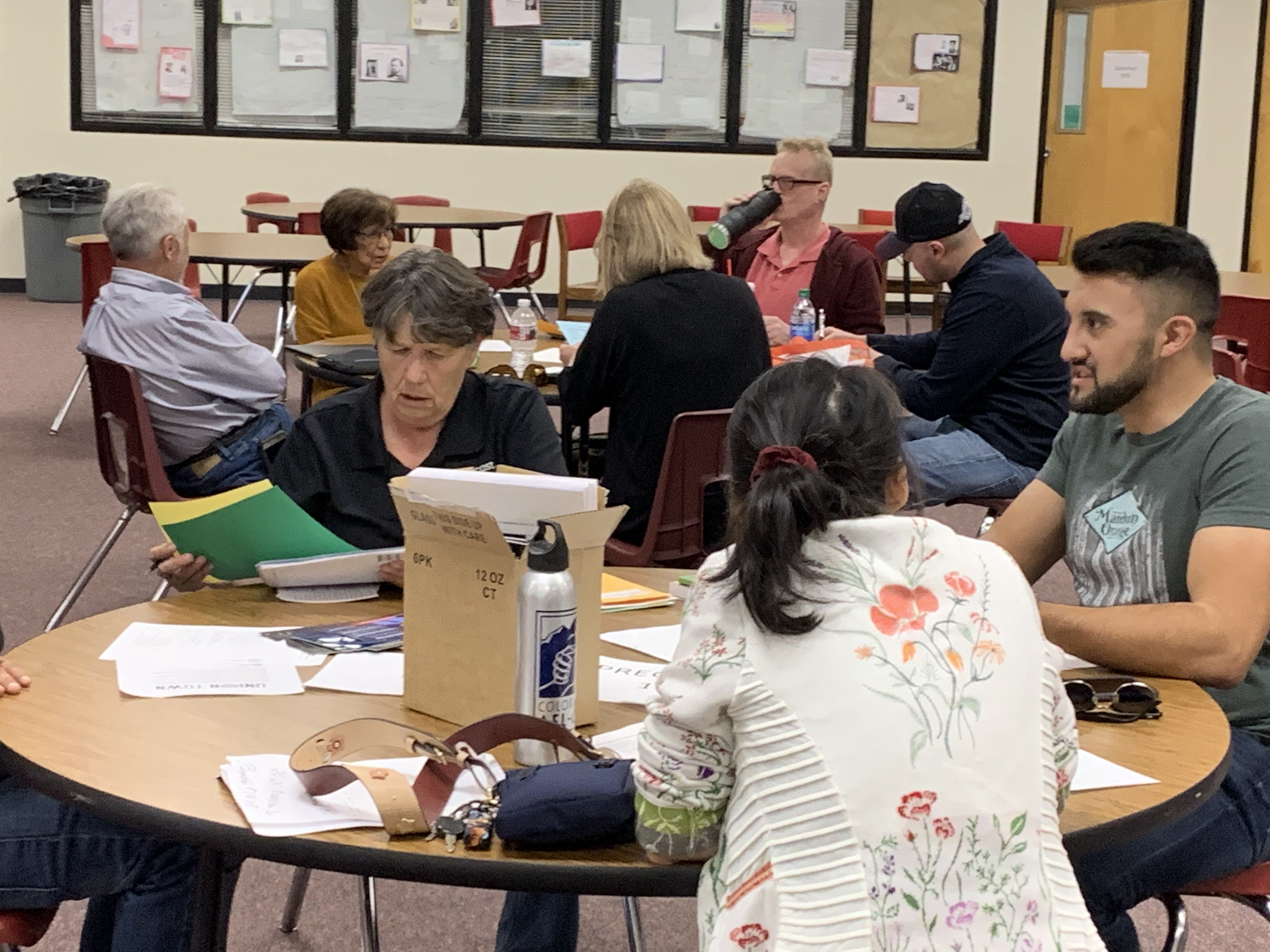
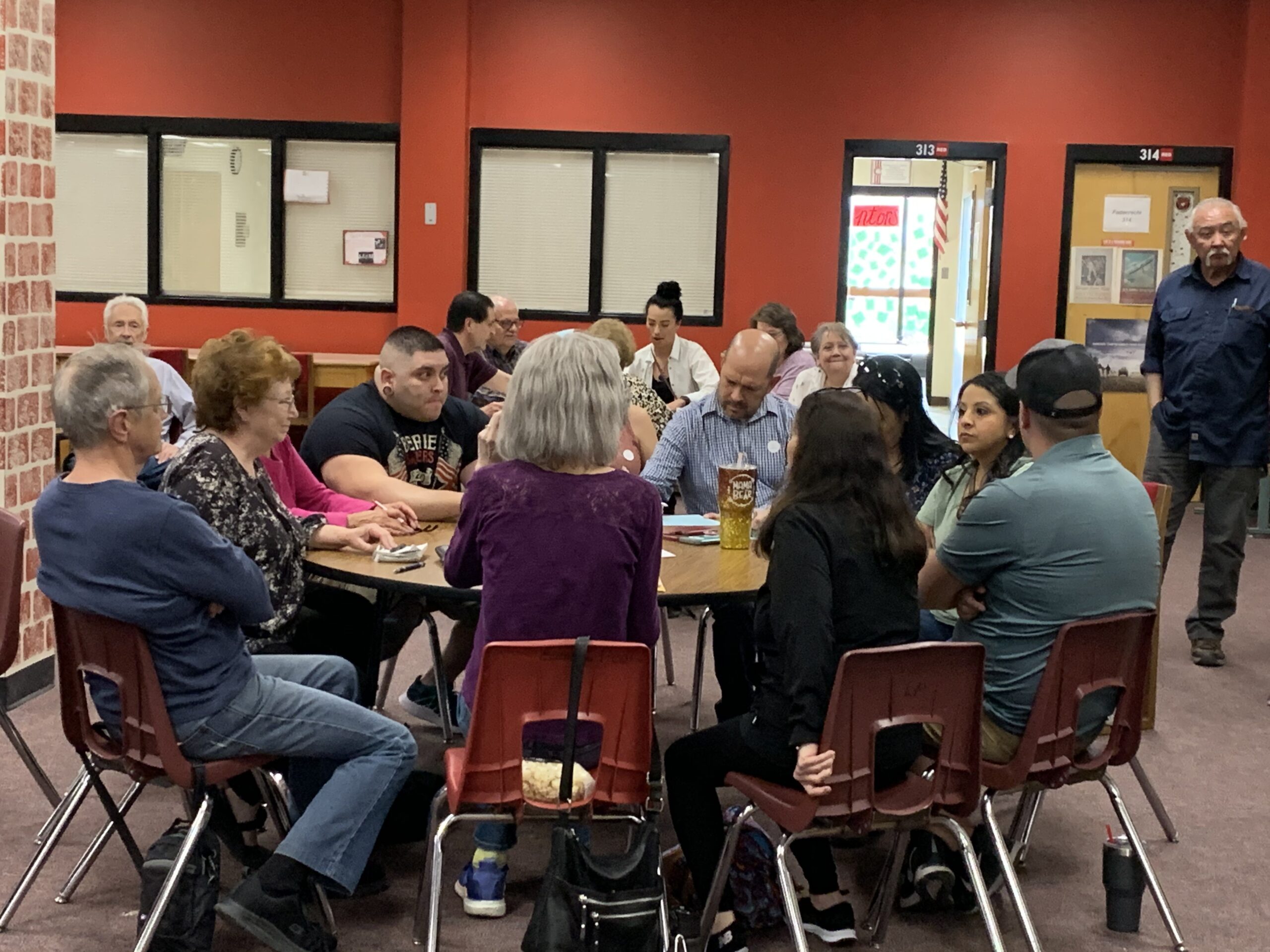
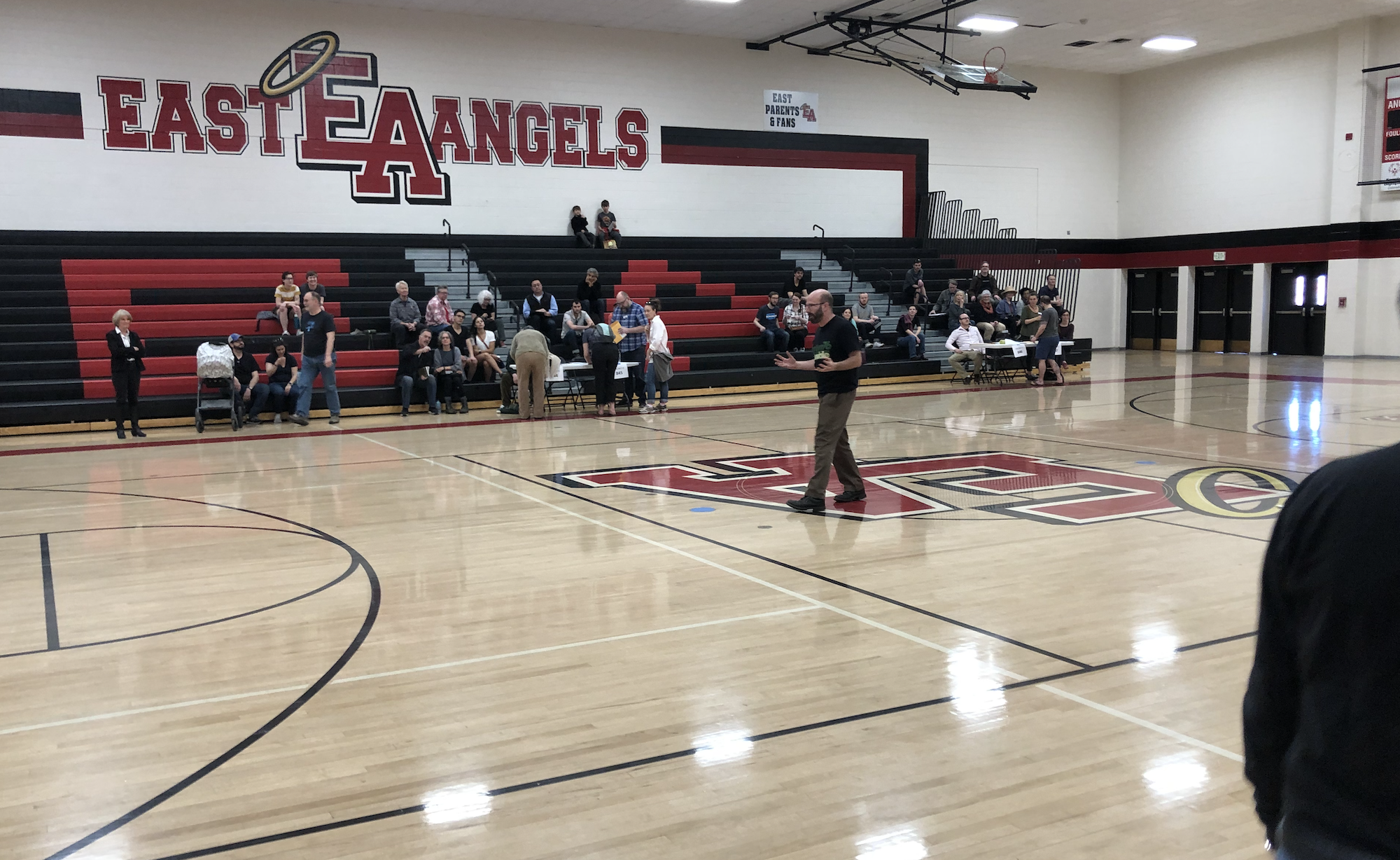
Coupled with unseasonably nice weather – caucus-goers at Denver’s East High School were greeted by the whoops and cheers of a youth soccer game across the street with temperatures in the 60s – and the worry over coronavirus, turnout was limited at most locations.
Instead of shaking hands, Democrats bumped elbows, hugged or lifted their feet to touch shoes, then joked about not spreading any illness that way.
Hickenlooper is also petitioning onto the ballot, along with five other Democratic Senate candidates.
Recent Colorado history shows that Democratic caucus victories don’t predict primary wins. Since 2000, none of the statewide candidates who won competitive preference polls at caucuses went on to secure the nomination – including Romanoff, who beat U.S. Sen. Michael Bennet at caucuses in 2010 but lost the primary to the incumbent, who had been appointed to the seat a year earlier.
“We hope to break that curse,” Romanoff said with a laugh after participating in his precinct caucus in Arapahoe County.
“For me, today is the only path to the ballot,” he told Colorado Politics. “This is the heart of the party – these are the grassroots activists who are knocking on doors and making phone calls and leading the charge.”
There’s a good deal of frustration at the role the national operation is playing in this, telling folks, ‘Don’t worry your pretty little heads about this, we’ve got it figured out.’ It’s insulting,” Romanoff said.
“More than a million votes were cast in the Democratic presidential primary on Tuesday, so we’ve got our work cut out for us, trying to reach the folks who are going to determine the nomination in June. We have to super-size our operation.”
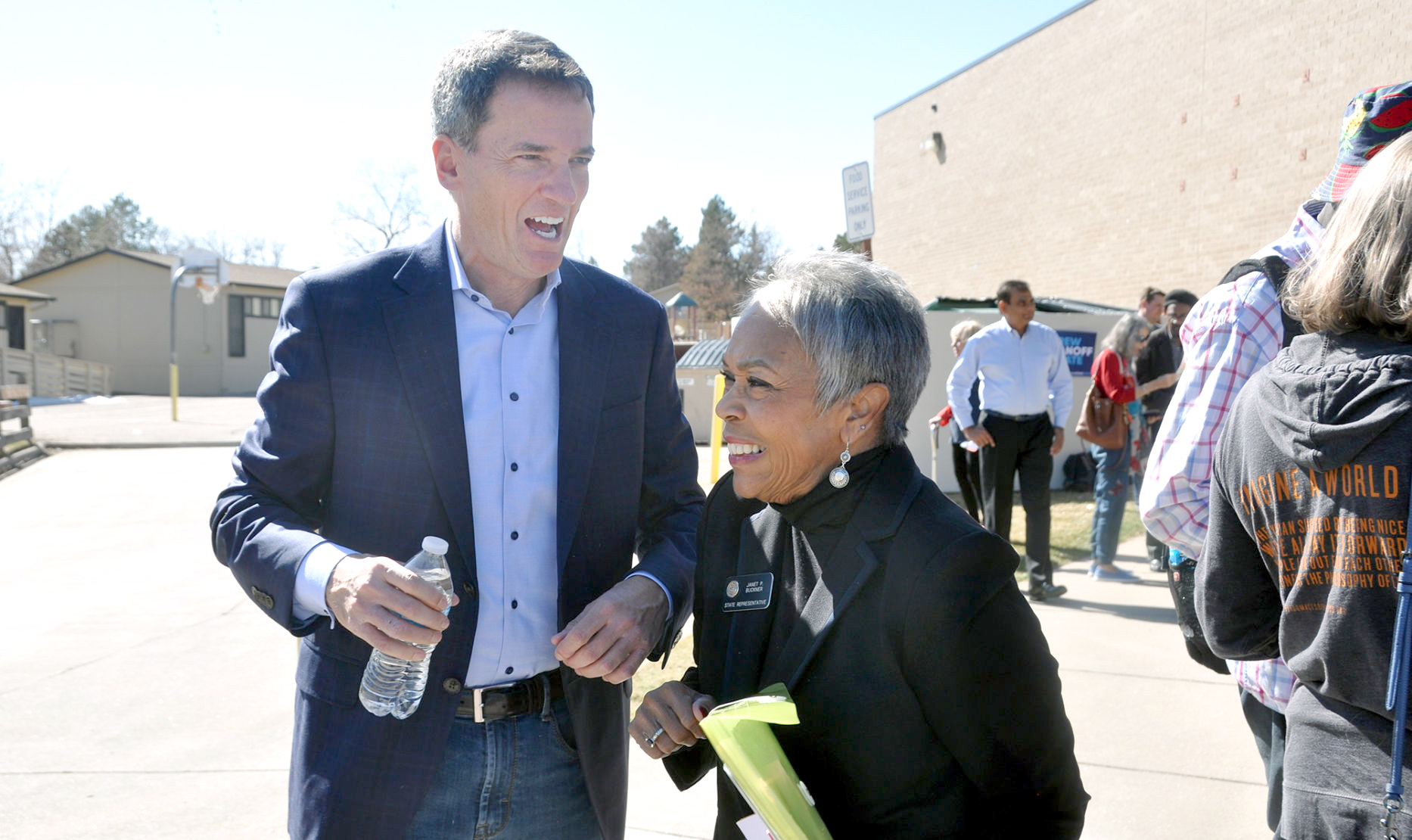
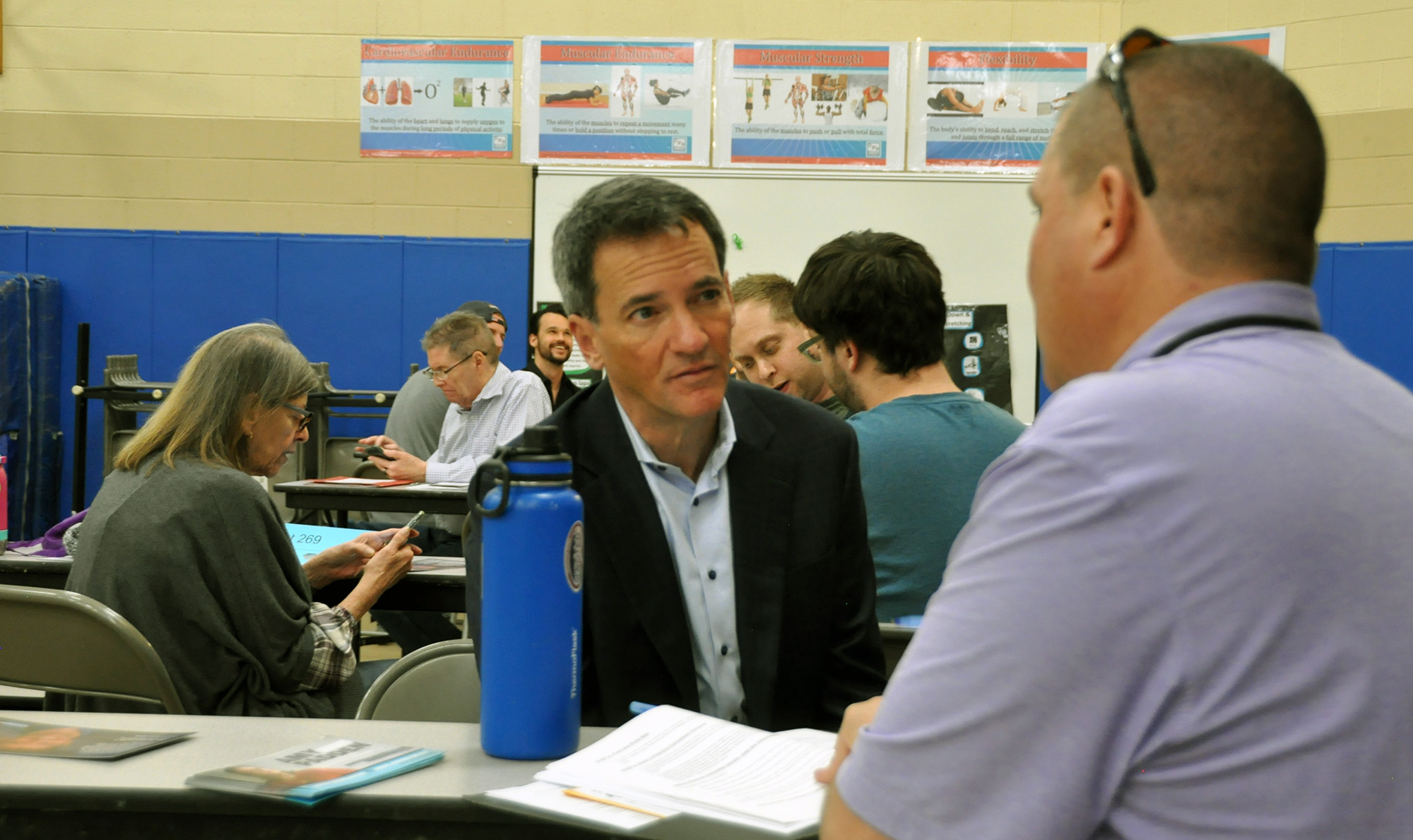
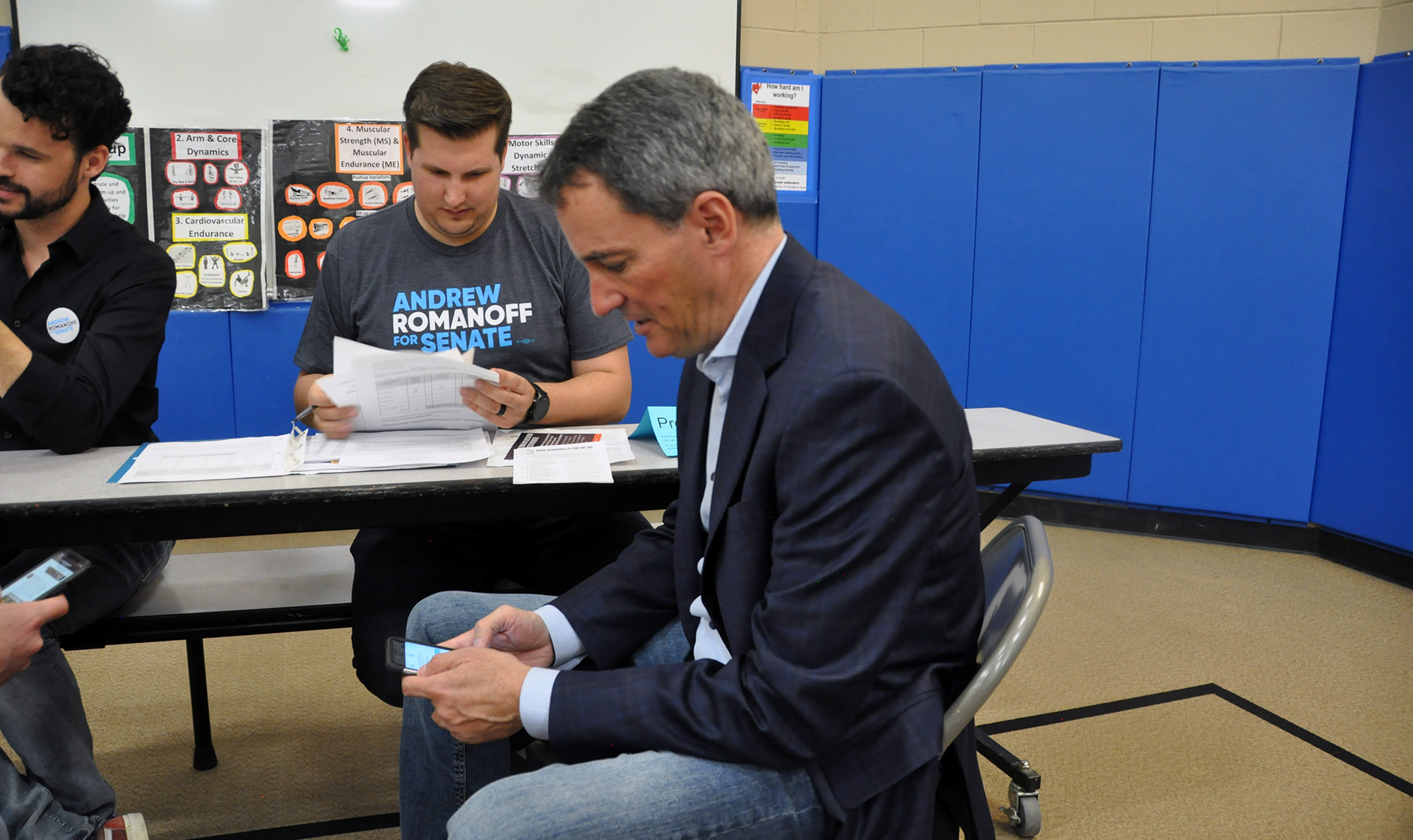
Flanked by campaign volunteers, Romanoff greeted voters as they filed in to at Mission Viejo Elementary School in Aurora, where Arapahoe County Democrats held caucuses for precincts in House District 40.
His mother, Gayle “Cap” Caplan, who said she flew in from San Francisco for the occasion, asked every Democrat whether they were supporting her son.
There were plenty of empty seats and empty tables in the school’s cafeteria and gymnasium, with 20 of 48 precincts without anyone at their caucuses.
In Pueblo County, which was carried by Romanoff, Democrats said they were swayed by Hickenlooper’s record on fracking and his earlier statements that he didn’t want to run for the Senate. A caucus-goer recalled when Hickenlooper was governor and said he would sue any city that banned fracking.
A Pueblo teacher pointed out, however, that while Hickenlooper might represent the old guard of the party, “he does know our issues.”
Electra Johnson, chair of the El Paso County Democratic Party, has mixed feelings about caucuses.
“It’s really expensive. It takes so much time for volunteers to put together, because it’s all volunteer-driven” she said late Saturday afternoon, after working a caucus at Gold Camp Elementary School in Colorado Springs. “But it is one of the places we can do serious grassroots work and move things forward from the neighborhood level.”
At her location, she said, the support seemed evenly divided between Hickenlooper and Romanoff.
Democrats in El Paso County, she said, considered calling off the caucuses because of concerns over coronavirus.
As a precaution, she said they won’t open any of the packets until Tuesday, because the virus is said to expire on paper surfaces after three days.
The caucus was upstaged and diluted by Tuesday’s presidential primary, which drew far more Democrats into the nominating process and allowed unaffiliated votes to participate.
“This state is going more and more unaffiliated, and I think more people need to pay attention to that,” she said. “The unaffiliated vote is going to be important.”
Democrats also voted on resolutions that could make their way into the state party platform.
Among the resolutions adopted by caucus-goers in Pueblo: a request to establish ranked-choice voting, a ban on plastic straws and a request that Democratic candidates support collective bargaining for all unions.
In Denver, proposed platform planks included ones addressing climate change, reproductive rights, social justice, education, workers rights and international affairs.
El Paso County Democrats voted to support the Green New Deal, universal health care, tackling student debt, women’s health care and labor, among numerous resolutions.
Debbie Stafford, who served with Romanoff in the state House before she left the Republican Party and became a Democrat, said at the Aurora caucus site that she was supporting her former colleague.
“Andrew has his arms around mental health,” Stafford said, noting that she counsels domestic violence offenders.
“Andrew’s going to listen, and I want to be heard,” she said.
Stafford added that the Democrats were fielding strong candidates all around and said she will get behind whichever one wins the nomination.
Mary Brice was one of three site coordinators for Democrats at East High on Saturday. She suggested that caucus-goers are often the ones who care the most and said a decent turnout on such a pleasant day under threat of a pandemic showed the passion among the party’s base.
“This is the ground level of their party,” she said. “This is where they come and take ownership, and they do that with their neighbors. It’s a different process than an election.
“An election is sort of sterile. You mark a name and send it in. This is more community. You come out and talk to neighbors and you decide together who you’re going to support.”



Pastors Scott Bottoms, Victor Marx win spots in Colorado GOP’s gubernatorial primary at party assembly
Ernest Luning
ernest.luning@coloradopolitics.com
Updated 3 hours ago
Two pastors from Colorado Springs qualified Saturday for the Republican gubernatorial primary ballot at the Colorado GOP’s state assembly in Pueblo in a party meeting that dragged late into the night. State Rep. Scott Bottoms, who is known as one...
Colorado House finishes work on 2026-27 state budget, finally
Marianne Goodland
marianne.goodland@coloradopolitics.com
Updated 21 hours ago
The House on Saturday, after four days of work – it usually takes two – finished up their work and voted on the $46.8 billion 2026-27 state budget, as contained in House Bill 1410 and 64 accompanying measures designed to...
What you need to know about the Colorado legislature reading a 661-page bill aloud
Marianne Goodland
marianne.goodland@coloradopolitics.com
Updated 22 hours ago
A rarely used procedural move by a Republican legislator threw the Colorado House into an extended slowdown, after she invoked her right to have a nearly 700-page state budget bill read aloud in full. Once Rep. Brandi Bradley, R‑Roxborough Park,...
Colorado GOP votes down bid to ask court to prevent unaffiliated voters from voting in June primary
Ernest Luning
ernest.luning@coloradopolitics.com
Updated 2 days ago
Members of the Colorado Republican Party’s executive committee rejected a proposal Thursday night to seek an emergency injunction in federal court to prevent unaffiliated voters from participating in the state’s upcoming June primary election. The proposed motion, backed by Colorado...

Colorado Democrat John Hickenlooper pulls in nearly $1.4M in 1st quarter, heads into primary with $4M
Ernest Luning
ernest.luning@coloradopolitics.com
Updated 2 days ago
U.S. Sen. John Hickenlooper’s campaign raised nearly $1.4 million in the first quarter of 2026 and plans to report more than $4 million on hand heading into Colorado’s June primary, the first-term Democrat’s campaign said Thursday. That brings Hickenlooper’s total...
Republican Ron Hanks plans ‘grassroots’ primary challenge to US Rep. Jeff Hurd in Colorado’s 3rd CD
Ernest Luning
ernest.luning@coloradopolitics.com
Updated 2 days ago
Colorado Republican Ron Hanks, a former state lawmaker, plans to challenge first-term U.S. Rep. Jeff Hurd in the 3rd Congressional District primary by seeking a spot on the June ballot at the GOP’s district assembly in Pueblo on Friday, Colorado...
House GOP stalls Colorado budget debate by forcing full reading of 661-page bill
Marianne Goodland
marianne.goodland@coloradopolitics.com
Updated 3 days ago
A procedural battle at the Colorado Capitol boiled over on Wednesday night, when a House Republican demanded the 661‑page state budget be read aloud in full — a move that delayed the advance of the proposed $46.8 billion spending plan....

Poll: Colorado Gov. Jared Polis loses support among Democrats
Marissa Ventrelli
marissa.ventrelli@coloradopolitics.com
Updated 4 days ago
Gov. Jared Polis is losing steam among members of his party, particularly progressive Democrats, according to a recent poll. Other statewide Democrats also saw their favorability ratings drop, though relatively stable compared to the governor’s numbers, the poll conducted by...

Kentucky Gov. Andy Beshear set to headline Colorado Democrats’ annual fundraising dinner
Ernest Luning
ernest.luning@coloradopolitics.com
Updated 1 week ago
Kentucky Gov. Andy Beshear, one of the Democrats’ top 2028 presidential prospects, is scheduled to deliver the keynote address at the Colorado Democratic Party’s annual fundraising dinner in June in Denver, the party said Friday. Serving his second term as...
Colorado sues Trump administration over elections order
Marissa Ventrelli
marissa.ventrelli@coloradopolitics.com
Updated 6 days ago
Colorado has joined a coalition of states in suing President Donald Trump over his new executive order on elections, arguing the directive unlawfully intrudes on their authority to run their own voting systems and threatens access to mail ballots for...
PREV
PREVIOUS

COUNTY CAUCUSES | North Pueblo Democrats turn out for caucus Saturday (Updated with delegate counts)
UPDATED: Democrats at caucuses in north Pueblo gathered at Centennial High School on Saturday to begin the process of picking the Democrat who will face U.S. Sen. Cory Gardner, R-Yuma, in November. At 8:15 p.m., Pueblo County Dems reported the delegate counts as follows; John Hickenlooper 138 Andrew Romanoff 228 Stephany Rose Spaulding 9 Erik […]

SONDERMANN | Colorado's Dem convention delegates must run a slalom course of quotas
Eric Sondermann Hypothetically speaking, if you are a white male in your 60s and living in Denver, what path do you take to become a delegate to the Democratic National Convention? That obviously presumes you meet the minimum test of being registered as a Democrat. (Which makes this fully hypothetical in that I’ve been an […]