

Presidential primary ballots continue to pour in as Super Tuesday nears
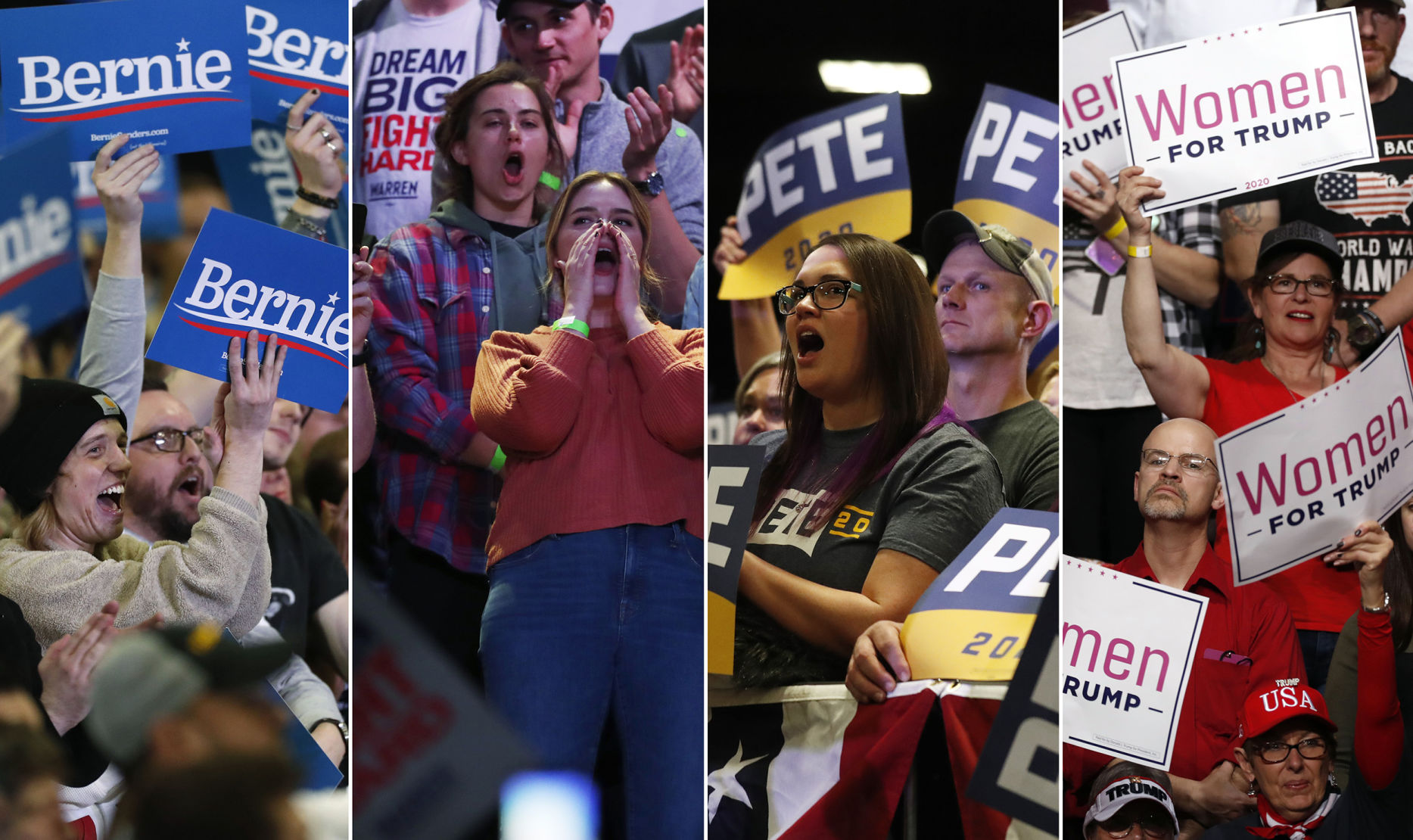
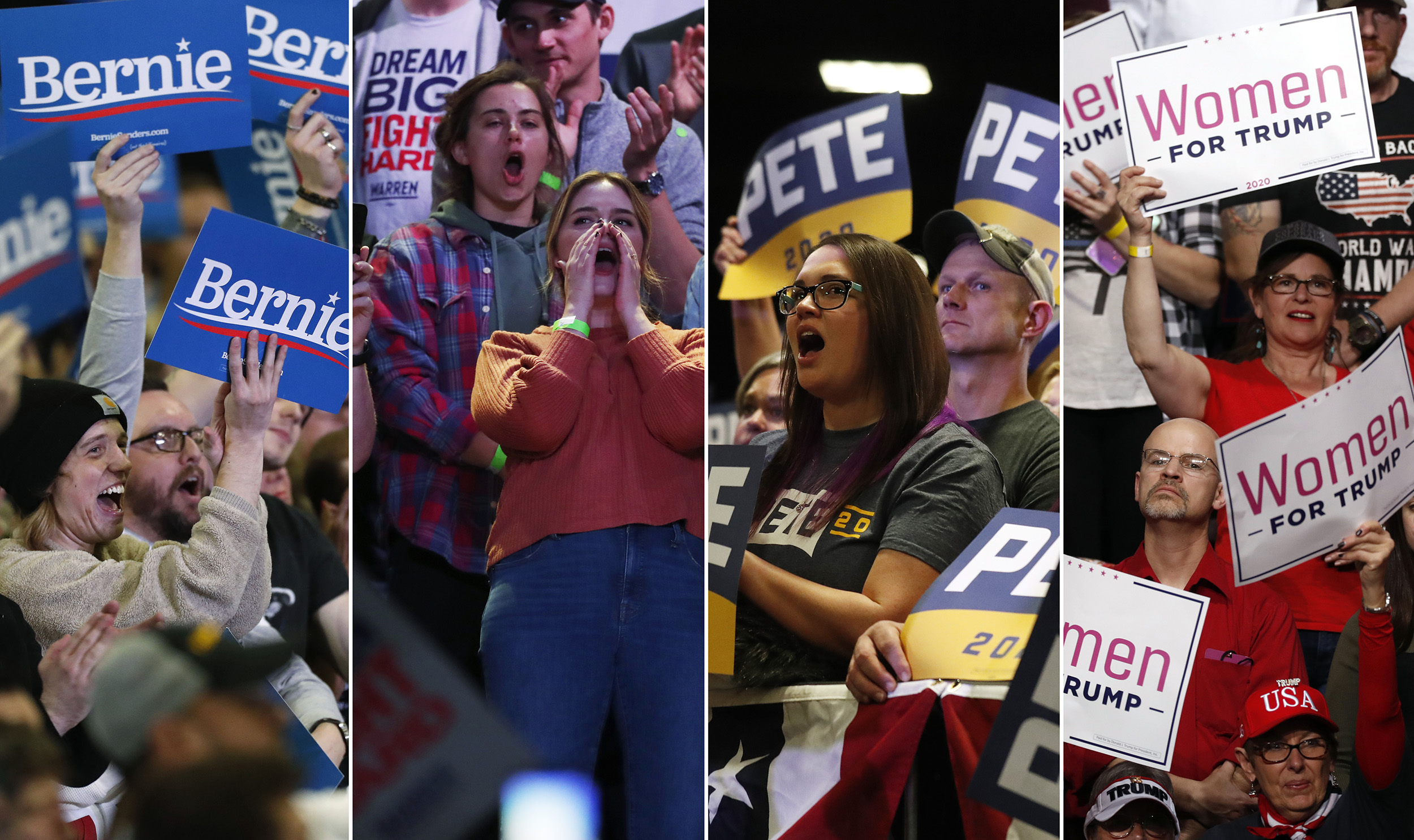
Colorado voters are returning ballots at a fast clip with just days remaining until this week’s Super Tuesday presidential primary.
Following a month that saw a whirlwind of campaign activity across the state, including massive rallies held by the leading Republican and Democratic presidential candidates, election officials say they expect a significant influx of ballots in the final days before they’re due to county clerks.
Through Friday morning, election officials had received 938,464 ballots, a spokesman for the Secretary of State’s office said – already approaching the total number of votes cast in the June 2018 primary, which featured competitive races in both parties for governor, members of Congress and other offices.
Although the Republican ballots jumped out to an early lead when voters started returning mail ballots a couple weeks back, by Friday clerks reported receiving 436,012 Republican ballots and 430,582 Democratic ballots, with an additional 71,870 in hand but not yet processed.
Colorado is holding a presidential primary for the first time in 20 years, after voters decided in 2016 to switch to a primary instead of relying on precinct caucuses to kick off the nominating process for the major parties’ presidential candidates.
At the same time voters approved a statewide measure opening up Democratic and Republican primaries to unaffiliated voters, who make up 40% of registered voters. In addition, residents who will be 18 by Election Day can cast ballots in primaries, based on legislation passed last year.
As far as unaffiliated voters, who received both a Republican and Democratic ballot but can only return one, at this point nearly twice as many of them are voting in the Democratic primary as are casting ballots in the GOP primary. Ryan Winger, director of data analysis for Magellan Strategies, a Republican firm, said in a memo that the ratio was “hardly surprising, given the hotly contested nature of the Democratic race.”
Voters have until 7 p.m. Tuesday to get their ballots to the clerk in their home county.
It’s too late to mail ballots, so election officials urge those who still have their ballots to take them to the secure drop boxes in every county or to visit vote centers, where they can also replace spoiled ballots and even register to vote and cast a ballot in person up until the polls close on Election Day.
In Colorado, the number of Republican ballots returned typically outpaces the number of Democratic ballots returned until close to the election, but the gap is already narrowing, and election watchers say it’s likely the Democratic vote will take the lead by the time ballots are due.
While Republicans have been stoking the turnout in their primary to test their capabilities and gauge enthusiasm ahead of the fall election, nearly all the action in the presidential primary is on the Democratic side.
In addition to enjoying record levels of approval from members of his party, President Donald Trump faces only nominal opposition on the GOP ballot.
Democrats, on the other hand, are faced with a contentious primary featuring seven major contenders, including recently anointed front-runner Bernie Sanders and a knot of candidates vying to emerge as the most viable alternative to the self-described democratic socialist.
Colorado is one of 15 states and territories voting this year on Super Tuesday, when more states vote than on any other day and about one-third of the total number of pledged delegates to the Democratic National Convention will be allotted.
Because so many states will be voting at the same time, including delegate-rich California and Texas, Colorado might not land in the national spotlight the way it has in previous years, since it will account for only about 5% of the total delegates awarded on March 3.
According to the latest polling and a forecast by the election experts at FiveThirtyEight.com, Sanders is poised to win Colorado’s Democratic primary by a comfortable margin. The Vermont senator led the field by double digits in two surveys released this week, and the FiveThirtyEight data-crunchers gave Sanders an 83% chance of carrying Colorado.
Not only is Sanders the delegate leader after scoring wins in Iowa, New Hampshire and Nevada, but some of his supporters have been organizing in Colorado since he prevailed over Hillary Clinton in the state’s 2016 caucuses with 60% of the vote.
Colorado’s vote will be a test for former New York Mayor Mike Bloomberg, the billionaire who is banking on a strategy of bypassing the early states and pouring record spending into advertising and organizing in states that start voting in March, including Colorado.
According to the poll released Thursday by Magellan Strategies, Bloomberg was tied for fourth place with former Vice President Joe Biden among likely Democratic primary voters. Sanders was out in front by 12 percentage points, with U.S. Sen. Elizabeth Warren of Massachusetts was in second, followed closely by former South Bend, Ind., Mayor Pete Buttigieg.
U.S. Sen. Amy Klobuchar of Minnesota and U.S. Rep. Tulsi Gabbard of Hawaii are also on the ballot. They scored in single digits in this week’s Colorado polls.
All four of the top candidates who trail Sanders – Warren, Buttigieg, Biden and Blomberg – were within the Magellan poll’s margin of error of the crucial 15% support level, which is what Democratic candidates must meet in order to win delegates – leaving the outcome in Colorado’s primary essentially up for grabs.
The ultimate results could also be unknown for some time, since the Democratic Party will have to figure out how the candidates performed in each of the state’s seven congressional districts before declaring which candidates scoop up how many delegates.
That’s because delegates to the national convention are awarded both at-large and by congressional district, with any candidate who gets at least 15% of the vote statewide or in any of the congressional districts qualifying for a share of the state’s 67 pledged delegates.
The math is easier on the Republican side, because the GOP awards its 34 pledged delegates on a winner-take-all basis.
Election officials on Friday warned against even counting on complete statewide results by late Tuesday, since clerks must wait until nine days after the election for voters to clear up signature issues and to receive ballots from military and overseas voters. Also, since a large number of ballots could be returned on Election Day, clerks could take until sometime Wednesday to report those results.
The Democratic primary ballot, which was certified in January, includes the names of seven candidates who have dropped out since it was printed, including Colorado’s senior senator Michael Bennet and California investor Tom Steyer, who dropped out after Saturday’s South Carolina primary, as well as U.S. Sen. Cory Booker of New Jersey, entrepreneur Andrew Yang and author Marianne Williamson. Another three mostly unknown candidates also appear on the Democratic ballot.
Of the five candidates who appear with Trump on the Republican ballot, former U.S. Rep. Joe Walsh has dropped out, and only former Massachusetts Gov. Bill Weld has much of a profile.
Colorado Republicans and Democrats will still hold precinct caucuses – this year they’re on the Saturday after the presidential primary, March 7 – and a June 30 primary for state-level and congressional offices.
In addition to conducting party business and electing delegates to county and higher-level assemblies and conventions, precinct caucuses are also the starting point for voters who want to be delegates to either of the major party’s national conventions this summer.
Editor’s note: This story has been updated to reflect Democrat Tom Steyer’s withdrawal from the race following the Feb. 29 South Carolina primary.

Gubernatorial candidates Phil Weiser, Greg Lopez spar, as Marx skips debate
Deborah Grigsby
deborah.smith@denvergazette.com
Updated 20 minutes ago
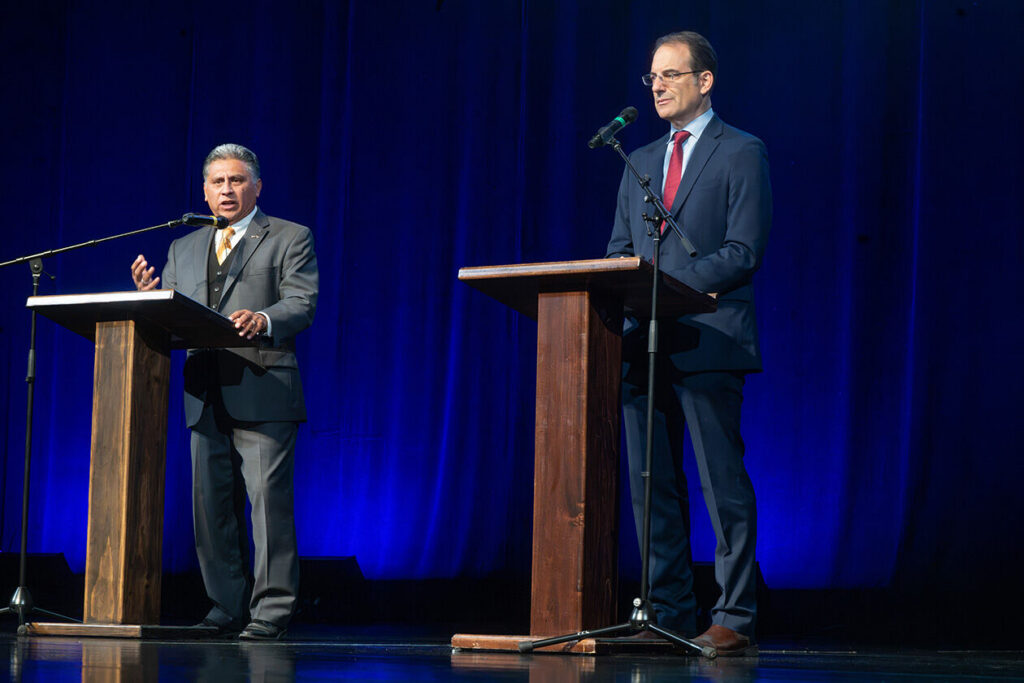
Two of the candidates for Colorado governor squared off in a televised debate on Thursday night, when Attorney General Phil Weiser, the Democratic nominee, and former U.S. Rep. Greg Lopez, an unaffiliated candidate, delved into issues of affordability, data center...
Troops, taxes, war dominate Colorado’s 5th CD debate between Jeff Crank, Jessica Killin
Deborah Grigsby
deborah.smith@denvergazette.com
Updated 23 minutes ago
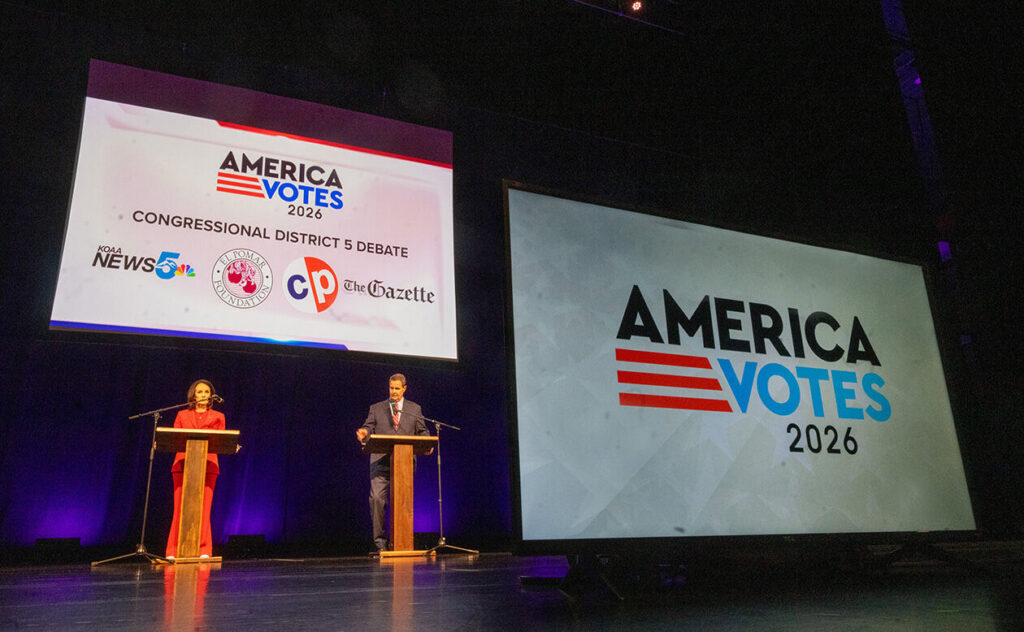
Republican U.S. Rep. Jeff Crank and Democratic challenger Jessica Killin on Thursday night clashed over the war in Iran, the federal budget and healthcare when they took the stage in Colorado Springs for a sold-out debate in the race to...
WATCH: Republican US Rep. Jeff Crank, Democratic challenger Jessica Killin debate in Colorado’s 5th CD
Ernest Luning
ernest.luning@coloradopolitics.com
Updated 15 hours ago
Republican U.S. Rep. Jeff Crank and Jessica Killin, his Democratic challenger, are scheduled to meet for a televised debate in the race to represent Colorado’s 5th Congressional District on Thursday night. The candidates are set to take the stage at...

Colorado gubernatorial candidates Phil Weiser, Greg Lopez to face off Thursday in televised debate
Ernest Luning
ernest.luning@coloradopolitics.com
Updated 14 minutes ago
Two of the candidates for governor of Colorado are set to square off in a televised debate for the first time Thursday night, when Attorney General Phil Weiser, the Democratic nominee, and former U.S. Rep. Greg Lopez, an unaffiliated candidate,...
Democratic-aligned poll shows big majority of swing-seat voters support routine childhood vaccines
Ernest Luning
ernest.luning@coloradopolitics.com
Updated 20 hours ago
A new poll conducted by Democratic-aligned groups found that voters in competitive U.S. House districts — including a battleground seat in Colorado — support routine childhood vaccinations by a wide margin and oppose a recent order by President Donald Trump...
Coalition drops Colorado transportation ballot measure after securing deal
Marissa Ventrelli
marissa.ventrelli@coloradopolitics.com
Updated 15 hours ago
The proposed constitutional amendment seeking to dedicate all transportation-related revenue to Colorado’s roads and bridges will no longer appear in this November’s ballot after its proponents reached an agreement with lawmakers following months of negotiations. Initiative No. 175, backed by...
USPS ballot rule faces lawsuit from Colorado, other states
Thelma Grimes
thelma.grimes@coloradopolitics.com
Updated 23 hours ago
Colorado, along with 25 other states, filed a lawsuit against the U.S. Postal Service to challenge a new rule that seeks to restrict the mailing of ballots to American citizens on an eligible voters list. Colorado relies heavily on the...
Colorado lawmaker, House leaders named in workplace-retaliation lawsuit
Marianne Goodland
marianne.goodland@coloradopolitics.com
Updated 3 days ago
A former legislative aide has filed a lawsuit alleging she was mistreated, illegally directed to perform campaign work and harmed by a House leadership structure she charged was fragmented, politicized and ineffective at protecting employees. The lawsuit, filed by Jennifer...
Democratic candidate in Colorado’s 4th CD urges long-term water planning
Marianne Goodland
marianne.goodland@coloradopolitics.com
Updated 5 days ago
The Democrat hoping to become the next representative of Colorado’s 4th Congressional District on Thursday made her case on the final day of Colorado Water Congress in Steamboat Springs. Eileen Laubacher, who spent 34 years in the U.S. Navy and...

Democratic gubernatorial candidate Phil Weiser promises to appoint rural outreach director, water adviser
Marianne Goodland
marianne.goodland@coloradopolitics.com
Updated 7 days ago
Democratic gubernatorial candidate and current Attorney General Phil Weiser told the Colorado Water Congress Thursday he intends to appoint a rural outreach director and a water policy adviser should he win the election in November. Weiser’s speech at the Steamboat...
PREV
PREVIOUS

Democrat Amy Klobuchar returning to Colorado on the eve of Super Tuesday
Democratic presidential candidate Amy Klobuchar is returning to Colorado to rally supporters the day before ballots are due in the state’s March 3 Super Tuesday primary. The Minnesota senator is holding what her campaign calls a “grassroots event” at 1 p.m. Monday at Mile High Station, 2727 W. Colfax Ave., in Denver. Doors open at […]

CAPITOL M | From the "It was nice while it lasted or something" file | Week ending Feb. 28, 2020
Happy Leap Year Day! The 2019 legislative session was lauded as the year of the woman. The 2018 general election, for the very first time, meant there were more women in the Colorado House than men, a 34-31 split. In the Senate, with the addition of five first-year senators, women also held 12 seats in […]