

Title Board advances proposals related to local gambling, paid leave, petitions
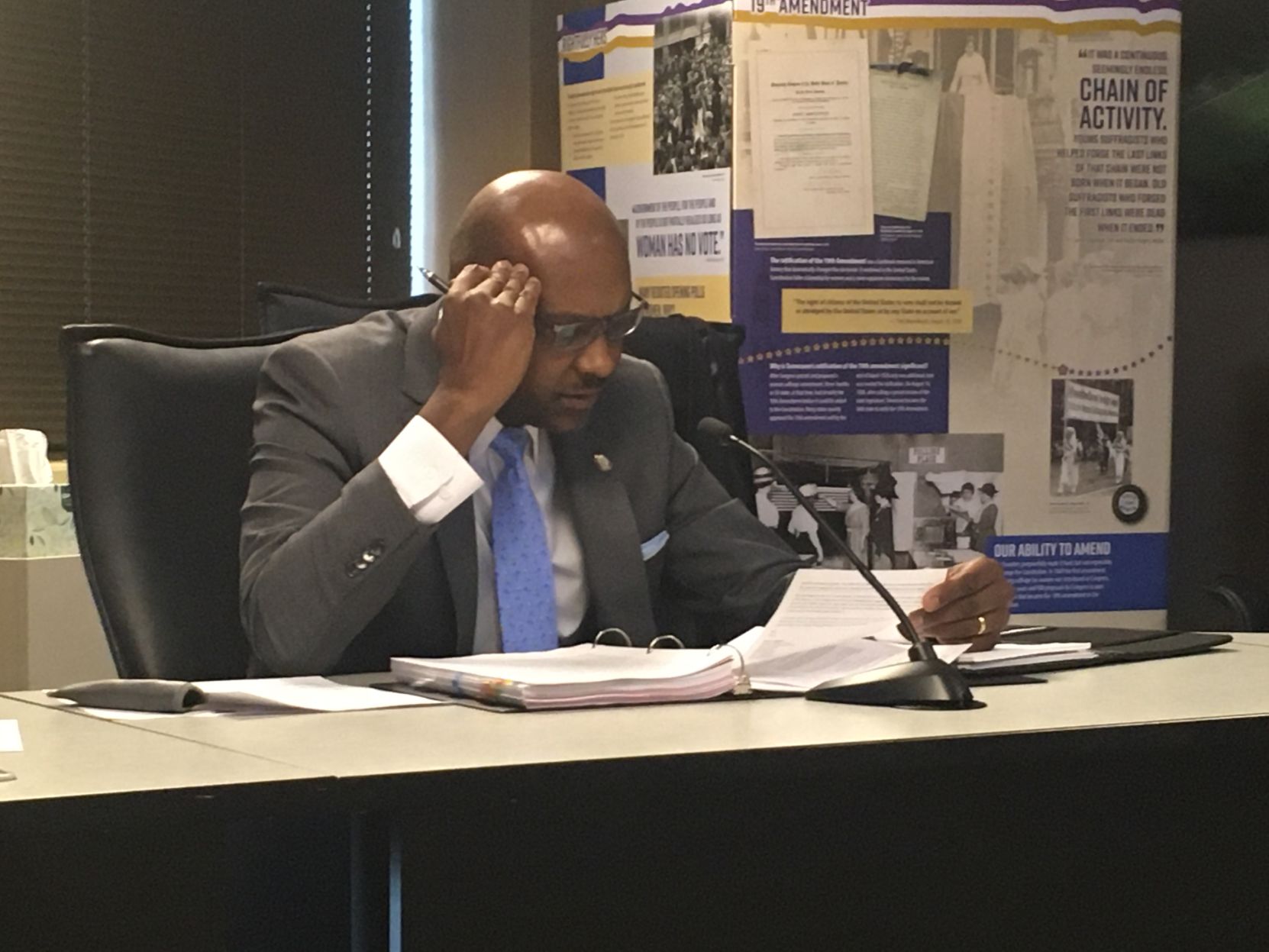
The Colorado Initiative Title Setting Review Board on Wednesday set the ballot titles for nearly two dozen proposed measures, including the local control of gambling in three jurisdictions, paid family and medical leave, and a reintroduction of sweeping changes to the petitioning process.
The three-member Title Board decides whether initiatives adhere to the legal requirement to cover only one subject. If so, the board sets the ballot title that appears before voters, clearing the way for circulators to gather petition signatures.
With Initiative 257, the voters of Black Hawk, Central City and Cripple Creek would gain the ability to expand gambling offerings. The $100 single bet limit would also go away, subject to local control. Amendment 50 in 2008 gave those jurisdictions some control over their operations, and the proposed constitutional amendment would further remove constraints. The designated representatives are Bruce Brown, the former mayor of Cripple Creek, and Bill Cadman, a former state senator from Colorado Springs.
“It makes sense that the people in these communities should be allowed to decide on this issue directly,” said Cadman. “If they choose to extend their limits and game options, the modest boost to revenue would be a win-win-win for all the businesses and employees in these small towns, the players who are asking for more gaming options, and the community colleges that receive the taxes.”
Twenty-three states have commercial betting, and Colorado is one of two with limits on bets, according to the American Gaming Association. The Colorado Department of Revenue describes its approach to casino-style gambling as “limited gaming.”
The board took up anew the Petition Rights Amendment, a measure from Natalie Menten of Lakewood and Donald L. “Chip” Creager III of Denver. The initiative, numbered 245, was similar to a previous version that the Title Board rejected in January after it concluded that the proposal covered multiple subjects.
Under the constitutional amendment, the right to ballot initiative would exist in virtually all state and local units of government. In addition to other revisions to the petitioning process, the legislature would be restricted in the number of bills they can exempt from referendum. In a departure from the previous version, the proponents clarified that their amendment does not eliminate the single-subject requirement, nor does it give the governor new veto power over bills referred to the ballot.
“We have tried to listen to the Title Board,” said Menten.
David Powell, representing Attorney General Phil Weiser, and Jason Gelender, representing the Office of Legislative Legal Services, both acknowledged that Menten and Creager had ameliorated their concerns from the previous iteration. Some of those concerns, such as the governor’s veto, came to light only during the Title Board hearing and seemed to surprise even the proponents.
Theresa Conley, the representative of Secretary of State Jena Griswold, did not sit on the board when the Petition Rights Amendment was first heard. Although she voted with the others to approve the initiative’s title, she was less comfortable with describing the measure to voters.
“This feels like a very complicated initiative and a very, very simple title, and I am worried about whether it is misleading and confusing for the voter to read,” she said.
In other business, the Title Board greenlit two proposals to create a paid family and medical leave program based on employer-collected premiums. Employees would be eligible for between 12 and 16 weeks of leave, and would be protected against employer retaliation from using the benefit. In one version, local governments could opt out of the program. The designated representatives are Timothy Tyler and Wendy Howell of Denver.
Lawmakers in the General Assembly are working separately on a legislative program for paid leave. The Denver Post reported that Sen. Faith Winter, D-Westminster, called the two initiatives a “backup plan” if her bill falters.
The board also approved 12 initiatives from Carol Hedges and Steve Briggs of Denver that would create a graduated income tax system, raising approximately $2 billion to $2.4 billion dollars. The money would go toward education and addressing “the impacts of a growing population and a changing economy.”
Proponents of nine initiatives to increase cigarette taxes pulled their proposals from consideration at this meeting. “Several of those will be officially withdrawn, but the withdrawal has to take place in writing,” said Mark Grueskin, the lawyer for designated representatives Anna Haynes and James Garcia.
Finally, the board set the title for a proposal to give a state income tax credit to individuals who drive their primary vehicle fewer than 12,000 miles per year.


Democrats and their big roll of the dice | SONDERMANN
Eric Sondermann
eric-sondermann@coloradopolitics.com
Updated 3 days ago
For Republicans on the ballot this fall, the hand they are forced to play is rather set. Even if so many of them had not so meekly submitted to President Donald Trump’s agenda, they would still be largely tethered to...

Reagan’s PATCO Showdown ignited Colorado labor backlash | A LOOK BACK
Rachael Wright, Special to Colorado Politics
rachael.wright@coloradopolitics.com
Updated 2 days ago
Forty-five years ago this week: “It’s the old Nixon reaction as far as I’m concerned. He thinks he’s the Great God Almighty and can do no wrong … in the eyes of the public,” said Zelda Bransted, spokesman of the...
Federal judge green-lights excessive force, retaliation claims for trial against Fort Collins officers
Michael Karlik
michael.karlik@coloradopolitics.com
Updated 50 minutes ago
A federal judge green-lit a jury trial last week against multiple Fort Collins police officers on claims that they used excessive force on one man who was standing unarmed in his underwear, and retaliated against another man for exercising his...

Jeff Crank, Jessica Killin set to face off in 2 debates in Colorado’s 5th Congressional District
Ernest Luning
ernest.luning@coloradopolitics.com
Updated 1 day ago
Republican U.S. Rep. Jeff Crank and Jessica Killin, his Democratic challenger, have agreed to debate twice in the weeks leading up to the general election in Colorado’s 5th Congressional District, their campaigns have said. Crank is seeking a second term...

CSI study reviews impacts of Colorado’s mandatory sex‑trafficking sentencing measure
Marissa Ventrelli
marissa.ventrelli@coloradopolitics.com
Updated 1 day ago
A new report by the think-tank Common Sense Institute examines what could happen if Colorado voters approve Initiative 108, which establishes mandatory life sentences for offenders convicted of sexual trafficking of a minor. The measure is backed by Protect Kids...

Luigi Mangione pleads guilty in UnitedHealthcare CEO Brian Thompson murder case
Kaelan Deese
kaelan-deese@coloradopolitics.com
Updated 1 day ago
Luigi Mangione pleaded guilty Friday to two federal stalking charges connected to the 2024 killing of UnitedHealthcare CEO Brian Thompson, a major development that could complicate New York prosecutors’ separate murder case against him. Mangione, 28, not only pleaded guilty in Manhattan federal court...

French court blocks Macron’s social media ban for children under 15
Emily Hallas
emily-hallas@coloradopolitics.com
Updated 1 day ago
France’s top court struck down on Friday a law championed by President Emmanuel Macron that would have made it illegal for children to have social media accounts. The law, approved by lawmakers in July, was set to take effect at...

10th Circuit revives wage violation lawsuit against Papa John’s operator
Michael Karlik
michael.karlik@coloradopolitics.com
Updated 1 day ago
The Denver-based federal appeals court on Tuesday reinstated a former Papa John’s delivery driver’s lawsuit alleging violations of federal and state wage law. Steve Mighell worked for one month at a Denver Papa John’s location in summer 2023. He alleged...

Golden fire chief fired days after city manager as city investigates ‘racist incident’
Matt Kyle
matt.kyle@denvergazette.com
Updated 1 day ago
The City of Golden has terminated its fire chief days after terminating the city manager due to a “racist incident” earlier this year at a city fire station. City officials said that in March, a “Snoop on a Stoop” doll,...

Ikon Pass company cuts jobs in Denver and beyond amid several changes
Bernadette Berdychowski
bernadette.berdychowski@denvergazette.com
Updated 1 day ago
As the ski resort company behind the Ikon Pass and the operator of Steamboat Springs, Arapahoe Basin and Winter Park Resort is going through a phase of changes, the Denver-based company is now cutting jobs. Alterra Mountain Co. has laid...
PREV
PREVIOUS

Amy Klobuchar staffs up Colorado presidential campaign, adds Bennet alums
Democratic presidential candidate Amy Klobuchar on Wednesday announced hires for her Colorado campaign, including veterans of Colorado Sen. Michael Bennet’s White House bid and other political operatives with experience in the state. The staffing announcement comes one day before the Minnesota senator is set to make her third visit to Colorado for a town hall-style […]
GOP off to a roaring start while Democrats growl at each other
A TV-savvy incumbent flies in on the day of the Democratic caucuses, provoking accusations that he is hijacking the national press corps and upstaging the eight candidates vying to be his opponent in November. Not Donald Trump – but Ronald Reagan in Iowa in 1984 on his way to an eventual 49-state win, powered by […]