

Grand Junction Daily Sentinel: If market says climate is changing, then it is
The signal was clear: Do not expect this administration to impede economic growth by adhering to any policy aimed at reducing greenhouse gas emissions. It was a stark reversal of the Obama administration’s efforts to curb carbon pollution.
A recent announcement from BlackRock, the world’s largest asset manager, shows how government’s power as a regulator pales in comparison to market forces.
In a letter to clients Tuesday, the firm’s global executive committee, which includes CEO Larry Fink, wrote that “climate change has become the defining factor in companies’ long-term prospects.” Fink is forecasting a “significant reallocation of capital … sooner than most anticipate.”
In other words, the risks to a company’s bottom line posed by climate change have become significant factors in a company’s investment worthiness. BlackRock will focus on “sustainable” investment options because they have the potential to offer clients better outcomes. The safest, most reliable investments are with companies that are environmentally conscious.
Just like that, climate change emerges from a squishy, often partisan policy debate to become the key factor in how companies are capitalized. It doesn’t matter whether Washington, D.C., regards climate change as settled science or a hoax. Wall Street has spoken. It sees the future and it’s going to put its money into companies that are committed to reducing carbon emissions.
BlackRock isn’t the first investment firm to take this stance. But it’s the biggest, with more than $6.8 trillion under its control. With this week’s announcement, it became the latest global investor to join Climate Action 100+, an initiative to sway companies to be carbon neutral by 2050. With BlackRock on board, total assets under management represented by Climate Action 100+ now top $41 trillion.
“Given BlackRock’s size and influence, their commitment to accelerating engagements with the largest corporate greenhouse gas emitters on climate change sends a powerful signal to companies to reduce emissions, improve corporate governance and strengthen their disclosure,” said Mindy Lubber, a member of the Climate Action 100+ steering committee and CEO and president at Ceres, which advocates for sustainability-minded investors, in a release.
If Blackrock’s stance represents a tipping point, it comes well after the market experienced jitters surrounding investments in fossil fuel production. Energy was the worst-performing sector on the S&P 500 index in 2019. In 1980, the energy industry represented 28% of the index’s value, according to the Institute for Energy Economics and Financial Analysis (IEEFA). Last year, it represented less than 5%.
With BlackRock and other global firms making investment decisions based on sustainability-related metrics, “going green” is no longer optional. Companies that don’t are going to find it hard to attract investors.
“This dynamic will accelerate as the next generation takes the helm of government and business,” Fink wrote. “As trillions of dollars shift to millennials over the next few decades, as they become CEOs and CIOs, as they become the policymakers and heads of state, they will further reshape the world’s approach to sustainability.”
Carbon polluters should take heed. Wall Street just left you.
Colorado Politics Must-Reads:

Were the primaries a preview for consequential general election? | Paula Noonan
Paula Noonan
paula-noonan@coloradopolitics.com
Updated 13 hours ago
Colorado’s political future will go the way of this election. Historically, the state has not had both chambers controlled by a supermajority. This election may change that. The primaries suggest how the general election may play out. Democrats had solid...

Disagreement doesn’t have to mean disrespect | GUEST COLUMN
Colorado Politics
colorado-politics@coloradopolitics.com
Updated 13 hours ago
By Vincent Atchity These days, it doesn’t take long to feel overwhelmed by politics. Turn on the news, scroll through social media or read the comments on almost any political post and you’ll find anger, outrage and personal attacks. For...
Tiered or capped? Battle over Colorado’s income taxes might come down to one number
Marianne Goodland
marianne.goodland@coloradopolitics.com
Updated 11 hours ago
The battle between two competing ballot measures — one seeking to cap Colorado’s income tax rate, the other pushing for a tiered system depending on income levels — might come down to whichever ballot proposal gets one more vote. The...
10th Circuit says landowner cannot sue ex-Routt County judge for statements in decision
Michael Karlik
michael.karlik@coloradopolitics.com
Updated 13 hours ago
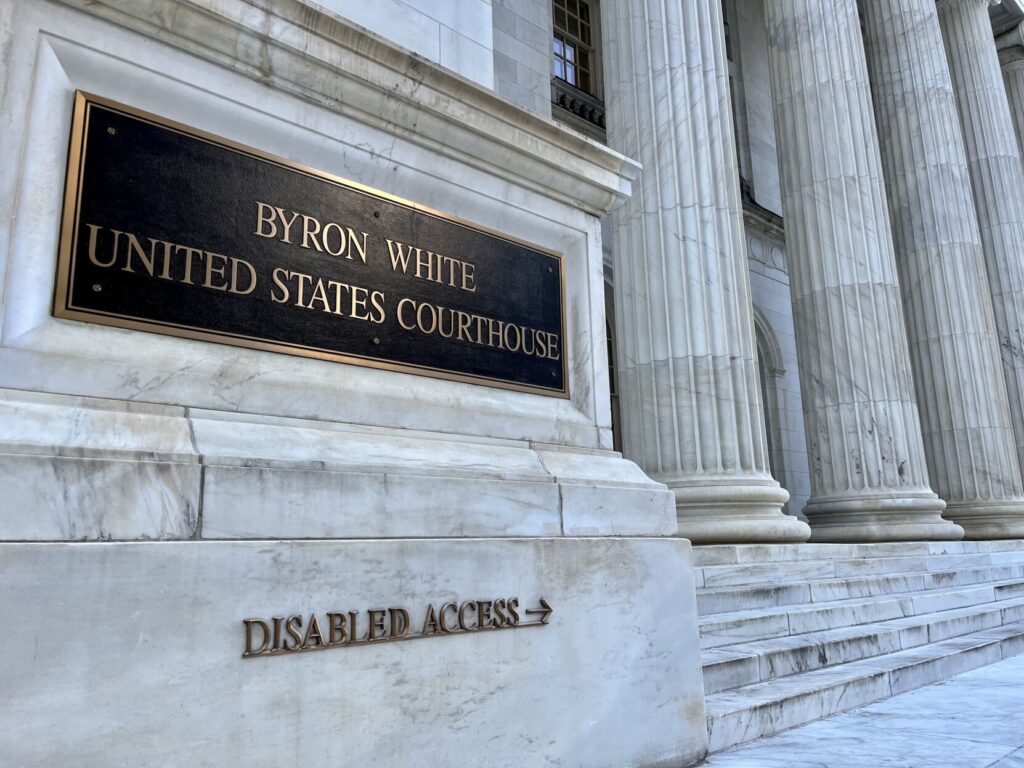
A Routt County landowner cannot sue a former judge for his allegedly inaccurate statements in a case where the landowner was not a party, the Denver-based federal appeals court decided on Wednesday. Anne Fitzsimmons, who lives in Germany, owns a...
Rubio crushes Vance in Western Conservative Summit 2028 straw poll
Kiara Moore
kiara.moore@washingtonexaminer.com
Updated 17 hours ago
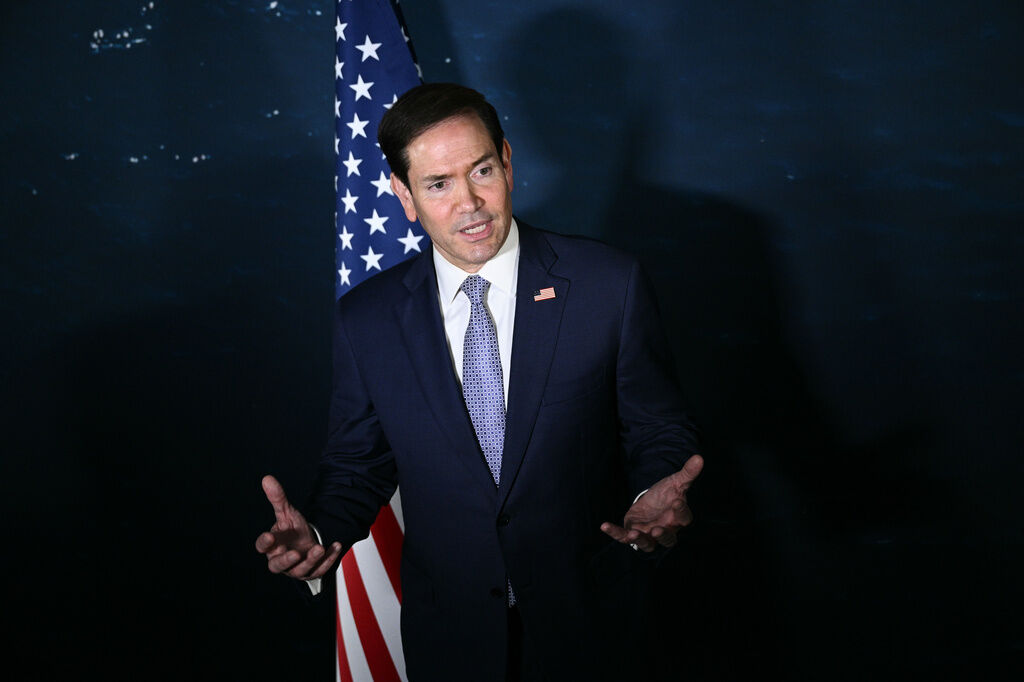
Secretary of State Marco Rubio came out on top in this past weekend’s nonpartisan straw poll at the Western Conservative Summit, outpacing a packed field of would-be 2028 presidential hopefuls. Hosted by the Centennial Institute, Colorado Christian University’s public policy...

Supreme Court to open next term with major climate change case
Jack Birle
jack-birle@coloradopolitics.com
Updated 16 hours ago
The Supreme Court’s next term will begin in October with major cases about costly climate change lawsuits and immigration. The high court announced the cases it will hear in the first month of its upcoming term, as the justices remain...

New Colorado laws going into effect cover AI disclosures, medical marijuana access and gambling limits
Marissa Ventrelli
marissa.ventrelli@coloradopolitics.com
Updated 17 hours ago
More than 100 new Colorado laws take effect Aug. 12, bringing changes to chatbot safety rules, psychedelic research, campus wellness checks and sports betting restrictions. Here is a look at some of those laws set to take effect. The law:...

Colorado background checks surge 195% ahead of new semiautomatic gun law
Marissa Ventrelli
marissa.ventrelli@coloradopolitics.com
Updated 13 hours ago
The Colorado Bureau of Investigation processed a record number of firearm background checks in July, which the agency attributes to a new state law that went into effect on Aug. 1. In total, CBI performed 59,452 background checks in July...

National House Democrats add Colorado seats held by Lauren Boebert, Jeff Hurd to target list
Ernest Luning
ernest.luning@coloradopolitics.com
Updated 15 hours ago
The national House Democrats’ campaign arm on Wednesday added the Colorado congressional district held by Republican U.S. Reps. Jeff Hurd and Lauren Boebert to the list of targeted seats the party believes are vulnerable in this year’s midterms. The Democratic...
Bennet settles campaign finance complaints, admits violating state law
Marianne Goodland
marianne.goodland@coloradopolitics.com
Updated 13 hours ago
U.S. Sen. Michael Bennet’s gubernatorial campaign has agreed to pay a $7,433 fine for using his Senate campaign account to pay for gubernatorial campaign travel expenses. The July 31 settlement includes an admission by Bennet and his campaign that they...