

Is the China trade deal a Christmas stocking or a Grinch for Colorado businesses?
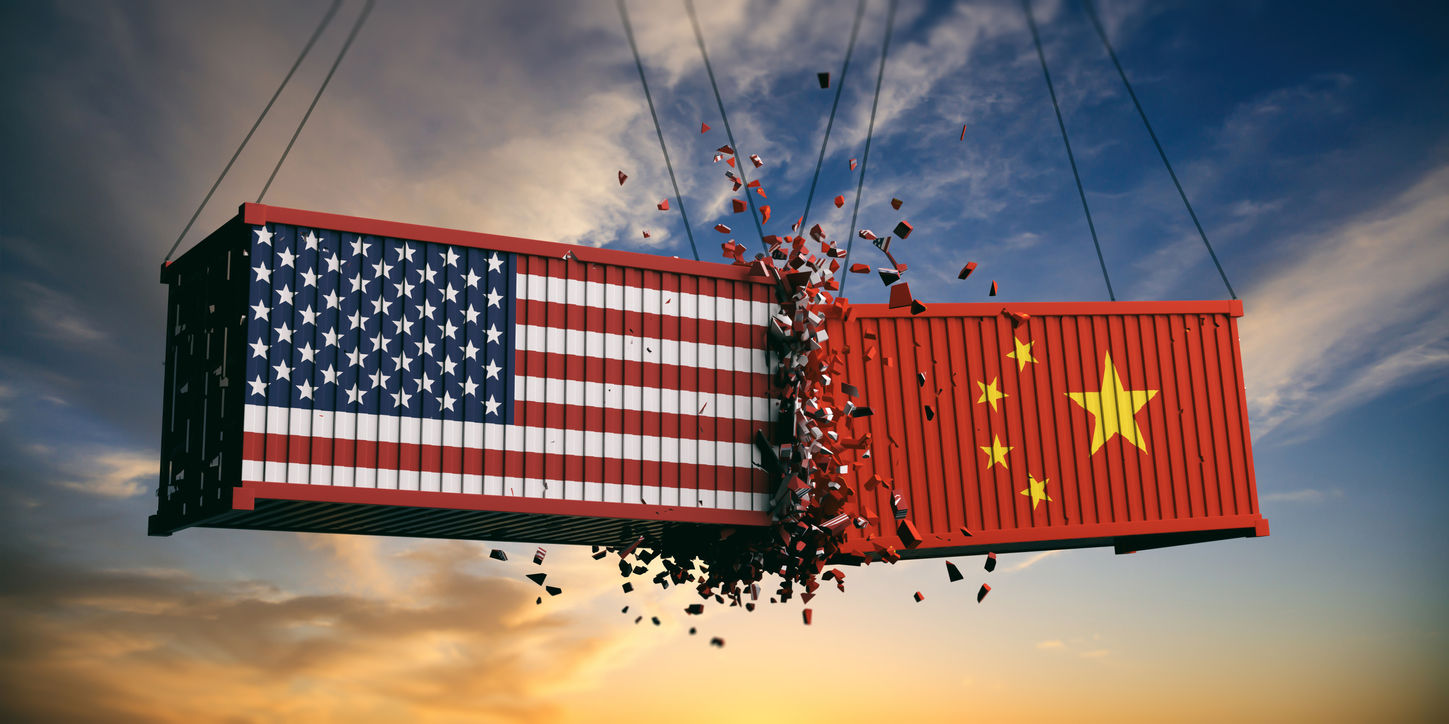
While Colorado businesses cheered the halt of a new round of tariffs on Chinese exports that were slated to go into effect Dec. 15, whether the Phase 1 deal is a Christmas gift or coal in the stocking is undecided.
The 86-page deal announced Dec. 13 hasn’t been made public. So far, the U.S. trade representative has released only a fact sheet with bare-bones details on the agreement.
The first, and most welcome to Colorado industries such as those who make outdoor recreational clothes and goods, is a U.S. cancellation of a a 15% additional tariff on $160 billion of Chinese exports that was due to go into effect on Dec. 15.
Another tariff on Chinese exports that also involved outdoor recreational productions will be halved from 15% to 7.5%, although the date of that reduction has not been announced. However, those goods and others, totaling $250 billion, are still under a 25% tariff that was put in place by the Trump administration during the course of the 18-month trade war. That’s being left in place as a negotiating tool.
The Outdoor Industry Association’s Patricia Rojas-Ungar said in a statement on Dec. 13 that “cancellation of some tariffs and reduction of others for products like outdoor apparel, footwear and equipment is welcome holiday season news to the outdoor industry and consumers, but more needs to be done — and done soon — to provide a stable economic environment so our outdoor businesses can innovate and plan ahead,”
Rojas-Ungar noted that outdoor companies have already paid $2.6 billion more in tariffs in 2019 than in 2018, and that has led those companies to do all they can to absorb the tariffs and avoid increasing prices on their goods to consumers.
There’s also the possibility that the deal isn’t as good or the information not as reliable as one might hope.
Rich Harper of OIA told Colorado Politics earlier this week that they are hopeful that the deal is for real and “are cautiously optimistic.”
However, yesterday, OIA announced that another $1 billion in tariffs were paid by U.S. companies in October alone. A similar amount was paid on tariffs in September.
Outdoor footwear, such as hiking boots, now carry a total tariff of 52.5%, an OIA statement said Thursday. The phase one deal did not change those tariffs.
“The latest tariff data continues to show that American outdoor companies have experienced significant economic hardship as a result of punitive taxes piled on already high tariffs for many outdoor products. And the recent phase-one deal fails to fully wipe away the burden that tariffs are adding to outdoor businesses,” Rojas-Ungar said Thursday. “We hope the recent move marks a turnaround with China and that we soon see a comprehensive deal to include a complete rollback of all existing punitive tariffs on outdoor products.”
According to Reuters, the Phase 1 deal would require China to buy $200 billion more in American products and services over the next two years, double the existing rate. That would include $50 billion in agricultural products.
The fact sheet from the U.S. trade representative said that the agreement addresses “non-tariff barriers” to U.S. agriculture in areas such as meat, poultry, seafood, ride, dairy, infant formula, horticultural products, animal feed and feed additives, pet food, and products of agriculture biotechnology.
China is Colorado’s No. 3 trading partner, behind Canada and Mexico. According to the US-China Business Council, trade with Beijing supported 10,900 jobs in Colorado in 2016, and hit a high of $755 million in exports in 2015. Since the trade war started, however, those exports have dropped to $647 million as of 2017. Meat and meat products are the state’s top export to China, at $111 million, also as of 2017.
The American Farm Bureau Federation indicated some skepticism, as have other China experts, on whether China could double its agricultural purchases in the timeframe outlined in the Phase 1 deal. American Farm Bureau Federation economic Veronica Nigh said Tuesday that trade between China and the U.S. “would have to expand pretty significantly” in order to double those exports. She did add, however, that given what China is buying from the rest of the world, “there’s probably room there.”
Nigh added that before the trade war China was the U.S.’s No. 2 market for agriculture. “While we certainly are exporting a lot of U.S. ag products to a wide variety of countries, it takes a lot of those smaller countries to add up to one China,” Nigh said. “Bringing China back as a sizable market for U.S. agriculture is certainly critical to U.S. farmers’ ability to continue to grow their businesses.”
The deal could be signed as soon as next month.
Colorado Politics Must-Reads:

10th Circuit grants rare all-judges’ review of Colorado banking regulation
Michael Karlik
michael.karlik@coloradopolitics.com
Updated 1 hour ago
The Denver-based federal appeals court announced on Thursday that it will hold a rare all-judges review of a recent decision that permits Colorado to require out-of-state banks to abide by the state’s maximum interest rates when they lend to in-state...
Colorado appeals court orders new sentencing for Tina Peters, upholds convictions
Michael Karlik
michael.karlik@coloradopolitics.com
Updated 3 hours ago
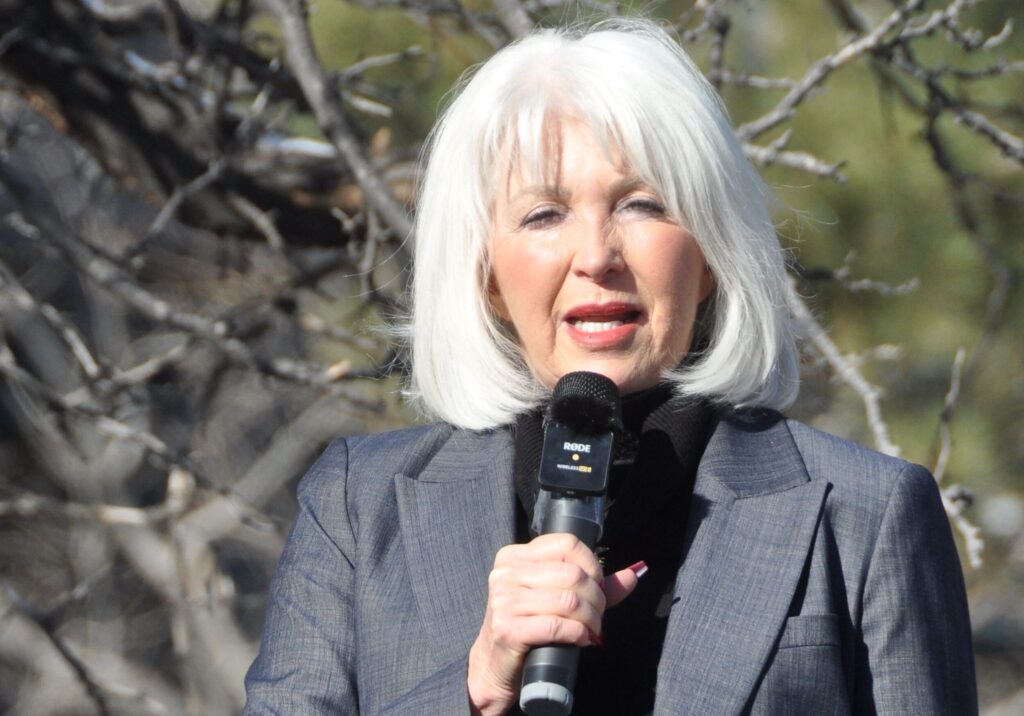
Colorado’s second-highest court determined on Thursday that a trial judge improperly sentenced former Mesa County clerk Tina Peters based upon her exercise of protected speech, while at the same time upholding her convictions. The three-judge Court of Appeals panel also...

Denver promised every school funding from $1B bond — but campuses later closed received far less | Analysis
Nico Brambila
nico.brambila@denvergazette.com
Updated 17 minutes ago
Denver voters overwhelmingly approved the largest bond measure in Denver Public Schools history on the promise that every school — including charter campuses — would receive something. And they did. But the nearly $1 billion bond was not distributed evenly....
National conservation area growing by 4,000-plus acres in western Colorado
Seth Boster
seth-boster@coloradopolitics.com
Updated 4 hours ago
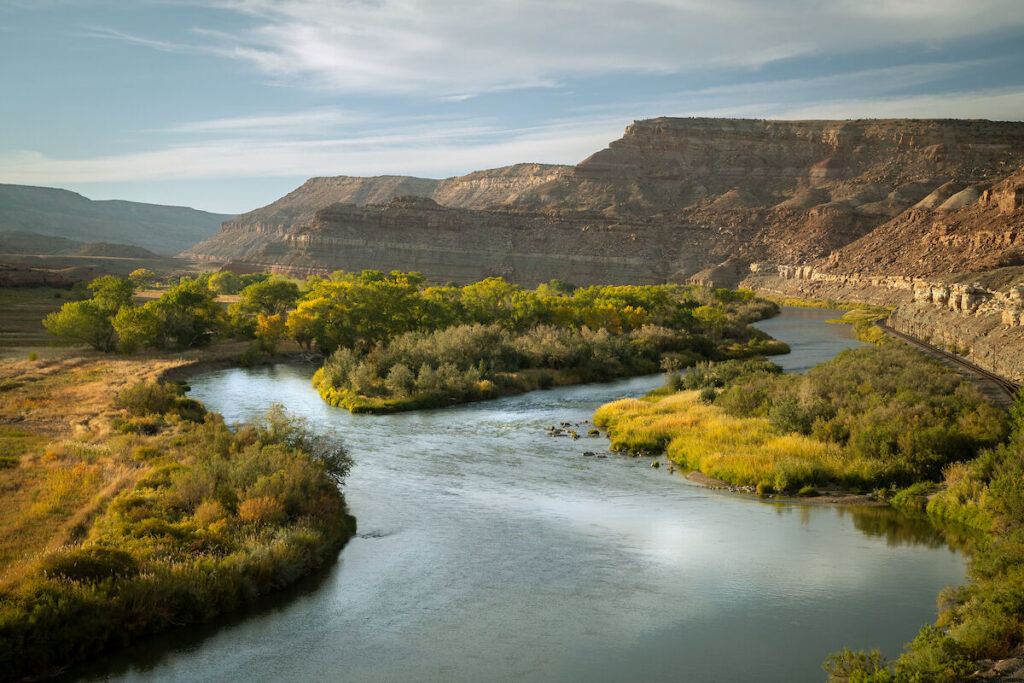
A formerly private, sweeping swath of western Colorado is growing a public, red rock wonderland. Spanning 4,000-plus acres, Escalante Ranch has been transferred to the Bureau of Land Management and incorporated into Dominguez-Escalante National Conservation Area, The Conservation Fund recently...
Judge rules that Colorado law makes it too hard for parties to bar unaffiliated voters from primaries
Ernest Luning
ernest.luning@coloradopolitics.com
Updated 3 hours ago
A federal judge ruled in favor of the Colorado Republican Party late Tuesday, saying that a portion of the state law that allows unaffiliated voters to cast ballots in party primaries is unconstitutional because it imposes an unrealistic burden on...
10th Circuit upholds regulator’s methodology for Tri-State exit fees
Michael Karlik
michael.karlik@coloradopolitics.com
Updated 3 hours ago
The Denver-based federal appeals court upheld a regulatory agency’s methodology for calculating the fee owed by entities seeking to withdraw from Tri-State Generation and Transmission Association last week. Tri-State is a Westminster-based cooperative that provides and transmits electricity to member...
Federal judge proposes sanctions against Mike Lindell’s lawyers for continued fake citations
Michael Karlik
michael.karlik@coloradopolitics.com
Updated 22 hours ago
A federal judge is once again pursuing sanctions against lawyers for MyPillow CEO Mike Lindell for continuing to cite to court cases that do not exist, likely based on the faulty output of artificial intelligence tools. Last year, a jury...
Front Range cities oppose Democratic proposal to permit lot‑splitting
Marianne Goodland
marianne.goodland@coloradopolitics.com
Updated 2 hours ago
Colorado lawmakers are pressing ahead with a plan to let homeowners split their lots to make room for smaller, less expensive houses — a proposal that has drawn sharp opposition from Aurora, Colorado Springs, Denver and other Front Range cities...
Susan Blanco signals views on role of appellate courts in first opinion as Colorado justice
Michael Karlik
michael.karlik@coloradopolitics.com
Updated 1 day ago
Justice Susan Blanco’s first solo opinion as a new member of the Colorado Supreme Court made clear her view of the guardrails that keep the state’s highest court tethered to the issues it is asked to decide. On Monday, the...

Hegseth features Fort Carson soldiers after returning from Middle East, gives warning on Iran war
Reuters
reuters@gazette.com
Updated 1 day ago
Defense Secretary Pete Hegseth said on Tuesday the next few days in the war against Iran would be decisive and warned Tehran that the conflict would intensify if it did not make a deal. Hegseth also highlighted his trip to the Middle...
PREV
PREVIOUS

514 arrests made during statewide holiday party crackdown
Law enforcement agencies’ vigilance during the holiday party season resulted in 514 arrests for impaired driving during the latest iteration of “The Heat is On.” The December enforcement period from Dec. 6-16 followed similar high-visibility crackdowns during the Fourth of July, Thanksgiving and Super Bowl weekend. “Impaired drivers put everyone else on the road at […]
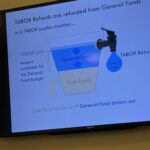
Taxpayers likely to see higher TABOR refunds in 2020, but 2020-21 state budget may need to be tighter
The December forecast released Friday by economists with the General Assembly and the Governor’s office both said refunds to taxpayers under the Taxpayer’s Bill of Rights will be higher, but at the same time, less robust economic growth means the state budget in 2020-21 might be a little tighter. Among the good news: Legislative Council […]