

Colorado Springs is home to new Space Force under congressional deal

In what is seen as a major accomplishment for a bitterly divided Congress, America’s Space Force will call Colorado Springs home thanks to a defense policy bill that lavishes construction cash on the Pikes Peak region and gives troops here bigger paychecks.
The bill redesignates Air Force Space Command in Colorado Springs as the Space Force, a new armed-service branch responsible for America’s military efforts in space and defense of satellites.
“It helps cement Colorado Springs as the center of military space,” said Colorado Springs Republican U.S. Rep. Doug Lamborn.
In what is seen as a major accomplishment for a bitterly divided Congress, America’s Space Force will call Colorado Springs home thanks to a defense policy bill that lavishes construction cash on the Pikes Peak region and gives troops here bigger paychecks.
The bill redesignates Air Force Space Command in Colorado Springs as the Space Force, a new armed-service branch responsible for America’s military efforts in space and defense of satellites.
“It helps cement Colorado Springs as the center of military space,” said Colorado Springs Republican U.S. Rep. Doug Lamborn.
“Nothing in this subtitle, or the amendments made by this subtitle, shall be construed to authorize or require the relocation of any facility, infrastructure, or military installation of the Air Force,” the bill says in bureaucratic language that means space things in Colorado Springs stay in Colorado Springs.
Whether U.S. Space Command will stay in Colorado Springs isn’t settled by the bill, but its provisions narrow the chances that another state, like Alabama, could grab it, Lamborn said.
The bill also all but names the first head of the Space Force: Air Force Space Command and U.S. Space Command boss Gen. Jay Raymond.
Raymond gets a nod in the bill’s language, which says the Air Force Space Command leader will be the Space Force chief of staff.
While the Space Force’s general gets a seat on the Pentagon’s Joint Chiefs of Staff, the measure establishes little in the way of Pentagon management structure for the new service.
The Space Force, with 15,000 troops, will fall under the Air Force, with an assistant secretary at the Pentagon to represent the new service. Space troops will also get a new acquisition office to buy satellites, rockets and other products.
And the new Assistant Secretary of Defense for Space Policy will push space issues at the top of the Pentagon’s bureaucracy.
All of the changes in the defense policy bill, however, will have to wait for a new Pentagon budget. The Pentagon has operated on temporary budget bills that don’t include cash for a Space Force.
Lamborn said getting the policy bill passed builds momentum for a budget accord. And the partisan wars may have a ceasefire when it comes to military issues.
“When it comes to national defense, we have a lot of common ground,” Lamborn said.





Colorado officials react as Trump weighs reclassifying marijuana
Marissa Ventrelli
marissa.ventrelli@coloradopolitics.com
Updated 35 minutes ago
Colorado policymakers and advocacy groups are responding to reports that the federal government could begin loosening restrictions on marijuana, according to insiders in Washington. According to the Washington Post, President Trump is expected to sign an executive order directing federal...

What we know so far about the Brown University shooting
Emily Hallas, Washington Examiner
emily.hallas.washington.examiner@gazetteedit.wpenginepowered.com
Updated 2 hours ago
A sweeping manhunt to locate the suspect who carried out a mass shooting at Brown University is stretching into its third day. The shooter gunned down students studying for finals, killing two and injuring nine in Providence, Rhode Island, on...
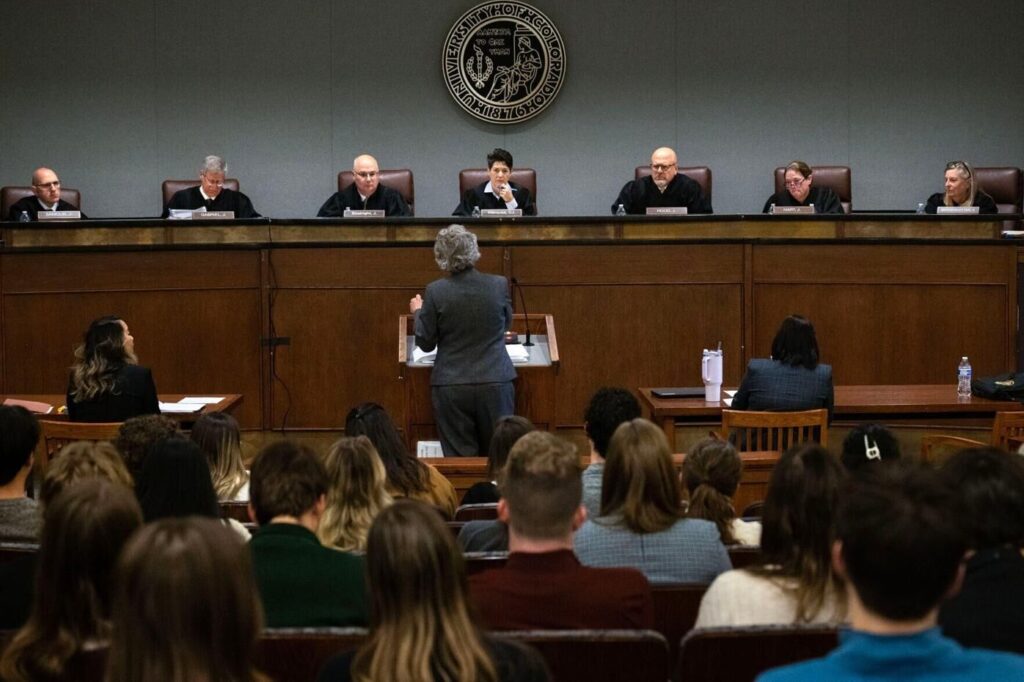
Judicial fees, furniture under scrutiny as Colorado lawmakers consider budget request
Michael Karlik
michael.karlik@coloradopolitics.com
Updated 2 hours ago
Members of the legislature’s Joint Budget Committee expressed concerns last week about aspects of the judiciary’s requested $845 million budget for courts and probation, while also hearing about the Judicial Department’s relatively restrained spending over time. “If you adjust for...

Colorado Supreme Court approves tenant-friendly rule change, broadens professional discipline for sexual misconduct
Michael Karlik
michael.karlik@coloradopolitics.com
Updated 3 hours ago
The Colorado Supreme Court approved a set of rule changes last week that will make it easier for tenants facing eviction to respond to and learn about their landlord’s initial court filing, and for lawyers to be held professionally accountable...

Suddenly, Colorado has a private school choice program │ Vince Bzdek
Vince Bzdek
vince.bzdek@gazette.com
Updated 1 day ago
By Vince Bzdek When I was a kid going to St. John’s Catholic grade school in Denver, I remember asking my mom if she and dad minded paying taxes for public schools since all her kids attended Catholic ones. We...

Tyson’s beef plant closure in Nebraska to impact town, ranchers nationwide | OUT WEST ROUNDUP
Ernest Luning
ernest.luning@coloradopolitics.com
Updated 5 days ago
NEBRASKA Beef plant’s closure could ripple OMAHA — Tyson Foods’ decision to close a beef plant that employs nearly one third of residents of Lexington, Nebraska, could devastate the small city and undermine the profits of ranchers nationwide. Closing a...

Calendar Dec. 15-21
Rachael Wright
rachael.wright@coloradopolitics.com
Updated 5 days ago
CoPo’s weekly political calendar will help you find political and public-policy events throughout Colorado. It includes candidate and issue campaign events, public policy meetings, court hearings, state and local party conventions, assemblies, debates, rallies, parades, speaking engagements, traveling dignitary appearances,...

Denver Mayor Peña makes unexpected announcement | A LOOK BACK
Rachael Wright
rachael.wright@coloradopolitics.com
Updated 5 days ago
Thirty-Five Years Ago This Week: Denver Mayor Federico Peña announced personal news that caught many of his supporters and Denver residents who paid close attention to politics off guard. Just two weeks prior on Nov. 16, 1990, The Colorado Statesman...

Julie Gonzales’s long but not impossible odds | SONDERMANN
Eric Sondermann
eric-sondermann@coloradopolitics.com
Updated 5 days ago
Allow me to start with a flashback. It was Thanksgiving 2024, just over 12 months back. For the first time, our son Clarke hosted the family Thanksgiving near New York City. It is a sign of our aging when the...

Performers announced for 14th Klezfest | NONPROFIT REGISTER
Thelma Grimes
thelma.grimes@coloradopolitics.com
Updated 3 days ago
MIZEL MUSEUM JCC DENVER Denver News: Klezfest 2025, which takes place Dec. 20, will feature performances by a host of popular Jewish entertainers: Rabbi Joe Black and Steve Brodsky; Hal Aqua & The Lost Tribe; Mishmish and Gora Gora Orkestar. Rabbi Black is a pioneer of contemporary Jewish music and has...
PREV
PREVIOUS
What they're saying: Articles of impeachment
On Tuesday, Democratic members of the U.S. House of Representatives announced two articles of impeachment against President Donald Trump, stating that he abused the power of his office and obstructed Congress’s investigation into Trump’s attempted enticement of Ukraine to affect the outcome of the 2020 presidential election. The House resolution announcing the charges followed weeks […]

Gardner, members of Congress request delay of Health Insurance Tax
U.S. Sen. Cory Gardner and members of Congress from both chambers and both parties sent a letter to congressional leadership on Tuesday requesting a delay in a $15.5 billion tax on health insurance companies. “That fee would be passed down to families, small businesses, seniors, Americans with disabilities, and state Medicaid programs,” the members wrote. […]