

Denver’s minimum wage hike heads to final vote, but not without a few more changes


Denver’s push to reach a nearly $16 minimum wage is nearing the finish line, but not without lingering concerns – and a few more tweaks.
Thanks to a unanimous vote during a Tuesday City Council committee meeting, the final proposal offered by Mayor Michael Hancock and Councilwoman Robin Kniech heads for a final vote on the floor of City Council later this month.
The first “catchup step” of the new minimum wage ordinance is 95 cents lower than the amount initially proposed, symbolic of a compromise with small business owners, who expressed their disapproval of the measure during a series of town halls.
The revised proposal requires Denver employers to pay hourly employees $12.85 beginning New Year’s Day. Come 2021, wages will increase to $14.77 and again to $15.87 at the start of 2022.
Having received additional stakeholder feedback following a presentation by the Finance and Governance Committee last week, Kniech and the mayor’s office presented a newly revised proposal Tuesday, mostly identical to the last, yet still with some changes – one of which concerned Denver Auditor Timothy O’Brien, much to the surprise of the councilwoman.
The issue he raised revolved around the power of his office, which the legislation not only gives the authority to investigate wage violations without a complaint, but also the ability to enforce findings and collect penalties.
“I just think the auditor should have … more discretion than what is outlined here,” O’Brien said.
The measure outlines a tier of penalties enforced by the auditor on employers who fail to pay their workers what they’re owed.
The draft’s previous language didn’t allow for much flexibility, but per O’Brien’s request, the version presented Tuesday now offers ranges in fines based on an employer’s number of offenses.
“You asked for the discretion, so we gave you a full range,” Kniech told the auditor. “I don’t know if we had a miscommunication, but … I thought we were on the same page. I don’t know what happened.”
O’Brien said his concern stems from the “continuing problem” in getting compliance with the prevailing wage reporting process. Personnel in payroll offices “don’t always have the skills and abilities we would like” and there’s a lot of turnover rate, which means the auditor’s office has to “continually re-educate” people on how to comply.
If it’s the same payroll technician failing to comply twice, then a steep fine would make sense, he said. But if it’s a new technician on the second offense, that’s when he’d like the office to be able to use discretion.
“I think we’re going to be fining people who really shouldn’t be fined,” he said. “The unintended consequence of having too many fines is that you’re going to be putting people out of business.”
Other changes in the newly revised measure include a differential wage for minors. Employers can opt-in to pay 15% below citywide wage to minors if they meet two criteria: developing a curriculum to develop the minor’s skills and competencies, and incorporating training and development “above and beyond” the job itself.
Denver Economic Development and Opportunity will be developing a new certification program, which Kniech said will be presented at the upcoming City Council meetings.
Another tweak to the legislation was extending from two to three years the period that wages owed to workers can be held by the Unclaimed Minimum Wage Special Trust Fund, which would be created in a companion ordinance.
Expenses unclaimed after three years will be transferred to the city’s general fund, a location O’Brien said was “not the right place to put them.” Any unclaimed funds should go to the state, he said, which has more resources to locate individuals who are owed money.
But Kniech said she and O’Brien already had “agreed to disagree” on the issue. She “did not feel comfortable” transferring money from the city to the state level, but remains open to piggybacking on state efforts.
Other changes to the ordinance include a requirement for the auditor to report to City Council by March 31 of each year beginning in 2021, and removing liability from people contracting their household services when the contractor fails to pay the minimum wage.
The measure advances to City Council for a first reading on Nov. 19. A courtesy public hearing will be held Nov. 25, when the proposal will be up for a vote.

Under fire from legislators and critics, Colorado’s top Medicaid official resigns
Marianne Goodland
marianne.goodland@coloradopolitics.com
Updated 40 seconds ago
Kim Bimestefer resigned Monday as Colorado’s top Medicaid official, stepping down just as a bipartisan bloc of state senators prepared to formally urge Gov. Jared Polis to remove her over what they called years of mismanagement, waste and costly errors...

Usha Vance launches story time podcast in latest second lady venture
Asher Notheis, Washington Examiner
asher.notheis.washington.examiner@gazetteedit.wpenginepowered.com
Updated 54 minutes ago
Second lady Usha Vance unveiled her new story time podcast of reading children’s stories on Monday. The podcast, Storytime with the Second Lady, features either her reading books or inviting a special guest to read, and is part of her...

Out-of-state judges address ex-discipline director’s lawsuit, Colorado justices accept federal invitation | COURT CRAWL
Michael Karlik
michael.karlik@coloradopolitics.com
Updated 2 hours ago
Welcome to Court Crawl, Colorado Politics’ roundup of news from the third branch of government. A pair of out-of-state judges got down to business in a lawsuit brought by Colorado’s former judicial discipline director, plus the state Supreme Court has...
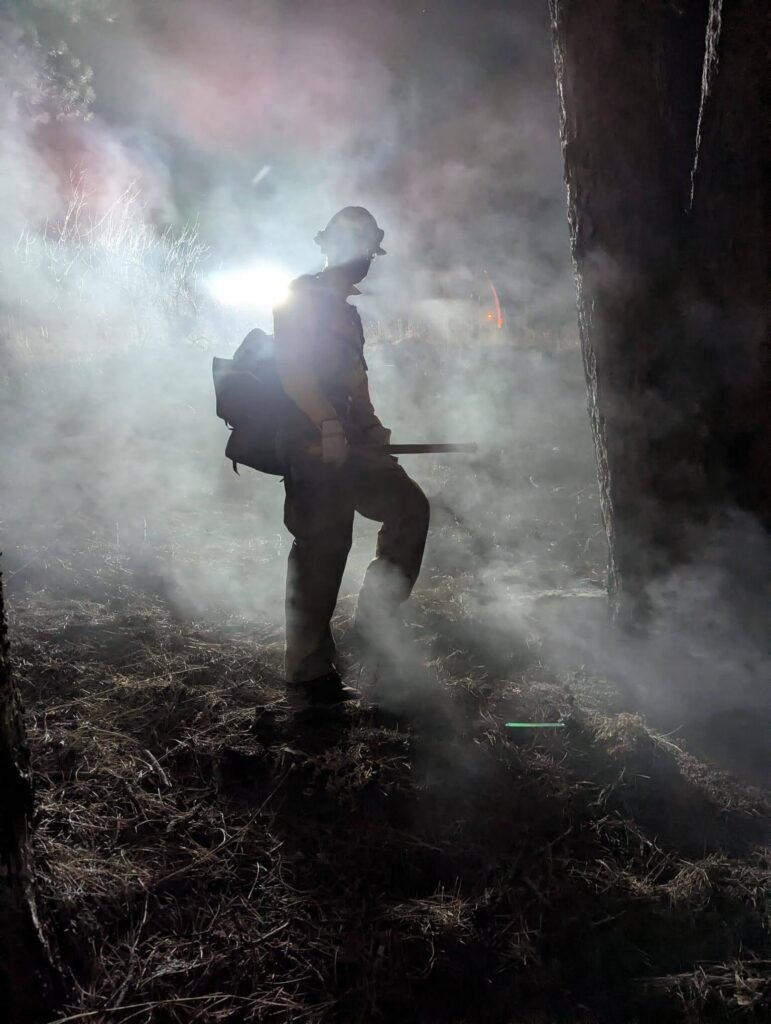
Power grid shutdowns in Colorado bring protection — and problems
Scott Weiser
scott.weiser@gazette.com
Updated 2 hours ago
A downed power line in Sunshine Canyon in the mountains west of Boulder in December posed an electrocution risk to firefighters and bystanders after Xcel Energy re-energized it without repairing it, despite being notified of the break the day before....

Aurora wildland fire contained at Buckley Space Force Base
Nicholas Fogleman
nicholas.fogleman@denvergazette.com
Updated 2 hours ago
A wildland fire burned Sunday morning on the southwest end of Buckley Space Force Base in Aurora, authorities said. The fire no longer posed a threat and crews were clearing the scene as of 10:53 a.m., according to Aurora Fire...

Unsustainable: How Colorado’s Medicaid spending exploded
Nico Brambila
nico.brambila@denvergazette.com
Updated 4 hours ago
The state’s Medicaid program — which covers about one in four Coloradans — is poised for its largest single-year jump in at least two decades, with officials proposing a $2.3 billion increase, even as lawmakers face a $1.5 billion budget...
Oklahoma’s governor picks energy executive Alan Armstrong to fill US Senate seat | OUT WEST ROUNDUP
The Associated Press
the-associated-press@coloradopolitics.com
Updated 2 hours ago
OKLAHOMA Governor makes US Senate pick OKLAHOMA CITY — Oklahoma’s governor on March 24 appointed energy executive Alan Armstrong to serve in the U.S. Senate through the end of the year and finish the term of Republican Markwayne Mullin, the...

Phil Weiser wins top spot in Colorado’s Democratic gubernatorial primary at party’s state assembly
Ernest Luning
ernest.luning@coloradopolitics.com
Updated 2 days ago
Attorney General Phil Weiser’s name will appear first on Colorado’s Democratic gubernatorial primary ballot after his overwhelming win Saturday at the party’s state assembly in Pueblo. Weiser joins U.S. Sen. Michael Bennet in the June 30 primary for the office...
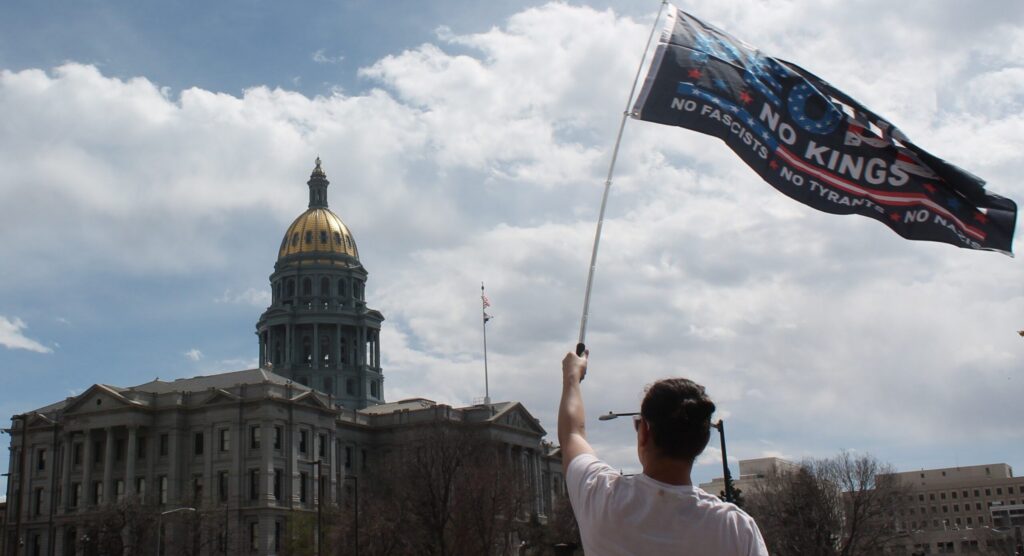
‘No Kings’ protest draws tens of thousands to Colorado state Capitol
Matt Kyle
matt.kyle@denvergazette.com
Updated 2 days ago
The third round of the national No Kings Day protests hit Denver Saturday, when tens of thousands gathered near the Colorado state Capitol to criticize the Trump administration. Organizers addressing the crowd estimated there were 30,000 present for the Saturday...
Denver Democrat Diana DeGette trails challenger Melat Kiros at assembly as both qualify for primary
Ernest Luning
ernest.luning@coloradopolitics.com
Updated 2 days ago
U.S. Rep Diana DeGette, a Denver Democrat, qualified for Colorado’s June primary by the skin of her teeth Friday at the party’s district assembly, where the 15-term incumbent received fewer than half as many delegate votes as her challenger, 28-year-old...
PREV
PREVIOUS

Resist Polis PAC relaunches as the Colorado Freedom Force
They’re baaaack. The Resist Polis PAC, one of two groups that led the effort during the summer to collect petition signatures to recall Gov. Jared Polis, is taking another shot at political action and plan to take their fight to the state Capitol. “Colorado Politics will never be the same again,” the Recall Polis website (which is […]
Colorado state Rep. James Coleman to run for Senate District 33
Democratic State Rep. James Coleman of Denver announced Tuesday he plans to run for Senate District 33. The district encompasses east Denver, including Park Hill and all the way north to Denver International Airport. But Coleman, at least for now, is not alone in that race. The incumbent, Democratic Sen. Angela Williams, filed for re-election […]