

Tommy Vietor talks ‘Pod Save America,’ 2020 political landscape ahead of podcast’s Denver show

The former Obama administration staffers who host the popular Pod Save America podcast return to Denver Wednesday night to talk progressive politics in front of a live audience while recording an episode of a show that’s been dubbed “the voice of the resistance.”
Gov. Jared Polis is set to join the hosts – Jon Favreau, Jon Lovett, Dan Pfeiffer and Tommy Vietor – for the decidedly partisan discussion, the 27th stop on the 2019 Pod Tours America swing across the country.
They’ve built a massive audience for their flagship podcast – the twice-weekly show’s episodes have been listened to more than 530 million times – since early 2017 when Favreau, Lovett and Vietor founded Crooked Media, a podcast empire with nearly a dozen offerings.
The Denver show is at 8 p.m. Wednesday, July 17, at the Bellco Theater inside the Colorado Convention Center, 700 14th St. (Tickets are available here.)
The Crooked Media team last appeared in Denver on Feb. 8, 2018, at the Denver Center’s Buell Theater for back-to-back tapings of Pod Save America and Lovett or Leave It, a fast-paced comedy show hosted by Lovett.
Vietor, who worked as a press secretary and national security spokesman in the Obama White House, spoke this week by phone with Colorado Politics about Crooked Media’s mission, potential topics for the upcoming Denver show and the political landscape nationally and in Colorado ahead of the 2020 election.
Colorado Politics: We’re about two and a half years into Pod Save America and since the founding of Crooked Media. Can you talk about what you were trying to do in the wake of the 2016 election and Keepin’ it 1600 [a 2016 podcast hosted by Favreau, Pfeiffer, Vietor and Lovett on The Ringer’s sports and pop culture podcast network], and how it’s worked out?
Tommy Vietor: That was a more innocent time. Keepin’ it 1600 was a fun hobby. Bill Simmons of The Ringer said, ‘Hey, you guys want to do a podcast about politics and this election,’ and we were all were doing it just for fun. It developed a following pretty quickly, but we all had day jobs, and it was just a way to vent a little bit about what was happening in the world and sort of assuage some of our guilt for having not been working on a campaign.
Then the election happened, and all of us were just shattered. And Lovett, Favreau and I decided that one of the things that frustrated us the most about the 2016 election was there were a lot of people hungering for a substantive, policy-focused, slightly less superficial conversation about politics, and we felt like whenever we would turn on the cable news, it was some awful talking head yelling, so you’d watch a half hour of that kind of programming and you’d be depressed about the state of the world and feeling hopeless, like you couldn’t do anything about it. On the right, there are all these conservative news outlets. They motivate Republican voters in a very different way, with fear, anger and grievance, and there was no equivalent on the left.
So we wanted to start Crooked Media because we felt like there needed to be a place to go where you could talk about politics, try to figure out what was happening in the world – because there’s obviously so much going on – but then the really key step for us was to help people understand how to be activists in their day-to-day life. If you’re really worried that Trump’s going to go to war with Iran, here’s what you can do about it. And so that’s what we’ve been trying to do on Pod Save America and Crooked Media generally.
The idea of the network and the show is the four of us, but we wanted to create a much more, interesting, diverse, broad slate of shows that was representative of the diversity of views in the country and in the party, but then also try to create some shows that were more politically adjacent, so we have a show about culture and politics that is fun and light and about Hollywood and movies and TV [Keep It, hosted by culture critic and columnist Ira Madison III] that brings you into the bigger political conversation and bring you into the Crooked Media universe. That’s been part of the extension of it.
CP: Some of the shows are telling stories, either limited-run like The Wilderness [a 15-episode documentary hosted by Favreau about the history and future of the Democratic Party] or like the show Jason Kander did [Majority54 with Jason Kander, which featured in-depth interviews conducted by the former Missouri secretary of state and founder of Let America Vote], as opposed to the news of the day.
TV: It’s a totally different animal, and it’s really been fun to try to tackle that challenge. Jason’s show was more seasonal and about discrete issues and was really cool, and we just love him as a person. Favreau’s show was a multi-part series about the Democratic Party, the history, what’s gone right, what’s gone wrong, the major issues, that I think was an invaluable primer for people who wanted to go deeper on that.
And we’re in the middle of a run of a limited series, a show called This Land, which is hosted by a woman named Rebecca Nagle, who is a member of the Cherokee Nation, that’s about the historical treatment of Native American people by the U.S. government. It’s pegged to this case that was supposed to be decided by the Supreme Court this term that could have given back half of the land in Oklahoma to the tribes. Strangely – truly bizarrely – the Supreme Court said, ‘We don’t have time to finish it,’ or something, so they punted it a whole another year. But it’s been really cool to do a narrative-style show, as well as the always-on, people talking once a week about something.
CP: Your show, Pod Save the World, is a fascinating look at foreign policy, with some great guests – you’ve had [former Deputy National Security Advisor] Ben Rhodes on recently as a co-host?
TV: Ben is officially a co-host, he moved to LA. When I worked at the White House, I spent two years working at the National Security Council and four years handling lots of foreign policy issues, and the coolest part of it for me was I got to sit in on meetings where people much more experienced and smarter than me would talk about tough problems. And I would also get calls from reports that would say, ‘Help me understand Afghanistan and your policy there and what’s happening on the ground.’ So the thing that I would do is find someone on the NSC and connect them with the journalist on background, and I would literally mute my phone and listen, and I would just learn and learn and learn. So I wanted to recreate that experience for myself, first and foremost, because I just missed talking about those issues and with those people, but also for the listener, and it’s been really cool to see people actually tune in. I never thought an hour-long show about foreign policy would get traction, but it has.
CP: You’ve said that the Trump administration seems to be able to create a new distraction on a daily basis, and the pace of the news is still what it was in January two years ago. What role does a podcast like yours play in keeping what you think is important front-and-center and part of the national conversation?
TV: That’s a really good question. I think one of the hardest thing to do every week is decide what you want to talk about, because there are always things that are front-and-center in the news, and then sort of bigger, issue-based conversations to be have, and there are guests that drive different parts of the conversation. One thing we can do for listeners – as you said, there’s just a deluge of stories and news coming at you all day, every day, and it’s really hard to sort out what’s important and what’s not, and we think we can help provide some sort of curation for our listeners.
‘This is a massive deal, there’s a lawsuit before the [Fifth] circuit court now about the Affordable Care Act that could strip Obamacare away from all the people in the country; this is critically important, people need to know about this.’ Or, ‘There’s legislation before the Senate, and if we don’t kill it …’ Whatever the example might be. And it’s also how people understand when there’s major moments in the country for activism, for marches, what have you.
CP: Ahead of your visit to Denver, any ideas what topics you’ll be discussing when you are here?
TV: You guys have a huge Senate race, so we’ll probably talk about Cory Gardner and whether or not he’s been good for the state, whether or not he’s a Trump stooge or a new kind of Republican, as he’s trying to sell himself. I think the Mueller hearings are that day, he’s on the Hill, so I imagine that will come up. Those are two big items I think we can predict. [On July 13, the House Judiciary and Intelligence committees said they would former Special Counsel Robert Mueller’s testimony by a week, leaving that potential topic up in the air.] And we have your great governor, Jared Polis, as your guest.
CP: There’s two Coloradans – John Hickenlooper, Jared Polis’ predecessor, and our senior senator, Michael Bennet, Cory Gardner’s colleague across the aisle – running for president this year. You have had them both on your show recently, in the 2020 candidates interviews [Favreau interviewed Hickenlooper in May, and Pfeiffer interviewed Bennet in July]. What’s your take on their place in the presidential race after the first debate and their most recent fundraising totals have come out?
TV: I think both of them have an uphill battle, because there are so many candidates in this race. There are some really well-established figures with tons of money and name ID and momentum. That said, I think in any other year, someone like John Hickenlooper would get a lot of looks. [This year] I think someone like John Hickenlooper will get a look from a lot of voters in Iowa, because he has a very serious track record and a tremendous amount of success. You cannot argue that he’s not a serious candidate or someone with really significant experience for the job.
The same is true for Michael Bennet. He is one of the most thoughtful members of the U.S. Senate. He’s smart, he’s decent, he cares about the institution, he cares about the state. I haven’t had the chance to listen to that interview [with Bennet] because I was away last week, but I’ve been told it’s tremendous. I think that he is someone that everyone just really likes; everyone in the Obama White House just really liked working with Michael Bennet because he was so smart and gracious, and that was the experience I had, when Jon Favreau and I talked to him during the health care march certainly solidified that sentiment. They’re like real-deal, impressive politicians. I have no idea how it’ll shake out for them in this cycle, but I think they can both make important contributions. It’s interesting to see Bennet up there offering a more moderate perspective on issues like health care. It’s good to have that debate play out, no matter which side you fall on.
CP: As someone who’s been in the thick of a presidential campaign, do you think there’s a place for them in the race, talking about issues that wouldn’t otherwise be discussed?
TV: That certainly was my sense with Bennet at the first debate. I think he went out of his way to make an argument about health care that was different than some of the other candidates on the stage. He went out of his way to have a conversation with Vice President Biden about that tax bill and why it was or wasn’t a good deal. His voice was definitely heard there. I think Hickenlooper has struggled to break through a little more than he might have expected – it seems like he just shook up his team.
CP: You spoke with [Warren Binford, an attorney who has been interviewing with migrant children at the detention center in Clint, Texas] in this week’s episode of Pod Save America.That seems to be in the news and drawing a lot of attention; is that going to be something we’re talking about by the election, or does that fade by then?
TV: My sense is that Trump will go out of his way to make immigration a central part of the conversation. I think he views demagoguing immigration and immigrants as a critical way to motivate his base. We all saw that, the bulls— about the caravan in 2018 and the “build the wall!” chant. I think it’s going to be front-and-center. It’s on Democrats to make the case for why he’s wrong, for why family separation is just an abomination. I think you have to make the argument that the way Trump has managed the immigration crisis – certainly it’s a big challenge, and it’s hard – but they have utterly failed. I do think it will be front-and-center if Democrats do it right.
CP: Colorado is not widely considered a [presidential] swing state anymore, it’s considered in the Democrats’ column, depending on who the Democratic nominee is, though the Trump campaign keeps listing it on their short list of reach states.
TV: I do think Colorado is a bluer state, but before 2016, I would have told you there was no way a Democrat could lose Pennsylvania – in fact, I probably said that – so I will never say never. But I do think that Democrats could do a lot better in [Colorado], we could do better down-ballot, we could pick up that Senate seat, so I do think there’s a lot of potential in Colorado if the nominee is strong and is able to reach Colorado voters.
CP: Any other new shows in development by Crooked Media?
TV: We have a ton of stuff in development, but nothing that’s final or even close to being out. A lot of it is longer-term churn. We’re working on a couple other of the more narrative-style shows that we talked about earlier, because we think those are fun and a way to stretch our ability to create stuff. A lot of our focus is around the election.
Democrats have this massive challenge. We have this big, messy primary, and there’ll be party infighting and tons of spending by individual candidates, and meanwhile Trump is just printing money – he raised, what, $100 million in the last quarter? We’re trying to figure out ways to help people focus on critical state-level elections that are coming up. Virginia has really important elections, so we’re focused there. We’re trying to raise money for a fund that will just sort of sit there for whoever the eventual nominee is, so we can get that individual several million dollars right away. We’re working a lot on the Senate map for 2020 and what we can do to get people to pay attention to it. We’re getting pretty seized with those political challenges.
CP: Can you handicap the presidential race? In some circles, it seems as though Trump is on the ropes, but in others, an incumbent has powerful advantages, even if he tops out at 43% of the country willing to vote for him. Is it a tossup at this point?
TV: I think – I’ve taken myself out of the prediction business, because I suck at it – but I think that most presidents get re-elected and, as you said, there’s a lot of structural advantages to incumbency, and there’s a strong economy at the moment, at least on paper, when you look at the stock market. Democrats have to understand that Trump will win this unless we work unbelievably hard to register tons of voters and get them out and motivate people and try to reach those Obama-Trump voters that do exist in many states. It’s going to be a massive slog. I don’t think we’ve learned a lot of the lessons from 2016 -Trump is able to control the narrative almost every day, he’s able to get the media attention he wants, good news even when it’s bad. It’s going to be tough, so we have to buckle down. It makes me very anxious, to be honest.
CP: Thank you so much. We’ll see you next week. I really appreciate you taking the time.
TV: Of course. Thank you so much for talking with me, and I appreciate it.


10th Circuit grants Boulder-Weld district’s fire chief immunity for firing union leader
Michael Karlik
michael.karlik@coloradopolitics.com
Updated 13 hours ago
The Denver-based federal appeals court decided on Monday that the chief of a fire protection district spanning Boulder and Weld counties could not be held liable for terminating a union leader through the process outlined in the collective bargaining agreement....
Michael Allen says a weakened justice system, rising crime drove him to run for attorney general
Thelma Grimes
thelma.grimes@coloradopolitics.com
Updated 12 hours ago
Michael Allen said he is running for attorney general because he believes Colorado’s criminal justice system has been weakened by recent legislation and that rising crime is directly increasing the cost of living. A Navy veteran and longtime prosecutor, Allen...

Colorado House ethics committee delays hearing to allow Rep. Lindsay to seek legal counsel
Marianne Goodland
marianne.goodland@coloradopolitics.com
Updated 17 hours ago
The Colorado House ethics committee voted Monday to pause the ethics complaint against Rep. Mandy Lindsay while she seeks legal counsel. The hearing was scheduled to begin with two days of testimony, during which Lindsay could present evidence and call...

State Supreme Court oral arguments, 10th Circuit nominee recuses from cases | COURT CRAWL
Michael Karlik
michael.karlik@coloradopolitics.com
Updated 11 hours ago
Welcome to Court Crawl, Colorado Politics’ roundup of news from the third branch of government. The state Supreme Court will hear its last set of oral arguments this week before breaking for the summer, and the nominee for a vacancy...
‘Peaking at the right time’: Barbara Kirkmeyer is confident as ballots go out
Thelma Grimes
thelma.grimes@coloradopolitics.com
Updated 12 hours ago
Calling 2026 an “interesting” year, Sen. Barbara Kirkmeyer said the race for the Republican nomination has taken her from a “bizarre debate” to a broader effort to maintain the party’s integrity, while making the case that she’s ready to lead...
Sheehy calls for Rubio to take over Iran negotiations if Vance can’t swing it
Claire Carter, Washington Examiner
claire.carter.washington.examiner@gazetteedit.wpenginepowered.com
Updated 19 hours ago
Sen. Tim Sheehy (R-MT) on Monday suggested Secretary of State Marco Rubio should be waiting in the wings to handle negotiations with Iran if Vice President JD Vance can’t get a long-term agreement with Tehran over the finish line. Vance...
Rural frustration, parental rights shape Scott Bottoms’ pitch ahead of Colorado’s gubernatorial primaries
Thelma Grimes
thelma.grimes@coloradopolitics.com
Updated 12 hours ago
With just weeks before Colorado’s June primary, Republican gubernatorial candidate state Rep. Scott Bottoms is spending nearly all his time on the road — literally crisscrossing the Western Slope and eastern plains — in a final push to connect with...

Appeals court adopts federal standard for jail deaths under Colorado law
Michael Karlik
michael.karlik@coloradopolitics.com
Updated 10 hours ago
Colorado’s second-highest court decided last month that the standard used by federal courts for assessing whether government officials may be liable for constitutional violations upon the death of a jail detainee also applies to claims made under the Colorado Constitution....

District court judges weighing Trump policies face repeated slap downs by appeals courts
Kaelan Deese, Washington Examiner
kaelan.deese.washington.examiner@gazetteedit.wpenginepowered.com
Updated 18 hours ago
Federal district court judges reviewing President Donald Trump’s immigration agenda and other contested policies are increasingly being checked by appeals courts, raising questions as to whether some members of the federal judiciary are implementing the law or seeking partisan ends....
Registered voters on the eve of the 2026 primaries | Cronin & Loevy
Tom Cronin Bob Loevy
tom-cronin-bob-loevy@coloradopolitics.com
Updated 3 days ago
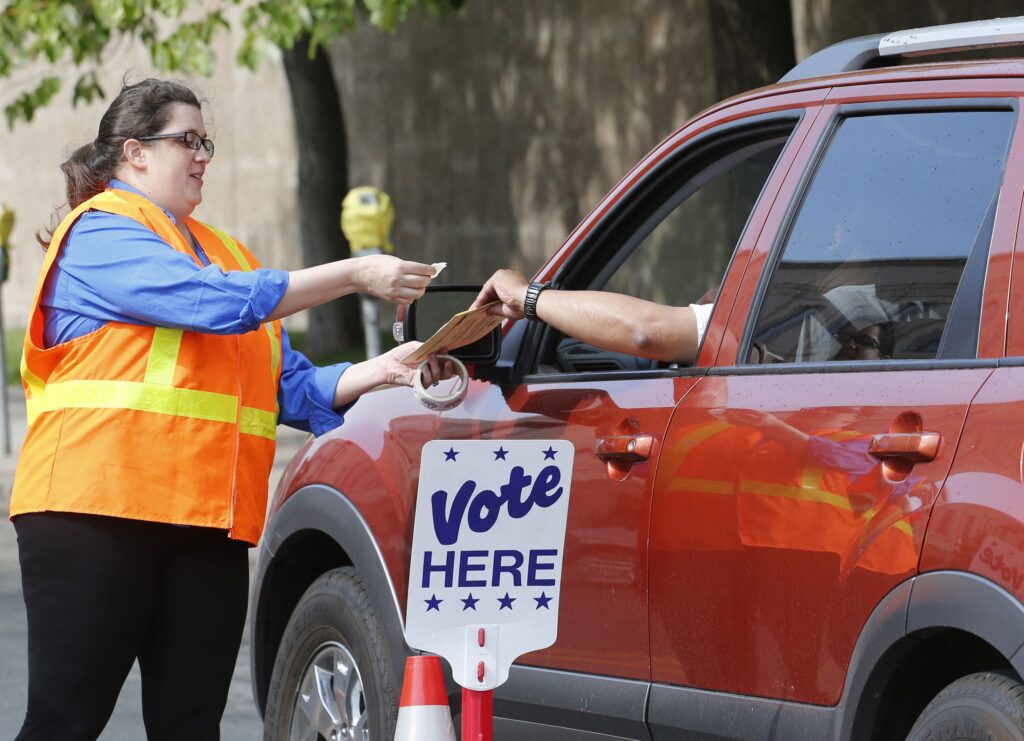
The Colorado Secretary of State’s Office has published the latest voter registration figures for the state and its counties as of June. Colorado ranks among the highest states for independent, or unaffiliated, voters. Only Alaska and Massachusetts have more. New Hampshire, New Jersey, Maine and Oregon also rank highly. So here...
PREV
PREVIOUS

COPO PODCAST | John C. Ensslin's interviews with Denver leaders
Here are some of the late Colorado Politics reporter John C. Ensslin’s recorded interviews with Denver leaders. > COPO PODCAST | Denver’s Republican and Democratic party chairs talk about their roles Denver Mayor Michael Hancock in his Denver office on June 5, 2019, the morning after winning reelection in a runoff. (Andy Colwell for Colorado Politics) […]
INSIGHTS | The Western way is lost on the political frontier
Candidates will tell us they’ve seen the mountaintops, the big sky, how they embody the pioneer spirit and how they’ve done things barely short of roping and humanely branding their own free-range, non-GMO cattle. These are Democrats, after all. Talk of the West is Colorado’s aloha; it means different things to different people, leaning a […]